Amish Built vs Prefab Garage Cost: 2026 Comparison
Copy Link
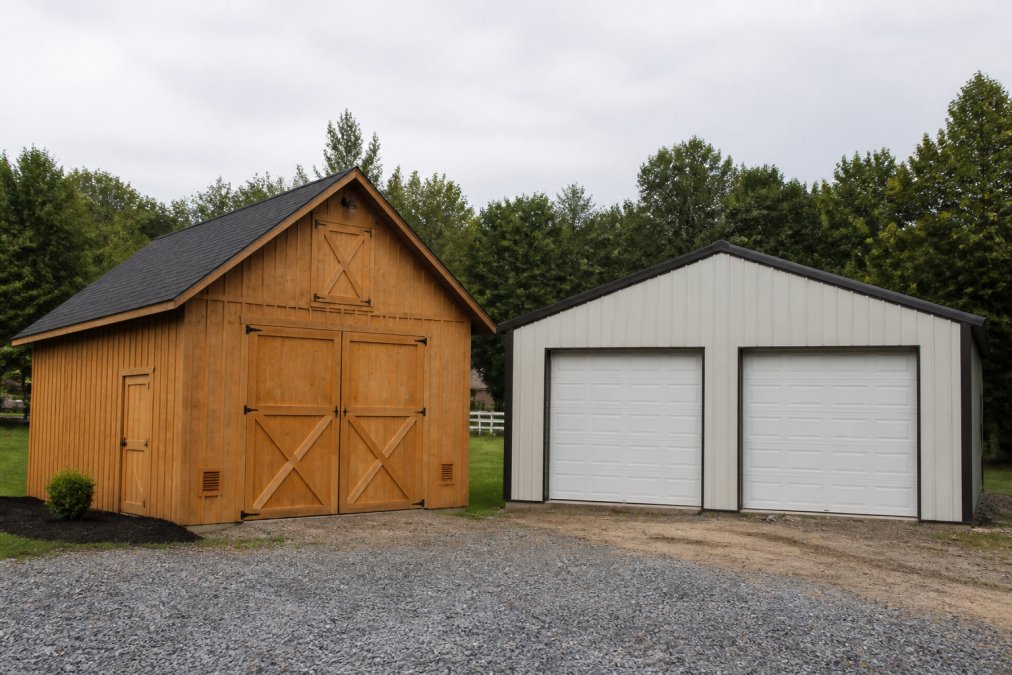
Table of Contents
- Amish Built vs Prefab Garage: Cost and Feature Comparison
- What Drives Custom Detached Garage Cost in Pennsylvania
- Site Preparation for Prefab Garages and Amish-Built Structures
- Durability and Longevity: Which Lasts Longer?
- Financing Options for Outdoor Structures
- Build Time and Installation: Speed vs. Customization
- How to Choose: Amish-Built or Prefab Garage
- Conclusion
Last Updated: August 25, 2026
Amish Built vs Prefab Garage: Cost and Feature Comparison
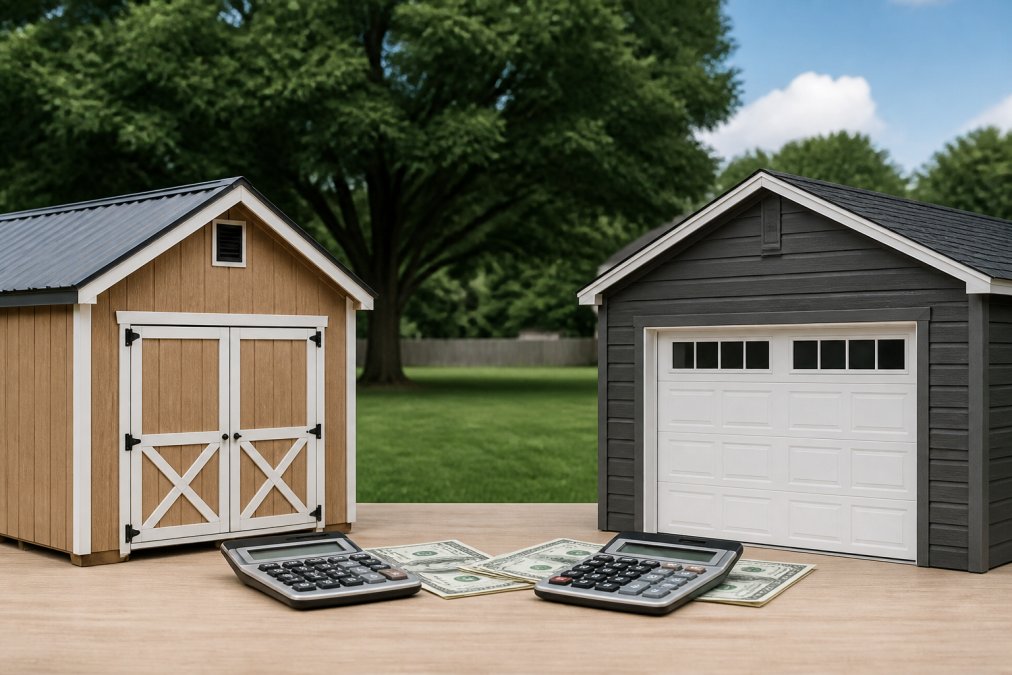
When you’re shopping for a new garage in West Chester, you face a fundamental choice: invest in custom Amish craftsmanship or go with a prefabricated structure that arrives ready to assemble. The amish built vs prefab garage cost comparison isn’t just about price tags, it’s about what you’re actually getting for your money, how long it will last, and whether the upfront investment pays dividends over time.
The decision hinges on three real-world factors: total cost of ownership, build timeline, and how much customization matters to your property. A prefab garage from a manufacturer like Sheds Unlimited or Alan’s Factory Outlet gets you a functional structure quickly and affordably. An Amish-built garage from a local craftsperson like Riehl Structures offers durability, customization, and the kind of quality that holds up for decades. Both solve the same problem, you need shelter for vehicles or storage. Neither is objectively "right." The right choice depends on your budget, your timeline, and your willingness to wait for something built to order.
Let’s break down what actually drives cost, how long each type takes to install, and which option makes sense for your situation.
Quick Comparison Table
| Factor | Amish-Built Garage | Prefab Garage |
|---|---|---|
| Starting Price Range | Contact for quote | $4,190-$13,787+ |
| Customization | Extensive | Limited to manufacturer options |
| Build Timeline | 4-12 weeks | 1-3 weeks |
| Installation Time | 1-3 days (with site prep) | 1-2 days |
| Material Quality | Premium hardwoods, traditional joinery | Engineered wood or steel |
| Lifespan | 30+ years | 20-40 years |
| Local Expertise | Yes (West Chester area) | Varies by vendor |
| Financing Available | Yes, rent-to-own options | Limited |
What Drives Custom Detached Garage Cost in Pennsylvania
The total cost of any garage, whether Amish-built or prefab, breaks down into four buckets: materials, labor, site preparation, and delivery. Understanding each one helps you compare apples to apples when you’re looking at quotes.
Amish-Built Garage Cost Factors
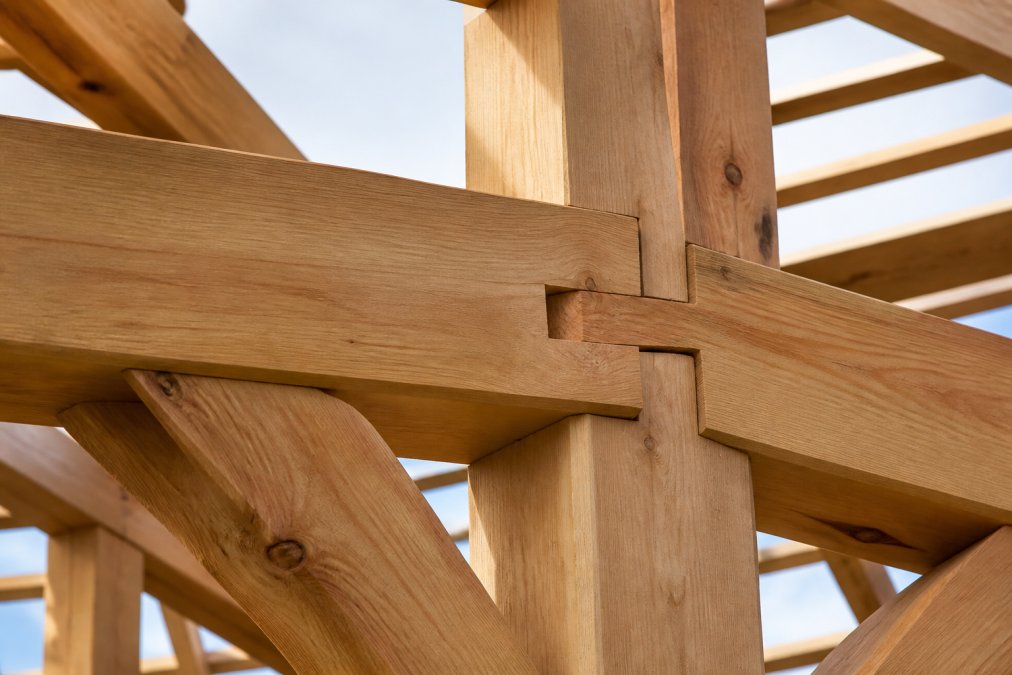
An Amish-built garage starts with premium materials. Craftspeople typically use solid hardwoods like oak, hickory, or pine rather than engineered alternatives. The joinery is traditional, mortise and tenon joints, not nails or staples. That construction method costs more in labor but creates a structure that can be repaired, reinforced, or modified decades later. A prefab frame, once assembled, is what it is.
Site preparation is where many homeowners get surprised. If your property in West Chester slopes or has uneven ground, you’ll need to level the foundation area. This might mean grading, compacting, and pouring a concrete pad. A professional site assessment typically reveals whether you can get away with minimal prep or whether you’re looking at significant earthwork. Riehl Structures provides guidance on this during the design phase, but the actual cost depends on your property’s conditions.
Labor costs reflect the fact that Amish craftspeople build to order. There’s no assembly line. Each garage is constructed specifically for your dimensions, roof style, door placement, and finish. That personalization takes time, typically 4 to 12 weeks from order to delivery. Delivery itself is included within 30 miles of West Chester and King of Prussia for Riehl Structures, but that’s a service, not a cost you’re calculating separately.
Financing matters here too. If you’re paying cash, there’s no interest. If you’re financing, the terms affect total cost. Rent-to-own options with no prepayment penalties, like those offered by Riehl Structures, let you spread payments without locking yourself into a fixed term.
Prefab Garage Cost Factors
Prefab garages have transparent, published pricing. A single-car metal garage from Alan’s Factory Outlet starts at $4,190. A 12×20 wood-frame prefab from Sheds Unlimited can range from $7,971.80 to $10,790.98. That clarity is valuable when you’re budgeting.
What you’re paying for is manufacturing efficiency. Prefab companies build dozens or hundreds of the same model, so materials are cheaper per unit and labor is standardized. You choose from preset dimensions and styles, not custom configurations. A 2-car versus 3-car prefab is a meaningful choice; a custom door placement or roof pitch is not.
Delivery costs vary. Some prefab vendors include delivery in their quoted price; others charge separately. Assembly is usually included in the quoted price for prefab structures, though you should confirm this. The actual installation, dropping the structure on your foundation and bolting it down, takes 1 to 2 days.
Site preparation for a prefab is the same as for Amish-built: you need a level, compacted foundation. The difference is that prefab companies expect you to handle that yourself or hire a contractor. Riehl Structures, by contrast, offers guidance and can connect you with local resources to manage site prep.
Site Preparation for Prefab Garages and Amish-Built Structures
Before either structure arrives, your land has to be ready. This is non-negotiable and often overlooked in cost estimates.
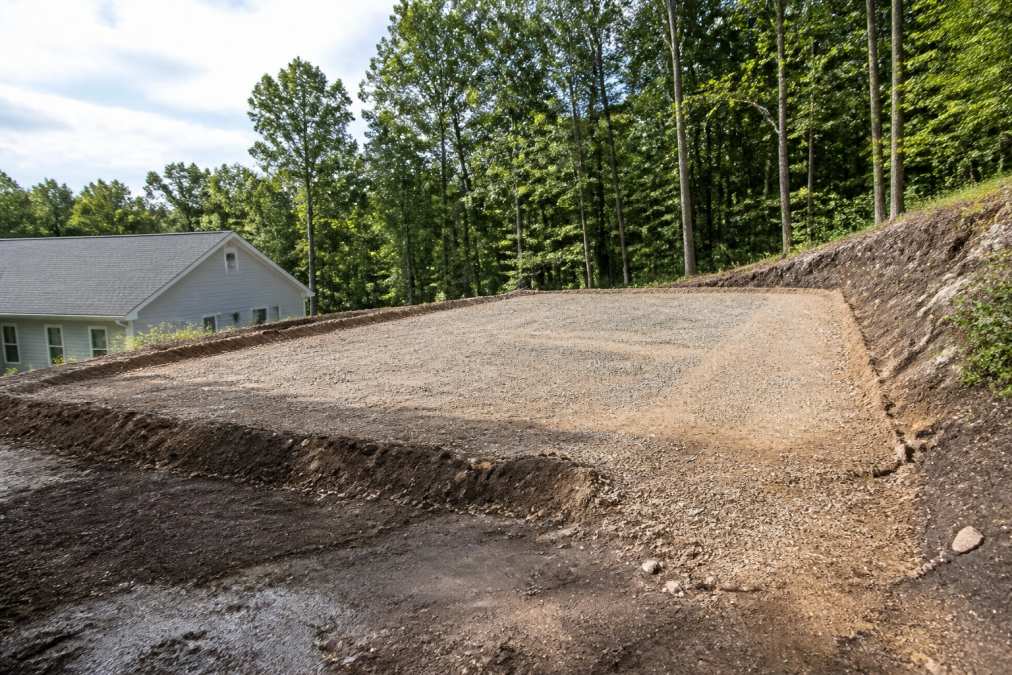
A proper foundation for a garage requires a level, compacted base (fema.gov). If your property slopes, and many properties in the West Chester area do, you’ll need to grade the site. The depth of grading depends on how uneven your terrain is. A gentle slope might need 4 to 6 inches of fill and compaction. A steeper grade could require 12 inches or more.
The foundation itself is typically a concrete pad. For a single-car garage, that’s roughly 12×20 feet. For a two-car, it’s closer to 20×20 or 24×24. Concrete costs vary, but you’re looking at a significant line item. The pad needs to be level, properly sloped for drainage, and cured before the structure arrives.
Many homeowners underestimate this step. You can’t just place a garage on uneven ground and expect it to settle level. Doors won’t operate properly, framing will shift, and long-term durability suffers. If your property is relatively flat and already has a suitable area, site prep might be minimal. If you’re building on a slope or in an area with poor drainage, budget accordingly.
Riehl Structures provides a site assessment during the consultation phase, so you understand what’s required before you commit. That transparency prevents surprises when the delivery truck arrives.
Ask for a written site assessment before ordering. A professional evaluation of drainage, slope, and soil conditions costs less than fixing problems after installation. Many contractors offer this for free or a nominal fee.
Durability and Longevity: Which Lasts Longer?
This is where Amish-built structures shine, and it’s why the upfront cost difference often makes sense.
An Amish-built garage, maintained reasonably well, lasts 30+ years (peer-reviewed research). Some last 50 years. The reason is material quality and construction method. Solid hardwoods age gracefully. Traditional joinery, where pieces are cut to interlock rather than fastened with nails, distributes stress across the structure. If a joint loosens, it can be re-tightened. If a board warps, it can be replaced without dismantling the frame.
A prefab garage, depending on materials, typically lasts 20 to 40 years (peer-reviewed research). Metal garages are durable against weather but can rust if the finish is compromised. Wood-frame prefabs are vulnerable to moisture and pest damage if not maintained. The engineered materials used in prefab construction don’t age as gracefully as solid hardwoods.
Over 30 years, the amish built vs prefab garage cost calculus shifts. If you replace a prefab structure twice, you’ve spent roughly 2.5 times the original cost. An Amish-built garage, maintained with occasional stain or siding repair, is still standing and functional. That’s the real value proposition.
Weather in the West Chester area, freeze-thaw cycles, humidity, occasional heavy snow, accelerates wear on lower-quality materials. Prefab structures handle this adequately. Amish-built structures treat it as normal operating conditions.
The durability difference isn’t theoretical. It’s the difference between a structure that requires replacement in two decades versus one that’s still performing in three. That longevity matters if you plan to stay in your home long-term.
Financing Options for Outdoor Structures
How you pay affects the total cost and your cash flow. Both Amish-built and prefab options have financing paths, but they differ.
Prefab garages are typically sold as a one-time purchase. You pay the full price upfront or finance through a standard loan. Some prefab companies partner with financing platforms, but terms and rates vary. You’re responsible for arranging financing independently.
Riehl Structures offers rent-to-own financing with no prepayment penalties and no home equity requirement. This matters. A traditional home equity line of credit requires you to have built equity and subjects you to a second mortgage. Rent-to-own spreads payments over time without those constraints. You can also pay off the structure early without penalty, which means if you get a bonus or inheritance, you can accelerate payoff without losing money.
The rent-to-own structure from Riehl Structures is designed for homeowners who want flexibility. You’re not locked into a fixed term. You’re not paying interest on a traditional loan. You’re paying for the structure in installments, and once the agreement is fulfilled, it’s yours.
For prefab structures, you’ll typically finance through a bank or credit union personal loan, which means you’re paying interest based on your credit score and the loan term. The total cost of financing is higher than rent-to-own, and you have less flexibility if circumstances change.
If you’re paying cash, the amish built vs prefab garage cost comparison is straightforward: prefab is cheaper upfront. If you’re financing, factor in the terms. Rent-to-own with no prepayment penalties is more flexible than a traditional loan, and that flexibility has value.
Build Time and Installation: Speed vs. Customization
If you need a garage in the next month, prefab wins. If you can wait and want something tailored to your property, Amish-built makes sense.
A prefab garage is manufactured, shipped, and installed in 2 to 4 weeks from order to completion. The structure arrives on a truck, gets placed on your foundation, and is bolted down. Installation is quick because there’s no customization happening on-site. Everything is standardized.
An Amish-built garage takes 4 to 12 weeks from order to delivery. The craftspeople build your specific structure, your dimensions, your style, your finish. There’s no rush. Quality takes time. Once it arrives, installation is 1 to 3 days, depending on complexity and site conditions.
The timeline difference is real but often overstated. If you’re planning ahead, 8 to 10 weeks is manageable. If you need shelter for vehicles next week, prefab is your only option.
Customization is where the timeline difference pays off. An Amish-built garage can be designed to match your home’s architecture, fit an unusual lot shape, or accommodate specific door and window placement. A prefab structure is what it is. You choose from available options, not from infinite possibilities.
How to Choose: Amish-Built or Prefab Garage
Start with your constraints: budget, timeline, and property.
If you have a tight budget and need a garage quickly, prefab is the answer. A metal garage from Alan’s Factory Outlet at $4,190 to $6,720 for a 2-car model solves the problem affordably. You get a functional structure that lasts 20 to 40 years. That’s not a bad outcome if you’re not planning to stay in your home for decades.
If you’re planning to stay long-term, have a property that requires customization, and value craftsmanship, Amish-built is worth the wait and the higher initial investment. Riehl Structures’ custom design process means your garage fits your property and your home’s aesthetic. The durability means you’re not rebuilding in 15 years. The flexible financing means you can spread the cost without traditional loan constraints.
If your property has site challenges, uneven terrain, poor drainage, unusual dimensions, Amish-built is more adaptable. Craftspeople can adjust designs to work with your land. Prefab structures are less flexible in these scenarios.
If you want to compare quality and craftsmanship directly, ask for references. Riehl Structures has 30+ years in business and customers throughout the West Chester and King of Prussia areas. Ask to see completed structures. Talk to homeowners who’ve had theirs for 5, 10, or 15 years. That real-world feedback is worth more than any marketing claim.
Avoid the cheapest option without understanding what you’re sacrificing. A metal garage is inexpensive because it’s standardized, uses thin-gauge steel, and has a limited lifespan. It’s not a bad choice if you know that going in. It is a bad choice if you expect it to perform like a structure built to last 30 years.
Choosing between an Amish-built and prefab garage isn’t about picking the objectively "best" option, it’s about matching the structure to your needs, budget, and timeline. Riehl Structures specializes in custom Amish-built garages designed for homeowners in the West Chester area who prioritize durability, customization, and stress-free installation. With flexible rent-to-own financing, no prepayment penalties, and free delivery within 30 miles, Riehl Structures removes the friction from the buying process. Get a quote now and see how a custom-built garage can add value to your property.
=== FAQ ANSWERS (audit these too, same rules) ===
[1] Q: Are Amish-built garages more expensive than standard prefab garages?
A: Amish-built garages typically require greater upfront investment than some prefab options due to hand-crafted construction and superior materials. However, the cost difference depends on customization, size, and materials chosen. Prefab garages offer transparent online pricing starting lower, while Amish-built structures provide longer-term durability that can offset initial cost over decades of ownership. Request a quote to compare pricing for your specific needs.
[2] Q: What factors influence the cost of a custom detached garage in Pennsylvania?
A: Garage cost depends on size (single, two, or three-car), materials (wood framing, siding type, roofing), customization level, foundation requirements, site preparation needs, and local labor costs. Amish-built structures add custom design complexity, while prefab options vary by style and features. Delivery distance, permitting complexity, and whether installation is included also affect final pricing. Local building codes in Pennsylvania may require specific upgrades that impact cost.
[3] Q: How long does it take to build an Amish-built garage compared to a prefab model?
A: Prefab garages typically install faster, often within days or weeks of delivery, since components are pre-manufactured. Amish-built garages take longer due to custom hand-crafting, though construction timelines depend on design complexity and builder schedules. Once built, both require site preparation and foundation work. Delivery and installation timeframes vary; prefab offers quicker turnaround for urgent needs, while Amish-built prioritizes craftsmanship over speed.
[4] Q: Is site preparation included in the cost of a prefab garage?
A: Site preparation costs are typically separate from the garage purchase price. Foundation work, grading, and ground leveling are often the homeowner’s responsibility or quoted as additional services. Some prefab and Amish-built providers include delivery and basic installation within their service area, but site grading and foundation preparation usually require separate contractor work. Confirm what’s included in your quote before purchasing.
Frequently Asked Questions
Q: Are Amish-built garages more expensive than standard prefab garages?
A: Amish-built garages typically require greater upfront investment than some prefab options due to hand-crafted construction and superior materials. However, the cost difference depends on customization, size, and materials chosen. Prefab garages offer transparent online pricing starting lower, while Amish-built structures provide longer-term durability that can offset initial cost over decades of ownership. Request a quote to compare pricing for your specific needs.
Q: What factors influence the cost of a custom detached garage in Pennsylvania?
A: Garage cost depends on size (single, two, or three-car), materials (wood framing, siding type, roofing), customization level, foundation requirements, site preparation needs, and local labor costs. Amish-built structures add custom design complexity, while prefab options vary by style and features. Delivery distance, permitting complexity, and whether installation is included also affect final pricing. Local building codes in Pennsylvania may require specific upgrades that impact cost.
Q: How long does it take to build an Amish-built garage compared to a prefab model?
A: Prefab garages typically install faster, often within days or weeks of delivery, since components are pre-manufactured. Amish-built garages take longer due to custom hand-crafting, though construction timelines depend on design complexity and builder schedules. Once built, both require site preparation and foundation work. Delivery and installation timeframes vary; prefab offers quicker turnaround for urgent needs, while Amish-built prioritizes craftsmanship over speed.
Q: Is site preparation included in the cost of a prefab garage?
A: Site preparation costs are typically separate from the garage purchase price. Foundation work, grading, and ground leveling are often the homeowner's responsibility or quoted as additional services. Some prefab and Amish-built providers include delivery and basic installation within their service area, but site grading and foundation preparation usually require separate contractor work. Confirm what's included in your quote before purchasing.
This article was written using GrandRanker

Copy Link