Wooden Gazebo vs Metal Pavilion Durability
Copy Link
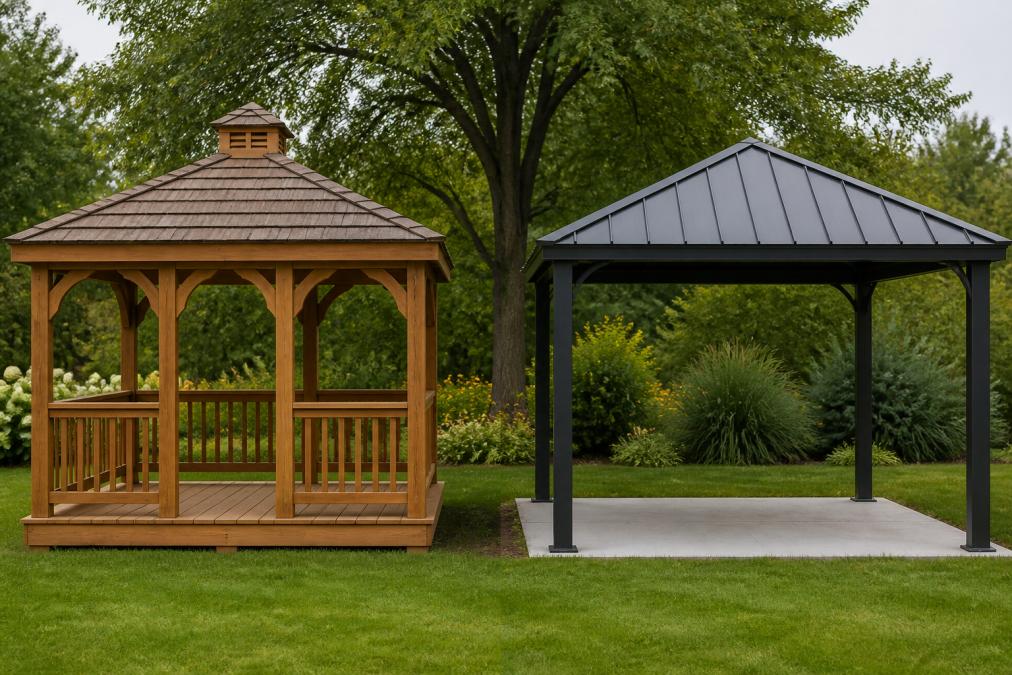
Table of Contents
- Wooden Gazebo vs Metal Pavilion: Which Lasts Longer?
- Durability Comparison Table: Wood vs. Metal
- How Pennsylvania Weather Tests Gazebo Durability
- Maintenance Requirements for Outdoor Structures
- The Strength of Amish-Built Gazebo Durability
- Weatherproofing Wooden Gazebos in Pennsylvania
- Choosing the Right Structure for Your Property
- Conclusion
- Frequently Asked Questions
Last Updated: September 8, 2026
Wooden Gazebo vs Metal Pavilion: Which Lasts Longer?
The question of wooden gazebo vs metal pavilion durability comes down to a trade-off between timeless strength and modern engineering. A well-built wooden structure can last several decades with proper care, while a quality metal pavilion resists rot and pests but may face rust and corrosion over time (extension.psu.edu). At Riehl Structures, a family-owned business, we build both and see firsthand how each material performs in real backyards.
The honest answer is that durability depends less on the material itself and more on construction quality, local climate, and maintenance. A cheap metal kit will fail faster than a properly built wooden gazebo, just as a thin-gauge steel frame will outlast an untreated pine structure. The comparison starts with how each material handles the specific stresses of outdoor exposure.
Durability Comparison Table: Wood vs. Metal
| Factor | Wooden Gazebo | Metal Pavilion | Winner |
|---|---|---|---|
| Rot and decay resistance | Requires sealant every 2 years | Naturally resistant | Metal |
| Pest resistance | Susceptible without treatment | Fully resistant | Metal |
| Rust and corrosion | Not applicable | Needs periodic inspection | Wood |
| Wind and snow load | High with proper joinery | High with galvanized steel | Tie |
| Aesthetic longevity | Improves with age | Finish can fade | Wood |
| Repair difficulty | Easy to patch | Hard to match finish | Wood |
| Expected lifespan | 20-30+ years | 15-25 years | Wood |
This table reflects what we see in the field. Galvanized steel frames, like those used by Backyard Discovery’s metal gazebo line, resist rot and pests completely, but they require periodic inspection for rust and loose hardware. Wooden structures demand proactive care yet reward owners with a lifespan that often exceeds metal alternatives when maintained properly.
How Pennsylvania Weather Tests Gazebo Durability
Pennsylvania weather is uniquely demanding. Humid summers promote rot and mildew, while freeze-thaw cycles in winter stress joints and foundations. Add heavy snow loads and occasional high winds, and you have a proving ground for outdoor structures.
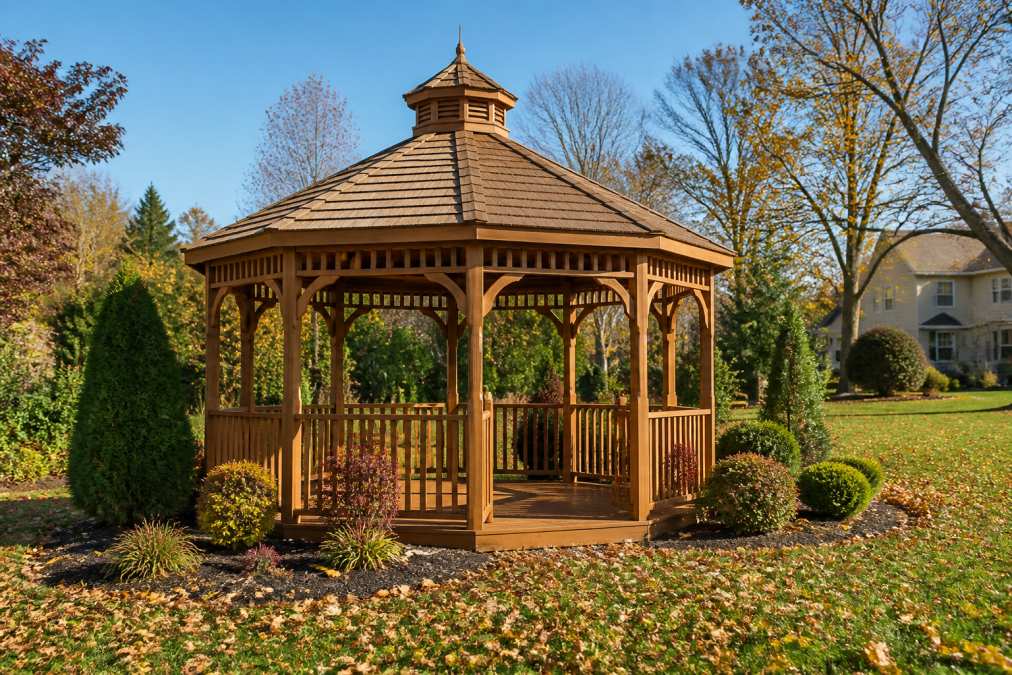
Metal pavilions handle moisture well because galvanized steel resists corrosion, and powder-coated finishes add another layer of protection. Aluminum frames, like those from Purple Leaf’s aluminum gazebo collection, go further by being naturally rust-resistant, making them strong choices for humid environments.
Wood responds differently. Quality timber expands and contracts with seasonal moisture changes, which is why joinery matters more than the wood itself. Amish-built structures use traditional mortise-and-tenon joints that accommodate this movement without weakening, whereas nailed or screwed kits loosen over time. Structures built with old-world methods often perform well in Pennsylvania weather.
Maintenance Requirements for Outdoor Structures
Every outdoor structure demands maintenance; the difference lies in frequency and effort. Understanding the maintenance requirements for outdoor structures before you buy prevents surprises later.
Wooden gazebos need the most attention. A quality sealant or stain should be applied every 2 years to prevent rot and cracking, as noted in the specifications for [Riehl Structures(/about-us/) custom wooden gazebos | riehlstructures.com]. This is a weekend project for most homeowners and extends the structure’s life dramatically.
Metal pavilions are lower maintenance but not zero maintenance. Check annually for rust spots, especially where hardware meets the frame, and retouch any scratches in the powder coating before corrosion spreads. Loose bolts should be tightened after winter, as freeze-thaw cycles can work fasteners loose.
Apply sealant in early fall, not spring. Pennsylvania summers bake the finish, and fall application gives the wood time to absorb the treatment before winter moisture arrives.
The Strength of Amish-Built Gazebo Durability
Amish-built gazebo durability comes from methods refined over generations, not from any single material advantage. The Amish tradition emphasizes joinery, timber selection, and structural engineering that mass-produced kits simply do not match.
Consider the framing. Amish builders select dense, straight-grained lumber and let it season before cutting. Joints are cut to fit precisely, then secured with mechanical fasteners and adhesives designed for outdoor use. The result is a structure that distributes weight evenly and resists the racking forces that loosen lesser frames.
This craftsmanship matters most in high-wind events. A properly joined wooden gazebo flexes slightly under load and returns to shape. A metal pavilion with bolted connections transfers stress directly to the fasteners, which is why periodic tightening becomes necessary. Amish-built quality often includes engineering that anticipates decades of weather.
Weatherproofing Wooden Gazebos in Pennsylvania
Weatherproofing wooden gazebos in Pennsylvania starts with choosing the right species and continues with disciplined finishing. Not all wood performs equally; cedar and pressure-treated pine resist moisture differently, and your choice should reflect your budget and aesthetic preferences.
The finish is your first line of defense. A penetrating oil-based stain protects from within, while a film-forming sealant creates a surface barrier. We recommend the former for gazebos because it flexes with the wood and never peels. Apply two coats initially, then one coat every two years.
Skipping the two-year resealing cycle is the most common reason wooden gazebos fail. Once moisture penetrates the finish, rot begins silently from the inside and is expensive to repair.
Pay attention to ground contact as well. Posts should sit on concrete footings or metal anchors, never directly in soil. Proper drainage around the structure prevents standing water from wicking into the posts, which is the primary cause of premature failure in Pennsylvania’s clay-heavy soil.
Choosing the Right Structure for Your Property
Your property’s specific conditions should drive the decision between wood and metal. Consider your exposure to sun, shade, and prevailing winds, as well as your tolerance for periodic maintenance.
Choose a metal pavilion if you want minimal upkeep, live in a consistently humid area, or plan to move within a decade. The rust resistance and structural stability of galvanized steel make these structures reliable for years with basic care.
Choose a wooden gazebo if you value aesthetics, plan to stay in your home long-term, or want a structure that complements your landscape rather than dominating it. Wood ages gracefully, developing a patina that metal cannot replicate, and repairs are straightforward when they become necessary.
For homeowners in the West Chester area, Riehl Structures offers both options with custom design services and professional installation. Our team handles delivery within 30 miles of our West Chester and King of Prussia locations, making the process seamless from permit questions to final placement.
The real durability winner is the structure you will maintain. A wooden gazebo that receives sealant every two years will outlast a neglected metal pavilion every time.
Conclusion
Durability is not a fixed property; it is the product of material, craftsmanship, and care working together. Metal pavilions offer genuine advantages in moisture resistance and low maintenance, while wooden gazebos deliver superior longevity and timeless beauty when properly maintained. For most homeowners weighing wooden gazebo vs metal pavilion durability, the deciding factor is whether they will commit to the two-year maintenance cycle that wood requires.
Frequently Asked Questions
Does a wooden gazebo last longer than a metal pavilion?
With proper care, a high-quality wooden gazebo can last 20 years or more. Mass-produced metal pavilions often last 10-15 years before rust or corrosion becomes a concern. The longevity of each depends heavily on material quality and maintenance. A custom Amish-built wooden gazebo uses thicker timber and superior joinery, which stands up to weather better than thin, hollow metal poles.
How does Pennsylvania weather affect wooden vs. metal outdoor structures?
Pennsylvania’s freeze-thaw cycles, heavy snow, and humid summers stress both materials. Wood expands and contracts with moisture, which can cause cracking if not sealed properly. Metal conducts cold and can develop condensation. Galvanized steel resists rust, but scratches in the coating expose it to corrosion. Wood needs a sealant every 2 years, while metal needs periodic inspection for rust spots.
What maintenance is required for a wooden gazebo compared to a metal pavilion?
Wooden gazebos require sealing or staining every 2 years to prevent rot and cracking. You should also check for loose joints annually. Metal pavilions need less frequent upkeep, but you should inspect for rust, especially after winter. Touch up any scratches in the powder coating promptly. Both benefit from clearing snow and debris from the roof to prevent structural stress.
Are Amish-built wooden gazebos more durable than mass-produced metal pavilions?
Yes, in most cases. Amish-built gazebos use solid, kiln-dried hardwoods and joinery techniques that create a rigid, stable frame. These structures are designed to handle significant snow loads. Mass-produced metal pavilions use lighter-gauge steel that can bend or dent. The custom nature of Amish construction also means the gazebo is tailored to your specific site conditions.
The team at Riehl Structures has spent over 30 years building outdoor structures that withstand Pennsylvania’s demanding climate. We offer custom designs, Amish-built craftsmanship, and flexible financing options with no prepayment penalties, making it easier to invest in a structure that will serve your family for decades. Get a quote now and let us help you choose the right foundation for your backyard.

Copy Link