Amish Sheds vs Big Box: Quality, Cost & Durability
Copy Link
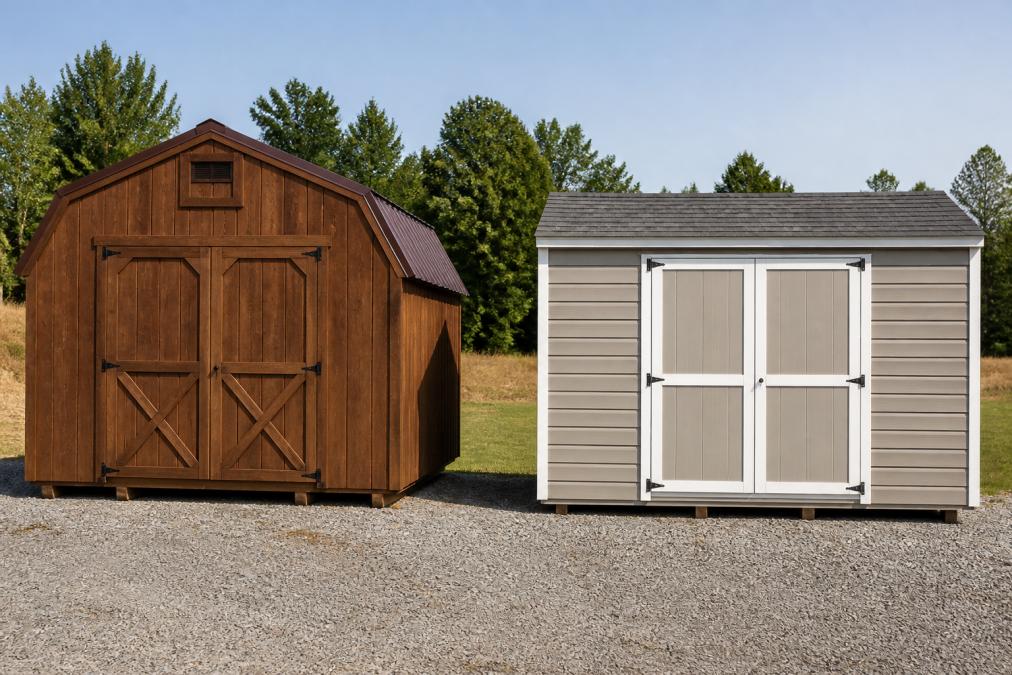
Table of Contents
- Amish Sheds vs Big Box: Side-by-Side Comparison
- Materials and Construction Quality
- Custom Amish Sheds in West Chester, PA
- Durability and Longevity: What to Expect
- Shed Foundation Requirements in Pennsylvania
- Financing Options for Outdoor Structures
- Which Type Is Right for You?
- Conclusion
Last Updated: August 29, 2026
Amish Sheds vs Big Box: Side-by-Side Comparison
When you’re shopping for a shed in the West Chester area, you’ll quickly notice the price gap between a custom Amish-built structure and something you can pick up at a big box retailer. An 8×12 garden shed from a local craftsman might run significantly more than a pre-cut kit from a national chain. The question isn’t really which one costs less, it’s what you’re actually getting for your money.
Amish sheds and big box sheds solve the same basic problem: you need outdoor storage. But they solve it in fundamentally different ways. One is built by hand using traditional joinery and premium materials. The other is mass-produced, designed for quick assembly, and optimized for retail margins. Both have legitimate use cases. The trick is understanding which one matches your actual needs, your timeline, and how long you plan to keep it.
At Riehl Structures, we’ve spent 30+ years building custom outdoor structures for homeowners across Pennsylvania. We’ve also helped plenty of customers understand why some sheds last decades while others need replacing in five years. This comparison cuts through the marketing noise and shows you exactly what separates Amish sheds from big box alternatives.
| Feature | Amish-Built Sheds | Big Box Wood Sheds | Metal Sheds | Resin Sheds |
|---|---|---|---|---|
| Construction | Hand-built with traditional joinery | Pre-cut kit, DIY or assembly service | Galvanized steel panels | Weather-resistant resin material |
| Customization | Fully custom design, materials, colors | Limited sizes and styles | Basic configurations | Modern or wood-look textures |
| Typical Lifespan | 30+ years with maintenance | 10-15 years with care | 15-20 years | 10-15 years |
| Maintenance | Annual staining/painting recommended | Regular staining/painting needed | Minimal (no rust if sealed) | Very low (no painting required) |
| Assembly | Professional installation included | DIY or paid assembly service | DIY or professional install | DIY, usually straightforward |
| Cost | Higher upfront investment | Budget-friendly | Budget to mid-range | Budget-friendly |
| Best For | Long-term investment, specific needs | Quick solution, tight budget | Low maintenance priority | Easy assembly, minimal upkeep |
Materials and Construction Quality
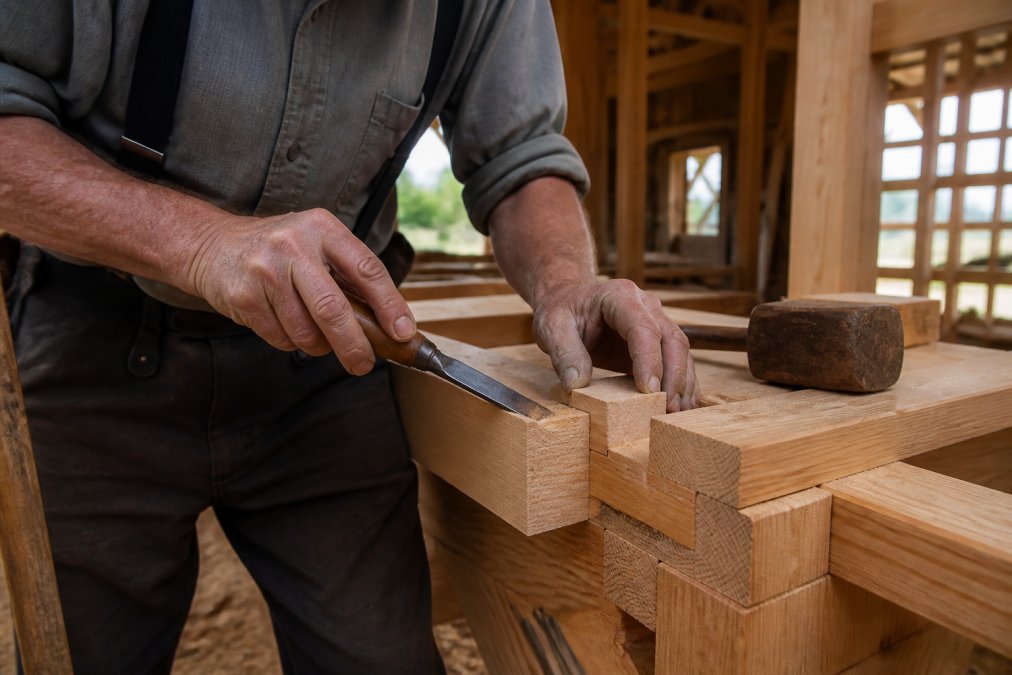
The material difference between Amish sheds and big box alternatives is where you see the first real divergence. Amish builders use pressure-treated lumber for foundations and framing, exterior-grade plywood, and premium roofing materials like 30-year architectural asphalt shingles. The walls are framed with 2×4 studs spaced 16 inches on center, creating structural integrity that handles Pennsylvania weather (iccsafe.org).
Big box sheds typically come as pre-cut kits using standard lumber and thinner materials. The Home Depot’s wood shed options, for example, use LP SmartPanel siding and pre-hung doors designed for quick assembly. They’re engineered to be affordable and buildable by someone without carpentry experience. Metal sheds from Lowe’s use galvanized steel panels, which resists rust but can develop condensation issues. Resin sheds from Tractor Supply are made from durable plastic materials that require virtually no maintenance but offer less structural rigidity.
Here’s what matters: an Amish-built shed uses materials selected for longevity. A big box shed uses materials selected for cost and ease of assembly. When you buy an Amish shed, you’re paying for materials that will still be solid in 20 years. When you buy a big box kit, you’re paying for something that will work fine for a decade.
Custom Amish Sheds in West Chester, PA
If you’re in the West Chester area, the local Amish community has been building structures for generations. These aren’t mass-produced; they’re built one at a time, often by hand, with the builder’s reputation on the line. A custom Amish shed means you choose the dimensions, the siding material, the roof style, the door configuration, and the interior layout. You’re not picking from a catalog of six standard sizes.
Riehl Structures offers fully customized Amish-built sheds designed specifically for your property and needs. Our Garden Shed model, for example, comes with options for different siding choices, roof pitches, and window configurations. If your yard slopes or has challenging terrain, we can adapt the design. If you need specific interior features, shelving, workbenches, loft storage, those are built in from the start, not added later as an afterthought.
The customization extends to aesthetics. You pick the color of your siding, the style of your roof, and whether you want windows. A big box shed comes in whatever colors the manufacturer decided to produce. With a custom Amish shed, you’re designing something that complements your home and fits your property exactly.
The trade-off is time. A custom-built shed takes longer than ordering a pre-cut kit and having it delivered next week. But if you’re planning to keep this structure for 20 or 30 years, waiting a few weeks for something built to your specifications is a reasonable investment.
Durability and Longevity: What to Expect
This is where the real cost calculation happens. An Amish-built shed costs more upfront, but the durability math changes the long-term picture significantly.
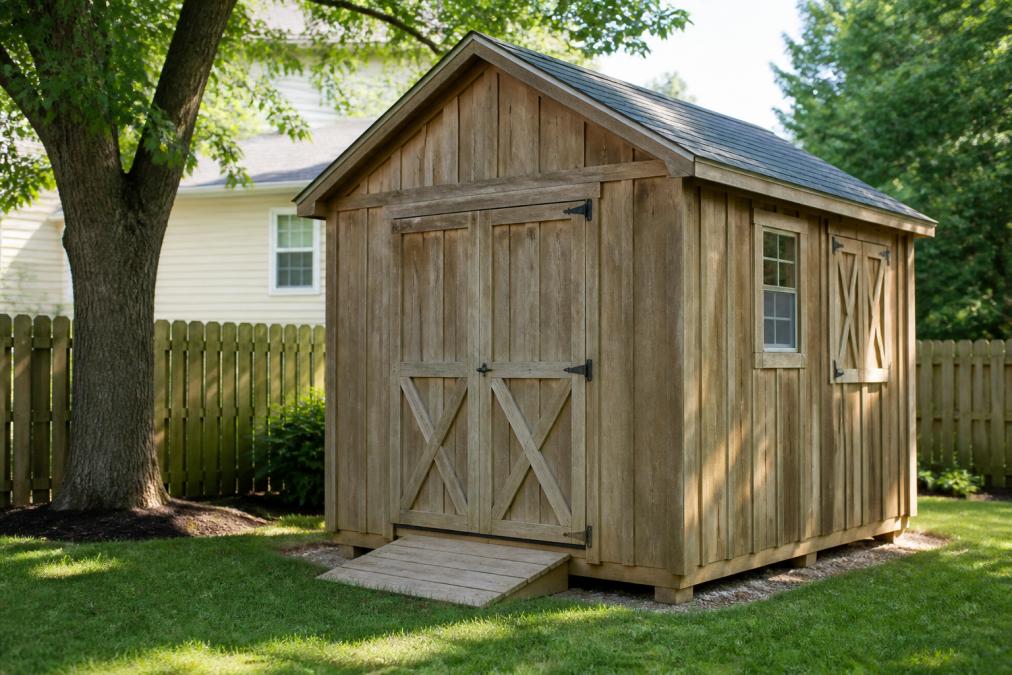
An Amish-built shed, maintained properly, will last 30 years or longer. Proper maintenance means annual staining or painting, clearing gutters, and addressing any minor issues quickly. Many homeowners report their Amish structures still look solid after two decades. The frame doesn’t rot, the roof doesn’t leak, and the doors still close smoothly.
A big box wood shed typically lasts 10-15 years with regular maintenance, and sometimes less if you skip the staining. The pre-cut lumber isn’t pressure-treated as thoroughly, the joints aren’t as strong, and the overall construction is lighter. After a decade, you’re often looking at replacing boards, re-roofing, or deciding the whole thing isn’t worth saving anymore.
Metal sheds from big box retailers last 15-20 years if you keep them sealed and prevent rust. The upside is minimal maintenance. The downside is condensation buildup inside and a less attractive appearance in most residential settings. Resin sheds typically last 10-15 years but can become brittle in extreme temperatures and aren’t as structurally sound for heavy storage.
Here’s the practical implication: if you’re buying a shed with the expectation of keeping it for 20+ years, an Amish-built structure is the rational choice despite the higher initial cost. If you need temporary storage for 5-7 years and don’t mind replacing it, a big box option makes financial sense.
Shed Foundation Requirements in Pennsylvania
Before you order any shed, you need to understand Pennsylvania’s foundation requirements. This varies slightly by township and county, but the principle is consistent: your shed needs a stable, level foundation that prevents moisture from wicking up into the structure.
Most sheds in Pennsylvania require either a concrete pad, gravel base, or pressure-treated skids. A concrete pad is the most permanent and expensive option, typically 4 inches of concrete poured over a compacted gravel base. A gravel base with landscape fabric is cheaper but requires periodic maintenance to stay level. Pressure-treated skids (essentially heavy timbers) sit directly on the ground and cost less than concrete but may need replacement after 10-15 years.
Amish builders typically include pressure-treated floor joists and runners in their structures, which means they can work with a gravel base or skids. Big box sheds often come with floor kits that assume a level, prepared surface. If your yard slopes or is uneven, you may need site preparation work. Riehl Structures handles site preparation and installation as part of our service, which means no surprises when the shed arrives.
Check with your local township before ordering. Some areas require permits for structures over a certain size (usually 200 square feet) (planning.org). Others have setback requirements, how far the shed must be from property lines. A few townships have restrictions on materials or appearance. Getting this right before you buy saves expensive corrections later.
Financing Options for Outdoor Structures
For many homeowners, the upfront cost of a quality shed is a barrier. This is where financing becomes practical. Riehl Structures offers flexible financing options including rent-to-own arrangements, with no prepayment penalties and no home equity required. This means you’re not locked into a traditional loan or forced to tap your home’s equity to pay for a backyard structure.
Big box retailers typically offer financing through third-party lenders, which often comes with higher interest rates and strict repayment terms. Some offer zero-interest promotions for 12-24 months, but you’re responsible for paying the full balance before the promotional period ends or facing back interest.
The financing question matters because it changes the total cost calculation. A big box shed might cost less upfront, but if you’re financing it, the interest adds up. An Amish-built shed costs more initially but, with flexible financing terms, might actually be more affordable monthly while you’re getting a structure that lasts three times longer.
Which Type Is Right for You?
The decision comes down to four factors: how long you plan to keep the shed, how much customization you need, your available budget, and how much maintenance you’re willing to do.
Choose an Amish-built shed if:
- You’re planning to keep the structure for 15+ years
- Your yard has specific challenges (slope, uneven ground, tight spaces)
- You want the shed to match your home’s aesthetic
- You value craftsmanship and traditional building methods
- You prefer flexible financing without home equity requirements
Choose a big box shed if:
- You need temporary storage for 5-10 years
- You want the lowest possible upfront cost
- Your yard is level and ready to go
- You’re comfortable with standard sizes and styles
- You don’t mind regular maintenance or replacement
Choose a metal shed if:
- Low maintenance is your priority
- You’re storing tools and equipment rather than wood or organic materials
- You’re budget-conscious and willing to accept a utilitarian appearance
Choose a resin shed if:
- You want virtually no maintenance
- You have a small storage need
- You’re willing to accept plastic materials and moderate durability
The honest assessment: if you’re asking the question "which shed should I buy," you’re probably thinking long-term. Most people don’t spend time researching shed options if they just need something for a year or two. If you’re doing this research, you’re likely planning to keep it around for a while. That calculation favors an Amish-built structure.
Choosing between an Amish-built shed and a big box alternative is really about choosing between short-term savings and long-term value. Riehl Structures has helped homeowners across the West Chester area and beyond make this decision. We offer fully customized Amish-built sheds with professional installation, flexible financing, and free delivery within 30 miles. Our structures are built to last decades, backed by 30+ years of family-owned experience, and designed specifically for your property and needs. Get a quote now and see how a custom Amish shed compares to what you’d find at a big box retailer.
Frequently Asked Questions
Q: Are Amish-built sheds worth the extra cost compared to big box stores?
A: Amish sheds typically cost more upfront, but they're built to last 30+ years, whereas big box sheds often need replacement within 10-15 years. The difference comes down to materials, Amish builders use pressure-treated lumber, solid joinery, and quality roofing that withstands Pennsylvania weather. When you factor in replacement costs, maintenance, and the value of a structure that doesn't deteriorate, many homeowners find the initial investment pays for itself over time.
Q: What makes custom Amish sheds in West Chester, PA different from standard big box options?
A: Custom Amish sheds are built to your exact specifications, roof pitch, siding material, door placement, window size, and interior layout. Big box sheds come in fixed sizes and styles. Amish builders also provide free delivery within 30 miles and handle site preparation, meaning your shed is delivered ready to use. You're also buying from a family-owned business with 30+ years of local experience, not a mass-produced kit assembled in a factory.
Q: How long do Amish-built sheds typically last compared to mass-produced ones?
A: Amish-built wooden sheds with proper maintenance typically last 30+ years. Big box wood sheds usually last 10-15 years before rot, warping, or structural issues appear. Metal sheds from big box stores can last 15-20 years but may develop rust or condensation problems. Resin sheds are the shortest-lived, typically 8-12 years. The difference is materials, Amish builders use premium lumber and proven construction methods rather than pre-cut kits designed for quick assembly and profit.
Q: What are shed foundation requirements in Pennsylvania, and does that affect my choice?
A: Pennsylvania doesn't have a statewide shed foundation rule, requirements vary by township. Most areas require a concrete pad, gravel base, or pressure-treated skids to prevent ground contact and rot. Some townships require permits for structures over a certain size. Riehl Structures handles site preparation and installation as part of our service. Big box sheds typically don't include this support, leaving you to research local rules and prepare the site yourself, which can add cost and complexity.
Q: What financing options are available for outdoor structures?
A: Riehl Structures offers flexible financing with rent-to-own options, no prepayment penalties, and no home equity requirement, making it accessible even if you don't want to take out a loan. Big box stores offer standard credit card or store financing, which often includes interest charges. Rent-to-own lets you pay over time and own the structure outright, while traditional financing means you're paying interest from day one. Ask about current terms when you get a quote.
This article was written using GrandRanker

Copy Link