Affordable Ways to Add Privacy to a Backyard Pergola
Copy Link
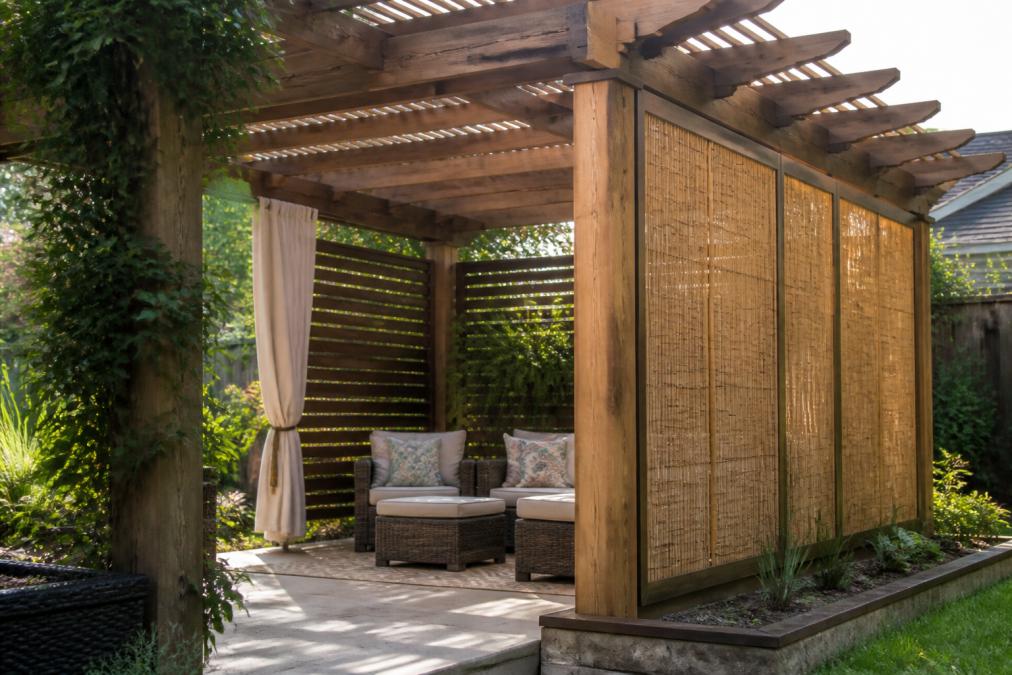
Table of Contents
- Why Pergola Privacy Matters
- DIY Pergola Privacy Screen Ideas That Won’t Break the Budget
- How to Install Pergola Privacy Panels Step by Step
- Best Outdoor Fabrics for Pergola Curtains and Shade
- Plant-Based Privacy Solutions for Your Pergola
- Cost Comparison and What Works Best
- Common Mistakes to Avoid When Adding Pergola Privacy
- Conclusion
Last Updated: August 24, 2026
Why Pergola Privacy Matters
A pergola creates an open-air retreat, but without privacy, you’re exposed to neighbors, street noise, and passing traffic. Privacy transforms your pergola from a semi-public space into a genuine outdoor room. The good news: affordable ways to add privacy to a backyard pergola range from DIY installations to plant-based solutions, and many cost under a few hundred dollars and can be installed in a weekend or two. At Riehl Structures, we understand that homeowners in West Chester and the surrounding Pennsylvania region want outdoor spaces that feel both beautiful and functional without breaking the bank.
DIY Pergola Privacy Screen Ideas That Won’t Break the Budget
Several affordable ways to add privacy to a backyard pergola work well for different situations. The key is matching the solution to your space, climate, and maintenance tolerance.
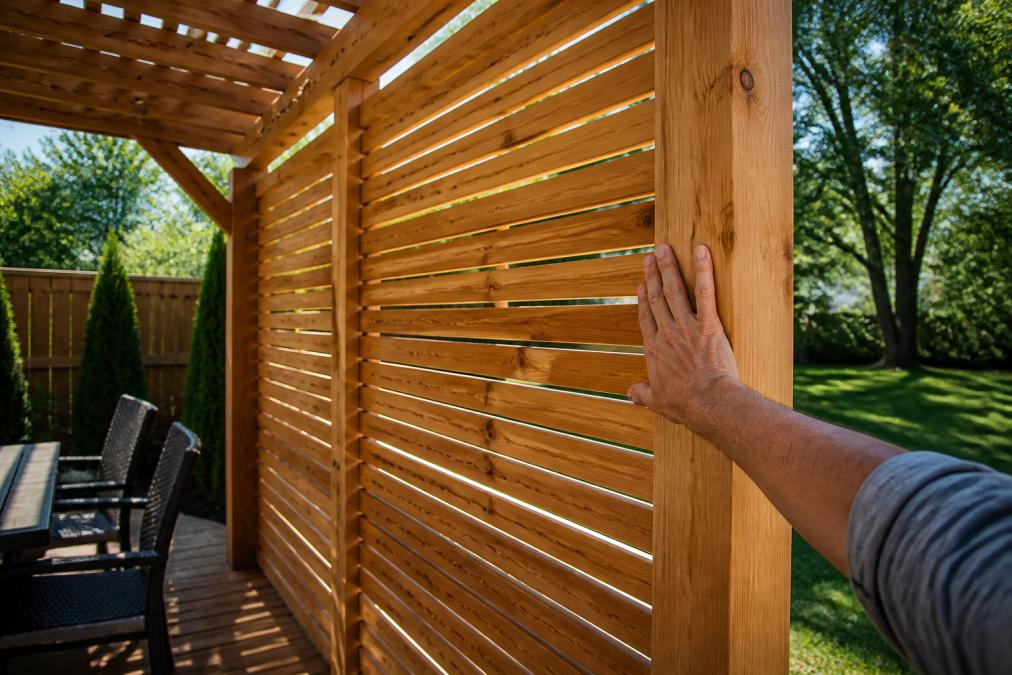
Wooden Slat Screens
Wooden slat screens offer a clean, modern look while remaining budget-friendly. Cedar or pressure-treated lumber creates natural privacy barriers that blend with most outdoor settings. Attach 2×4 or 2×6 lumber horizontally or vertically to the pergola frame using lag bolts and brackets, spacing slats 2-4 inches apart for partial privacy that still allows airflow and filtered light (fpl.fs.usda.gov). Most homeowners can source materials and complete installation in a day. Wood requires annual staining or sealing to prevent rot, especially in humid climates.
Lattice Panels and Climbing Vines
Lattice provides affordable ways to add privacy to a backyard pergola while supporting living plants. Prefabricated lattice panels cost significantly less than solid screens and install quickly using brackets and fasteners. Pairing lattice with fast-growing climbing vines like clematis, climbing hydrangea, or hops creates a living privacy solution that improves over time, filling lattice within one to two growing seasons (peer-reviewed research). Installation requires mounting lattice panels securely to the pergola frame using corrosion-resistant fasteners and adequate bracing to handle wind loads and the weight of mature vines.
Bamboo Screening
Bamboo screening provides a tropical aesthetic while remaining one of the most affordable ways to add privacy to a backyard pergola. Rolled bamboo fencing or woven bamboo panels attach directly to pergola frames and create solid visual barriers. Bamboo is lightweight, weather-resistant, and typically costs less than wood or composite materials. Most bamboo screening lasts 5-7 years before requiring replacement (fpl.fs.usda.gov). Installation is simple: roll out panels, position them against the pergola structure, and secure with zip ties, screws, or brackets.
Repurposed Materials
Creative reuse keeps costs minimal while adding character. Reclaimed wood pallets, old barn doors, or salvaged fencing materials create unique privacy screens. Many communities have sources for free or cheap reclaimed materials through salvage yards or online marketplaces. Ensure any repurposed material can safely support itself and withstand weather exposure by reinforcing weak joints and treating materials as needed before mounting to your pergola.
How to Install Pergola Privacy Panels Step by Step
Installing privacy panels requires planning, the right tools, and careful execution. A systematic approach ensures your privacy solution is secure, level, and built to last.
Measure and Plan Your Layout
Start by measuring your pergola frame dimensions carefully, noting spacing between posts and beam locations. Sketch a simple layout showing where panels will attach and how they’ll cover sightlines from neighboring properties and street views. Determine coverage goals and consider sun exposure and wind patterns. Account for expansion and contraction by leaving small gaps between panels and allowing room for seasonal movement.
Gather Your Tools and Materials
Essential tools include a drill-driver, saw, level, measuring tape, and safety equipment. Calculate linear feet of screening needed, then add 10-15% for waste. Use corrosion-resistant screws, bolts, and brackets rated for outdoor environments, as cheap fasteners fail quickly when exposed to weather.
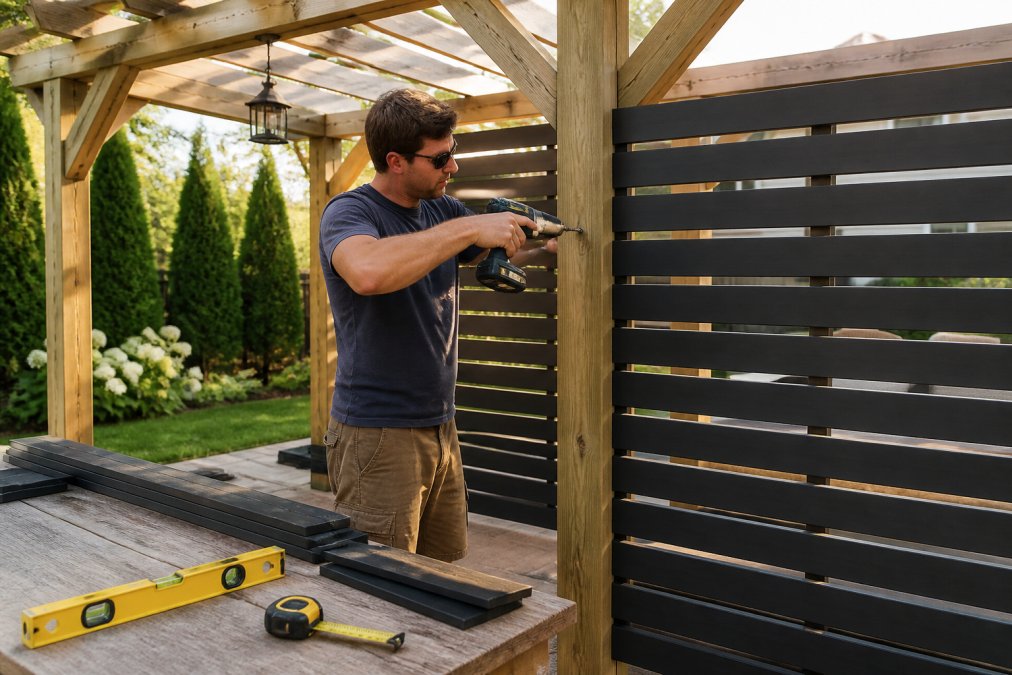
Attach Panels to Your Pergola Frame
Position your first panel and use a level to ensure it’s plumb. Mark mounting locations with a pencil before drilling and predrill holes to prevent splitting. Secure panels using lag bolts for heavy materials or heavy-duty screws for lighter panels, spacing fasteners every 12-16 inches for adequate support. Check level frequently as you work and maintain consistent spacing and alignment across multiple panels.
Secure and Weatherproof
Inspect all fasteners and tighten any that have loosened during installation. Apply weatherproofing appropriate to your material: wood screens benefit from annual stain or sealant, bamboo may be sealed to extend lifespan, and metal materials should be checked for rust. Ensure drainage around the base of panels by leaving small gaps at the bottom or installing slight slopes to direct water away from the structure.
Best Outdoor Fabrics for Pergola Curtains and Shade
Fabric solutions offer flexibility and can be adjusted seasonally. Outdoor fabrics designed for weather exposure provide better durability than standard indoor textiles.
Solution-Dyed Acrylic
Solution-dyed acrylic fabrics maintain color longer because the dye is incorporated into the fiber itself. These fabrics resist fading from UV exposure, are water-repellent, and dry quickly. Solution-dyled acrylic works well for pergola curtains, shade panels, and temporary privacy screens. The material is lightweight, easy to install with grommets and hooks, and can be removed for cleaning or storage.
Polyester Outdoor Fabric
Polyester outdoor fabric offers excellent value and comes in numerous colors and patterns. Modern outdoor polyester resists mildew and fading better than older formulations. The material is lightweight, affordable, and easy to work with for DIY installation. Polyester doesn’t repel water as effectively as solution-dyed acrylic, so it may retain moisture longer after rain in humid climates.
Sunbrella and Premium Outdoor Blends
Premium brands like Sunbrella use advanced fabric technology to resist fading, mildew, and water damage. These fabrics cost significantly more but maintain appearance and performance longer, often looking good for five years or more. Premium fabrics also resist staining better than standard outdoor textiles and are easier to clean and maintain.
Plant-Based Privacy Solutions for Your Pergola
Living privacy solutions improve over time and provide environmental benefits. Plants create natural beauty while screening views and reducing noise.
Fast-Growing Climbing Vines
Clematis, climbing hydrangea, hops, and trumpet vine grow rapidly and fill structures within one to two seasons. These plants prefer full sun to partial shade and require regular watering during establishment. Once mature, most climbing vines need minimal care beyond annual pruning. The advantage of plant-based privacy is continuous improvement as vines mature and coverage increases. Pairing vines with lattice or other structural screens provides immediate privacy while plants establish.
Potted Plants and Planters
Large potted plants positioned strategically around your pergola create privacy while remaining flexible. Tall ornamental grasses, bamboo in containers, and large shrubs work well for this purpose. Potted solutions require regular watering and maintenance but offer flexibility that in-ground plantings don’t, allowing you to experiment with different combinations before committing to permanent installations.
Cost Comparison and What Works Best
Different privacy solutions serve different needs and budgets. Wooden slat screens and bamboo screening provide affordable solid coverage. Lattice with vines offers lower upfront cost with increasing visual appeal over time. Fabric solutions offer flexibility and seasonal adjustability. Plant-based solutions have minimal upfront cost but require patience for maturity.
The best choice depends on your priorities and maintenance tolerance. For immediate solid privacy on a budget, wooden slats or bamboo screening work well. For flexible, adjustable coverage, outdoor fabrics shine. For long-term solutions that improve over time, climbing vines combined with structural screens offer the best balance. Match the solution to your willingness to maintain it over time.
Common Mistakes to Avoid When Adding Pergola Privacy
Undersizing fasteners is a frequent error that allows panels to shift or fail under wind loads. Ignoring water management causes rot and structural failure. Skipping weatherproofing reduces lifespan significantly. Overcomplicating installations leads to cost overruns and frustration. Failing to account for seasonal changes causes panels to crack or warp. Not considering wind loads is dangerous, as solid screens catch wind like sails and can fail catastrophically in storms.
Before purchasing materials, test your chosen privacy solution in a small section of your pergola. This reveals installation challenges, shows how the solution looks in your specific light, and confirms that it meets your coverage goals before committing to a full installation.
Privacy doesn’t require professional installation or premium pricing. The affordable ways to add privacy to a backyard pergola range from simple wooden screens to living vine solutions, each offering different benefits. At Riehl Structures, we’ve helped homeowners throughout West Chester and Pennsylvania create outdoor spaces that feel both private and beautiful. Whether you’re installing screens yourself or considering a custom pergola designed with privacy in mind, start with a clear plan, quality materials, and realistic expectations about maintenance. Get a quote now to explore how a professionally built pergola can serve as the foundation for your privacy solution.
Frequently Asked Questions
What is the cheapest way to add privacy to a pergola?
Climbing vines and repurposed materials offer the lowest upfront costs. Plant fast-growing varieties like clematis or ivy near your pergola, they cost just a few dollars per plant and create natural privacy within a season or two. Alternatively, reclaimed wood, old fence panels, or pallets can be attached to your pergola frame for minimal expense. These DIY approaches require time and effort but keep material costs low for most pergolas.
Can I add curtains to an existing pergola?
Yes, outdoor curtains work well on existing pergolas. Use solution-dyed acrylic or polyester outdoor fabrics, which resist fading and moisture. Install a curtain rod or cable system along the pergola's top beams or side posts, then hang panels from hooks or clips. This method is reversible, affordable, and allows you to adjust privacy and shade seasonally. Ensure your pergola's frame is sturdy enough to support the weight of wet fabric.
How do I choose the right privacy material for my climate?
Consider moisture, temperature swings, and UV exposure in your region. Solution-dyed acrylic and Sunbrella fabrics withstand harsh sun and humidity. For plant-based privacy, choose cold-hardy vines like clematis or ivy if your winters are cold. Wooden screens need regular sealing to resist moisture and rot, especially in humid seasons. Bamboo screening performs well but may require annual maintenance to stay attractive and prevent mildew in damp conditions.
Do I need a permit to add privacy screens to my pergola?
Permit requirements vary by township and county. Most residential privacy additions don't require permits, but some jurisdictions have rules about fence height, setback distances, or structural modifications. Contact your local building department or township office to confirm before installing. If your pergola is a custom structure from a builder like Riehl Structures, ask whether they offer guidance on permits as part of their service.
This article was written using GrandRanker

Copy Link