Are Amish-Built Playsets Safer? What Parents Need to Know
Copy Link
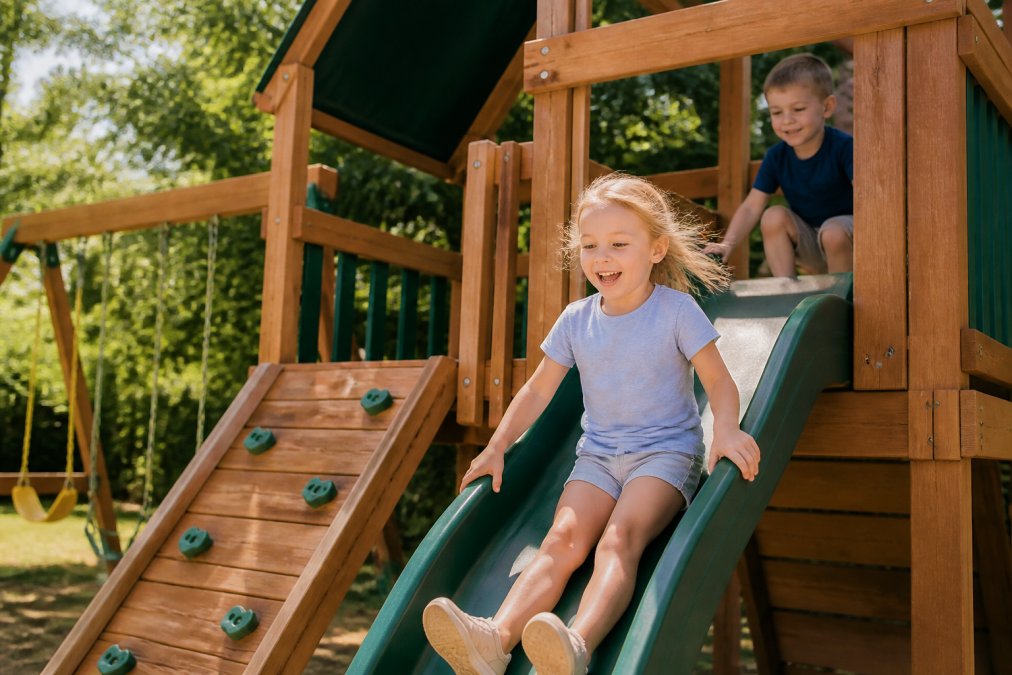
Table of Contents
- What Makes Amish-Built Playsets Different
- ASTM Safety Standards for Residential Playsets
- Materials and Construction Quality
- Amish-Built Vinyl Swing Sets vs. Wooden Alternatives
- Common Safety Concerns and How Amish Builders Address Them
- Amish Playset Maintenance Tips for Long-Term Safety
- Is the Higher Price Worth It?
- Conclusion
Last Updated: August 21, 2026
What Makes Amish-Built Playsets Different
Are Amish-built playsets safer than mass-produced alternatives? The short answer is yes, but the real story is more nuanced. Amish-built playsets stand apart because they’re constructed one at a time by craftspeople who treat each project as a permanent fixture in someone’s backyard, not a disposable commodity.
The fundamental difference lies in materials and methodology. Amish builders use thick cedar beams (typically 4×4 and 4×6 construction) and stainless steel hardware throughout, choosing components designed to withstand decades of use. Mass-produced playsets often cut corners with thinner lumber, galvanized fasteners that corrode, and composite materials that degrade under UV exposure. When a builder knows a family will own their creation for 15+ years, the incentive to use durable materials aligns perfectly with safety.
Customization is another critical distinction. Rather than forcing your backyard into a one-size-fits-all design, Amish builders in the West Chester area work with families to account for soil conditions, sun exposure, and specific safety needs. A playset built for your yard’s actual slope and drainage patterns is inherently safer than one installed on uneven ground with drainage problems.
Amish playsets are built to order, not warehoused. This means no weather damage during storage, no rust from prolonged outdoor exposure before installation, and no quality degradation from inventory turnover. You’re getting a freshly constructed structure delivered and installed within weeks.
The craftsmanship model creates accountability. When your neighbor can see who built your playset, quality becomes personal. Amish builders rely on reputation within their communities and among customers. A defective structure isn’t just a customer service problem, it’s a reflection on their name and livelihood.
ASTM Safety Standards for Residential Playsets
Understanding ASTM safety standards for residential playsets is essential for evaluating any structure you’re considering for your children. ASTM F1487 is the standard that governs public playground equipment, not residential playsets, and it establishes requirements for fall surfacing, spacing between components, entrapment hazards, and hardware specifications. ASTM F1148 is the standard for home playground equipment.
The standard requires that playsets have appropriate fall zones with impact-attenuating surfaces (mulch, engineered wood fiber, rubber mats) beneath all elevated components (cpsc.gov). It specifies exact clearances to prevent head entrapment, openings must be either smaller than 3.5 inches or larger than 9 inches to avoid catching a child’s head. ASTM F1487 also mandates that hardware be corrosion-resistant and that all moving parts have guards to prevent pinching.
Amish builders who prioritize safety typically exceed these minimum standards rather than merely meeting them. They add redundant hardware, use oversized fasteners, and install additional railings beyond code requirements. This conservative approach reflects their philosophy that a playset should outlast the children who use it and still be safe for grandchildren.
Many mass-produced playsets meet ASTM standards on paper but fail in real-world conditions. Rust develops at connection points, fasteners loosen under seasonal expansion and contraction, and fall surfacing compacts or washes away. ASTM compliance is a baseline, not a guarantee of long-term safety.
When comparing playsets, ask whether the builder tests their structures against ASTM F1487 or simply claims compliance. Builders offering ASTM safety certification documentation show transparency about their testing and quality assurance processes. This documentation is a strong indicator that safety isn’t an afterthought.
Materials and Construction Quality
The materials used in playset construction determine both safety and longevity. Cedar is the gold standard for Amish-built playsets because it naturally resists rot and insect damage without requiring chemical treatments. Unlike pressure-treated lumber, which contains preservatives that can leach into soil, untreated cedar is inherently durable and safe for areas where children play barefoot or dig in sand.
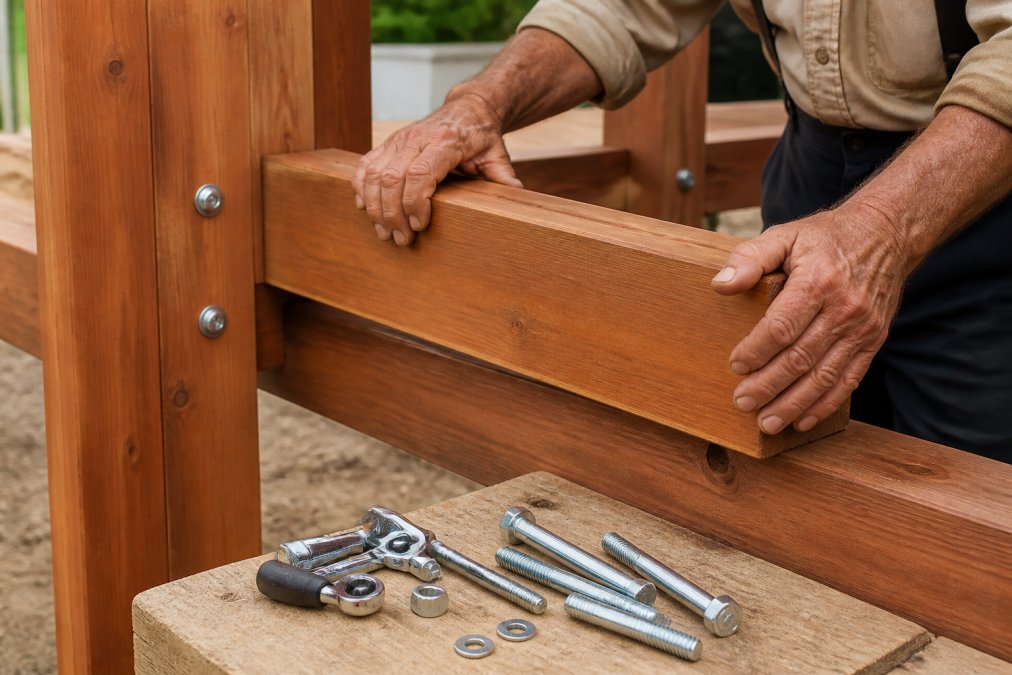
Stainless steel hardware is non-negotiable for safety. Galvanized fasteners corrode over time, especially in humid climates, creating rust that weakens connections and creates sharp edges. Stainless steel costs more upfront but eliminates this failure mode entirely. Amish builders in Pennsylvania understand that seasonal moisture and freeze-thaw cycles will test every connection point, they choose materials accordingly.
Vinyl-encased playsets represent an alternative approach. Vinyl playsets use a wood core wrapped in non-fading vinyl sheaths that eliminate splinters and reduce maintenance. The vinyl is a protective coating, not structural material. The best vinyl playsets use the same thick cedar beams as all-wood structures, just with added surface protection.
Decking materials matter significantly for safety. Amish builders use solid wood or poly lumber (engineered plastic lumber) rather than thin plywood that splinters and deteriorates. Poly lumber resists cracking, doesn’t splinter, and provides consistent traction even when wet. The difference becomes obvious the first time a child runs across wet decking, solid construction prevents slipping.
Hardware redundancy is a hallmark of quality Amish construction. Rather than a single bolt holding a swing beam, quality builders use multiple connection points. Rather than relying on one fastener to secure a railing, they use overlapping lag bolts with lock washers. This redundancy means that even if one fastener loosens, the structure remains safe.
Amish-Built Vinyl Swing Sets vs. Wooden Alternatives
Choosing between vinyl and wood Amish-built playsets requires understanding the trade-offs. Vinyl playsets eliminate splinters entirely, require less maintenance, and resist weather damage more effectively than bare wood. Wooden playsets offer a more natural aesthetic, often cost less, and provide the tactile experience of real wood that many families prefer.
Vinyl-encased structures use a wood frame (typically cedar) with a vinyl sheath applied over the top. This approach combines the durability of wood with the low-maintenance benefits of vinyl. The vinyl prevents UV damage to the wood underneath, eliminates splinter hazards, and reduces the need for annual staining or sealing. For families in the West Chester area who want a playset that looks good for decades without seasonal maintenance, vinyl is compelling.
Wooden playsets require more hands-on care but reward that effort with a structure that ages gracefully. Cedar naturally weathers to a silver-gray color that many find attractive. If you prefer to maintain the honey-colored finish, annual staining keeps the wood protected. This isn’t onerous, most owners find it a manageable spring ritual.
The safety distinction between vinyl and wood is minimal when both are built to high standards. Vinyl playsets eliminate one hazard class (splinters) but introduce different considerations (vinyl durability, UV resistance). A poorly constructed wooden playset is more dangerous than a well-built vinyl one, and vice versa. The builder’s quality matters more than the material choice.
Cost differences exist but aren’t dramatic for Amish-built structures. Vinyl playsets typically cost slightly more due to the additional material and labor involved in wrapping. However, reduced maintenance costs over 10-15 years can offset the initial premium. For families planning to keep the playset through multiple children’s childhood, vinyl often proves more economical.
Vinyl is ideal if you want minimal maintenance and splinter-free surfaces. Wood is better if you prefer natural materials, are willing to maintain finishes, or want the most cost-effective entry point. Both are safe when built by quality craftspeople using proper materials and construction methods.
Common Safety Concerns and How Amish Builders Address Them
Parents worry about specific hazards when evaluating playsets. Head entrapment, fall injuries, sharp edges, rust, and structural failure represent the main categories of concern. Quality Amish builders have systematic approaches to eliminating each.
Head entrapment occurs when a child’s head becomes caught in gaps or openings. ASTM standards address this, but quality builders go further. They verify spacing during construction, add protective caps to prevent access to dangerous openings, and design railings with vertical balusters rather than horizontal rails that could catch limbs. Testing each component before assembly ensures no surprises after installation.
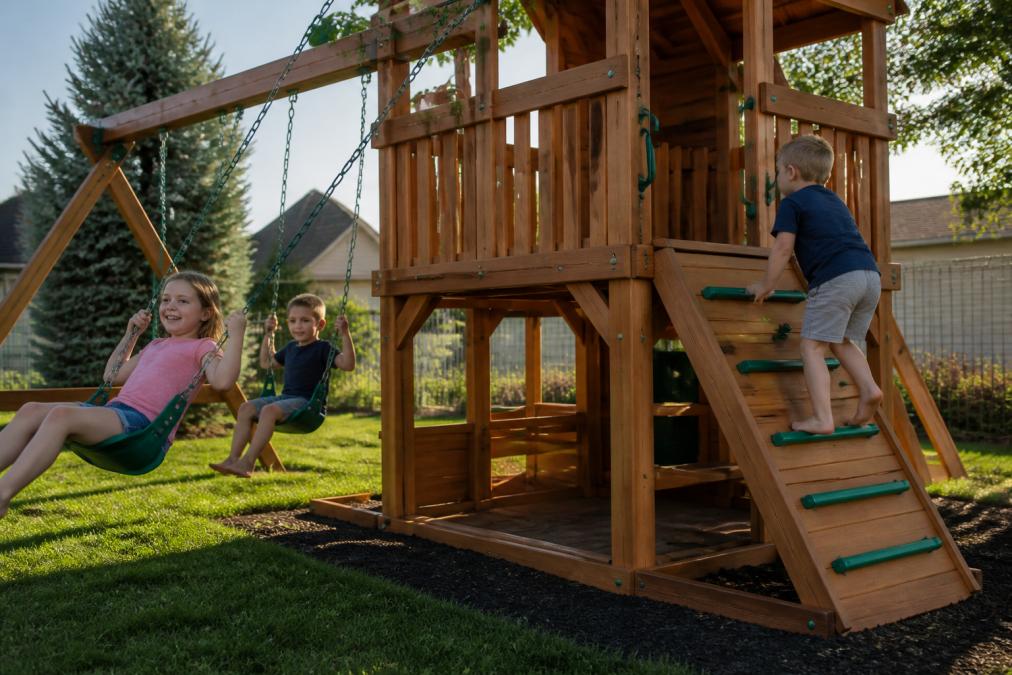
Fall injuries are the most common playset accident. The solution involves proper fall surfacing and height-appropriate design. Amish builders calculate fall zones based on equipment height and ensure adequate impact-attenuating material (engineered wood fiber, rubber mulch, or safety mats) covers the entire zone. They also avoid creating hidden drop-offs or uneven surfaces that could cause twisted ankles.
Sharp edges and splinters are addressed through material selection and finishing. Cedar has fewer splinters than pressure-treated lumber, but quality builders sand all surfaces smooth and seal exposed edges. Vinyl-wrapped playsets eliminate this hazard entirely. All fasteners are countersunk or capped to prevent catching clothing or skin.
Rust develops when ferrous metals are exposed to moisture without protection. Stainless steel hardware eliminates this problem. For bolts and fasteners that must be steel, quality builders use hot-dipped galvanizing or apply protective coatings. They also design drainage so water doesn’t pool at connection points.
Structural failure typically results from inadequate materials, poor connections, or deferred maintenance. Amish builders use oversized lumber and multiple connection points so that the structure remains safe even if maintenance is neglected. The conservative design approach means a 20-year-old playset is still structurally sound.
Amish Playset Maintenance Tips for Long-Term Safety
A playset’s safety depends on ongoing maintenance, not just initial construction. Even the best-built structure can develop hazards if neglected. Amish builders understand this and design their playsets to be maintainable by homeowners.
Inspect hardware annually, particularly bolts connecting major components. Seasonal expansion and contraction can loosen fasteners. Use a wrench to verify that all bolts are tight, checking swing hangers, railings, and ladder attachments with extra care. This 30-minute inspection prevents most structural problems before they develop.
Check for splinters and rough surfaces by running your hand along all wood surfaces where children make contact. Cedar is naturally splinter-resistant, but weathering can raise the grain. Light sanding of problem areas and resealing the wood restores safety. Vinyl-wrapped playsets require less attention but should still be inspected for damage to the vinyl coating.
Examine fall surfacing regularly. Engineered wood fiber and rubber mulch compact over time and wash away during heavy rain (cpsc.gov). Rake and redistribute material to maintain proper depth (typically 9-12 inches, depending on equipment height). Replace material when it becomes depleted. This is the single most important maintenance task for preventing fall injuries.
Look for signs of rust or corrosion, particularly where different metals meet or where fasteners pass through wood. Even stainless steel can develop surface corrosion if exposed to road salt or other harsh conditions. Clean affected areas with a wire brush and apply a protective coating if needed.
Test swing chains and hangers by applying firm downward pressure. Chains should not move or flex excessively. If movement is detected, have the attachment inspected by the builder or a qualified contractor. Swing-related injuries often result from failed hangers or chains.
Remove debris regularly. Leaves and dirt accumulate in corners and under railings, trapping moisture and accelerating rot. A quick sweep or blow-off weekly prevents this accumulation. Check gutters and drainage areas to ensure water flows away from the structure rather than pooling underneath.
Is the Higher Price Worth It?
Amish-built playsets cost more than mass-produced alternatives. Whether that premium is justified depends on your priorities and timeline. For families planning to use the playset for 10+ years and potentially pass it to younger siblings or neighbors, the higher initial cost often proves economical over the structure’s lifetime.
Quality Amish construction typically costs more because of material choices, craftsmanship, and customization. Thick cedar beams, stainless steel hardware, and careful assembly require more labor and material investment than stamped-out components and automated assembly. That investment translates to a structure that resists weathering, maintains structural integrity, and requires less maintenance.
Longevity is the key metric. A mass-produced playset might cost 40-50% less but require replacement after 8-10 years. An Amish-built structure costs more upfront but remains safe and functional for 15-20+ years. When you divide the total cost by years of use, the premium narrows considerably.
Customization adds value for many families. Rather than forcing your yard to fit a standard playset design, Amish builders accommodate your specific needs. A sloped yard, specific equipment preferences, or unusual dimensions, these customizations ensure the playset integrates seamlessly with your property. Mass-produced options force compromise.
Resale value is another consideration. Amish-built structures have strong resale appeal in communities where they’re available. If you eventually move or no longer need the playset, you can often recover a significant portion of your investment. Mass-produced playsets depreciate more steeply.
Local builders like Riehl Structures offer financing options that make the higher price more accessible. Flexible payment plans spread the cost over time without prepayment penalties, making quality construction achievable even for families on moderate budgets.
The real question isn’t whether Amish-built playsets are expensive, it’s whether they’re worth the investment for your family’s specific situation. For families prioritizing durability, safety, and minimal maintenance, the answer is typically yes.
Are Amish-built playsets safer? The evidence points clearly to yes, particularly when you’re comparing quality Amish construction to mass-produced alternatives. The combination of superior materials, careful craftsmanship, and conservative design creates structures that outlast cheaper options and maintain safety throughout their lifespan.
Riehl Structures brings 30+ years of family-owned experience to custom playset design and installation in the West Chester area. Our Amish-built playsets use thick cedar beams, stainless steel hardware, and customized designs that account for your specific backyard conditions. We handle everything from site preparation through installation, so you get a playset that’s safe, beautiful, and ready to create memories. Get a quote now and discover why families in Pennsylvania choose quality over shortcuts.
=== FAQ ANSWERS (audit these too, same rules) ===
[1] Q: What makes Amish-built playsets more durable than mass-produced sets?
A: Amish-built playsets are constructed individually by skilled craftsmen using premium materials like thick cedar beams (4×4 and 4×6 construction) and stainless steel hardware. This hand-crafted approach allows builders to inspect each piece and ensure proper assembly, whereas mass-produced playsets prioritize speed and cost reduction. The result is stronger joints, better wood selection, and hardware that resists corrosion, extending the playset’s lifespan significantly.
[2] Q: Do Amish-built playsets meet ASTM safety standards?
A: Many Amish-built playsets are designed to meet or exceed ASTM safety standards for residential playsets. These standards cover critical areas like fall surfaces, spacing between components to prevent entrapment, weight limits, and hardware durability. When selecting an Amish-built playset, confirm that the builder designs to these standards. Reputable Amish craftsmen prioritize child safety as part of their quality commitment, incorporating features like safety rails, ground anchors, and proper spacing throughout the structure.
[3] Q: Are vinyl Amish playsets safer than wooden ones?
A: Vinyl Amish-built swing sets offer distinct safety advantages over all-wood alternatives. Vinyl eliminates splinters entirely, provides better weather resistance, and requires less frequent maintenance. However, both vinyl and wooden Amish playsets can be safe when properly designed and maintained. The key difference is maintenance burden: vinyl playsets need less upkeep to remain safe, while wooden playsets require regular inspections and treatment to prevent rot and splinter formation. Your choice depends on your willingness to maintain the structure over time.
[4] Q: What maintenance is required for Amish-built outdoor structures?
A: Wooden Amish playsets benefit from annual inspections for loose bolts, cracks, or weathering, plus periodic sealing to protect against moisture. Vinyl-clad playsets require less maintenance, mainly checking hardware, cleaning surfaces, and inspecting for damage after storms. Swing chains and hardware should be checked regularly regardless of material type. Proper maintenance extends the playset’s life and ensures ongoing safety for children. Most Amish builders provide guidance on care when you purchase, helping you keep the structure in top condition for years.
Frequently Asked Questions
Q: What makes Amish-built playsets more durable than mass-produced sets?
A: Amish-built playsets are constructed individually by skilled craftsmen using premium materials like thick cedar beams (4×4 and 4×6 construction) and stainless steel hardware. This hand-crafted approach allows builders to inspect each piece and ensure proper assembly, whereas mass-produced playsets prioritize speed and cost reduction. The result is stronger joints, better wood selection, and hardware that resists corrosion, extending the playset's lifespan significantly.
Q: Do Amish-built playsets meet ASTM safety standards?
A: Many Amish-built playsets are designed to meet or exceed ASTM safety standards for residential playsets. These standards cover critical areas like fall surfaces, spacing between components to prevent entrapment, weight limits, and hardware durability. When selecting an Amish-built playset, confirm that the builder designs to these standards. Reputable Amish craftsmen prioritize child safety as part of their quality commitment, incorporating features like safety rails, ground anchors, and proper spacing throughout the structure.
Q: Are vinyl Amish playsets safer than wooden ones?
A: Vinyl Amish-built swing sets offer distinct safety advantages over all-wood alternatives. Vinyl eliminates splinters entirely, provides better weather resistance, and requires less frequent maintenance. However, both vinyl and wooden Amish playsets can be safe when properly designed and maintained. The key difference is maintenance burden: vinyl playsets need less upkeep to remain safe, while wooden playsets require regular inspections and treatment to prevent rot and splinter formation. Your choice depends on your willingness to maintain the structure over time.
Q: What maintenance is required for Amish-built outdoor structures?
A: Wooden Amish playsets benefit from annual inspections for loose bolts, cracks, or weathering, plus periodic sealing to protect against moisture. Vinyl-clad playsets require less maintenance, mainly checking hardware, cleaning surfaces, and inspecting for damage after storms. Swing chains and hardware should be checked regularly regardless of material type. Proper maintenance extends the playset's life and ensures ongoing safety for children. Most Amish builders provide guidance on care when you purchase, helping you keep the structure in top condition for years.
This article was written using GrandRanker

Copy Link