Top 5 Backyard Storage Solutions for Pool Equipment
Copy Link
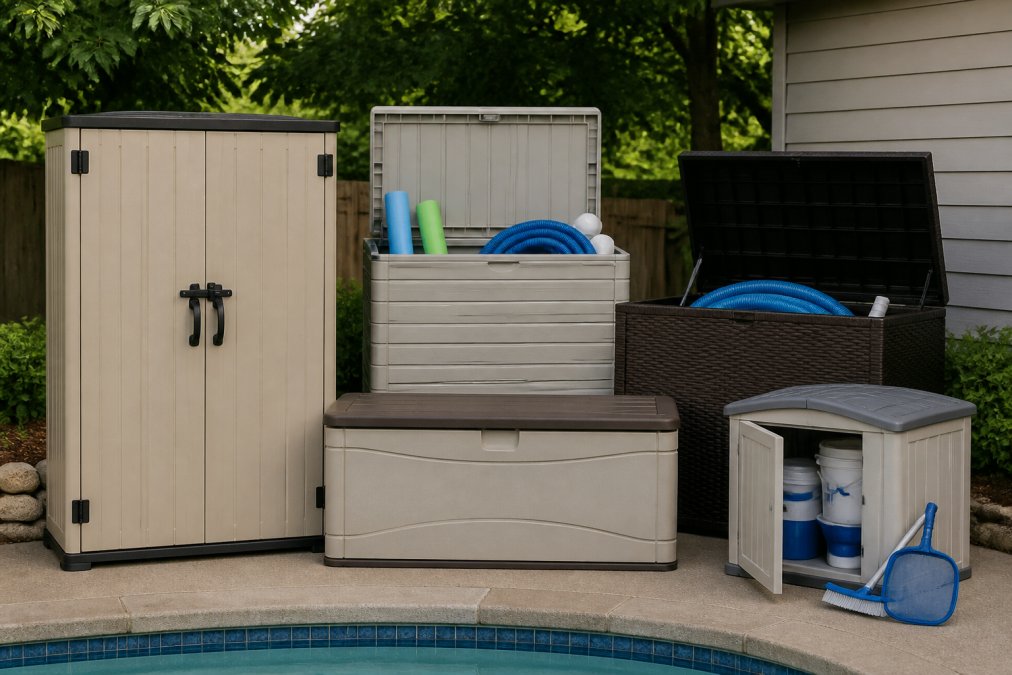
Table of Contents
- 1. Deck Boxes: Compact and Versatile Pool Equipment Storage
- 2. Pool Equipment Sheds: Dedicated Protection for Larger Collections
- 3. Outdoor Pool Toy Storage: Keeping Floats and Accessories Organized
- 4. Pool Chemical Storage Safety: Secure and Ventilated Solutions
- 5. Wall-Mounted Organizers and Vertical Storage Systems
- Choosing the Right Pool Equipment Storage Solution for Your Backyard
- Conclusion
Last Updated: August 13, 2026
1. Deck Boxes: Compact and Versatile Pool Equipment Storage
A deck box is one of the most practical top 5 backyard storage solutions for pool equipment because it combines accessibility with weather protection in a compact footprint. These units sit directly on your pool deck or patio, making them ideal for storing floats, towels, cleaning supplies, and smaller maintenance tools without requiring permanent installation or site preparation.
The appeal of deck boxes lies in their versatility. Unlike dedicated sheds, they don’t demand foundation work or significant yard space. You can reposition them seasonally, move them when entertaining guests, or upgrade to a larger model without the commitment of a built structure. For homeowners in the region looking for a low-friction entry point into organized pool storage, deck boxes deliver immediate results.
Capacity ranges dramatically. A compact round deck box like the Keter Circa holds 37 gallons and doubles as both seating and a side table, perfect for smaller yards or patios where every square foot matters. On the other end, the Keter Denali 200-gallon model stores everything from pool floats to cushions to seasonal decorations, making it suitable for families with extensive pool equipment collections.
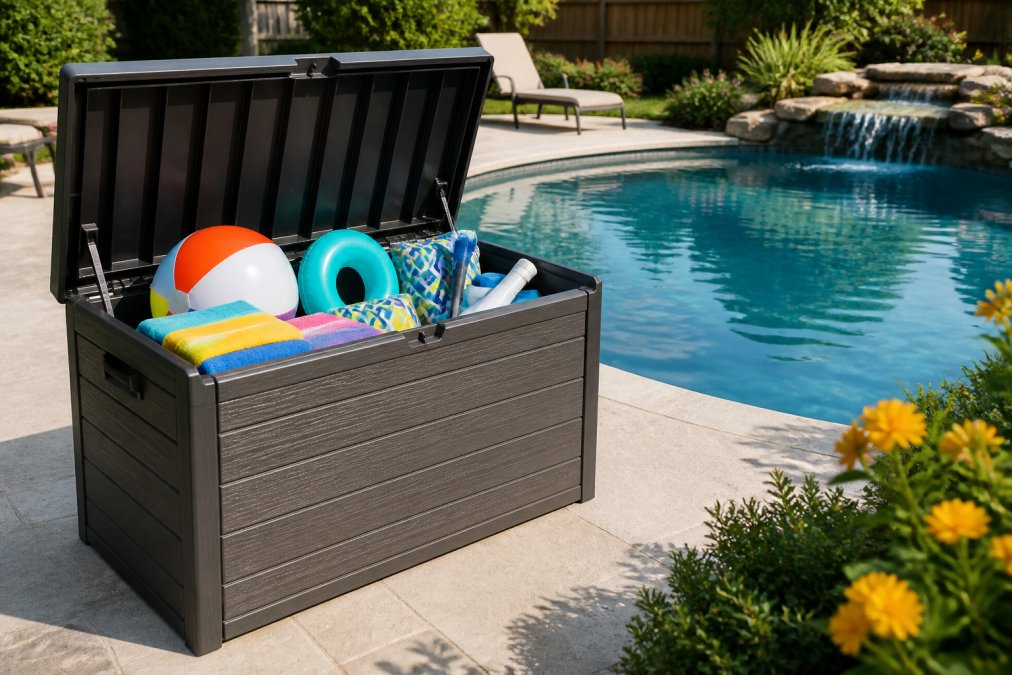
Weather resistance is built into quality deck boxes. Most use UV-protected resin or HDPE plastic that resists fading, cracking, and moisture damage across seasons. The Suncast 120-gallon Split Lid model includes multi-wall construction and UV protection, keeping contents dry and protected from the elements. Many feature lockable lids, which matters if you store pool chemicals or expensive equipment.
The tradeoff: deck boxes look like storage boxes. If your backyard aesthetic demands seamless integration, they’re visible design elements. Some models offer wood-like finishes that blend better with traditional outdoor spaces, but they still read as functional storage rather than architectural features.
For homes with uneven terrain or sloped yards, deck boxes require minimal site prep compared to sheds. Position them on level ground or use shims to stabilize, no grading or foundation work needed.
2. Pool Equipment Sheds: Dedicated Protection for Larger Collections
For serious pool equipment storage, a dedicated shed is the most comprehensive solution among top 5 backyard storage solutions for pool equipment. Unlike deck boxes, sheds provide climate-controlled space, ample room for large items like pump replacements, filter housings, and seasonal equipment, plus proper ventilation for pool chemical storage safety.
Amish-built structures like those from Riehl Structures represent the premium end of this category. These custom-designed sheds are constructed with attention to detail and material quality that translates to decades of reliable service. The craftsmanship means your storage structure becomes a permanent asset that adds value to your property rather than a consumable that degrades over time.
A well-designed pool equipment shed accomplishes multiple functions. It houses your pump and filter system, stores pool chemicals in a ventilated environment separate from living spaces, organizes maintenance tools and replacement parts, and keeps seasonal items (winter covers, extra hoses, test kits) organized and accessible. For families with above-ground pools requiring regular equipment maintenance, a shed transforms pool upkeep from chaotic to systematic.
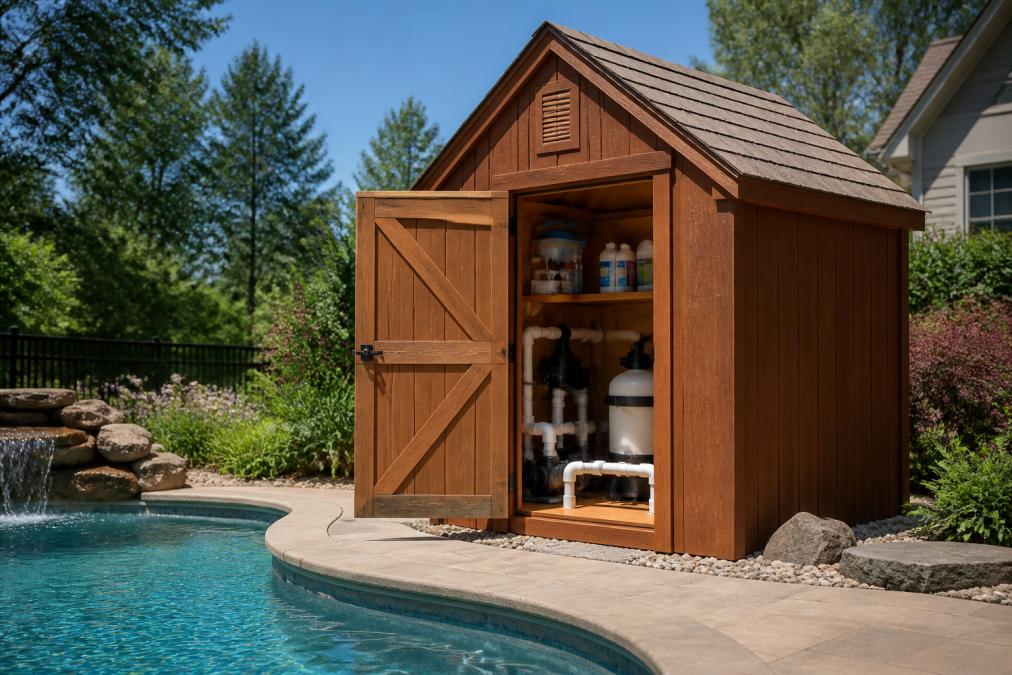
The construction quality matters significantly. A poorly built shed deteriorates within 5-7 years; quality construction lasts 20+ years. Amish builders traditionally use solid wood construction, proper ventilation, and weather-resistant finishes that withstand freeze-thaw cycles and UV exposure. This durability justifies the initial investment for homeowners planning long-term.
Ventilation is critical for pool chemical storage safety. Chlorine, acid, and other pool chemicals release fumes that require airflow to prevent dangerous gas accumulation. A properly designed shed includes vents or louvers that maintain air circulation without compromising weather protection. This is where DIY or budget structures often fail, they lack proper ventilation design, creating hazardous conditions.
Never store pool chemicals in an unventilated space or sealed container. Chlorine and acid fumes can accumulate to dangerous levels. A shed without proper airflow creates a potential safety hazard for anyone entering the space.
Installation logistics differ from deck boxes. A shed requires site preparation: leveling ground, potentially laying a foundation, and ensuring proper drainage. Riehl Structures handles this through their free delivery and setup service within 30 miles of West Chester and King of Prussia, eliminating the stress of coordinating contractors or managing installation yourself.
3. Outdoor Pool Toy Storage: Keeping Floats and Accessories Organized
Pool floats, inflatable toys, kickboards, and noodles create clutter when stored haphazardly. Dedicated outdoor pool toy storage solutions keep these items organized, protected from UV damage, and accessible without consuming deck space or requiring a full shed.
The DIY PVC pool storage bin represents the budget-conscious approach to this problem. Using PVC pipe and UV-protected mesh, you can construct a large, custom-sized bin for under $100 in materials. The advantage is complete customization, build it to fit your exact space and capacity needs. The disadvantage is time investment and aesthetic appeal depending on your DIY skill level.
For those preferring ready-made solutions, storage benches with integrated compartments serve dual purposes. The Suncast Elements Club Chair with Storage combines comfortable poolside seating with 11-gallon under-seat storage. This works well for small items like goggles, sunscreen, or towels, but won’t accommodate large floats.
Larger floats and pool toys benefit from vertical storage. Wall-mounted organizers and specialized float racks keep items off the ground, preventing moisture accumulation and freeing deck space. A dedicated float storage bag or mesh bin hung on a fence or shed wall keeps items visible and accessible while protecting them from ground-level moisture and pests.
The key to outdoor pool toy storage is vertical organization. Wall-mounted solutions and hanging storage maximize available space while keeping floats and toys dry and protected from UV damage.
Climate matters for toy longevity. In humid environments, moisture trapped inside floats leads to mold and deterioration. Ensure storage allows airflow, mesh bins work better than sealed plastic containers. In areas with intense sun exposure, UV-protected storage or shaded placement prevents material breakdown and fading.
4. Pool Chemical Storage Safety: Secure and Ventilated Solutions
Pool chemical storage safety is non-negotiable. Chlorine, stabilizers, acid, and algaecides require secure, ventilated storage away from living spaces, incompatible chemicals, and moisture sources. This is where generic storage solutions fail, pool chemicals demand specific handling.
The Rubbermaid ActionPacker series addresses chemical storage through lockable, impact-resistant design. The 24-gallon capacity accommodates typical household pool chemical quantities, while lockable latches prevent accidental access. Impact-resistant plastic withstands temperature fluctuations and prevents leaks if containers shift or fall.
However, chemical storage requires more than a locked box. Proper ventilation prevents dangerous gas accumulation. A shed with vents or louvers provides appropriate airflow. An unventilated deck box or garage corner creates hazardous conditions where fumes concentrate. This is where a dedicated pool equipment shed from Riehl Structures becomes essential, the structure is designed with proper ventilation specifically for this purpose.
Separation is critical. Pool chemicals should never share storage space with living areas, children’s play equipment, or garden tools. Chlorine fumes corrode metal and damage organic materials. Acid can eat through containers and cause chemical burns. A dedicated, ventilated structure isolates these hazards while keeping chemicals accessible for routine maintenance.
Never store pool chemicals in your garage, basement, or enclosed deck box. Fumes accumulate in enclosed spaces, creating respiratory hazards. A properly ventilated shed or outdoor storage structure is the only safe option.
According to CDC guidance on pool chemical safety, proper storage prevents accidental poisoning and chemical reactions. Store chemicals in their original containers with labels intact. Keep chlorine separate from acid and other oxidizers. Maintain temperatures between 50-85°F when possible, extreme heat accelerates decomposition and increases fume release.
For homes in the West Chester area with freeze-thaw cycles, temperature fluctuations are significant. A climate-controlled shed prevents chemical degradation during winter months while ensuring summer storage doesn’t exceed safe temperature ranges.
5. Wall-Mounted Organizers and Vertical Storage Systems
Vertical storage maximizes limited deck or patio space while keeping frequently used items within arm’s reach. Wall-mounted organizers transform unused fence or shed walls into functional storage zones without consuming ground space.
The Pool Caddy exemplifies this approach. This wall-mounted system holds poles, brushes, vacuum hoses, and nets vertically, freeing deck space while organizing maintenance tools. Installation is straightforward, mount to a fence post, shed wall, or dedicated post using basic hardware. For homeowners who maintain their pools regularly, having tools organized and visible reduces friction around routine maintenance.
Vertical storage works particularly well for long-handled tools. Telescopic poles, skimmer nets, and brushes naturally hang vertically. A dedicated wall-mounted holder keeps these tools off the ground, preventing rust and deterioration while making them grab-and-go accessible.
Beyond dedicated caddies, simple solutions work effectively. Pegboard mounted on a shed wall, with hooks for various tools, creates customizable storage. PVC pipe mounted horizontally holds poles and long items. Wire shelving installed on fence lines stores baskets of smaller supplies. The advantage of these DIY approaches is cost, materials run $30-50, and flexibility to adapt as your needs change.
Install wall-mounted organizers at eye level for frequently accessed items, higher for seasonal equipment, and lower for children’s pool toys. This organization pattern reduces clutter while making items intuitive to find.
Weatherproofing matters for vertical storage. Exposed metal rusts quickly near pools due to chlorine exposure. Choose stainless steel hardware or powder-coated steel that resists corrosion. Wood organizers should be treated for outdoor use. Plastic and resin components resist rust but may degrade under intense UV exposure without UV-protective coatings.
For homes with limited deck space, vertical storage is transformative. A 4-foot section of fence with wall-mounted organizers stores as much as a 2-foot by 3-foot deck box while occupying vertical space that would otherwise sit empty.
Choosing the Right Pool Equipment Storage Solution for Your Backyard
Selecting the best option depends on three factors: storage volume, space constraints, and budget.
Volume Assessment: Inventory your pool equipment. A small above-ground pool with basic maintenance needs (brush, skimmer, chemicals) fits easily in a 100-gallon deck box. An inground pool with pump replacement parts, multiple chemical containers, seasonal covers, and extensive toy collections requires a shed. Between these extremes, combination approaches work, a deck box for daily-use items plus wall-mounted organizers for tools.
Space Reality: Measure your available space. A 10-by-10-foot deck accommodates a large deck box without crowding. A sloped yard with limited flat space favors wall-mounted solutions. Homes with room for a structure benefit from a shed’s capacity and climate control. Be honest about what your property allows, an oversized deck box on a small patio creates visual clutter and functional problems.
Budget Considerations: Deck boxes range from $85-$300 depending on capacity and materials. Wall-mounted organizers cost $30-$100. DIY solutions run $50-$150 in materials. A quality shed represents a larger investment but provides decades of service and adds property value. Riehl Structures offers flexible financing including Rent to Own options with no prepayment penalties, making higher-quality structures accessible without requiring upfront capital.
| Storage Solution | Capacity | Space Required | Best For | Investment |
|---|---|---|---|---|
| Deck Box (small) | 37-50 gallons | 2×2 feet | Small pools, limited space | $85-$150 |
| Deck Box (large) | 120-200 gallons | 3×4 feet | Medium pools, multiple items | $200-$300 |
| Wall-Mounted Organizer | 10-20 items | Fence or wall space | Tool organization, space-saving | $30-$100 |
| DIY PVC Storage | Custom | Flexible | Budget-conscious, customizable | $50-$150 |
| Pool Equipment Shed | 500+ gallons | 8×10 feet minimum | Large collections, chemical storage | $3,000-$8,000+ |
Climate influences decisions. In humid regions, ventilation becomes critical, a shed outperforms sealed deck boxes for preventing mold and moisture damage. In areas with intense sun, UV-protected materials and shaded placement matter more. Freeze-thaw cycles in northern climates demand materials that expand and contract without cracking.
For homeowners in the West Chester area managing seasonal weather changes, a properly designed shed handles temperature fluctuations better than exposed deck boxes. Amish-built structures from Riehl Structures are constructed to withstand these regional conditions through solid wood construction and proper ventilation design.
Conclusion
Organizing pool equipment transforms pool maintenance from chaotic to systematic. Whether you choose a deck box for compact storage, a dedicated shed for comprehensive protection, vertical organizers for space efficiency, or a combination approach, the key is matching your solution to your actual needs rather than aspirational ideals.
For homeowners seeking a long-term investment that handles pool chemical storage safety while adding property value, Riehl Structures delivers custom-designed sheds built with Amish craftsmanship and engineered ventilation. With 30+ years of experience, flexible financing options, and free delivery within 30 miles of West Chester and King of Prussia, Riehl Structures eliminates the stress of sourcing, financing, and installing your pool equipment storage solution. Get a quote now to explore how a custom-designed structure can transform your backyard organization.
Frequently Asked Questions
What is the best way to store pool equipment to prevent weather damage?
Use weather-resistant containers like resin deck boxes, UV-protected storage sheds, or heavy-duty plastic bins with lockable lids. Store equipment in a dry location away from direct sunlight. For pool chemicals, use ventilated storage to prevent moisture buildup. Deck boxes with drainage holes and sealed seams protect items from rain and UV exposure. Custom pool equipment sheds offer the most comprehensive protection for larger collections and sensitive items.
How can I organize pool chemicals with proper storage safety?
Store pool chemicals in a dedicated, well-ventilated area away from living spaces and children. Use lockable storage containers like heavy-duty plastic bins or commercial-grade fiberglass boxes. Keep chemicals off the ground on shelving to prevent water damage and corrosion. Ensure adequate airflow to prevent fumes from accumulating. Never store different chemical types together, and always follow manufacturer labels for specific storage requirements. A separate pool equipment shed with proper ventilation is ideal for chemical storage safety.
What's the difference between deck boxes and storage sheds for pool equipment?
Deck boxes are smaller (37-200 gallons), portable, and ideal for pool floats, towels, and light equipment. They fit small to medium backyards and double as seating or tables. Storage sheds offer significantly more space, accommodate pumps, filters, and large equipment, and provide better weather protection and ventilation. Sheds are permanent structures suited for comprehensive backyard organization and long-term durability. Choose deck boxes for limited space or smaller pools; select sheds for extensive equipment collections or dedicated storage needs.
Are there budget-friendly pool equipment storage options?
Yes. Wall-mounted organizers and vertical storage systems cost $30-$50 and keep tools off the ground. Small resin deck boxes start around $85. DIY PVC storage bins can be built for $50-$100 and are customizable. Heavy-duty plastic storage containers with lockable lids offer durability at moderate cost. For homeowners seeking long-term value and custom solutions, Amish-built sheds provide superior craftsmanship and durability that outlasts cheaper alternatives, with flexible financing available to spread costs.
This article was written using GrandRanker

Copy Link