How to Store Outdoor Cushions in Winter
Copy Link
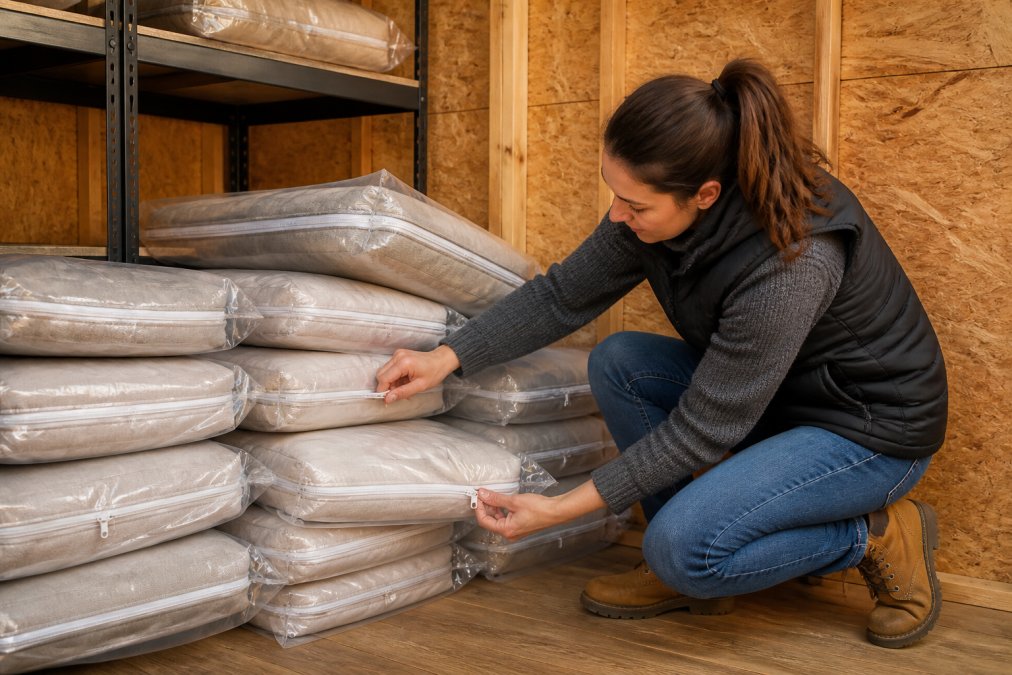
Table of Contents
- Why Winter Storage Matters for Outdoor Cushions
- How to Clean Patio Cushions Before Storage
- Preparing Your Cushions for Winter Storage
- Best Outdoor Cushion Storage Containers
- Preventing Mold on Outdoor Cushions During Storage
- Ideal Storage Locations: Garage, Shed, or Basement
- Material-Specific Storage Requirements
- Small-Space Solutions for Apartment Dwellers
Last Updated: August 12, 2026
Why Winter Storage Matters for Outdoor Cushions
Outdoor cushions face harsh winter conditions, cold, moisture, snow, and ice, that cause fabric deterioration, mold growth, and pest infestation. The difference between proper storage and simply stacking cushions in a corner is the difference between a five-year lifespan and a two-year one. Intentional preparation and strategic storage decisions preserve the comfort and aesthetic of your outdoor living space. At Riehl Structures, we help homeowners create outdoor spaces they love, and that includes protecting furnishings year-round. Proper storage requires cleaning, complete drying, appropriate containers, ideal location selection, and winter monitoring.
How to Clean Patio Cushions Before Storage
Before storing outdoor cushions, cleaning is non-negotiable. Dirt, pollen, mold spores, and organic debris accelerate deterioration and create conditions for mold growth during storage.
Start by vacuuming both sides of each cushion with an upholstery attachment. Mix a mild cleaning solution using warm water and gentle dish soap, avoiding harsh chemicals. Use a soft-bristled brush to scrub the solution into the fabric in circular motions, working one section at a time.
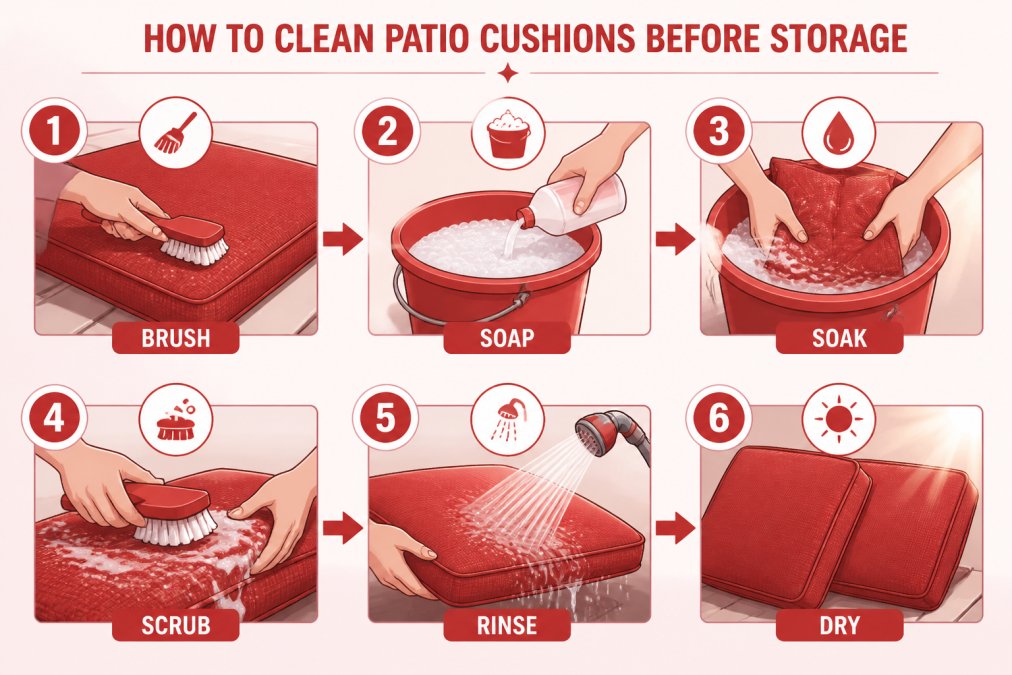
For stubborn stains, let the soapy water sit for 10-15 minutes before scrubbing. Rinse thoroughly with clean water using a spray nozzle or hose to remove all soap residue, soap left behind traps moisture and promotes mold growth. Pay special attention to seams and corners where water and dirt accumulate.
Allow cushions to air dry completely in direct sunlight. Sunlight acts as a natural disinfectant and evaporates moisture trapped in the foam. This typically takes 24-48 hours depending on humidity and temperature. Don’t rush this step; moisture is the enemy of winter storage.
Preparing Your Cushions for Winter Storage
Once clean and completely dry, preparation involves two critical tasks: ensuring absolute dryness and selecting protective covers.
Drying Your Cushions Completely
Moisture trapped inside foam causes mold and mildew growth during storage. Press your hand firmly against the cushion; if you feel dampness or coolness, it needs more drying time.
Stand cushions upright on a rack or lean them against a fence to allow air circulation on all sides. Avoid laying them flat, which traps moisture underneath. If weather turns cloudy or cool, bring cushions inside to a warm, dry room with good air circulation. A ceiling fan or dehumidifier speeds up drying significantly.
Some homeowners use a heat gun on low setting, held 12 inches from the fabric and moved slowly across the surface. This works well for dense cushions that retain moisture deep in the foam. Never use high heat, which damages fabric and foam.
Choosing the Right Cushion Covers
Breathable fabric covers are essential for winter storage. They allow moisture to escape while protecting cushions from dust and pests. Look for weather-resistant but breathable materials like cotton blends or specialized storage fabrics.
Avoid plastic covers or vacuum-seal bags for long-term storage. While they save space, they trap moisture and create conditions where mold thrives. Custom cushion covers that fit your specific cushions provide superior protection compared to generic covers, preventing shifting that exposes uncovered areas to moisture and pests.
Best Outdoor Cushion Storage Containers
The container you choose significantly impacts how well your cushions survive winter.
Storage bins and plastic containers offer protection from pests and dust but require careful moisture management. Choose bins with ventilation holes or leave the lid slightly ajar to allow air circulation. Don’t compress cushions excessively, which damages foam and traps moisture.
Deck boxes are specifically designed for outdoor storage and provide excellent weather protection while allowing air circulation through wood slats. They work particularly well in West Chester and surrounding areas where winter precipitation is frequent.
Shelving units in garages or sheds allow cushions to be stored off the ground with excellent air circulation. This is arguably the best option if space permits, keeping cushions elevated and preventing ground moisture from wicking into the stack.
Cushion storage bags made from breathable fabric are designed specifically for this purpose and are more affordable than custom covers. Look for bags with reinforced handles and zippered closures that still allow ventilation.
Ensure your chosen container is clean and dry before placing cushions inside.
Preventing Mold on Outdoor Cushions During Storage
Mold thrives in damp, dark environments with poor air circulation. Prevention is far easier than remediation.
The foundation of mold prevention is moisture control. Ensure cushions are completely dry before storage. During storage, monitor humidity levels in your storage location. A dehumidifier running periodically maintains humidity below 50%, which inhibits mold growth. Silica gel packets or moisture-absorbing products placed in storage containers capture ambient moisture.
Ventilation prevents moisture from accumulating around stored cushions. Open storage area doors or windows on dry days to allow air circulation. Avoid sealing cushions in airtight containers without ventilation. If using storage bins, drill small ventilation holes in the bottom and sides to promote airflow.
Inspect cushions monthly during storage. Check for visible mold or musty odors and allow air to circulate. If you notice condensation inside storage containers, increase ventilation immediately. Space cushions with at least 2-3 inches between them to allow air circulation, and rotate their position occasionally to ensure even air exposure.
Ideal Storage Locations: Garage, Shed, or Basement
Your choice of storage location dramatically affects how well cushions survive winter.
Garage storage provides protection from precipitation and extreme temperature swings. Garages remain relatively stable compared to unheated sheds. The downside is potential dampness, especially if vehicles are parked there regularly. Store cushions on elevated shelving away from the floor and vehicle parking areas.
Shed storage works well if your shed is dry and well-ventilated. Wooden sheds breathe naturally, allowing moisture to escape. Avoid metal sheds, which develop condensation on interior surfaces during temperature fluctuations. This condensation drips onto stored items below, creating conditions where mold grows. If using a metal shed, place cushions on elevated racks with significant clearance from metal walls.
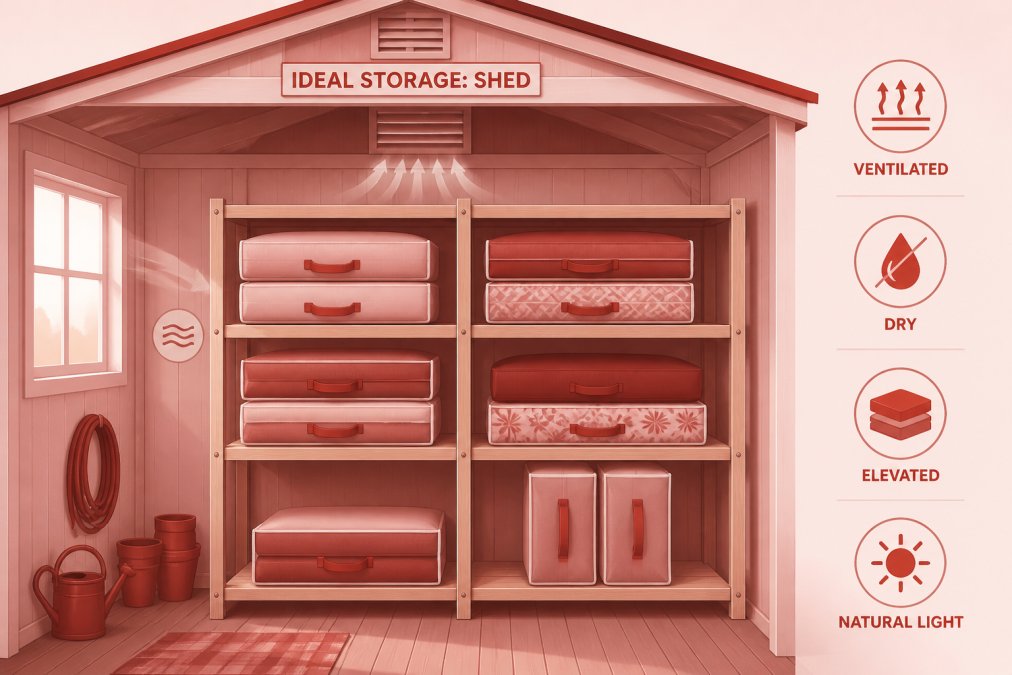
Basement storage is problematic unless exceptionally dry. Basements are naturally damp environments where ground moisture wicks up through concrete. Unless you run a dehumidifier continuously and have excellent foundation drainage, basement storage risks mold growth. If basement storage is your only option, elevate cushions on shelving at least 12 inches off the floor and use a dehumidifier set to maintain humidity below 50%.
Temperature-Controlled Environments
Climate-controlled storage, whether a heated garage, climate-controlled storage unit, or bonus room, is ideal. Stable temperatures between 50-70°F and humidity below 50% create conditions where cushions remain stable and mold cannot grow. Temperature fluctuations cause condensation; temperature-controlled environments eliminate this problem.
Protecting Against Pests and Rodents
Rodents and insects view stored cushions as ideal nesting material. Mice and rats shred foam and fabric to create nests. Prevention is critical because complete remediation is difficult once pests establish themselves.
Use sealed storage containers rather than open shelving when pest prevention is a priority. Plastic bins with tight-fitting lids prevent rodent entry. Ensure bins have no cracks or gaps. Place cushions on elevated shelving at least 12 inches off the floor to reduce pest risk.
Natural pest deterrents include cedar blocks, mothballs, and peppermint oil-soaked cotton balls placed in storage containers. Replace deterrents monthly to maintain effectiveness. Inspect storage areas regularly for signs of pest activity, droppings, gnaw marks, or nesting evidence, to address problems before they damage cushions.
Material-Specific Storage Requirements
Different cushion materials require slightly different storage approaches.
Outdoor fabric cushions made from solution-dyed acrylic or polyester are durable and resist mold well. Standard storage procedures work well for these cushions.
Natural fiber cushions made from cotton, linen, or wool require extra care. These materials absorb moisture readily and are susceptible to mold. Ensure complete dryness before storage, use breathable covers, and monitor humidity closely.
Memory foam cushions contain dense foam that retains moisture longer than traditional foam. Allow extra drying time (48-72 hours in direct sunlight) and ensure excellent ventilation during storage. Memory foam cushions benefit from elevated storage on shelving rather than in sealed containers.
Leather cushions require different treatment. Clean leather with leather-specific cleaner and allow to dry completely before storage. Store in breathable covers in a temperature-controlled environment, avoiding plastic covers that trap moisture against the leather.
Regardless of material, the fundamental principles remain: clean thoroughly, dry completely, use breathable covers, ensure ventilation, and monitor conditions throughout winter.
Small-Space Solutions for Apartment Dwellers
Apartment living presents unique storage challenges requiring creative solutions.
Vertical storage maximizes limited space. Use over-the-door organizers, wall-mounted shelving, or hanging racks to store cushions vertically rather than stacked horizontally.
Under-bed storage works for smaller cushions. Use flat storage containers that slide under beds or sofas with ventilation holes and moisture-absorbing products inside.
Closet storage is viable if you have a coat closet or linen closet with good ventilation. Remove cushions periodically to allow air circulation.
Balcony storage boxes designed for apartments provide weather protection while allowing ventilation. Position them in a corner to minimize visual impact.
Climate-controlled storage units are worth considering if other options aren’t available. Monthly rental costs are reasonable, and climate control ensures optimal conditions.
The key for apartment storage is choosing elevated, ventilated options that don’t trap moisture. Avoid sealed plastic bags or airtight containers that create mold-friendly conditions.
Storing outdoor cushions properly ensures they remain comfortable, attractive, and functional year after year. The process requires attention to cleanliness, dryness, ventilation, and environmental conditions, but the effort pays dividends in extended cushion lifespan and reduced replacement costs. When you’re ready to enjoy your outdoor space again next spring, properly stored cushions will look and feel as good as they did when you put them away. At Riehl Structures, we understand that outdoor living spaces are where families make memories, and that includes the furniture that makes those spaces inviting. Whether you’re storing cushions for a deck, patio, or custom outdoor structure, these storage principles protect your investment and keep your outdoor area ready for enjoyment season after season. Get a quote now to create the outdoor space you’ve been dreaming about.
| Storage Method | Best For | Key Advantage | Main Consideration |
|---|---|---|---|
| Garage shelving | Most situations | Climate control + ventilation | Monitor humidity levels |
| Sealed storage bins | Pest prevention | Rodent protection | Requires ventilation holes |
| Wooden shed | Budget-friendly | Natural air circulation | Must be dry and well-ventilated |
| Climate-controlled unit | Apartments or small spaces | Optimal conditions | Monthly rental cost |
| Breathable storage bags | Space efficiency | Compact storage | Limited pest protection |
| Elevated deck boxes | Frequent access | Easy retrieval | Weather dependent |
Frequently Asked Questions
Can you leave outdoor furniture cushions outside in the winter?
No, outdoor cushions should not be left outside during winter. Exposure to freezing temperatures, moisture, and UV rays causes fabric fading, mold growth, and structural damage to cushion inserts. Winter storage protects your investment and extends cushion lifespan significantly. Even weatherproof cushions benefit from being stored in a dry, temperature-controlled environment.
Should I wash my outdoor cushions before storing them for winter?
Yes, cleaning cushions before storage is essential. Use mild soap and water to remove dirt, pollen, and organic matter that can promote mold growth in storage. Allow cushions to dry completely in sunlight before packing them away. This step prevents mildew and keeps your cushions fresh when you retrieve them in spring.
What is the best way to store patio cushions to prevent mold?
Store cushions in a dry, well-ventilated space like a garage, shed, or basement with good air circulation. Use breathable fabric covers rather than plastic, which traps moisture. Add desiccant packs or moisture-absorbing materials inside storage containers. Maintain consistent temperature and humidity levels, and avoid stacking cushions too tightly, which restricts airflow and creates conditions for mildew.
How do you keep mice out of stored outdoor cushions?
Store cushions in sealed, hard-sided containers like plastic storage bins or deck boxes rather than fabric bags. Keep the storage area clean and free of food sources. Seal any gaps or cracks in your garage, shed, or basement where rodents could enter. Check stored cushions periodically throughout winter, and consider placing rodent deterrents near storage areas if you've had pest issues before.
This article was written using GrandRanker

Copy Link