Essential Features for Your Backyard Play Area: A Complete Guide
Copy Link
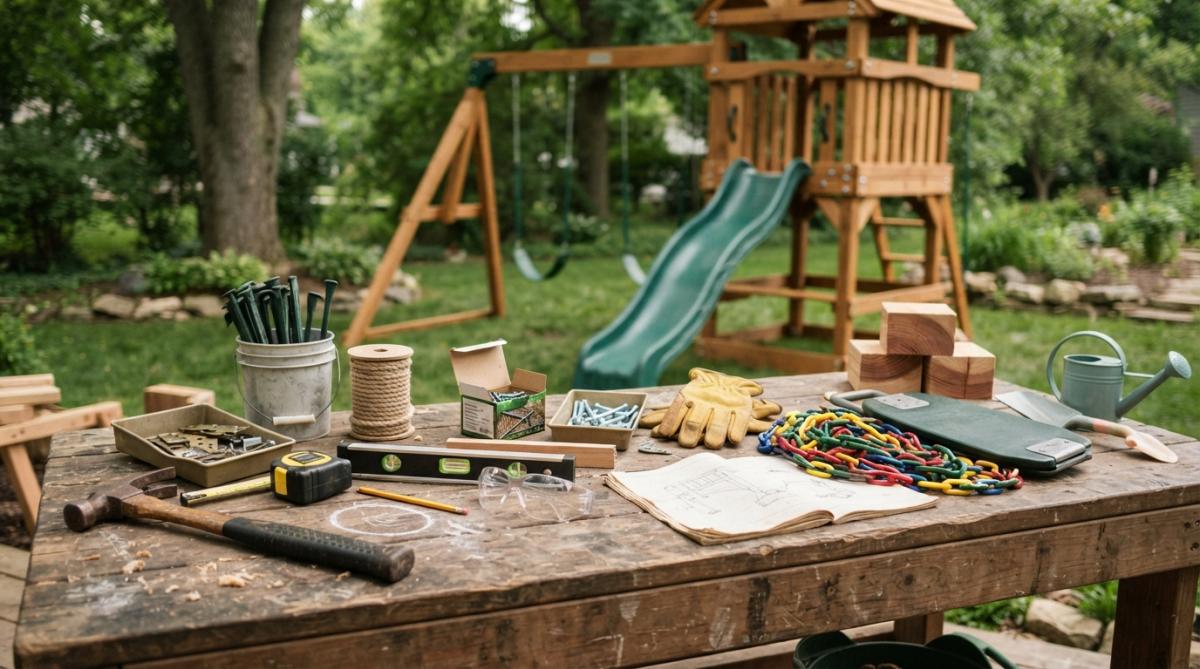
Table of Contents
- Essential Features to Include in a Backyard Play Area
- Backyard Play Area Safety: Design and Installation Standards
- Space Planning, Layout, and Footprint Considerations
- Choosing Materials: Pressure-Treated Wood vs. Composite and Durability
- Age-Appropriate Play Area Features for Every Stage
- Backyard Play Area Design: DIY vs. Pre-Built and Budget Strategies
- Budget-Friendly Backyard Play Area Ideas and Resale Value
- Accessibility and Inclusive Design for All Children
Essential Features for Your Backyard Play Area: A Complete Guide
Last Updated: July 27, 2026
Creating a backyard play area requires thoughtful planning around safety, age-appropriateness, and durability. At Riehl Structures, we’ve designed custom playsets and outdoor structures for families across the region for over 30 years. This guide covers the specific elements that transform a blank yard into an engaging outdoor environment, from safety surfacing to material choices to legal compliance considerations.
Safety Surfacing and Fall Zones
The most overlooked element in residential playgrounds is proper fall protection. Fall zones aren’t optional; they’re the difference between a minor tumble and serious injury. The American Society for Testing and Materials (ASTM) sets specific standards for how much cushioning different heights require.
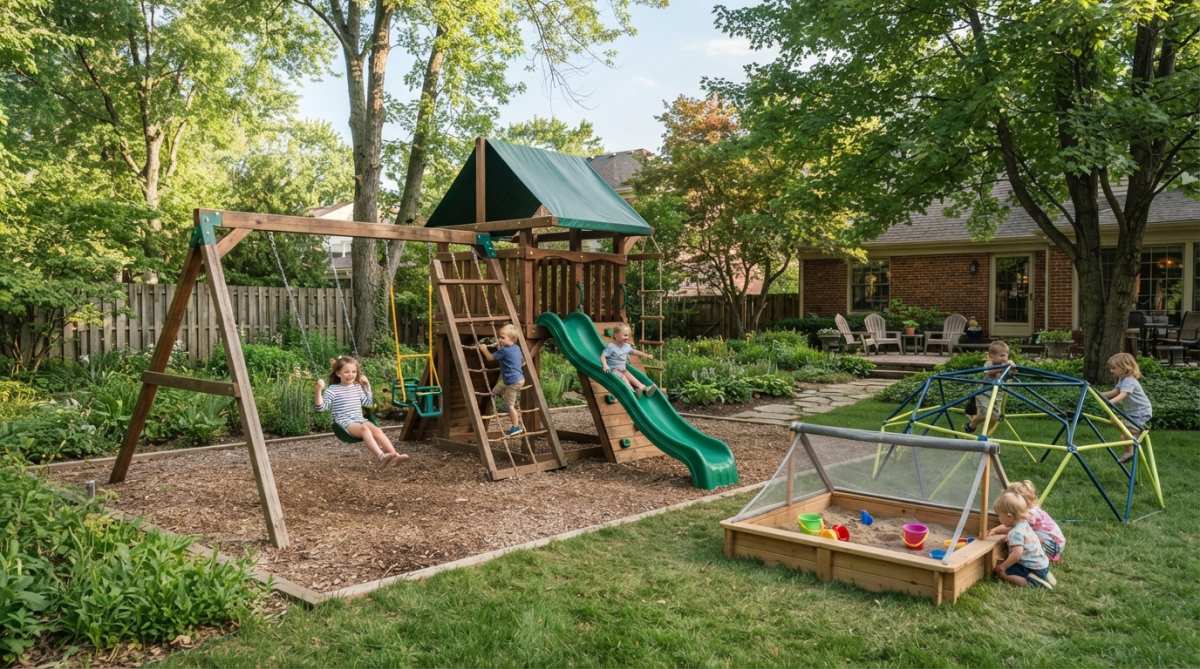
Effective safety surfacing includes engineered wood fiber (EWF) or wood chips, which provide natural aesthetics but require regular topping up as material compacts; rubber mulch, which offers superior durability with less maintenance but costs more upfront; and pour-in-place rubber surfaces, which deliver maximum impact absorption but represent the highest investment.
The fall zone extends horizontally from the equipment base, typically 6 feet in all directions for swings and 8 feet in the direction of slide exits. Most homeowners underestimate this space requirement, which is why [custom design](/design-your-playset/)s account for these zones before installation begins.
The depth of safety surfacing depends on equipment height. A 4-foot structure requires 9 inches of EWF or 6 inches of rubber mulch. A 6-foot structure needs 12 inches of EWF or 9 inches of rubber mulch. These are tested minimums, not estimates.
Swing Sets and Climbing Structures
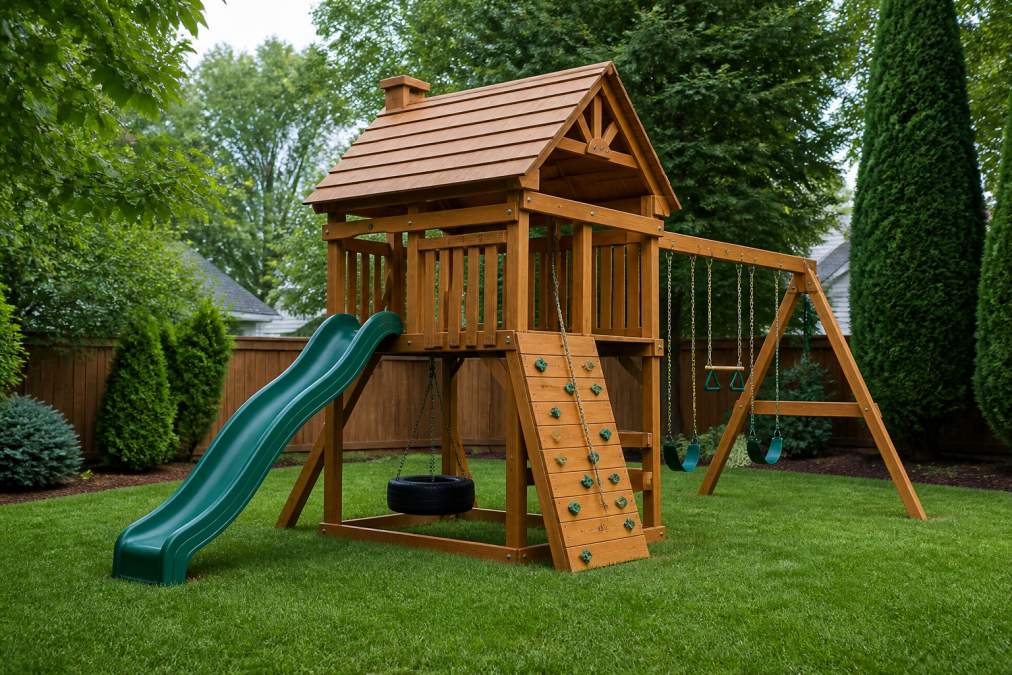
Swing sets anchor most backyard play areas by delivering core strength, balance development, and cardiovascular activity. Toddler swings feature higher backs and safety restraints for ages 1-3. Standard swings suit ages 3-12. Older children benefit from tire swings or rope swings that demand greater engagement.
Climbing structures build gross motor skills, spatial reasoning, and problem-solving abilities. A climbing dome or rock wall challenges children to plan movements and assess risk. Wooden climbing structures with rope elements or ladder-style frames work well for mixed-age groups.
Swing hanger spacing should be 24 inches apart minimum to prevent entrapment. Swing seats should be at least 8 inches from the frame and 12 inches from the ground at rest.
Sandbox and Sensory Play Elements
Sandboxes provide irreplaceable sensory development opportunities, building fine motor control and encouraging imaginative construction. A quality sandbox includes adequate depth (18-24 inches), a fitted cover to prevent animal contamination, and proper drainage to avoid standing water.
Beyond traditional sandboxes, consider water play elements like a mud kitchen or water table, which engage similar sensory pathways and encourage cooperative play.
Natural Play and Water Features
Natural elements, logs, rocks, plants, and water, transform a play area from utilitarian to genuinely engaging. Children drawn to natural play develop environmental awareness and risk assessment skills that structured equipment alone cannot provide.
Incorporating natural materials means adding fallen logs for balance practice, creating slight berms for climbing, and establishing plantings for shade. Water features don’t require elaborate fountains; even a simple ground-level water trough creates powerful play value. This "loose parts play" approach builds creativity and independence more effectively than equipment-only designs.
Backyard Play Area Safety: Design and Installation Standards
Safety rests on three pillars: proper equipment design, correct installation, and ongoing maintenance. Missing any one creates risk regardless of how well the others are executed.
ASTM Guidelines and Residential Playground Standards
The ASTM F1487 standard specifically addresses playground equipment for residential use, differing from the more rigorous ASTM F1159 standard for public playgrounds. ASTM standards address equipment spacing, height limitations, material specifications, and hardware requirements based on injury data analysis.
According to CPSC Guidelines for Residential Playgrounds, entrapment hazards represent a leading cause of playground injuries. Standards specify maximum and minimum spacing for all openings to prevent this risk.
Structural Integrity and Age-Appropriate Design
Structural integrity begins with proper foundation installation. Equipment must be anchored securely to prevent tipping. Concrete footings set below the frost line prevent heaving in freeze-thaw cycles.
Age-appropriate design means matching equipment challenge to developmental capability. Rather than designing a single play area for all ages, stage equipment by zone: a toddler area with low structures and soft surfacing, a middle-ground area for preschoolers, and a more challenging zone for older children.
Space Planning, Layout, and Footprint Considerations
Measuring Your Available Space
Before selecting equipment, measure your yard carefully, including fall zones, sight lines, and circulation paths. A play area that feels cramped discourages use; one with generous spacing feels inviting.
Consider sun exposure, equipment in full afternoon sun becomes uncomfortably hot. Partial shade from trees or shade structures keeps play areas usable. Think about wind exposure and ensure clear sight lines from common vantage points like patios for effective supervision.
A common mistake is underestimating the space needed for swing fall zones. A swingset with a 10-foot diameter footprint actually requires a 20-foot diameter clear zone when fall zones are included.
Zoning and Legal Compliance for Backyard Structures
Zoning regulations vary significantly by municipality. Some townships require setback distances from property lines (often 5-10 feet for structures over a certain height). Others limit structure height or require permits. Homeowners’ association rules may restrict structure height, material types, or require architectural review.
Contact your local building department and review HOA documentation before designing your play area. This 30-minute investment prevents costly problems later.
Choosing Materials: Pressure-Treated Wood vs. Composite and Durability
Maintenance Requirements by Material Type
Pressure-treated wood offers aesthetic appeal and cost-effectiveness but requires ongoing maintenance: periodic sealing every 1-2 years and regular inspection for rot or insect damage. Composite materials resist rot and require minimal maintenance, occasional cleaning suffices, but cost more initially.
Cedar and redwood resist rot naturally but still require sealing and cost significantly more. Steel structures demand rust prevention through powder coating or regular paint maintenance.
| Material | Initial Cost | Annual Maintenance | Lifespan | Best For |
|---|---|---|---|---|
| Pressure-treated wood | Low | High (sealing, inspection) | 8-12 years | Budget-conscious families committed to maintenance |
| Composite | High | Low (cleaning only) | 15-20+ years | Families prioritizing minimal maintenance |
| Cedar/Redwood | High | Moderate (sealing) | 12-15 years | Aesthetic-focused installations |
| Galvanized steel | Moderate | Low (inspection) | 15+ years | Climbing structures, swings |
Climate-Specific Maintenance and Longevity
Climate dramatically affects material performance. In humid regions, wood deteriorates faster and requires more frequent sealing. In dry climates, UV exposure becomes the primary concern. Freeze-thaw cycles in northern climates create expansion stress that loosens fasteners. Coastal regions with salt air accelerate metal corrosion.
Understanding your climate helps you select materials that perform well with realistic maintenance.
Age-Appropriate Play Area Features for Every Stage
Toddler-Friendly Elements (Ages 1-3)
Toddlers need low structures (not exceeding 3 feet), soft landings, and simple challenges. Slides should have gentle angles (no more than 30 degrees) with enclosed sides. Steps should be shallow with handrails throughout. Sandbox play, water tables, and sensory elements appeal strongly to this age group.
Preschool and Early Elementary (Ages 3-7)
This age group thrives on moderate challenges. Equipment can reach 5-7 feet with proper fall surfacing. Climbing structures with varied handholds, slides of moderate height, swings, see-saws, and balance beams develop coordination. Imaginative play elements like playhouses encourage social interaction.
Older Children and Multi-Age Play (Ages 7+)
Older children seek challenge and independence. Taller structures (8-12 feet with proper fall surfacing), complex climbing challenges, and equipment requiring strategy appeal to this group. Multi-age play areas work best with distinct zones matched to specific age ranges rather than trying to serve all ages equally.
Backyard Play Area Design: DIY vs. Pre-Built and Budget Strategies
DIY Playsets and Recycled Materials for Cost Savings
Building a playset from plans offers cost savings and customization flexibility. The trade-off is time investment and quality risk. Mistakes in measurements, material selection, or fastening create safety hazards.
Recycled materials like old tires for swings, reclaimed wood for structures, or repurposed pallets reduce costs further. However, recycled materials require careful inspection for hazards like rusty nails, rot, or chemical contamination.
If building a DIY playset, invest in quality fasteners (stainless steel or galvanized hardware) and proper anchoring systems. These components represent a small portion of total cost but dramatically affect longevity and safety.
Pre-Built Playsets and Custom Design Options
Pre-built playsets offer tested safety compliance, consistent quality materials, professional installation support, and warranty coverage. Custom design services allow you to specify dimensions, material choices, and features that match your yard exactly. Riehl Structures offers custom-designed playsets with flexible financing options and free delivery within 30 miles of our West Chester and King of Prussia locations.
The decision between DIY and pre-built depends on your comfort level with construction, available time, and risk tolerance.
Budget-Friendly Backyard Play Area Ideas and Resale Value
Inexpensive Play Area Features That Deliver Impact
High-value, low-cost features include natural elements (logs, rocks, plants), sand and water play, and simple climbing structures. Shade structures, even simple sail shades, dramatically improve usability. Starting with essential elements and expanding over time spreads costs while building a play area incrementally.
How a Quality Play Area Affects Home Resale Value
Research shows outdoor improvements rank highly among features influencing buyer decisions. A well-designed, well-maintained play area appeals to families with children and adds perceived value. Conversely, poorly maintained equipment or unsafe-looking structures deter buyers.
The resale value impact depends on your market and buyer demographics. In family-focused neighborhoods, a quality play area influences buying decisions. A well-maintained outdoor space appeals broadly, whether as a play area or simply as an attractive landscape feature.
Accessibility and Inclusive Design for All Children
Creating truly inclusive play spaces means considering children with varying physical abilities, sensory sensitivities, and developmental needs. Universal design principles create better spaces for all children.
Ground-level play elements serve children with mobility limitations. Ramps rather than stairs, wide pathways, and accessible seating benefit families with accessibility needs while improving usability for everyone. Varied textures, colors, and stimulation levels accommodate sensory-seeking and sensory-sensitive children. Inclusive design recognizes that children develop at different rates and have different needs, creating spaces where all children participate.
Creating a backyard play area that truly serves your family requires balancing safety requirements, developmental appropriateness, material durability, and realistic maintenance commitments. The essential features, safety surfacing, age-appropriate equipment, quality materials, and thoughtful layout, form the foundation of a space where children thrive. Riehl Structures has helped families across the region design custom playsets and outdoor structures that deliver professional-grade safety and craftsmanship with the flexibility to match your specific yard and budget. Get a quote now and discover how a custom-designed play area transforms your backyard into a space where memories are made.
Frequently Asked Questions
What are the most essential features to include in a backyard play area?
A quality backyard play area should include safe surfacing (wood chips or rubber mulch) beneath equipment, age-appropriate structures like swing sets or climbing walls, a sandbox for sensory play, and adequate shade. Safety surfacing is critical, it reduces fall injuries by absorbing impact. Include a mix of active play (swings, slides) and imaginative play (playhouse, mud kitchen) to keep children engaged across different ages and interests.
What's the safest surface for a backyard play area?
ASTM standards recommend engineered wood fiber (wood chips) or rubber mulch as the safest fall surfaces. These materials absorb impact and reduce injury risk. Wood chips require regular topping up as they compress and decompose, while rubber mulch is more durable but requires occasional raking. The depth needed depends on equipment height, typically 6-12 inches for most residential playsets. Always maintain adequate fall zones around equipment per ASTM guidelines.
How much space do I need for a backyard play area?
Space requirements depend on what you're installing. A basic swing set needs roughly 20 feet by 20 feet (including fall zones on all sides). Climbing domes require a 247-inch clearance zone. Sandboxes and water tables are flexible and fit smaller spaces. Measure your yard carefully and plan the footprint before purchasing. Consider sight lines from your home and drainage patterns. Sloped yards can be adapted with leveling, consult a professional if your yard slopes significantly.
Is it better to buy a pre-built playset or build a DIY backyard play area?
Pre-built playsets offer convenience, consistent quality, and warranty protection, ideal if you want stress-free installation. Custom Amish-built structures provide durability and personalization for families wanting long-term investment. DIY projects using recycled materials (tire swings, pallet climbing walls) are budget-friendly but require time, skill, and careful safety planning. Consider your timeline, budget, and maintenance comfort level. Quality pressure-treated wood or composite materials last longer than budget options.
What age-appropriate features should I include in my backyard play area?
Toddlers (1-3) benefit from low balance beams, sandbox, and water tables. Preschoolers (3-7) enjoy playhouses, small climbing structures, and swings with safety seats. Older children (7+) engage with taller climbing walls, rope structures, and challenging balance beams. Design a multi-age space with elements for each stage, or focus on your children's current ages. Natural play elements like logs and rocks appeal across ages and encourage creative, unstructured play.
This article was written using GrandRanker

Copy Link