7 Best Backyard Storage Ideas for Small Yards
Copy Link
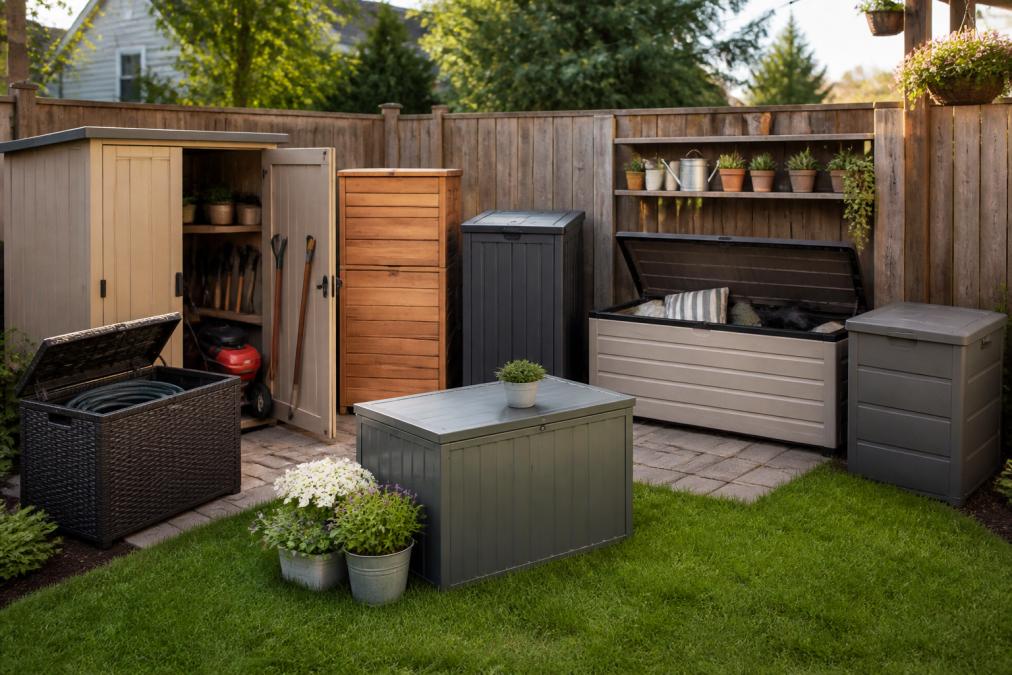
Table of Contents
- 1. Vertical Storage Solutions for Small Backyards
- 2. Small Backyard Shed Alternatives That Fit Tight Spaces
- 3. How to Organize Garden Tools in Small Spaces
- 4. DIY Outdoor Storage Bench for Seating and Storage
- 5. Built-In Bench and Ottoman Storage Under Decks
- 6. Multi-Functional Outdoor Furniture That Doubles as Storage
- 7. Utilizing Fences and Railings for Hanging Storage
- Choosing the Right Storage Solution for Your Yard
Last Updated: August 8, 2026
1. Vertical Storage Solutions for Small Backyards
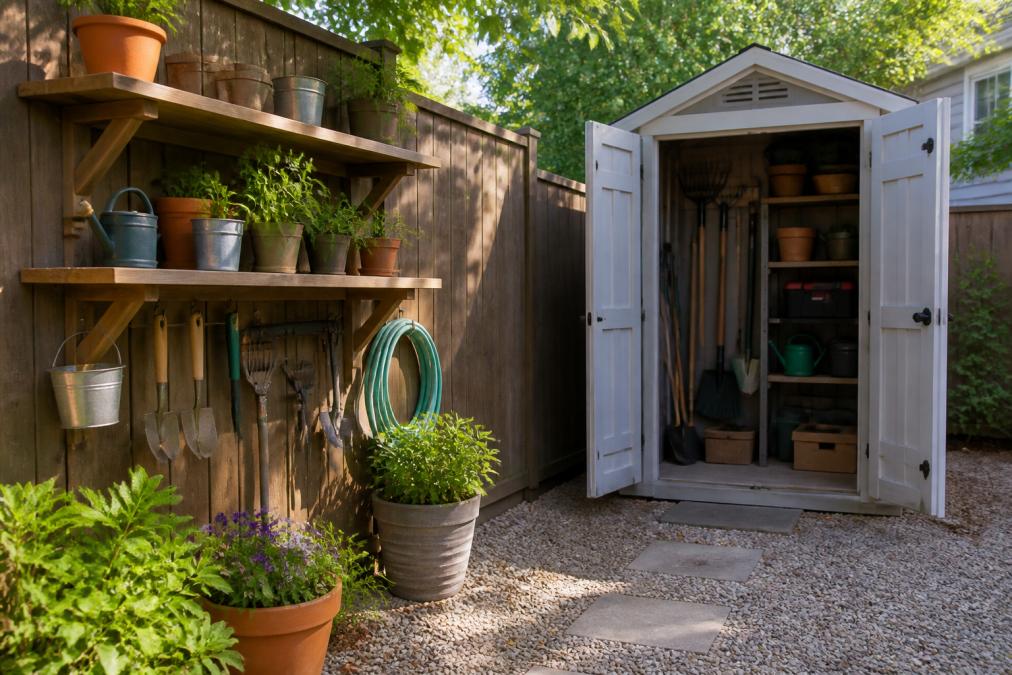
Vertical storage transforms wasted wall space into functional organization, making even tight backyards feel less cramped. Wall-mounted shelving and tall vertical sheds pull items off the ground without consuming precious floor area.
Wall-mounted shelving works best for lightweight items: gardening supplies, cushions, seasonal decorations, and hand tools. Install shelves 6-8 feet high to maximize usable space while keeping frequently accessed items within arm’s reach. Floating shelves or metal grid systems offer flexibility to adjust heights as needs change. The National Association of Home Builders emphasizes that vertical storage is a key strategy for maximizing compact outdoor spaces.
Tall vertical sheds like the Suncast Vertical Storage Shed maximize your storage footprint by going up rather than out. These narrow, 5-6 foot tall structures fit snugly against fences or property lines. With 22 cubic feet of interior capacity, they accommodate long-handled tools like rakes, shovels, and ladders without requiring a sprawling footprint. Customizable interior shelving keeps everything visible and accessible.
Mount shelving 12-18 inches from the fence line to leave room for air circulation. This prevents moisture buildup that can damage stored items and extends the lifespan of your storage solution.
(/shed-vs-storage-box-small-yards/) Backyards]
A small yard feels less cluttered when items are organized overhead rather than scattered across the ground. Your patio or deck regains usable space for seating, entertaining, or playing.
2. Small Backyard Shed Alternatives That Fit Tight Spaces
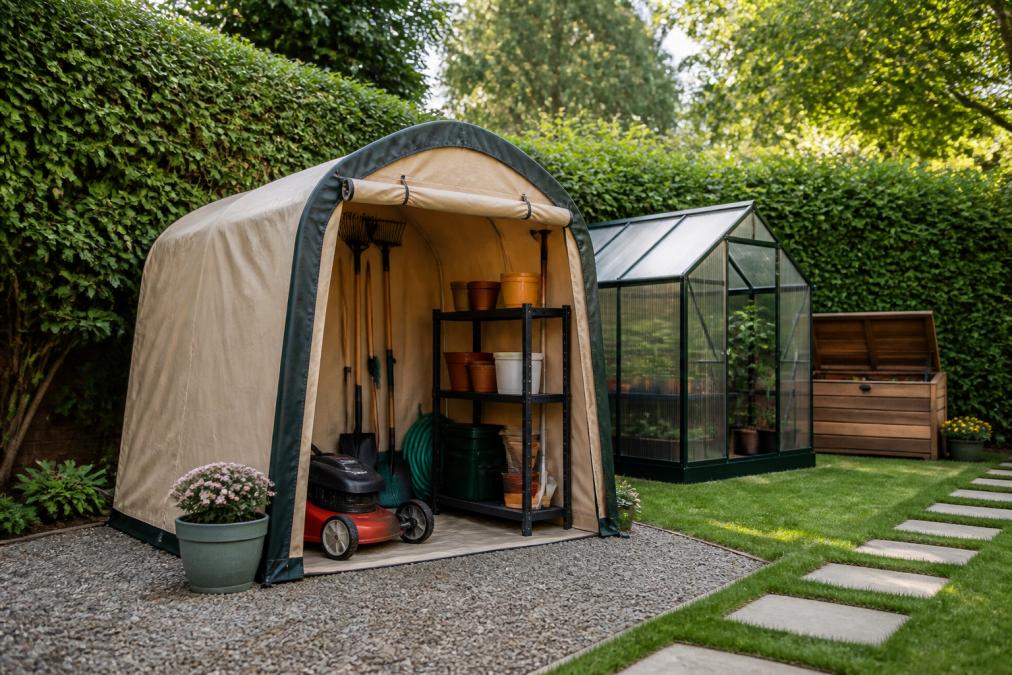
Not every homeowner has room for a traditional 8×10 shed. Compact resin storage sheds and deck boxes offer practical alternatives that deliver real storage capacity without consuming your entire yard.
Compact resin sheds like the Keter Store-It-Out Midi hold 30-31 cubic feet and measure roughly 4 feet wide by 2 feet deep. This fits under overhangs, against house foundations, or beside patios. Resin construction resists rot, rust, and peeling with no painting required. Built-in ventilation prevents moisture accumulation and mildew.
Deck boxes and multi-functional seating storage combine storage with functionality. The Suncast 22-gallon deck box doubles as outdoor seating, perfect for small patios where every square inch counts. Cushions transform it into extra seating during gatherings, then lift the lid to stash throw pillows, pool toys, or seasonal items.
Homeowners with patios under 200 square feet who need to hide trash cans, pool equipment, or seasonal decorations without sacrificing seating or entertaining space.
The trade-off with compact sheds is capacity. A small resin shed maxes out around 75 cubic feet, compared to 150+ cubic feet in a traditional shed. For modest storage needs, cushions, small tools, pool supplies, they’re ideal.
For those willing to invest in durability, Riehl Structures offers custom-built compact sheds designed specifically for Pennsylvania properties. Amish-built sheds withstand decades of Northeast weather. The customization process ensures your storage solution fits your exact space constraints and aesthetic preferences, with flexible financing options available.
3. How to Organize Garden Tools in Small Spaces
Cramped tool storage becomes manageable when you use vertical wall space and modular systems. Wall-mounted tool hooks keep everything visible, preventing duplicate purchases and frustration searching for specific tools.
Wall-mounted tool hook systems come in several styles. The Gladiator GearTrack Pack uses aluminum channels mounted horizontally on walls, supporting up to 75 pounds per linear foot. Hooks slide along the track, so you customize spacing based on your tools. The Toolflex One system uses universal holders that grip handles from 0.5 to 1.5 inches in diameter, ideal for garden tools with varying handle thicknesses.
For a permanent solution, the HangThis Up Double Garden Tool Hooks mount directly to wall studs using heavy-duty cabinet-grade birch plywood. Each pair holds two long-handled tools securely. The WORKPRO Garage Tool Organizer Wall Mount provides 64 inches of storage length with eight adjustable hooks in four sizes, working on drywall, studs, or masonry.
Before mounting any wall system, locate studs using a stud finder. Drywall alone won’t support the weight of a full tool collection. Improper installation leads to wall damage and tools crashing down during use.
When tools hang at eye level, you use them more efficiently and maintain them better. Rust spots or damaged handles become obvious, prompting timely replacement.
4. DIY Outdoor Storage Bench for Seating and Storage
A storage bench combines seating with hidden storage, making it ideal for small patios where every piece of furniture must serve multiple purposes. Building one yourself costs significantly less than purchasing finished pieces and lets you customize dimensions to fit your exact space.
A basic DIY storage bench requires pressure-treated lumber (2x4s and 2x6s), exterior-grade wood screws, hinges, and wood stain or sealant. The structure is straightforward: a rectangular frame with a plywood base, storage compartment sides, and a hinged lid. Most designs measure 36-48 inches long, 18-24 inches deep, and 18-20 inches tall.
Start by cutting and assembling the frame using 2x4s. Attach plywood panels for the sides and back, leaving the front and top open. Install a plywood base inside to create a shelf, then add the hinged lid. Drill drainage holes in the bottom to prevent water accumulation. Sand all surfaces smooth, then apply exterior-grade stain or sealant.
A comparable store-bought storage bench runs $200-500, while a DIY version typically costs $80-150 in materials. Assembly takes a weekend with basic carpentry skills.
Use stainless steel or coated hinges rated for outdoor use. Standard interior hinges rust quickly in wet conditions, and replacement becomes a recurring maintenance headache.
Storage benches work particularly well under deck overhangs or against house walls, where they’re protected from direct rain.
5. Built-In Bench and Ottoman Storage Under Decks
The space underneath a deck is often overlooked, a dark area perfect for organized storage. Built-in benches and ottomans with storage transform this underutilized zone into functional capacity.
Under-deck storage works best when your deck sits 2-3 feet above ground. Install wooden or composite benches along the perimeter with lift-top lids. The deck overhead provides weather protection, extending the lifespan of stored items. Ottoman storage units fit under lower decks or in tight corners, holding cushions, small tools, or seasonal items.
Material selection matters for under-deck storage. Cedar or composite materials resist rot better than standard lumber in damp conditions. Ensure proper drainage by sloping the deck slightly or installing perforated drain pipes above the storage area. Ventilation is critical; install vents at both ends of storage benches to allow air circulation and prevent mildew.
The advantage of under-deck storage is that it’s essentially invisible. Guests see only your patio and deck, not rows of storage boxes. A 12×12 deck with 2.5 feet of clearance underneath can accommodate 40-60 cubic feet of storage.
6. Multi-Functional Outdoor Furniture That Doubles as Storage
Outdoor furniture that serves dual purposes is essential in small backyards. Every piece should earn its space through both functionality and aesthetics.
Storage ottomans and benches with cushions blend seamlessly into patio décor while hiding clutter. Choose weather-resistant cushions in colors that complement your space, and guests won’t realize they’re sitting on storage. Suncast’s 22-gallon deck box with storage seat is one example, but custom-built options from local craftspeople like Riehl Structures offer durability that outlasts mass-produced alternatives.
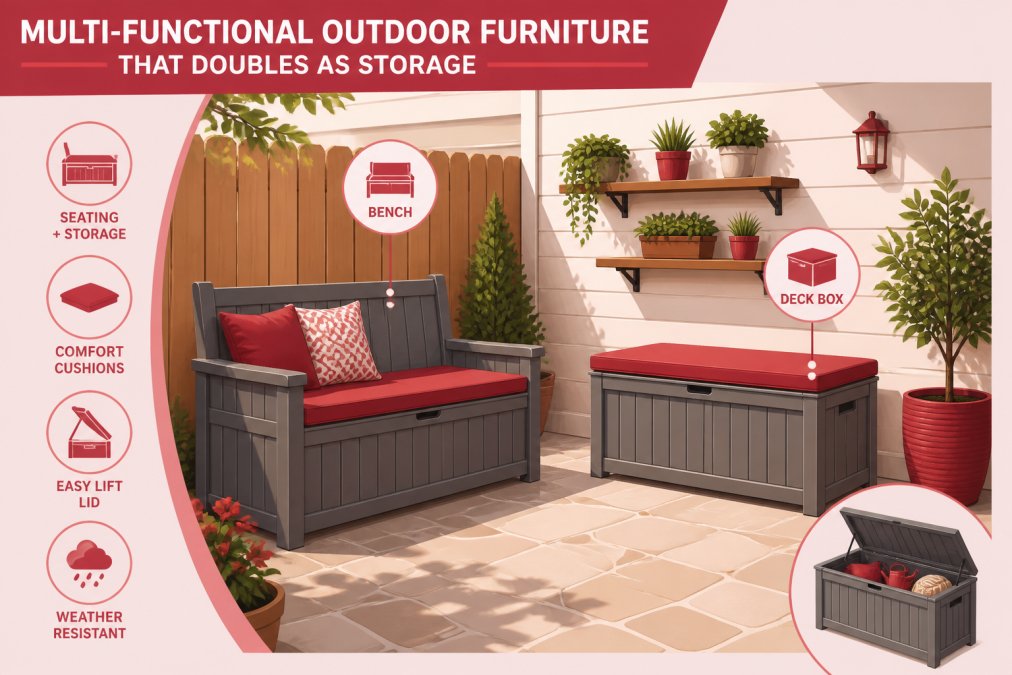
Coffee tables with shelves or hidden compartments provide storage without looking like storage units. A low table with an open shelf underneath holds magazines, gardening books, or decorative baskets. Outdoor bar carts with wheels offer portable storage that moves as needed, then becomes a serving station during gatherings.
Quality construction is essential. Cheap pieces deteriorate quickly under weather exposure. Investing in well-made furniture pays dividends through durability and sustained functionality.
7. Using Fences and Railings for Hanging Storage
Fences and railings are prime real estate for hanging storage. These vertical surfaces can accommodate considerable storage capacity.
Hanging baskets and planters transform fence lines into vertical gardens while storing small tools or supplies. Woven baskets hold gloves, pruning shears, and twine. Hang baskets at varying heights to add visual interest and accommodate different item sizes.
Fence-mounted shelves extend storage upward without eating floor space. Install sturdy brackets every 16-24 inches along the fence line, then add shelves for potted plants, gardening supplies, or decorative items. Pegboard systems mounted on fences offer customizable hanging storage with hooks, shelves, and baskets that rearrange as needs evolve. Tool racks mounted on fence rails keep frequently used items within arm’s reach.
The advantage of fence-based storage is that it doesn’t require ground space. Your patio and deck remain open for seating, entertaining, and enjoying your outdoor area.
Choosing the Right Storage Solution for Your Yard
Selecting among these storage ideas requires considering climate durability, HOA regulations, and budget constraints specific to your situation.
Climate and Material Durability Considerations
Pennsylvania’s climate, cold winters, humid summers, and significant precipitation, demands weather-resistant materials. Resin sheds resist rot and rust that plague wood or metal alternatives. Composite materials handle freeze-thaw cycles better than untreated wood. Stainless steel hardware outlasts galvanized or painted options.
For long-term durability, Amish-built structures from Riehl Structures use premium materials and construction techniques designed for Northeast weather. Custom designs incorporate proper drainage, ventilation, and material selection for your specific microclimate. While the upfront investment exceeds mass-produced alternatives, the lifespan justifies the cost for homeowners planning to stay long-term.
Consider sun exposure when selecting storage materials. UV-protected resin resists fading and brittleness. Wood-look resin captures aesthetic appeal without the maintenance of actual wood.
HOA and Zoning Compliance
Many neighborhoods have HOA restrictions or local zoning codes limiting shed size, height, or placement. Before purchasing or building any storage structure, verify requirements with your local township or HOA.
Typical restrictions include:
- Maximum shed size without permits (often 100-200 square feet)
- Setback requirements from property lines (typically 5-10 feet)
- Height limitations (often 12-15 feet maximum)
- Architectural standards requiring specific materials or colors
Riehl Structures has 30+ years of experience navigating Pennsylvania regulations. Their team helps customers understand local requirements and designs structures that comply while meeting storage needs.
DIY vs. Store-Bought Cost Analysis
The cost spectrum for backyard storage varies dramatically. A Suncast deck box runs $55-60. A compact resin shed costs $280-700. A traditional wooden shed or custom-built structure ranges from $1,500-5,000+. DIY storage benches cost $80-150 in materials, plus your labor. Store-bought benches run $200-500.
The decision hinges on longevity expectations. If you plan to move within 5 years, a budget resin shed makes sense. If you’re settling long-term, investing in quality construction pays dividends. Riehl Structures offers flexible financing options, including rent-to-own arrangements with no prepayment penalties, making premium quality accessible without large upfront costs.
| Storage Type | Starting Cost | Lifespan | Maintenance | Best For |
|---|---|---|---|---|
| Resin deck box | $55-60 | 5-8 years | Minimal | Very small patios, temporary storage |
| Compact resin shed | $280-700 | 8-12 years | Minimal | Small yards, trash cans, tools |
| DIY storage bench | $80-150 | 5-10 years | Moderate | Budget-conscious, custom fit |
| Custom-built structure | $1,500-5,000+ | 20+ years | Low | Long-term investment, premium quality |
Small backyards don’t require storage compromises. By combining vertical solutions, dual-purpose furniture, and strategic use of fences and railings, you can organize everything without sacrificing outdoor living space.
For homeowners in the Greater Philadelphia and Chester County regions seeking durable, custom-designed storage solutions, Riehl Structures offers Amish-built sheds and structures designed for Pennsylvania’s climate and local requirements. With 30+ years of experience, flexible financing options including rent-to-own with no prepayment penalties, and free delivery within 30 miles of West Chester and King of Prussia locations, Riehl Structures transforms small backyards into organized, functional outdoor spaces. Get a quote now and discover how quality craftsmanship and custom design solve your storage challenges.
Frequently Asked Questions
What's the best way to store garden tools in a small space?
Wall-mounted organizers and vertical storage systems maximize space without consuming floor area. Use modular tool hooks that grip handles from 0.5 to 1.5 inches, or install GearTrack channels that hold up to 75 lbs per linear foot. For long-handled tools like rakes and shovels, tall vertical sheds with internal shelving provide efficient organization while fitting into narrow yards. Group similar tools together and keep frequently used items at eye level for quick access.
Can you have a shed in a small backyard?
Yes. Compact resin sheds and horizontal storage models are specifically designed for small yards. Options like the Keter Store-It-Out Midi (holds two 32-gallon trash cans) or the Suncast Vertical Storage Shed (22 cubic feet) fit into tight spaces. Before purchasing, check your local zoning regulations and HOA restrictions. Many townships in Pennsylvania require permits for structures over a certain size, so verify requirements with your municipality before installation.
How do I organize my backyard without a shed?
Use vertical storage solutions like wall-mounted cabinets, hanging baskets on fences, and deck boxes with storage seats. Under-deck storage utilizes wasted space, while multi-functional outdoor furniture (storage benches, ottomans with compartments) provides dual-purpose utility. Modular wall-mounted systems free up floor space, and repurposed indoor furniture like weatherproof cabinets or shelving units can be adapted for outdoor use if protected from direct moisture.
What are some cheap outdoor storage ideas?
DIY projects offer budget-friendly options: build a storage bench from treated lumber, install wall-mounted hooks using basic hardware, or repurpose old furniture with weatherproof finishes. Deck boxes start around $55, while wall-mounted organizer systems range from $40 to $80. For custom, durable solutions that last decades, custom-built structures from local craftspeople may cost more upfront but eliminate replacement costs and provide superior craftsmanship compared to mass-produced alternatives.
How do I keep outdoor cushions and gear dry in a small yard?
Use weatherproof storage containers with lockable lids and built-in ventilation to prevent moisture buildup. Deck boxes with hinged tops and drain holes protect cushions from rain. Vertical sheds with controlled-hinge lids keep contents dry while maximizing space. Store items off the ground using shelving inside storage units, and ensure your chosen container has proper drainage holes. In humid climates, add silica gel packets inside sealed containers to control moisture.
This article was written using GrandRanker

Copy Link