Shed Foundation Cost Per Square Foot: 2026 Guide
Copy Link
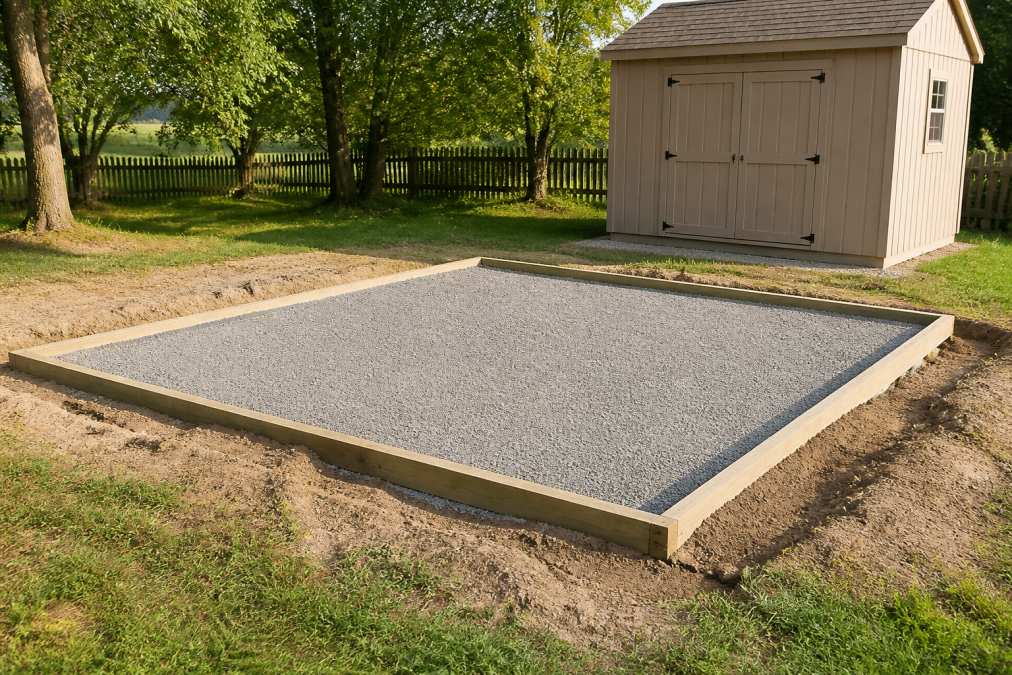
Table of Contents
- Shed Foundation Cost Per Square Foot: What to Expect
- Shed Foundation Types and Their Pricing
- Shed Site Preparation Cost Factors
- DIY Shed Foundation Materials and Installation
- Labor vs. Material Costs: When to Hire a Professional
- Hidden Costs and Budget Overruns to Avoid
- Foundation Longevity and Return on Investment
- Permits, Codes, and Compliance
Last Updated: August 5, 2026
Shed Foundation Cost Per Square Foot: What to Expect
The cost of a shed foundation ranges from $2 to $14 per square foot, depending on the type you choose and whether you install it yourself or hire a professional. A 10-by-12-foot shed, for example, costs between $240 and $1,680 just for the foundation. Understanding this range means matching foundation type to your soil conditions, climate, intended use, and desired lifespan. A gravel pad saves money upfront but requires ongoing maintenance. A concrete slab costs more initially but eliminates moisture problems and rodent access for decades.
At Riehl Structures, we’ve helped homeowners in the Greater Philadelphia and Chester County regions navigate this decision. Below, we’ll show you exactly how to calculate your shed foundation cost and identify which option makes sense for your project.
Shed Foundation Types and Their Pricing
The foundation type you select determines both upfront cost and long-term maintenance burden.
Concrete Slab Foundations
A poured concrete slab creates a permanent, level, and moisture-proof surface that serves as both foundation and shed floor. Concrete slab foundations cost between $4 and $14 per square foot when professionally installed, with labor accounting for roughly half that expense. A 10-by-12-foot shed (120 square feet) typically runs $480 to $1,680 for the slab alone.
The real advantage emerges over time. Moisture cannot wick up from the ground, eliminating rot in the shed floor framing. Rodents cannot burrow underneath. The slab prevents settling and shifting that destabilize the structure. If you’re building a workshop or storing valuable equipment, a concrete slab justifies the expense.
Concrete slabs work best for sheds larger than 100-150 square feet or those storing heavy equipment.
Gravel Pad Foundations
A gravel pad foundation uses 4 to 6 inches of compacted crushed stone laid over landscape fabric. This is the most budget-friendly option and the most popular DIY choice.
Gravel pad foundations cost $2 to $10 per square foot for materials alone. A 10-by-12-foot shed requires roughly 4 to 5 tons of crushed stone, costing between $240 and $600 depending on local prices and delivery distance. If you hire a professional service, expect $700 to $1,350 including weed barrier, leveling, and pressure-treated perimeter framing.
The gravel pad excels at drainage. Water runs through the stone instead of pooling around the shed base. The landscape fabric prevents weeds from growing up through the stone. The major drawback is maintenance. Gravel settles over time, especially in freeze-thaw climates. You’ll need to add fresh stone every few years to maintain proper leveling. Rodents can burrow under the edges.
Gravel pads work best for smaller sheds (under 200 square feet) on relatively level ground.
Concrete Block Piers
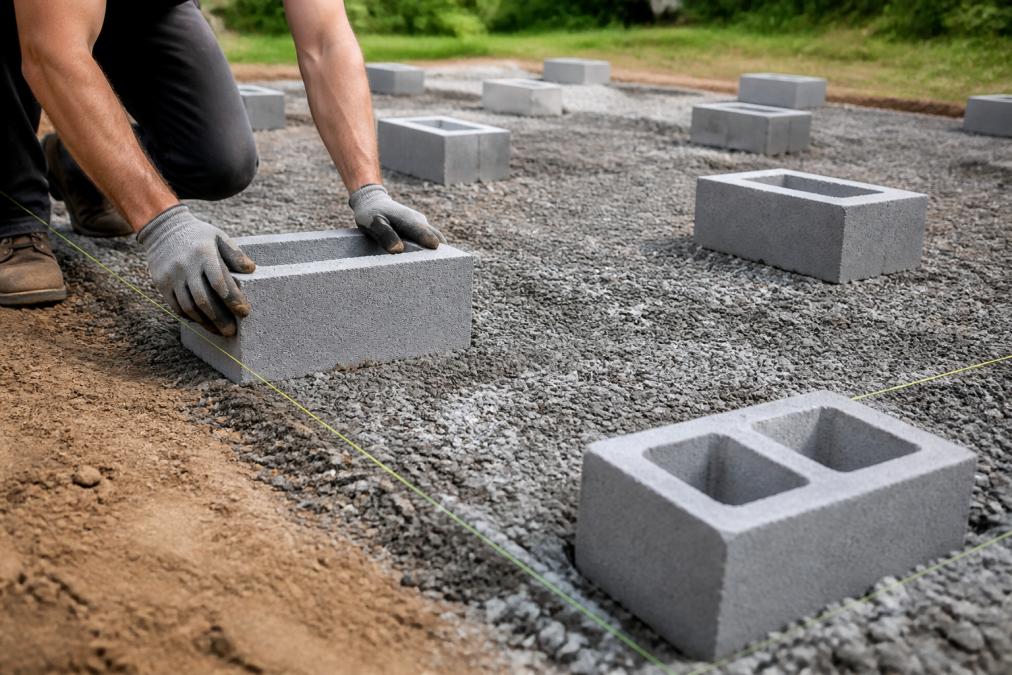
Concrete block piers use individual concrete blocks placed on compacted gravel bases at intervals beneath the shed’s floor frame. Block pier foundations cost $2 to $5 per block for materials, with a typical 10-by-12-foot shed requiring 8 to 12 blocks. Total material cost runs $16 to $60, making this the cheapest foundation option.
Block piers provide excellent ventilation underneath the shed, reducing rot risk. They adapt to slightly uneven terrain better than gravel pads. The trade-off is stability. Each block must be individually leveled, and any settling throws the entire structure off-level. Very heavy sheds or uneven slopes make block piers unreliable.
Block piers are prone to frost heave in cold climates. If your area experiences freeze-thaw cycles, blocks can shift upward in winter as soil freezes beneath them. For permanent structures, consider foundations that extend below the frost line.
Modern Alternatives: Plastic Blocks and Grid Systems
Newer foundation options include plastic deck blocks (like TuffBlock, CAMO BLOCK, and BULLKE) and interlocking plastic grid systems (like ProBase and ECODECK). Plastic deck blocks cost around $8 per block and support over 1,700 pounds per block. Plastic grid systems cost roughly $3.95 to $11 per square foot depending on the brand.
Plastic blocks and grids excel when your yard is slightly uneven or you want to avoid digging. Installation takes hours instead of days. The blocks don’t frost heave like concrete. For a 120-square-foot shed, a plastic grid system might cost $475 to $1,320 just for the foundation.
| Foundation Type | Material Cost Per Sq Ft | Total for 120 Sq Ft Shed | Best For | Lifespan |
|---|---|---|---|---|
| Concrete Slab | $4-$14 | $480-$1,680 | Large sheds, workshops, heavy equipment | 30+ years |
| Gravel Pad | $2-$10 | $240-$1,200 | Small to medium sheds, DIY projects | 10-15 years (with maintenance) |
| Concrete Blocks | $0.15-$0.50 | $18-$60 | Lightweight sheds, uneven terrain | 15-20 years |
| Plastic Blocks | $8 per block | $400-$800 (8-10 blocks) | DIY projects, no-dig preference | 20-25 years |
| Plastic Grid Systems | $3.95-$11 | $475-$1,320 | Small sheds, easy installation | 15-20 years |
Shed Site Preparation Cost Factors
Site preparation often determines whether your foundation project stays on budget. Many homeowners underestimate this phase because they focus only on the foundation material itself.
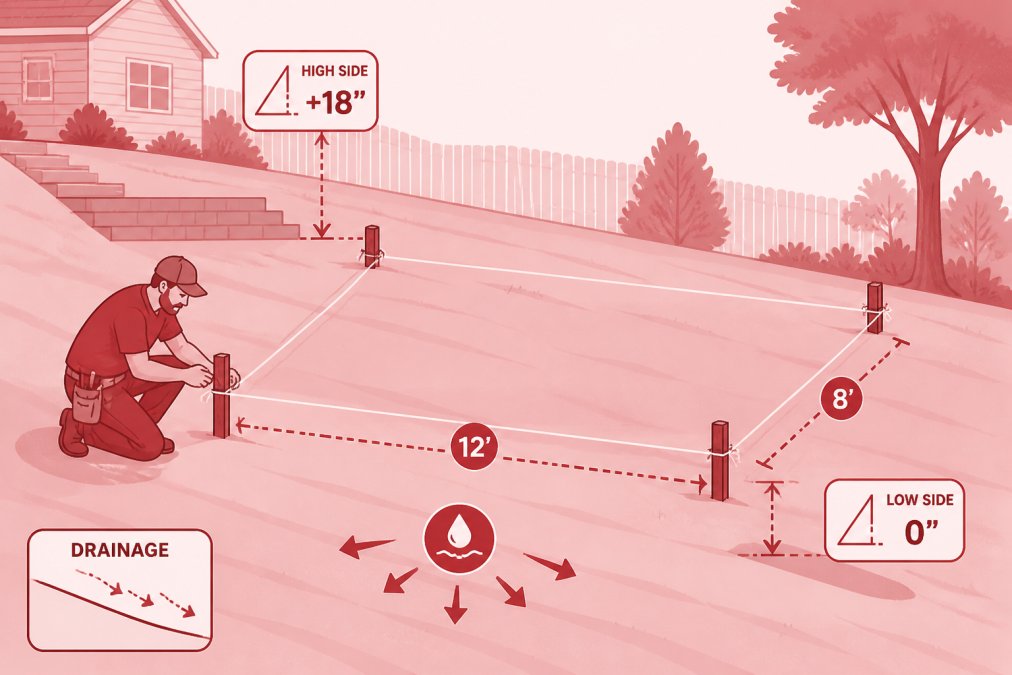
Excavation and grading form the foundation of all shed installations. If your yard is relatively level, excavation might cost nothing (DIY effort) to a few hundred dollars (professional equipment rental). If your yard slopes significantly, you’re moving soil, potentially renting a small excavator at $200 to $400 per day. A sloped site requiring 6 to 12 inches of cut-and-fill can easily add $500 to $1,500 to your project.
Soil testing and geotechnical assessment reveal whether your soil can support the structure. Clay soils compact well and support foundations reliably. Sandy soils drain quickly but provide less bearing capacity. Wet, organic soils cannot support any foundation without extensive preparation. Professional soil testing costs $300 to $800 but prevents catastrophic settling later.
Drainage and grading around the foundation determine whether water pools against the shed base. If your yard doesn’t slope away from the building location, you may need to regrade, install French drains, or create a swale. This can add $200 to $1,000 depending on complexity.
Crushed stone and sub-base materials are required for nearly all foundation types except concrete slabs. A 4-to-6-inch gravel pad under a 120-square-foot shed requires roughly 4 to 5 tons of stone at local delivery costs.
Landscape fabric prevents weeds from growing up through gravel and slows soil migration into the stone layer. A roll of quality landscape fabric costs $50 to $150 and covers 100 to 300 square feet.
Compaction and leveling are where many DIY projects fail. Proper compaction requires a plate compactor (rent for $40 to $80 per day) or hand tamping. Improper compaction leads to settling, uneven floors, and door-frame issues within a year.
DIY Shed Foundation Materials and Installation
Building your own foundation saves labor costs but demands attention to detail and the right tools.
For a gravel pad, clear vegetation and topsoil from the foundation area. Mark out the pad dimensions using string and stakes, extending 12 to 24 inches beyond the shed footprint on all sides. Excavate 4 to 6 inches deep, removing clay and organic material. Lay landscape fabric over the excavated area, overlapping seams by 6 inches. Spread crushed stone in 2-inch lifts, compacting each lift with a hand tamper or plate compactor before adding the next. The final pad should be level and firm.
For concrete block piers, excavate small holes at each pier location, digging down to stable soil (typically 12 to 18 inches in the Northeast). Spread 2 to 3 inches of compacted gravel in each hole. Place the concrete block on the gravel and check for level in all directions using a 4-foot level. Adjust by adding or removing gravel until the block sits solid. Space blocks roughly 4 feet apart in a grid pattern under the shed’s floor frame.
For plastic block systems, clear and level the area as you would for a gravel pad. Lay plastic blocks directly on compacted soil in a grid pattern. Check each block for level before moving to the next.
The most common DIY mistakes are underestimating compaction, skipping landscape fabric, and not extending the foundation far enough beyond the shed footprint.
Rent a plate compactor rather than hand-tamping gravel. The cost ($40-$80 per day) is insignificant compared to the risk of uneven settling.
Labor vs. Material Costs: When to Hire a Professional
For gravel pads and concrete blocks on level ground, DIY is feasible if you have access to a plate compactor and can spend a full day on the work. Material costs run $200 to $600, and you save $400 to $800 in labor.
For concrete slabs, professional installation is nearly mandatory. Pouring concrete requires proper forms, moisture barriers, and finishing techniques. Professional concrete work costs $4 to $14 per square foot but guarantees a proper installation.
For plastic block and grid systems, DIY is straightforward if your yard is relatively level. Material costs run $400 to $1,320, and you save $200 to $500 in labor.
Site preparation is where professionals add the most value. Excavation, grading, and drainage work require equipment and experience that most homeowners lack. If your site requires significant grading or has drainage issues, hiring a professional for site prep while doing the foundation yourself is often the best compromise.
Riehl Structures offers turnkey outdoor structure installation, which can include site preparation and foundation installation, eliminating the stress of coordinating multiple contractors and the risk of installation errors.
Hidden Costs and Budget Overruns to Avoid
Most homeowners budget for foundation materials and miss the costs that derail projects.
Site access and equipment delivery are invisible until they’re not. If your property has a narrow driveway or dense landscaping, getting equipment or materials to the shed location might require renting additional equipment or hand-carrying materials.
Soil remediation costs spike when you discover poor soil conditions. If your soil is too wet, too sandy, or contaminated with organic material, you may need to excavate and replace it with engineered fill. This can add $500 to $2,000 depending on the volume required.
Permits and inspections vary by jurisdiction but typically cost $50 to $300. Some townships require foundation inspections before you can proceed with shed installation. The permit process adds 1 to 4 weeks to your timeline.
Frost line depth determines how deep you must excavate for permanent foundations in cold climates. In the Northeast, frost lines reach 36 to 48 inches below grade. If your foundation doesn’t extend below the frost line, freeze-thaw cycles push it upward, destabilizing the shed, cracks the floor, and sticks doors.
Drainage problems compound over years. A site that seems adequately drained in summer might become a swamp in spring. If water pools around the shed base, you’ll be replacing rotted framing within a few years. Investing $300 to $500 in grading or drainage upfront prevents $2,000+ in repairs later.
Never skip site survey and soil assessment for large sheds or those on sloped or wet sites. A $400 soil test prevents the $5,000+ cost of foundation failure.
Foundation Longevity and Return on Investment
The cheapest foundation isn’t always the best value. Foundation lifespan directly affects your shed’s usable life and total cost of ownership.
A gravel pad foundation lasts 10 to 15 years with maintenance. You’ll spend $50 to $100 annually adding fresh stone and releveling. Over 15 years, maintenance costs $750 to $1,500. If your initial gravel pad cost $400, your total 15-year cost is $1,150 to $1,900.
A concrete slab foundation lasts 30 years or longer with minimal maintenance. The initial cost is $480 to $1,680 for a 120-square-foot shed. After 30 years, your total cost is the initial installation with no ongoing maintenance. The annual cost is $16 to $56.
A concrete block pier foundation lasts 15 to 20 years depending on climate and settling. Maintenance is minimal, but you may need to relevel blocks after 10 years.
The longevity advantage of concrete slabs becomes clear over time. If you plan to keep your shed for 20+ years, a concrete slab costs less per year than any alternative. If you’re building a temporary structure or expect to move in 5 years, a gravel pad or plastic block system makes more sense.
Riehl Structures builds Amish-crafted sheds designed to be durable. Investing in a durable foundation like a concrete slab can help ensure your structure’s quality isn’t compromised by foundation failure.
Permits, Codes, and Compliance
Building codes govern foundation depth, materials, and design based on local soil conditions, frost lines, and seismic activity.
Frost line depth determines foundation depth in cold climates. In Pennsylvania, the frost line ranges from 36 to 48 inches depending on location. Foundations that don’t extend below the frost line experience frost heave, upward movement as soil freezes beneath the structure. This destabilizes the shed, cracks the floor, and sticks doors.
Zoning and setback requirements specify how close to property lines you can build. Most townships require sheds to be set back 5 to 10 feet from property lines. Building permits verify compliance before you start.
Permits and inspections typically cost $50 to $300 and take 1 to 4 weeks. Some jurisdictions require foundation inspections before you can proceed with construction.
Load-bearing capacity requirements depend on what you’re storing. A storage shed requires less bearing capacity than a workshop with heavy equipment. Building codes specify minimum bearing capacity for different uses.
Building a shed foundation is a decision that affects your project’s cost, durability, and long-term value. The foundation type you choose should match your soil conditions, climate, shed size, and intended use, not just your initial budget.
For most homeowners in the Greater Philadelphia and Chester County regions, the real question isn’t whether to spend more on a foundation, but whether to invest upfront in durability or pay for maintenance and repairs later. Riehl Structures offers custom-designed outdoor structures and can help you navigate this decision by assessing your site and recommending the right foundation approach. Get a quote now and let’s build something that will serve your family for generations.
Frequently Asked Questions
What is the cheapest foundation for a shed?
Concrete block piers are the most affordable option, costing $2-$5 per block in materials. A gravel pad runs $2-$10 per square foot for materials only. Both work well for smaller sheds under 200 square feet. Concrete slabs cost $4-$14 per square foot but last longer and suit heavier structures. Your choice depends on shed size, ground conditions, and whether you plan to DIY or hire a professional.
Does a 10×12 shed need a foundation?
Yes. A 10×12 shed (120 square feet) needs a foundation to prevent moisture damage, ensure level ground, and provide structural stability. Smaller sheds under 100 square feet may skip foundations in some cases, but building codes in most U.S. jurisdictions require a foundation for any permanent structure. A gravel pad or concrete slab is standard. Check your local zoning ordinances to confirm requirements.
How much does a 10×10 concrete slab cost?
A 10×10 concrete slab (100 square feet) typically costs $400-$1,400 total, or $4-$14 per square foot including labor and materials. Price varies by region, concrete mix strength, reinforcement (rebar or wire mesh), site accessibility, and whether excavation or grading is needed. Professional installation is recommended for durability. Get a local quote to account for your specific site conditions and labor rates.
What permits do I need for a shed foundation in Pennsylvania?
Pennsylvania zoning and building codes vary by municipality. Most townships require a permit for sheds over 200 square feet or those with permanent foundations like concrete slabs. Some allow gravel pads without permits. Contact your local township building department or zoning office before starting work. Riehl Structures can guide you through the permit process as part of our service.
This article was written using GrandRanker

Copy Link