Shed with Vinyl Siding: The Complete 2026 Guide
Copy Link
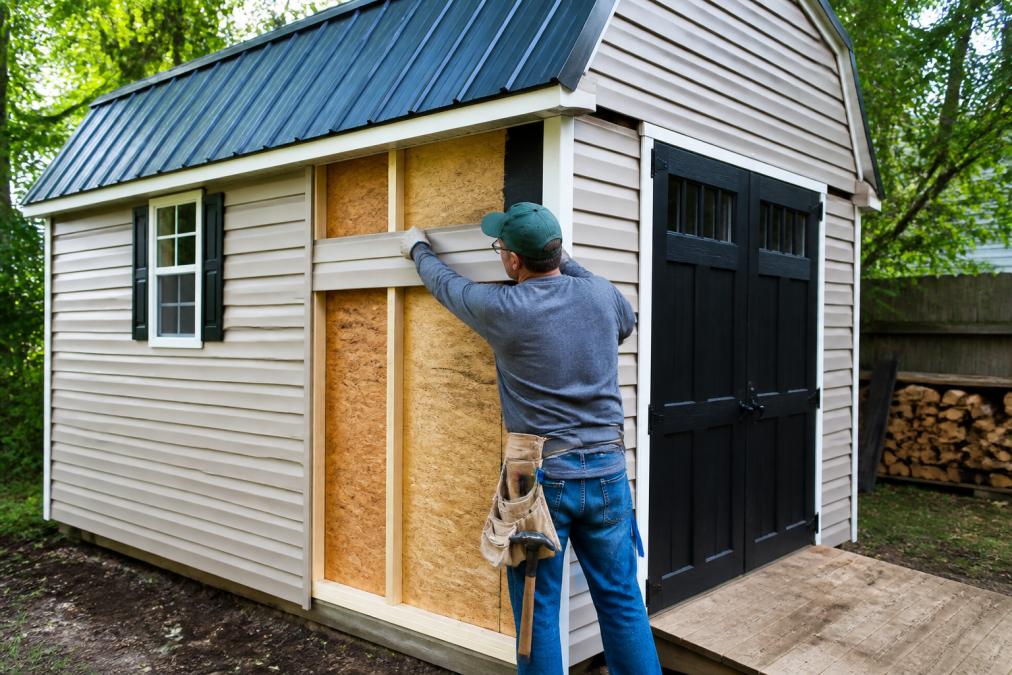
Table of Contents
- Why Choose Vinyl Siding for Your Shed?
- Shed Siding Materials Comparison: Vinyl vs Wood vs Metal
- Vinyl Shed Maintenance Tips for Pennsylvania Weather
- Amish-Built Sheds in West Chester PA: Quality You Can Trust
- How to Customize Your Vinyl Siding Shed
- Installation and Delivery: What to Expect
- Cost and Financing Options for Vinyl Siding Sheds
- Conclusion
- Frequently Asked Questions
Last Updated: September 20, 2026
Why Choose Vinyl Siding for Your Shed?
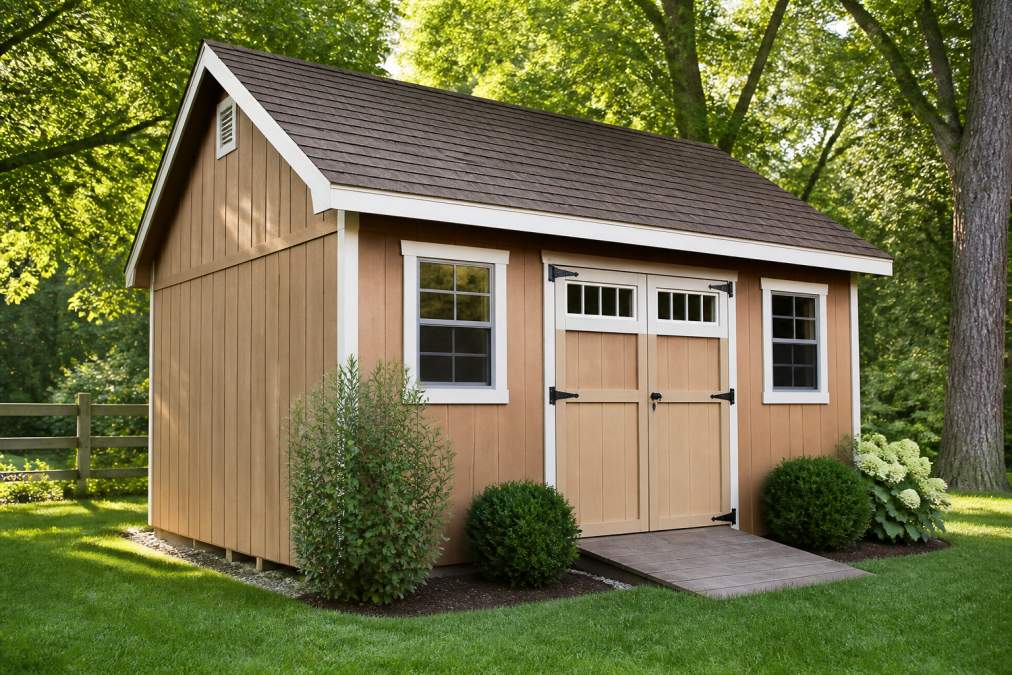
A shed with vinyl siding is a storage building clad in polyvinyl chloride panels that mimic painted wood clapboard, and it has become the default exterior for backyard sheds because it holds paint-free color for decades. At Riehl Structures, we have watched that shift happen across Chester County.
The appeal comes down to three things: weather resistance, near-zero upkeep, and cost predictability at the point of purchase.
Vinyl siding is a plastic exterior cladding made from PVC resin, extruded into interlocking panels that hang loosely on the wall so the material can expand and contract with temperature swings. That loose fit is the whole trick. Panels that were nailed tight would buckle in July and crack in January. Panels that float can move, and movement is what keeps vinyl intact through a Pennsylvania year.
For a shed specifically, that matters more than it does on a house. Sheds are often unheated, poorly ventilated, and exposed on all four sides with no shade from a neighboring wing. The material takes the full thermal cycle, and vinyl handles it better than almost anything in its price class.
Shed Siding Materials Comparison: Vinyl vs Wood vs Metal
A shed siding materials comparison usually comes down to how much maintenance you are willing to do and how long you plan to keep the building. Vinyl wins on maintenance, wood wins on appearance, and metal wins on impact resistance.
| Material | Maintenance | Lifespan | Best For |
|---|---|---|---|
| Vinyl | Rinse 1-2x per year | 20-30+ years | Low-upkeep backyard storage |
| Wood | Repaint every 3-5 years | 15-25 years with care | Custom looks, stain finishes |
| Metal | Touch up scratches | 30+ years | High-wind, rural, or wooded lots |
Wood needs scraping, priming, and repainting on a cycle that never really ends, and a shed that goes two summers without it starts to cup and rot at the base. Metal panels shrug off hail and falling branches, but they dent, they are loud in rain, and they show every scratch once the finish wears through.
Vinyl sits in the middle and does the least asking. The trade-off is that it can crack under a hard impact in extreme cold, and it is not the material to choose if you want a stained cedar look.
If your shed will sit under mature trees, ask about metal or a heavier vinyl profile. Falling limbs and constant leaf tannin are the two things that shorten a vinyl shed’s life fastest, and neither shows up in a showroom.
Vinyl Shed Maintenance Tips for Pennsylvania Weather
Vinyl shed maintenance tips for this region start with one habit: a soft rinse in spring and fall. Southeastern Pennsylvania swings from humid 95-degree summers to single-digit winters, and that cycle leaves pollen, mold spores, and road dust in the panel seams.
A garden hose with a spray nozzle handles most of it. For stubborn mildew on north-facing walls, a bucket of warm water with a little mild dish soap and a soft brush is enough. Never use a pressure washer above a gentle setting, and never aim it upward under a panel edge; forced water behind the siding is how you get a damp interior.
- Rinse all four walls each spring and fall
- Check that panel bottoms still clear the ground by 6 inches or more
- Look for loose or lifted panels after any storm
- Clear leaves and debris from the base and roofline
- Inspect caulk and trim at corners once a year
The climate here also means ice. Water that gets behind a panel and freezes will push it outward over a few seasons, which is why proper flashing at the roof edge and a clear gap at the bottom matter more than any cleaning product.
Do not plant shrubs tight against the siding. Constant moisture against the panel face and blocked airflow at the base are the two most common causes of premature rot in the shed’s framing, and the siding gets blamed for a problem it did not cause.
Amish-Built Sheds in West Chester PA: Quality You Can Trust
Amish-built sheds in West Chester PA differ from mass-produced big-box sheds in the framing, not the siding. The vinyl panels look similar from the driveway. What is behind them does not.
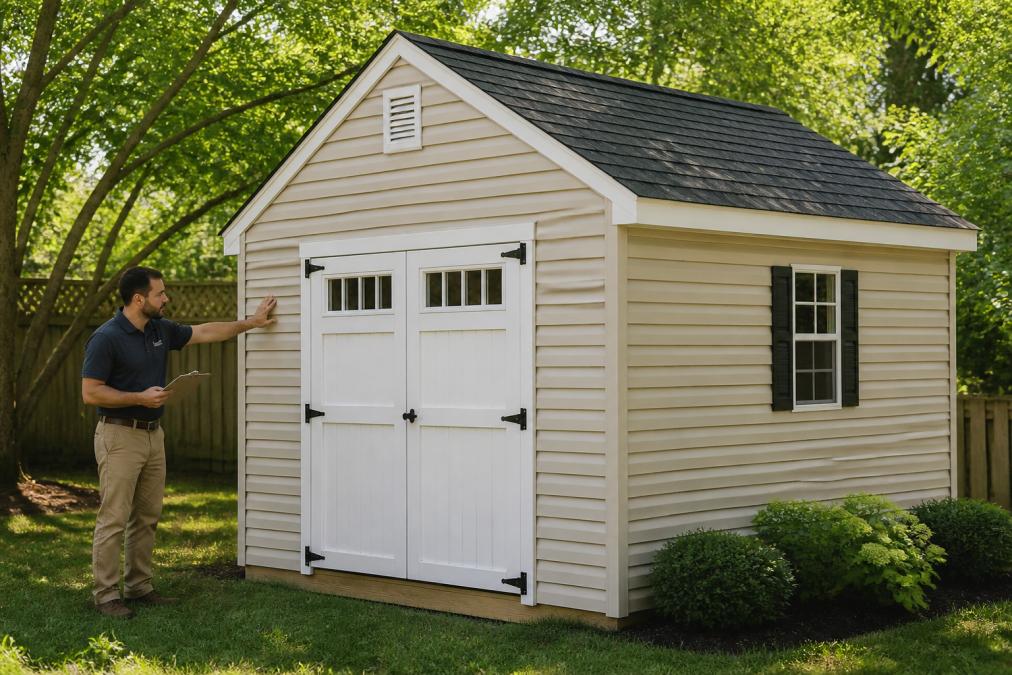
The difference shows up in stud spacing, floor joist size, and how the walls are squared before the siding ever goes on. A shed framed with wider stud spacing and thinner sheathing will flex, and flexing walls are what pop vinyl panels loose at the seams. Buyers who have watched a cheap shed fail in five years tend to ask exactly this question, and the honest answer is that you are paying for what you cannot see. Structural integrity remains the primary defense against long-term damage, though proper maintenance like cleaning vinyl siding ensures the material retains its resilience against the elements for years to come.
Riehl Structures has been building in this area for more than 30 years. One customer put it plainly: “We are extremely pleased and satisfied with our Riehl structure. The finished product was exactly as we planned and imagined.”
That is the standard a shed with vinyl siding should be held to. If the frame is right, the siding is the easy part.
How to Customize Your Vinyl Siding Shed
Customization on a vinyl shed happens in the trim, the doors, and the footprint, not in the siding color alone. Vinyl comes in many molded profiles, from standard clapboard to board-and-batten and shake-style panels, and mixing two profiles on one building changes its look more than any paint color would.
Start with size, since it is the one decision you cannot change later. A common mistake is sizing to today’s lawnmower instead of the riding mower, snow blower, and bikes that arrive in three years. If there is any chance you will outgrow the building, say so before the order is placed rather than after.
Then work outward:
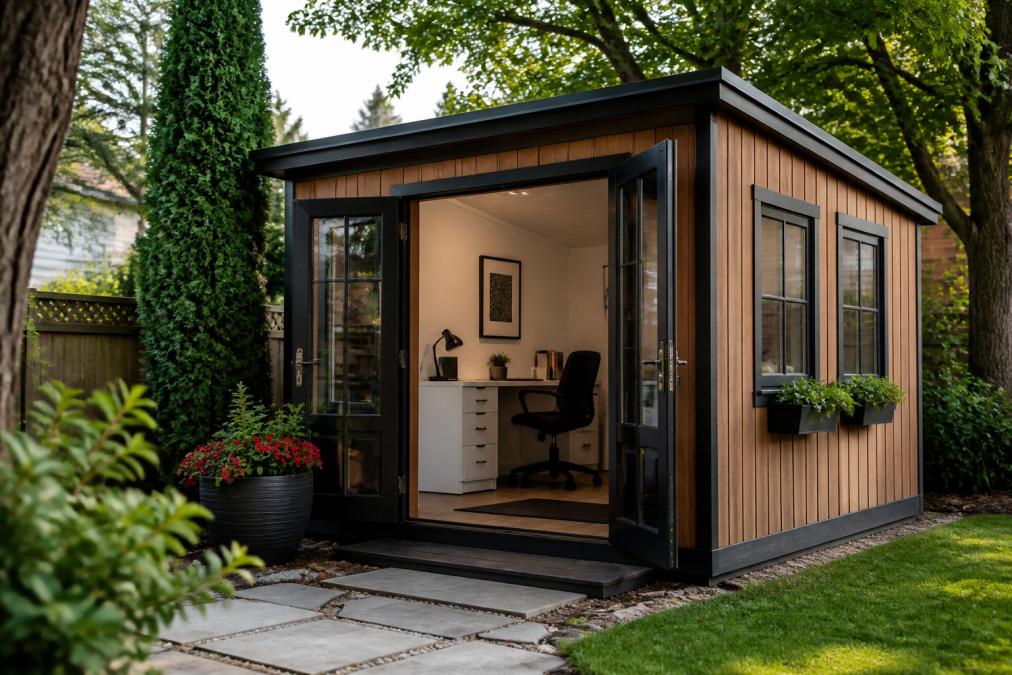
- Profile: clapboard for a classic look, board-and-batten for a modern shed or studio
- Color: match the house, or go darker for a garden studio that should recede into the trees
- Trim and corners: contrasting corner boards and fascia do most of the visual work
- Doors and windows: double doors for equipment, a single door plus windows for a workshop
- Ramps and shelving: added at build time, not retrofitted later
Shoppers comparing a custom shed to a cheaper online listing are usually comparing the siding, which is the least important variable. The framing, the floor, and the delivery method are where the money actually goes.
Installation and Delivery: What to Expect
Delivery on a vinyl-sided shed is not a drop-and-run operation when it is done properly. The building arrives on a trailer, gets positioned on your prepared site, and is leveled before the driver leaves.
Site prep is the part most buyers underestimate. A yard that slopes toward the back does not automatically mean thousands in excavation. In many cases a gravel pad or a small block foundation brings the site into tolerance, and a site visit settles the question before you commit to anything. A common mistake is ordering a shed before anyone has looked at the ground.
Leveling matters more with vinyl than with wood. A building that settles unevenly will rack slightly, and racked walls are where panels separate at the seams. If the shed is going on a slope, the foundation does the work, not the siding.
Permits are the other piece buyers worry about. Requirements vary by township across Chester County, and the honest answer is that the rules depend on your municipality, the size of the building, and whether it sits on a permanent foundation. Ask before you order rather than after the trailer is in the driveway.
Cost and Financing Options for Vinyl Siding Sheds
Cost for a vinyl-sided shed depends on size, profile, trim, doors, windows, and site conditions, so pricing is quoted per building rather than published as a flat rate. Anyone who quotes you a single number before asking those questions is guessing.
What you can control is how you pay. Financing that does not require home equity keeps the purchase separate from your mortgage, and terms without a prepayment penalty let you pay the balance off early instead of carrying a fixed schedule to the end.
Conclusion
The hard part of buying a shed is not choosing the siding. It is knowing whether the frame behind it will still be square in fifteen years, and that question is answered before the first panel goes on. Riehl Structures builds Amish-crafted structures with custom design, flexible financing that requires no home equity and carries no prepayment penalty, and free delivery within 30 miles of our West Chester and King of Prussia locations.
Frequently Asked Questions
Is vinyl siding better than wood for a storage shed?
Vinyl siding outperforms wood for sheds in most cases. It resists rot, insects, and moisture, and never needs repainting. Wood requires regular sealing and staining, and can warp or decay in Pennsylvania’s humid summers and freezing winters. Vinyl costs more upfront but saves on long-term maintenance. For a low-maintenance, durable shed, vinyl is often the better choice.
Does vinyl siding on a shed require a lot of maintenance?
No, vinyl siding is one of the lowest-maintenance options. An annual rinse with a garden hose removes most dirt. For stubborn stains, use a mild soap and soft brush. Avoid pressure washing, which can force water behind panels. Check for loose panels after severe storms. With basic care, vinyl siding keeps its appearance for decades.
Can I customize the color of my vinyl siding shed?
Yes, vinyl siding comes in a wide range of colors, from classic white and beige to deeper greens, blues, and grays. You can also mix colors for trim, doors, and shutters. Riehl Structures offers custom design services, so you can match your shed to your home’s exterior. Ask about color samples during your consultation.
How long does a vinyl-sided shed last in Pennsylvania weather?
A quality vinyl-sided shed can last 25 to 30 years or more in Pennsylvania’s climate. Vinyl resists moisture, UV rays, and temperature swings. The lifespan depends on the shed’s foundation, installation, and the grade of vinyl. Amish-built sheds from Riehl Structures use high-quality materials and construction methods that stand up to local weather.

Copy Link