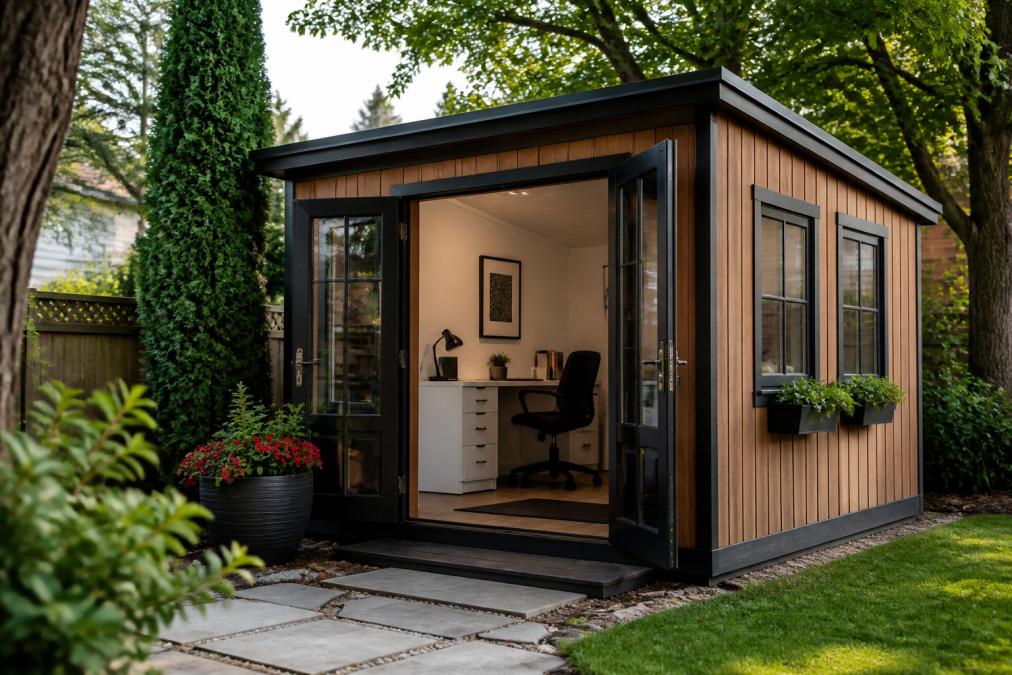
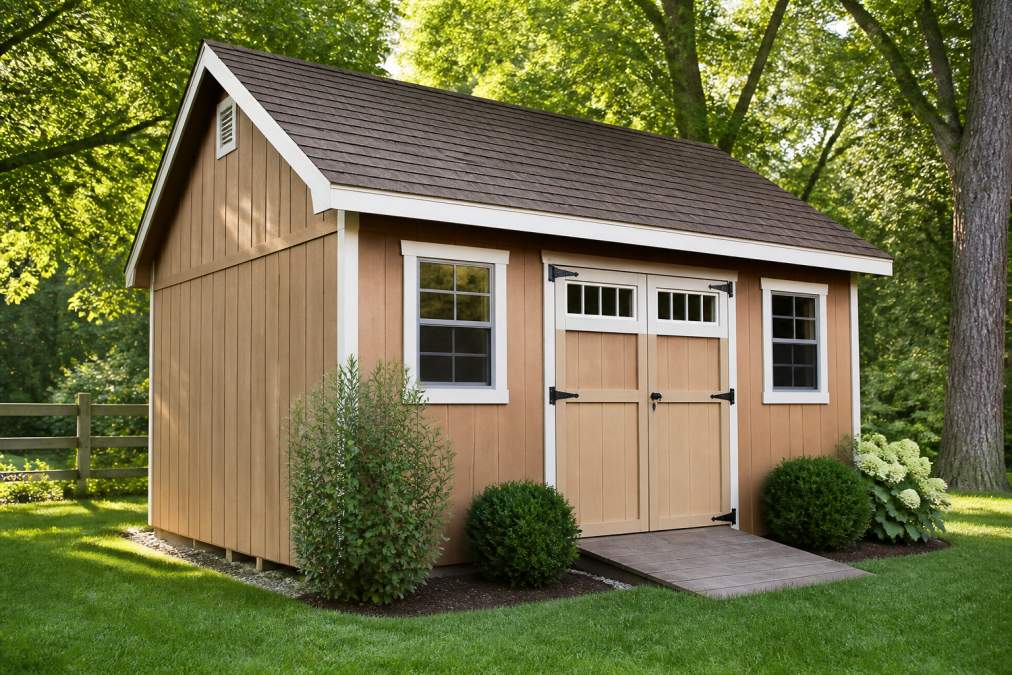
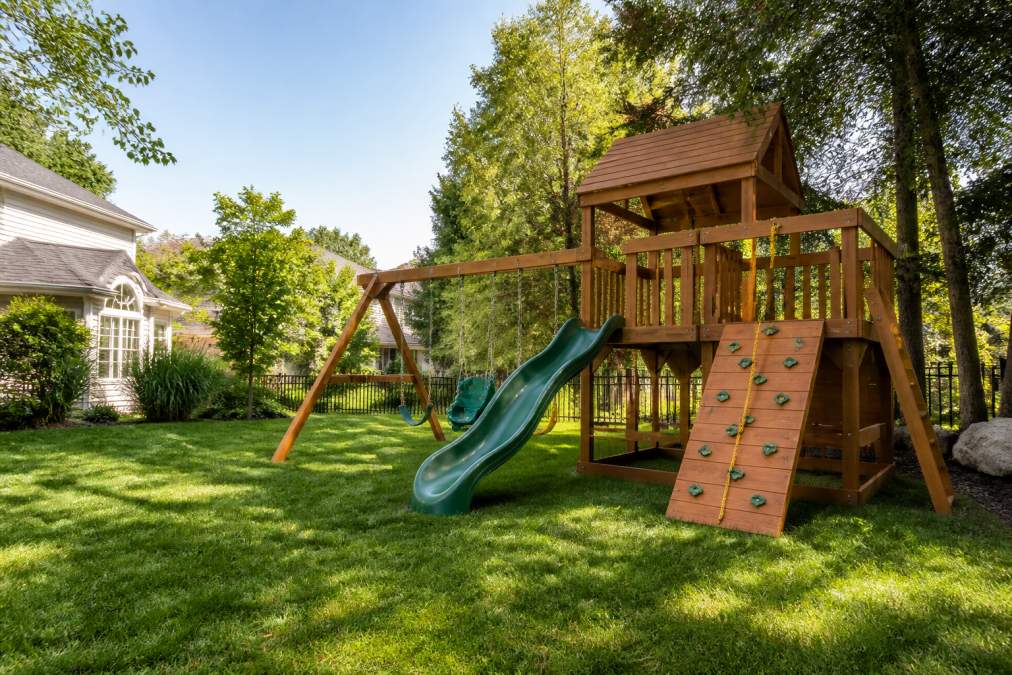
Best Size Shed for Backyard: A Complete Guide
Copy Link
Table of Contents
- How to Choose the Best Size Shed for Your Backyard
- Common Shed Dimensions and What They Hold
- Shed Foundation Requirements and Site Preparation
- Local Shed Building Codes and Permit Requirements
- Maximizing Storage With Shed Organization Tips
- Comparing Shed Types: Cost, Durability, and Maintenance
- Finding Your Ideal Backyard Shed Size
- Conclusion
Best Size Shed for Backyard: A Complete Guide
Last Updated: August 2, 2026
Finding the best size shed for backyard storage is less about picking the largest option and more about matching your structure to three critical factors: available space, intended use, and local regulations. At Riehl Structures, we’ve helped hundreds of homeowners in Pennsylvania navigate this decision. The most successful shed purchases happen when people think beyond square footage and consider actual access, equipment fit, and township permits. Buy too small and you’ll outgrow it within two years. Buy too large and you’ve wasted money or violated setback requirements that force relocation. This guide shows you exactly how to determine the right dimensions for your property.
How to Choose the Best Size Shed for Your Backyard
The decision process requires answering three questions in order: How much space do you have? What will you store? What does your township allow?
Start by measuring your available yard space. Walk the perimeter and identify usable area, excluding sections near the house, fence lines, and slopes. Many homeowners discover they have far less usable space than assumed, especially once they account for local setback requirements.
Next, list everything you plan to store. Don’t estimate, count your lawn equipment, tools, and seasonal items. A riding lawn mower is 4 feet wide and 8 feet long, a constraint that rules out many small sheds. Two bicycles, a snow blower, and hand tools fit in an 8×8 shed. A full workshop with workbench and power tools requires 12×16 or larger.
Finally, call your township zoning office and ask three specific questions: What’s the maximum shed size allowed without a permit? What setback distances are required from property lines? Are there height restrictions? This 15-minute call prevents costly mistakes.
Before measuring or shopping, take photos of your backyard from multiple angles and note existing utilities (water lines, electric, septic). Many homeowners discover underground utilities during site preparation and must relocate their shed plan entirely.
| Decision Factor | What to Measure | Red Flags |
|---|---|---|
| Available space | Usable flat area in square feet | Slopes, tree roots, or utility lines |
| Storage needs | Length × width of largest item | Underestimating equipment size |
| Local regulations | Setback distance, max square footage | Assuming neighbor’s rules apply to you |
Assessing Your Available Backyard Space and Property Lines
Most homeowners measure their yard once and assume they know what they’re working with. That’s where mistakes happen.
Walk your property lines carefully and look for survey markers (small metal stakes or flags) that define your actual property boundary, not your fence line. Many fences sit several feet from the true property line. Setback requirements typically demand sheds sit 5-15 feet from property lines, depending on your township.
Measure the usable area where you plan to place the shed and note any slopes. Even a gentle slope creates site preparation costs. If your yard slopes more than 2-3 inches per 10 feet, you’ll need to level it by filling or digging.
Check for underground utilities by calling 811 (the national "call before you dig" service) to have utility lines marked. Water, electric, gas, and septic lines are common obstacles that can make a location illegal or create serious liability.
Placing a shed directly over a septic drain field or within 10 feet of a septic tank violates health codes in most states and can result in fines or forced removal. Always verify utility locations before site selection.
Identifying Your Primary Storage Purpose
What you store determines minimum dimensions more than available space does.
A garden shed with hand tools, rakes, shovels, and potting supplies fits comfortably in 8×6 feet (48 square feet). Add a riding mower, and you need at least 10×10 feet (100 square feet) to open the door and maneuver inside.
Workshop sheds demand more vertical and floor space. If you plan to hang tools on walls and use a workbench, a 10×12 footprint gives you room to move. Hobbyists needing space for a lathe, miter saw, or other stationary tools should plan for 12×16 or larger.
Multi-purpose sheds benefit from taller roof pitches and lofted storage. A 10×12 shed with a lofted attic space effectively doubles your usable storage without doubling your footprint. Be honest about future growth, it’s far cheaper to buy a larger shed today than to add a second structure later.
Common Shed Dimensions and What They Hold
Small Sheds: 4×6 to 8×8 Footprints
A 4×6 shed (24 square feet) stores hand tools, a few bicycles, and seasonal decorations. An 8×8 shed (64 square feet) is the real entry point for serious storage. It holds a riding mower, a snow blower, hand tools, and seasonal items with the footprint small enough to fit most suburban backyards without major site prep. Interior organization is critical, without shelving and wall storage, the space fills quickly.
Small sheds work best for homeowners with limited yard space or those storing only hand tools and small equipment. They’re also easiest to site and typically don’t require permits in many townships.
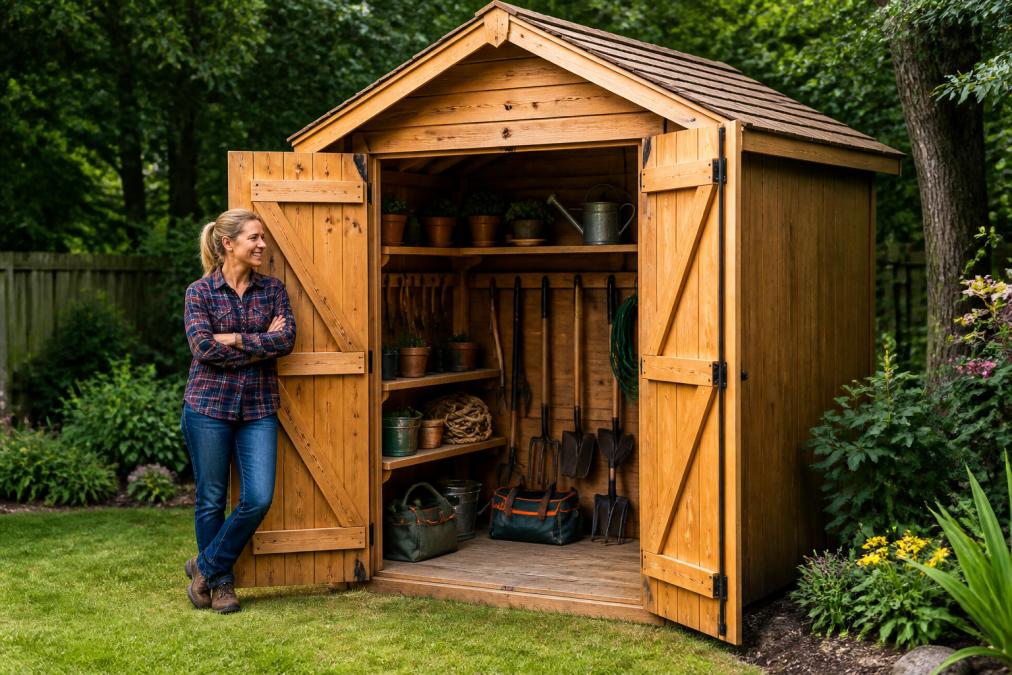
Medium Sheds: 8×10 to 10×12 Footprints
An 8×10 shed (80 square feet) is the most popular size for suburban backyards. It holds a riding mower, snow blower, bicycles, hand tools, and seasonal decorations with room to spare. The door opens fully, and you can move around inside without squeezing past equipment.
A 10×12 shed (120 square feet) gives you workshop capacity. You can install a workbench along one wall, hang tools, and still park a riding mower. This size works for hobbyists needing dedicated workspace. Medium sheds typically require permits and must comply with setback requirements.
Large Sheds: 12×16 and Beyond
A 12×16 shed (192 square feet) approaches small garage territory. You can fit two vehicles, a full workshop setup, or significant equipment storage. This size requires careful site selection and almost always requires permits and inspections.
Anything larger than 12×16 may trigger different zoning classifications in many townships. Some jurisdictions reclassify structures over 200 square feet as "accessory buildings" with stricter requirements. Check local rules before committing to a large footprint.
Shed Foundation Requirements and Site Preparation
A shed is only as solid as what it sits on. Most sheds fail prematurely because of poor foundation work, not poor construction.
Your foundation options depend on local codes and soil conditions. A gravel or crushed stone base (4-6 inches deep) works for small sheds in well-draining soil. A concrete pad (4 inches thick, reinforced) is the gold standard for medium and large sheds, preventing water intrusion and providing a level surface.
If your yard slopes, you have two options: bring in fill soil to level the area or dig out the slope. Both add cost. A slope greater than 3-4 inches per 10 feet typically requires professional grading.
Frost heave is a real concern in Pennsylvania winters. If your shed sits on soil without proper drainage, water freezes and expands, shifting the foundation and causing doors to jam or walls to crack. Proper gravel base or concrete pad with drainage prevents this.
Your shed needs breathing room. A minimum 3-foot clearance on all sides allows you to walk around it and perform maintenance. Door swing is critical, an 8-foot-wide door needs 8 feet of clear space in front to open fully. Check your local setback rules, as some measure from the shed wall and others from the roof edge.
The best size shed for backyard storage accounts for site prep costs, not just the footprint. A larger shed on poor soil can cost more to prepare than a smaller shed on well-drained ground.
Local Shed Building Codes and Permit Requirements
Setback requirements define how far your shed must sit from property lines, roads, and structures. Pennsylvania townships vary widely. Some require 5 feet from side property lines; others demand 15 feet. Easements are invisible restrictions on your land, utility easements typically prohibit structures above ground.
Building permits are required for sheds over a certain size (typically 100-200 square feet, depending on your township). Permit costs range from $50 to $300, and the process takes 2-4 weeks. Unpermitted structures can be ordered removed, and you lose insurance coverage if something goes wrong.
If you live in a community with a homeowners association, HOA rules often supersede township zoning. HOA covenants may restrict shed colors, materials, and placement. Check your CC&Rs (Covenants, Conditions, and Restrictions) before you buy. Call your zoning office and ask for written confirmation of rules, don’t rely on what a neighbor says.
Maximizing Storage With Shed Organization Tips
A well-organized shed feels larger than its actual footprint. Most homeowners use only floor space and forget about vertical storage. Wall-mounted shelving, pegboards, and hooks multiply your usable capacity. A 10×10 shed with floor-to-ceiling wall storage holds far more than one without it.
Overhead storage racks or lofted attic space add capacity without expanding the footprint. A lofted 10×12 shed effectively stores seasonal decorations and rarely-used items overhead, leaving the floor clear for daily-use items.
Wall shelving (adjustable metal or wood shelves) organizes tools, paint cans, and small equipment. A simple workbench (2-3 feet wide) along one wall creates a potting or tool-repair station without consuming much floor space. Zone your space: one corner for lawn equipment, one wall for hand tools, overhead for seasonal items, and a small workbench area.
Comparing Shed Types: Cost, Durability, and Maintenance
Material choice affects long-term cost and maintenance burden more than size does.
Wood sheds offer aesthetic appeal and customization, blending with residential landscapes. They’re also the most maintenance-intensive, requiring regular staining or painting every 3-5 years to prevent rot. Riehl Structures builds Amish-crafted wood sheds with premium materials that extend lifespan significantly compared to mass-produced kits.
Metal sheds are affordable and low-maintenance, resisting rot and requiring no painting. The downside: they dent easily, rust if the coating is damaged, and feel industrial in residential settings.
Resin sheds require almost no maintenance and don’t rot, rust, or need painting. The downside: resin can become brittle in extreme cold, and UV exposure can fade colors.
For durability and long-term value, wood sheds built with quality materials outperform cheaper alternatives. A $2,000 wood shed lasting 25 years costs $80 per year. A $800 metal shed lasting 12 years costs $67 per year, but you’re replacing it twice in the same timeframe.
Custom-built sheds cost more upfront but deliver better long-term value through superior craftsmanship and durability. Riehl Structures offers flexible financing with no prepayment penalties, making premium quality accessible without a large upfront payment.
Finding Your Ideal Backyard Shed Size
The best size shed for backyard storage is the smallest size that fits your actual needs plus 20% growth capacity.
Start with your current storage list and measure your largest item. That’s your minimum interior width. Add 2 feet of clearance on either side, and you have your minimum shed width. If your largest item is 4 feet wide, you need at least 8 feet of interior width.
Length depends on how many items you’re storing. A 4-foot-deep item needs 4 feet of length plus clearance. Add space for other equipment, and 10-12 feet of length is typical for medium sheds. Height matters less than footprint, but taller sheds (8-foot walls instead of 7-foot) offer lofted storage options. Check your township’s height restrictions before choosing.
Once you’ve calculated minimum dimensions, add 20% for future growth. If you need 8×10 for current needs, consider 10×12. That extra capacity prevents the need to replace the shed within five years.
For homeowners in the Greater Philadelphia and Chester County region, Riehl Structures provides custom design services that match your exact needs. The team can assess your property, verify local permit requirements, handle site preparation, and deliver a shed tailored to your space and budget. Free delivery within 30 miles of West Chester and King of Prussia locations, plus flexible financing, makes the process stress-free.
Choosing the best size shed for backyard storage requires balancing available space, storage needs, and local regulations. The most common mistake is underestimating future needs or overlooking permit requirements. Riehl Structures simplifies this decision with custom design services, professional site assessment, and Amish-built quality that lasts decades. Get a quote now and discover how a properly sized, professionally built shed transforms your backyard storage.
Frequently Asked Questions
What is the most popular shed size for a backyard?
The 8×10 footprint (80 square feet) is the most commonly chosen size for residential backyard sheds. This dimension offers enough storage capacity for a riding lawn mower, hand tools, seasonal items, and garden equipment without overwhelming most properties. It balances practical storage with reasonable site preparation and foundation costs. However, the best size for your backyard depends on your specific needs, available space, and local building codes.
How do I determine what size shed I need for my backyard?
Start by listing what you'll store: a riding mower requires roughly 48 square feet alone, while hand tools and smaller equipment need 20-30 square feet. Measure your available yard space and check property lines and setback requirements with your township. Consider future needs, most homeowners wish they'd gone slightly larger. Sketch your backyard layout to see how different footprints fit. Finally, verify local building codes; some areas restrict shed sizes or require permits above certain square footages.
What size shed can I build without a permit in Pennsylvania?
Pennsylvania regulations vary by township and municipality. Many areas allow sheds under 200 square feet without permits, but some require permits for any permanent structure. Accessory structures often have setback requirements (typically 5-10 feet from property lines). Contact your local township office before purchasing to confirm exact rules for your property. HOAs may impose stricter limits than municipal codes. Getting this right upfront saves costly delays or having to relocate a completed structure.
Should I buy a larger shed than I think I need?
Most homeowners report wishing they'd chosen a larger shed within 2-3 years. Storage needs tend to grow as you acquire tools, seasonal decorations, and equipment. A medium 10×12 shed costs only slightly more than an 8×10 but provides 44% more storage. However, balance this against your available space, foundation costs, and local regulations. If your yard is tight or permits are restrictive, a smaller shed with smart vertical storage and overhead shelving can maximize capacity without requiring expansion.
This article was written using GrandRanker

Copy Link