Outdoor Living Structures: A Complete Guide
Copy Link

Table of Contents
- What Are Outdoor Living Structures?
- Types of Outdoor Living Structures
- Best Materials for Outdoor Living Spaces
- Backyard Pergola Ideas and Design Considerations
- Cost of Outdoor Structures and ROI
- Permits, Zoning, and Installation Requirements
- Creating Your Outdoor Oasis
- Conclusion
Last Updated: July 11, 2026
What Are Outdoor Living Structures?
Outdoor living structures are permanent or semi-permanent installations designed to extend your usable backyard space and create functional outdoor areas. At Riehl Structures, we’ve helped thousands of homeowners transform their yards with custom-built pergolas, pavilions, gazebos, and other outdoor solutions that blend aesthetics with practicality. These structures range from simple shade solutions to elaborate outdoor kitchens, each serving a specific purpose in your landscape design.
A well-designed outdoor structure becomes an extension of your home, a place where families gather, friends celebrate, and memories form.
Why They Matter for Your Backyard
Outdoor living structures solve real problems: excessive sun exposure, lack of defined entertaining space, and underutilized square footage. When you add these structures to your property, you establish zones within your landscape. A pergola defines a seating area. A pavilion becomes your outdoor dining room. A gazebo creates a focal point that anchors your entire backyard design.
Research from the National Association of Landscape Professionals indicates that outdoor structures consistently rank among the highest-value outdoor improvements for both enjoyment and property appeal. Many homeowners discover they use their yards significantly more often after adding structures.
Types of Outdoor Living Structures
Understanding your options is the first step toward choosing the right structure for your needs.
Pergolas, Arbors, and Trellises
A pergola is an open-roof structure with a framework of beams or lattice, designed to provide partial shade while allowing light and air circulation. Unlike a full roof, pergolas create dappled shade that becomes deeper as climbing vines mature.
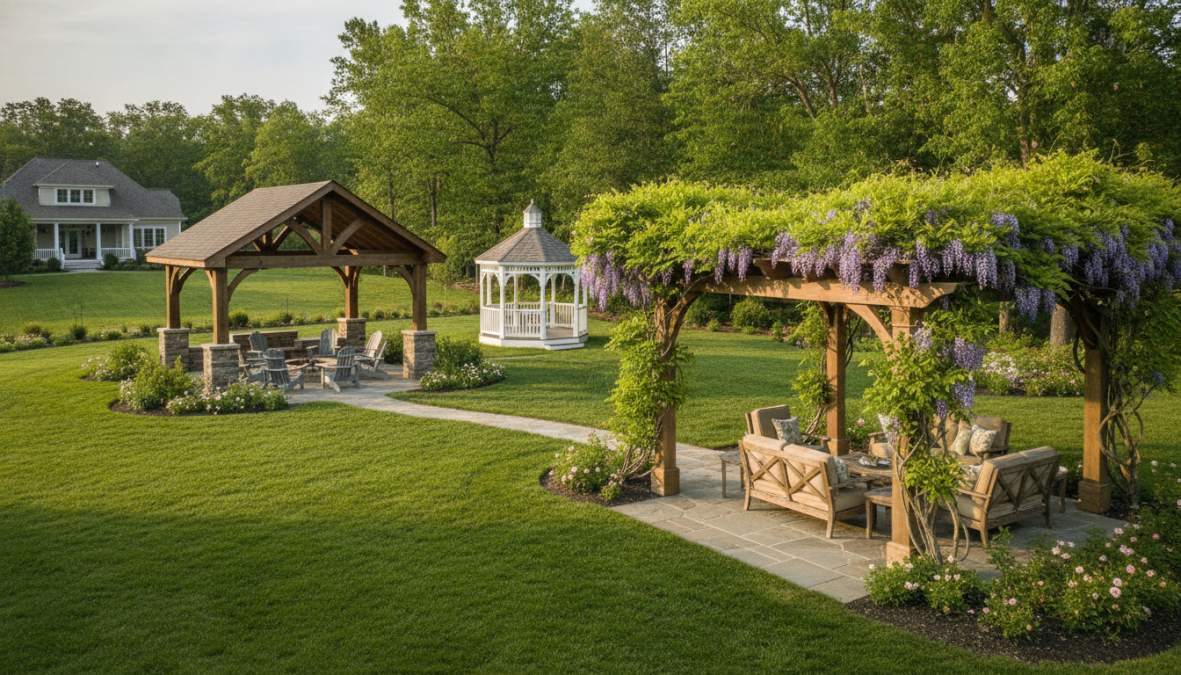
Arbors are smaller, more decorative structures that frame entryways or garden pathways. Trellises are open frameworks that support climbing plants while taking up minimal space. Each serves different functions: pergolas provide functional shade for entertaining or lounging, arbors create visual interest and mark transitions, and trellises add vertical greenery without requiring much footprint space.
Pergolas typically require foundation posts and can be constructed from wood, vinyl, or aluminum. Wood pergolas offer warmth and natural beauty but require regular staining or sealing. Metal options provide durability with less maintenance.
The most successful pergolas are positioned to catch morning or late-afternoon sun while blocking midday heat, maximizing comfort during peak entertaining hours.
Gazebo vs Pavilion: Key Differences
A gazebo is typically a freestanding, enclosed or semi-enclosed structure with a roof that provides complete weather protection. Most gazebos are octagonal or hexagonal. A pavilion is an open-sided structure with a roof, supported by posts, designed primarily for entertaining while maintaining an open, airy feeling.
Choose a gazebo if you want a defined, intimate space separate from your home. Choose a pavilion if you want to entertain larger groups and maintain visual connection to your yard and home. Gazebos typically cost more per square foot due to their enclosed design. Pavilions offer more square footage for the investment since they’re simpler to construct. Both add significant curb appeal and outdoor living value.
Screened Porches and Open-Air Covers
Screened porches provide insect protection while allowing airflow, making them ideal for regions with significant bug populations. Open-air covers, simple roof structures without walls or screening, provide basic weather protection over decks, patios, or hot tubs. These are the most affordable outdoor structures and require minimal foundation work.
Best Materials for Outdoor Living Spaces
Material selection determines your structure’s longevity, maintenance requirements, appearance, and cost.
Wood, Metal, and Weather-Resistant Options
Wood remains the most popular choice for outdoor living structures. Cedar and pressure-treated lumber offer natural beauty and reasonable durability. The trade-off is maintenance: wood requires periodic staining, sealing, or painting to prevent rot and insect damage, typically every 2-3 years in humid climates.
Aluminum and steel structures offer durability with minimal maintenance. Aluminum doesn’t rust and requires only occasional cleaning. Steel is stronger but requires protective coatings to prevent rust. Metal structures suit modern aesthetics and work well in coastal environments.
Vinyl mimics wood appearance while requiring virtually no maintenance. It’s more expensive initially but saves money over decades through eliminated maintenance. Composite materials blend wood fibers with plastic, offering wood-like appearance with reduced maintenance compared to solid wood.
Match your material choice to your climate and tolerance for maintenance. Wood suits those willing to maintain it. Vinyl and composite suit those prioritizing longevity with minimal upkeep. Metal suits coastal areas and modern designs.
Backyard Pergola Ideas and Design Considerations
Creating the perfect pergola requires thinking beyond just the structure itself. Your pergola should integrate with your landscape, serve your intended purpose, and complement your home’s architecture.
Custom Design and Landscape Architecture
The most successful outdoor living structures are custom-designed for their specific location and purpose. Consider these design elements: What’s the pergola’s primary function? Shade for a seating area? A frame for an outdoor kitchen? A focal point visible from your house?
Sun exposure matters tremendously. A pergola on the south side of your home needs different beam spacing than one on the west side. East-facing pergolas provide morning shade without blocking afternoon warmth. West-facing structures block intense afternoon sun.
Sight lines determine whether your pergola feels integrated or intrusive. The best pergolas frame views of your landscape rather than blocking them. Your pergola should complement your home’s exterior, matching roofline angles or intentionally contrasting if that’s your design goal.
Foundation and Site Preparation Essentials
Proper foundation work determines whether your outdoor structure stands for decades or develops problems within years. Your structure’s foundation depends on soil conditions, frost lines in your region, and the structure’s weight. In areas with significant freeze-thaw cycles, posts must extend below the frost line, typically 3-4 feet deep in northern climates.
Site preparation begins with soil assessment. Clay soil requires different treatment than sandy soil. Wet sites need drainage solutions before construction. Before construction begins, call your local utility locating service to mark gas lines, electrical conduits, and water pipes.
Improper foundation work is the most common reason outdoor structures fail prematurely. Frost heave, settling, and water damage all stem from inadequate site preparation. The cost of fixing foundation problems after construction is exponentially higher than doing it correctly initially.
Cost of Outdoor Structures and ROI
Investment in outdoor living structures requires understanding both the immediate cost and the long-term value they provide.
The cost of outdoor structures varies dramatically based on size, materials, and complexity. A simple pergola costs less than a custom pavilion with built-in features. An outdoor kitchen integration adds substantial expense. Cost scales with square footage, material quality, and customization level.
Several factors drive cost: material choices (wood versus vinyl versus metal), whether you’re adding utilities (electrical for lighting, plumbing for outdoor kitchens), complexity of the design, and local labor rates. Riehl Structures offers flexible financing options including Rent to Own programs with no prepayment penalties and no home equity requirements.
Property Value and Long-Term Benefits
According to Remodeling Magazine’s Cost vs. Value Report, outdoor improvements consistently deliver strong returns, often recovering 50-80% of investment at resale.
But the intangible returns matter more for most homeowners. A well-designed outdoor space increases daily enjoyment of your property. You use your yard more frequently, spend more time outdoors, and create more opportunities for family gatherings. A covered structure allows you to enjoy your yard during light rain or intense sun, effectively extending your usable outdoor season by weeks or months depending on your climate.
Permits, Zoning, and Installation Requirements
Before breaking ground, understand the regulatory requirements in your area. Most jurisdictions require permits for permanent outdoor structures. Permit requirements typically depend on size, materials, and whether the structure is attached to your home.
Zoning regulations affect placement and design. Setback requirements specify how far your structure must be from property lines. Height restrictions limit how tall your structure can be. Understanding these requirements before designing your structure prevents expensive redesigns later.
Installation requirements depend on structure type and your local building code. Most permanent structures require concrete footings below the frost line. Electrical work requires licensed electricians and proper permits. Professional installation ensures your structure is safe, legal, and built to last.
Creating Your Outdoor Oasis
Transforming your backyard into a true outdoor oasis requires thinking about your space holistically. Start with a clear vision of how you’ll use the space. Will this be primarily for entertaining? Quiet retreat? Outdoor dining?
Consider the relationship between your structure and your home. The best outdoor living spaces feel like natural extensions of your interior. Hardscaping, patios, pathways, and ground surfaces complete your outdoor space. A pergola floating above grass feels incomplete; the same pergola anchoring a paved patio becomes a finished outdoor room.
Lighting extends your outdoor space into evening hours. String lights, uplighting on trees, or integrated post lighting transform your structure from daytime feature to evening destination. Furniture and accessories complete your outdoor oasis, with weather-resistant materials working better than those requiring constant upkeep.
Custom outdoor living structures work best for homeowners who plan to stay in their homes long-term, value daily outdoor enjoyment, and want structures tailored to their specific landscape and lifestyle.
Conclusion
Outdoor living structures represent a significant investment in your property and quality of life. The structures that deliver the most value are those designed specifically for your space and needs. Riehl Structures specializes in custom outdoor structures using Amish craftsmanship and attention to detail. We offer flexible financing options including Rent to Own programs with no prepayment penalties, free delivery within 30 miles of our West Chester and King of Prussia locations, and professional installation that ensures your structure meets all local codes.
Research from the National Association of Landscape Professionals consistently shows that outdoor improvements deliver both immediate enjoyment and strong long-term value. Whether you’re looking to extend your entertaining space, create a shaded retreat, or add architectural interest to your landscape, outdoor living structures make your backyard work harder and more enjoyably.
Get a quote now from Riehl Structures and transform your backyard into the outdoor living space you’ve been imagining.
| Structure Type | Best Use | Primary Benefit | Typical Maintenance |
|---|---|---|---|
| Pergola | Shade with openness | Partial shade, architectural interest | Annual staining (if wood) |
| Pavilion | Entertaining | Full weather protection, large gathering space | Periodic roof inspection |
| Gazebo | Intimate retreat | Complete enclosure, defined space | Seasonal cleaning |
| Screened Porch | Year-round use | Insect protection with airflow | Screen replacement as needed |
| Arbor | Entryway framing | Visual focal point, minimal footprint | Plant maintenance |
Frequently Asked Questions
What are considered outdoor living structures?
Outdoor living structures are permanent or semi-permanent installations designed to extend your usable backyard space. These include pergolas, gazebos, pavilions, screened porches, patio covers, and arbors. Each serves different purposes, from providing shade and weather protection to creating defined entertaining areas. They're built using weather-resistant materials like wood, metal, or composite materials to withstand outdoor conditions while enhancing your outdoor lifestyle and curb appeal.
What is the difference between a pergola and a gazebo?
A pergola features an open-roof structure with cross beams that provide partial shade and allow light through, ideal for climbing plants and decorative elements. A gazebo, by contrast, is a freestanding structure with a solid or semi-solid roof that offers full weather protection. Gazebos are better for rain protection and complete shade, while pergolas work well for creating an airy ambiance. Pavilions fall between the two, they're larger open structures with roofs, perfect for entertaining groups. Your choice depends on your climate, desired shade level, and intended use.
Do I need a permit for outdoor living structures?
Permit requirements vary significantly by location, local zoning regulations, and structure size. Most jurisdictions require permits for permanent structures, especially those with foundations or electrical components like outdoor kitchens or fireplaces. Smaller structures like trellises may not need permits, while gazebos and pavilions typically do. Before building, check with your local building department about setback requirements, height restrictions, and property line rules. Working with experienced builders familiar with local codes ensures compliance and protects your investment.
How do outdoor living structures add value to a home?
Quality outdoor living structures can significantly boost property value by expanding usable living space and enhancing curb appeal. Buyers increasingly value outdoor entertaining areas, shade solutions, and well-designed hardscaping. A well-built pergola, gazebo, or patio cover creates an inviting outdoor oasis that justifies higher asking prices. The return on investment depends on materials, craftsmanship, and how well the structure complements your home's architecture. Custom-designed, professionally installed structures typically deliver better ROI than generic options.
This article was written using GrandRanker

Copy Link


