How to Maintain Wooden Pergolas: Complete Care Guide
Copy Link

Table of Contents
- Why Proper Maintenance Matters for Wooden Pergolas
- Essential Tools and Materials You’ll Need
- How to Clean a Wooden Pergola Without Damaging It
- How Often to Seal a Wooden Pergola
- Best Wood Stain for Pergolas and Application Tips
- Seasonal Maintenance Checklist for Year-Round Protection
- Visual Inspection Guide: How to Spot Early Wood Rot and Decay
- Hardware, Fasteners, and Structural Integrity
How to Maintain Wooden Pergolas: Complete Care Guide
Last Updated: July 9, 2026
Learning how to maintain wooden pergolas is essential for protecting your outdoor investment and extending its lifespan for decades. A well-maintained wooden pergola can last 20+ years, but neglect can reduce that timeline to just 5-7 years. The difference comes down to understanding the specific maintenance tasks that protect wood from the elements, rot, and structural degradation.
This guide covers everything you need to know about pergola care, from cleaning techniques to seasonal checklists that keep your structure in peak condition year-round.
Why Proper Maintenance Matters for Wooden Pergolas
Wooden pergolas face constant exposure to moisture, UV rays, temperature fluctuations, and pest activity. Without regular maintenance, these environmental stressors accelerate wood decay and compromise structural integrity. Research from the U.S. Forest Products Laboratory shows that untreated wood exposed to outdoor conditions experiences significant degradation within 2-3 years.
The cost of preventative maintenance is minimal compared to replacing rotted beams or dealing with structural failures. A well-maintained pergola also enhances your property’s aesthetic appeal and provides reliable shade and shelter for entertaining.
Establish a maintenance routine in your first year of ownership. Consistent care prevents problems from compounding and keeps costs predictable. Most homeowners find that 4-6 hours of maintenance per year prevents major issues.
Essential Tools and Materials You’ll Need
Before starting any maintenance work, gather the right equipment. Having everything on hand prevents interruptions and ensures you complete tasks safely and effectively.
Cleaning equipment:
- Soft-bristle brush (not wire or stiff brushes that damage wood grain)
- Garden hose with adjustable nozzle
- Pressure washer (2500 PSI maximum to avoid wood damage)
- Non-abrasive cloth or microfiber towels
Inspection and repair tools:
- Moisture meter to detect hidden dampness
- Awl or screwdriver for probing soft wood
- Flashlight or headlamp for detailed inspection
- Caulking gun for sealing gaps
- Sandpaper (80, 120, and 220 grit)
Sealing and staining supplies:
- Weather-resistant sealant or wood preservative
- Exterior wood stain (if refinishing)
- Paint or stain brushes (2-4 inch width)
- Drop cloths or plastic sheeting
- Safety glasses and work gloves
Specialty items:
- Mildewcide or mold-killing solution
- Wood filler for small gaps
- Corrosion-resistant fasteners for replacements
Invest in quality tools upfront. A good soft-bristle brush and pressure washer are the foundation of any pergola maintenance routine.
How to Clean a Wooden Pergola Without Damaging It
Regular cleaning removes dirt, mildew, and organic growth that accelerate wood deterioration. The key is using gentle methods that clean effectively without splintering or gouging the wood surface.
Step 1: Inspect before cleaning
Walk the entire structure and note any soft spots, visible rot, or areas of concern. Avoid pressure washing these weakened areas.
Step 2: Prepare the area
Clear furniture and objects from beneath the pergola. Sweep away loose debris from horizontal surfaces.
Step 3: Choose your cleaning method
For light dirt and dust, a soft-bristle brush and garden hose work well. For stubborn mold or mildew, use a deck cleaner or homemade solution. Reserve pressure washing for heavily soiled areas, keeping the nozzle at least 12 inches from the wood surface.
Step 4: Apply cleaning solution
Mix your chosen cleaner according to package directions. Apply with a brush, working in sections from top to bottom. Let the solution sit for 10-15 minutes.
Step 5: Scrub gently
Use a soft-bristle brush in circular motions, avoiding scrubbing against the wood grain. Pay special attention to horizontal surfaces where water pools and mold thrives.
Step 6: Rinse thoroughly
Rinse with a garden hose using moderate pressure, starting at the top and working downward. Ensure all cleaning solution is removed.
Step 7: Allow complete drying
Wait 48-72 hours before applying any sealant or stain. Moisture trapped under a new finish will cause peeling and damage.
Removing Mildew and Mold Safely
Mildew and mold appear as black or greenish discoloration on wood surfaces. These fungi retain moisture against the wood and accelerate rot. For light mildew, a mixture of equal parts white vinegar and water works effectively. For stubborn mold, a commercial mildewcide designed for outdoor wood provides faster results.
Never use bleach on wood. Oxygen-based cleaners are safer and equally effective. After removing mold, improve airflow around the pergola by trimming nearby branches and ensuring proper drainage around posts.
Eco-Friendly Cleaning Alternatives
Vinegar solutions handle light mildew. Baking soda mixed with water creates a gentle abrasive paste for stubborn stains. Citrus-based cleaners break down dirt and mold without harsh fumes. Plain water at moderate pressure removes most dirt without chemical assistance on regularly maintained pergolas. The trade-off with eco-friendly methods is time, natural solutions typically require longer dwell times and more scrubbing than chemical alternatives.
How Often to Seal a Wooden Pergola
Sealing protects wood from moisture penetration, UV damage, and pest activity. Most wooden pergolas need resealing every 2-3 years. Signs that your pergola needs resealing include water beading poorly on the surface, visible graying or weathering, or water soaking into the wood rather than beading up.
In harsh climates with intense sun, heavy rain, or freeze-thaw cycles, annual sealing extends wood life significantly. In milder climates, every 3 years may suffice.
Neglecting to reseal allows moisture to penetrate the wood grain. Once water enters, wood swells, cracks form, and rot begins. Catching this early through regular inspection prevents expensive damage.
Choosing the Right Weather-Resistant Sealant
Penetrating sealers soak into the wood and provide UV protection while allowing the wood to breathe. These are ideal for pergolas because they prevent moisture trapping while protecting against weather damage. They typically last 2-3 years.
Film-forming sealers create a protective coating on the wood surface. They offer excellent water resistance and durability (3-5 years) but can trap moisture if the wood gets damaged.
Water-based sealers clean up easily and emit fewer fumes than oil-based options. They’re environmentally friendly and dry quickly, but typically need reapplication sooner.
Oil-based sealers penetrate deeply and provide rich color enhancement. They last longer but require longer drying times and emit stronger odors.
For pergolas, a quality penetrating sealer strikes the best balance between protection and breathability. Look for products specifically labeled for outdoor wood and UV protection.
| Sealant Type | Lifespan | Best For | Application |
|---|---|---|---|
| Penetrating sealer | 2-3 years | Most pergolas | Brush or roller |
| Film-forming sealer | 3-5 years | High-traffic areas | Brush or sprayer |
| Water-based sealer | 2-3 years | Eco-conscious owners | Brush or roller |
| Oil-based sealer | 3-4 years | Enhanced color | Brush application |
Best Wood Stain for Pergolas and Application Tips
Staining adds color while providing some weather protection. Semi-transparent stains work best for pergolas because they show the wood’s character while providing better protection than transparent stains. Solid stains offer the most protection and color consistency but hide the wood grain.
Before staining, sand the wood surface with 120-150 grit sandpaper to open the grain and ensure even absorption. Remove all dust with a tack cloth. Apply stain with a brush, roller, or sprayer, working in the direction of the wood grain. Most exterior stains require 24-48 hours drying time before a second coat. Two coats provide better color depth and protection than one.
Stain lasts 2-3 years on average. Reapply when color fades or water no longer beads on the surface.
Seasonal Maintenance Checklist for Year-Round Protection
A seasonal approach ensures you address maintenance needs at the optimal time.
Spring and Summer Tasks
Spring is the ideal time to assess winter damage and prepare for summer storms. Inspect the entire structure for damage from freeze-thaw cycles, fallen branches, or winter weather exposure.
Check all fasteners and hardware. Winter expansion and contraction can loosen bolts and screws. Tighten any loose connections and replace corroded fasteners with corrosion-resistant alternatives.
Clean the pergola thoroughly in late spring before heavy use begins. Inspect the roof area if your pergola has one, clearing any debris from horizontal surfaces where water can pool.
Summer maintenance focuses on monitoring for pest damage and maintaining the finish. Check for signs of carpenter ants, termites, or wood-boring beetles. Inspect the sealant condition in summer when the wood is dry. If water no longer beads on the surface, plan to reseal in late summer or early fall.
Fall and Winter Preparation
Fall is the critical season for preparing your pergola for winter weather. Reseal the structure if needed before winter arrives. Trim branches hanging over the pergola to prevent heavy snow and ice accumulation from damaging the structure.
Clear gutters and drainage areas if your pergola has a roof. Blocked drainage causes water backup and wood saturation. Inspect posts and connections one final time, ensuring all fasteners are tight and no visible cracks or damage exists.
In winter, monitor the pergola after heavy snow or ice storms. Remove excess snow accumulation if it exceeds the structure’s design capacity. Address any damage immediately to prevent water entry and further deterioration.
Spring and fall are your maintenance seasons. Spring handles winter damage assessment and cleaning. Fall prepares the structure for winter weather.
Visual Inspection Guide: How to Spot Early Wood Rot and Decay
Early detection of rot prevents expensive damage. Learning to identify rot in its initial stages allows you to address problems before they compromise structural integrity.
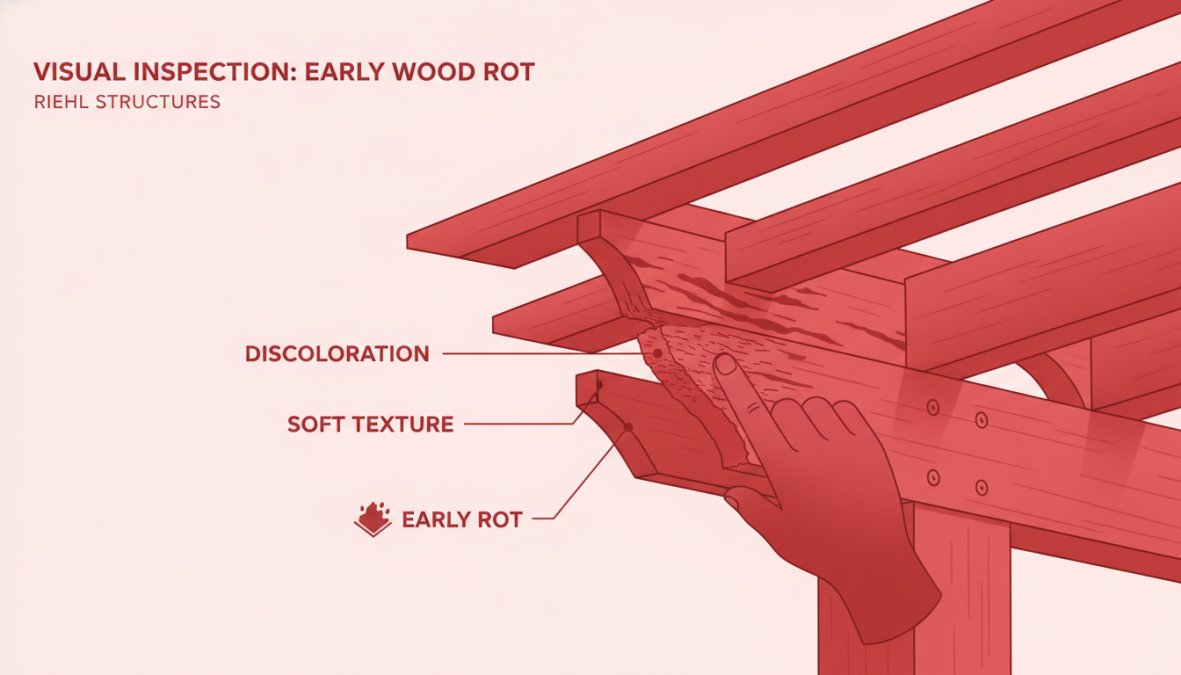
Visual signs of early rot:
Discoloration is often the first indicator. Rotting wood appears darker than surrounding healthy wood, sometimes with a blackish or purplish tint. Soft spots indicate advanced decay, press the wood surface with a screwdriver or awl. Healthy wood resists penetration. Peeling or checking (surface cracks) allow water entry and indicate the wood is losing its protective layer.
Where to look:
Posts at ground level are most vulnerable to rot. Water splashes from rain and soil moisture wicks up into the wood. Inspect the bottom 12 inches of posts carefully. Horizontal surfaces where water pools are high-risk areas. Joints and connections trap water and are difficult to maintain. Wood grain cracks and checks near fasteners create stress points where water enters.
Testing for hidden moisture:
A moisture meter reveals moisture levels before visible rot appears. Healthy wood typically reads 12-16% moisture content. Readings above 20% indicate excess moisture and increased rot risk. If you detect high moisture, improve drainage and airflow immediately.
Hardware, Fasteners, and Structural Integrity
Hardware and fasteners are critical to structural safety. Inspect all bolts, screws, and nails regularly. Tighten any loose fasteners immediately, as loose connections allow movement that stresses wood joints and creates gaps where water enters.
Replace corroded fasteners with stainless steel or galvanized alternatives. Corrosion weakens fasteners and can stain the wood. Check ledger bolts that attach the pergola to your house, these carry significant load and must be secure.
Inspect metal brackets, posts bases, and connectors for rust or corrosion. Apply a rust-preventative coating if corrosion is beginning. Pressure-treated lumber sometimes contains fasteners that corrode quickly. Replace original fasteners with corrosion-resistant alternatives designed for treated wood.
Seasonal expansion and contraction can loosen connections. Check fasteners in spring and fall when temperature changes are most significant.
Maintaining a wooden pergola requires consistent attention, but the effort pays off with years of reliable service and beautiful outdoor living space. A pergola that receives regular cleaning, annual sealing, and seasonal inspection will outlast one that’s neglected. At Riehl Structures, we build pergolas with Amish craftsmanship designed to last decades with proper care. Our custom-designed structures are built from quality materials that respond well to the maintenance practices outlined in this guide.
Frequently Asked Questions
How often should you stain and seal a wooden pergola?
Most wooden pergolas benefit from resealing every 2-3 years, depending on climate and wood type. Staining frequency varies by product and weather exposure; high-UV areas may need refreshing annually. Pressure-treated lumber typically requires less frequent sealing than cedar or redwood. Check your wood finish annually for signs of fading or water penetration to determine if reapplication is needed sooner.
What's the best way to remove mildew from a wooden pergola?
Use a soft-bristle brush with a gentle detergent solution or eco-friendly mildewcide. Scrub affected areas in the direction of the wood grain, then rinse thoroughly with a garden hose using low pressure. Avoid power washing, which can damage wood fibers and open the grain to moisture. For stubborn mildew, apply a mildew-specific cleaner and let it sit before brushing. Always wear gloves and work on a calm day to prevent solution drift.
Can you pressure wash a wooden pergola?
Low-pressure washing (below 1500 PSI) is acceptable on hardy woods like pressure-treated lumber, but high-pressure washing risks splintering, grain damage, and forcing water deep into the wood. Soft woods like cedar and redwood are especially vulnerable. If you use a pressure washer, keep the nozzle at least 12 inches away, use a wide spray pattern, and follow the wood grain. Hand-scrubbing with a soft brush and detergent is safer for most pergolas.
How do I protect my wooden pergola from rot and weather damage?
Apply a quality weather-resistant sealant or wood preservative every 2-3 years to create a moisture barrier and UV protection. Ensure proper drainage by keeping gutters and surrounding areas clear. Inspect annually for early signs of wood rot, splintering, or corrosion on fasteners. Choose pressure-treated lumber or naturally rot-resistant woods like cedar and redwood. Maintain good airflow around the structure to prevent moisture buildup and mold growth.
This article was written using GrandRanker

Copy Link


