Best Materials for Backyard Sheds: Durability & Cost Guide
Copy Link
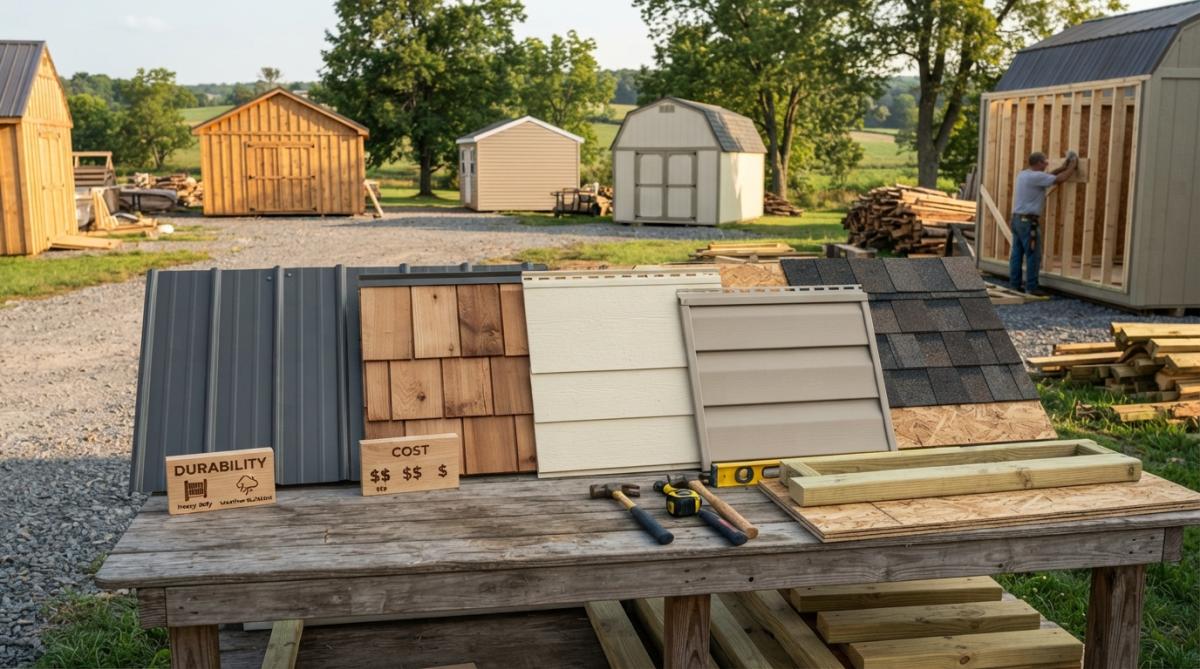
Table of Contents
- Best Materials for Backyard Sheds: A Material Comparison
- Wood Sheds: Traditional Beauty With Maintenance Demands
- Metal Sheds: Durability and Corrosion Resistance
- Resin and Vinyl Sheds: Low-Maintenance Alternatives
- Climate-Specific Material Performance: Where Each Excels
- Long-Term Cost of Ownership: Total Investment Analysis
- Building Code Compliance and Permits
- Sustainability and Material Sourcing
Last Updated: July 25, 2026
Best Materials for Backyard Sheds: A Material Comparison
Choosing the right materials for your backyard shed determines how it looks, whether it’ll stand strong in 20 years, and how much you’ll spend maintaining it. At Riehl Structures, we’ve spent over 30 years helping homeowners understand the real costs of each option over time.
This guide breaks down five main material categories: traditional wood, galvanized steel, aluminum, resin/vinyl, and engineered wood siding. Each performs differently depending on your climate, budget, and storage needs.
The biggest mistake homeowners make is choosing based on initial price alone. A shed that costs $400 less upfront but requires repainting every three years will cost significantly more over 15 years. Always calculate total cost of ownership, not just the purchase price.
Quick Material Comparison Table
| Material | Starting Price Range | Durability | Maintenance | Best Climate | Lifespan |
|---|---|---|---|---|---|
| Pressure-Treated Wood | $2,500-$4,500 | 10-15 years | High (annual sealing) | Dry climates | 15-20 years |
| Cedar/Redwood | $4,000-$7,000 | 15-20 years | Moderate (staining every 2-3 years) | Temperate | 20-30 years |
| Galvanized Steel | $1,500-$3,500 | 20-30 years | Low (occasional cleaning) | Most climates | 25-40 years |
| Aluminum | $2,000-$4,000 | 20-25 years | Very low | Coastal/humid | 20-30 years |
| Resin/Vinyl | $1,200-$3,000 | 15-25 years | Minimal (rinse only) | All climates | 20-25 years |
Wood Sheds: Traditional Beauty With Maintenance Demands
Wood remains the most popular choice for backyard sheds because it looks great, offers endless customization, and blends seamlessly with landscaping. But wood requires genuine commitment, this isn’t a set-it-and-forget-it material.
Pressure-treated lumber is the most common choice, chemically treated to resist rot and insects. It typically lasts 15-20 years before significant rot begins. Cedar and redwood are naturally rot-resistant and last 20-30 years with proper maintenance, but cost 40-60% more than pressure-treated alternatives.
Pros and Cons of Wood Construction
Wood sheds deliver aesthetic appeal. You can paint any color, add custom trim, install windows, and create something intentional rather than utilitarian. Damaged boards can be replaced individually rather than rebuilding entire walls.
The cons are substantial. Wood absorbs moisture, leading to mold, mildew, and rot in humid climates. In cold climates, water freezes and expands, cracking boards. You’ll need to seal or stain the exterior every 2-3 years. Carpenter ants, termites, and wood-boring beetles will attack untreated wood.
The most common mistake is underestimating maintenance frequency. Many homeowners seal their wood shed once and assume it’s protected forever, then watch rot develop five years later. Wood requires active, ongoing maintenance.
Maintenance and Weather Protection
Inspect your wood shed annually for soft spots, paint bubbling, and gaps where water can enter. Sealing or staining should happen every 2-3 years, depending on climate. In humid or coastal areas, you might need to reseal every 18-24 months. Materials cost $200-$400 for a typical 8×10 shed.
Proper ventilation inside the shed matters tremendously. Without it, moisture accumulates and rot develops even in sealed structures. Ensure your shed design includes gable vents or soffit vents. A moisture barrier under the floor also prevents rot from below.
Metal Sheds: Durability and Corrosion Resistance
Metal sheds represent the opposite philosophy from wood. They’re low-maintenance, last for decades, and don’t require ongoing attention. The trade-off is aesthetic: metal sheds look utilitarian rather than blending into landscaping.
Galvanized Steel vs. Aluminum Options
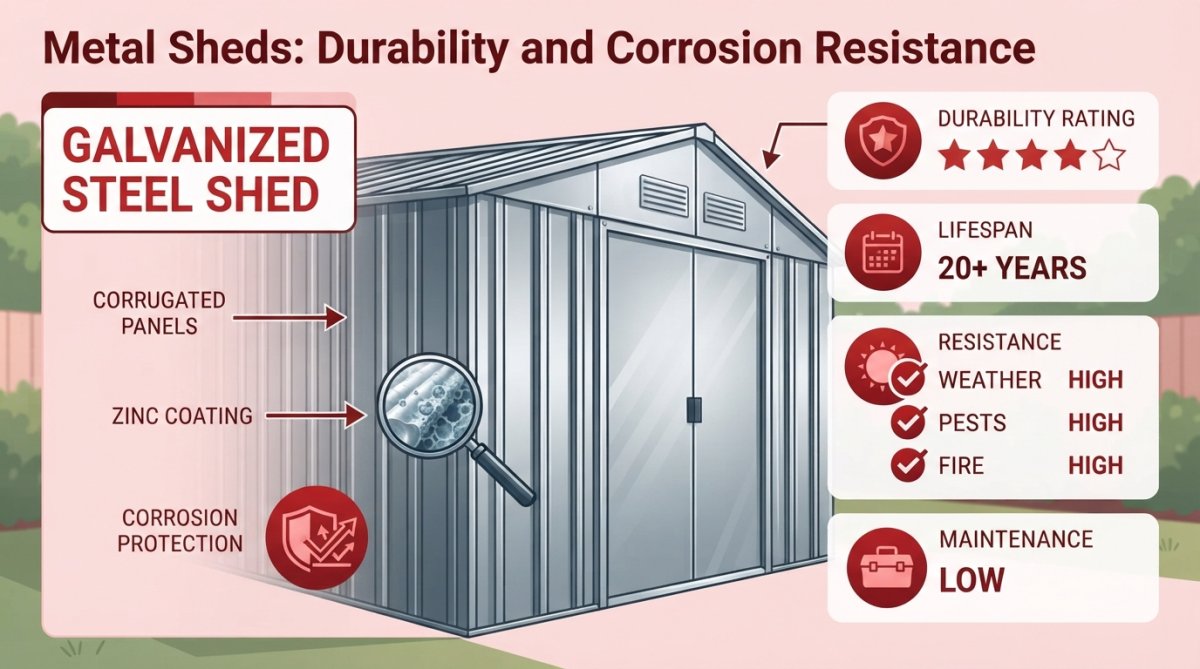
Galvanized steel is the most common metal choice. The zinc coating prevents rust and corrosion, and a quality galvanized steel shed lasts 25-40 years with virtually no maintenance beyond occasional cleaning. The material is incredibly strong and handles snow loads well.
The weakness is rust. If the zinc coating gets scratched, rust will eventually develop. In coastal environments with salt air, the coating can fail faster. Regular cleaning with a soft brush and mild soap extends the coating’s life significantly.
Aluminum is lighter, never rusts, and offers superior corrosion resistance in coastal climates. However, aluminum is softer than steel and dents permanently with hard impacts. Aluminum sheds typically cost 15-20% more than galvanized steel.
Galvanized steel is the better choice for most inland climates. Aluminum makes sense if you’re near the ocean or in a high-humidity environment where salt air is a constant concern.
Assembly and Long-Term Performance
Metal sheds come as kits with pre-cut panels, fasteners, and instructions. Assembly typically takes 8-12 hours for two people. The process is straightforward: bolt the frame together, attach panels, install the roof, and secure the door.
The real advantage is what happens after assembly. You won’t be repainting, resealing, or replacing rotted boards. Cleaning with a garden hose and occasional soft-brush scrubbing keeps it looking decent. A galvanized steel shed properly maintained will outlast most wood sheds by 10-15 years.
Resin and Vinyl Sheds: Low-Maintenance Alternatives
Resin and vinyl sheds occupy a middle ground between wood and metal. Made from plastic polymers that resist moisture, rot, and insects, they require almost no maintenance, just an occasional rinse with a garden hose, and last 15-25 years. The trade-off is less durability than metal and less customization than wood.
Resin sheds from manufacturers like Suncast, Lifetime, Keter, and Rubbermaid are typically constructed from double-walled resin panels. Many include integrated floors and reinforced corners. Pricing ranges from $1,200 to $3,500 depending on size and features.
Weather Resistance and Durability
Resin and vinyl are naturally moisture-resistant. They don’t absorb water, so rot is impossible. Insects won’t eat them. Mold and mildew can grow on the surface in humid climates but wash off easily.
The real weakness is UV exposure. Sunlight degrades the plastic over time, causing brittleness and color loss. After 15-20 years in a sunny location, resin panels may crack if impacted. In shaded locations, the lifespan extends closer to 25 years.
Thermal expansion is another consideration. Resin expands and contracts with temperature changes more than wood or metal. In climates with extreme temperature swings, you may notice panels shifting slightly.
According to DuraMax Vinyl Storage Sheds, vinyl sheds with proper ventilation and foundation support typically maintain structural integrity for 20+ years.
Aesthetic Versatility and Curb Appeal
Resin sheds come in a wider range of colors than metal sheds, though not as many as wood. Many manufacturers offer wood-grain finishes that mimic cedar or redwood from a distance. Resin sheds still read as plastic up close. If curb appeal is a priority and your shed is visible from the street, wood will always look more intentional.
Customization is limited compared to wood. You can’t add custom trim, windows, or interior shelving. Most resin sheds come with fixed interior layouts, though some manufacturers offer optional shelving kits.
Climate-Specific Material Performance: Where Each Excels
The best material depends largely on your climate. Understanding your specific conditions helps you avoid costly mistakes.
Hot and Humid Climates
In the Southeast, Gulf Coast, and Hawaii, wood deteriorates rapidly. Moisture is constantly present, and fungi, mold, and rot develop quickly. Even pressure-treated wood lasts only 12-15 years.
Metal sheds, particularly aluminum, excel in humid climates. Aluminum never rusts, and the low maintenance profile is a genuine advantage. Galvanized steel also performs well inland, though coastal humidity with salt spray requires more frequent cleaning.
Resin and vinyl sheds are excellent for humid climates. The moisture resistance is exactly what you need, and minimal maintenance reduces the burden of ownership.
Cold and Snowy Regions
In the Upper Midwest, Northeast, and Mountain states, freeze-thaw cycles are the primary enemy. Water that enters wood expands when it freezes, cracking boards and opening gaps for more water. This accelerates rot dramatically.
Metal sheds handle cold beautifully. Snow loads don’t bother galvanized steel, and the material is unaffected by freezing. Aluminum is equally cold-hardy.
Resin sheds are also cold-hardy, but thermal expansion becomes more noticeable. Over 15-20 years, this cycling can cause slight panel misalignment.
Coastal and Salt-Air Environments
Coastal properties present unique challenges. Salt spray accelerates corrosion of galvanized steel and degrades wood finishes quickly.
Aluminum sheds are the superior choice in coastal areas. Aluminum is naturally resistant to saltwater corrosion and won’t develop rust blooms like galvanized steel. You’ll still need to rinse occasionally to remove salt residue, but maintenance is minimal.
Resin and vinyl sheds also perform well in coastal climates. They’re moisture-resistant and won’t corrode. Wood is the weakest choice in coastal environments.
Long-Term Cost of Ownership: Total Investment Analysis
Initial purchase price is just the first number in your total cost equation. Maintenance, repairs, and eventual replacement all factor into true ownership cost.
Initial Purchase vs. Lifetime Expenses
A pressure-treated wood shed costs $2,500-$4,500 upfront. Over 15 years, you’ll spend roughly $200-$400 every 2-3 years on sealing materials. If you hire someone, labor costs run $400-$800 per application. Over 15 years, that’s $1,500-$4,000 in maintenance. If the shed develops rot requiring panel replacement, add another $500-$1,500. Total 15-year cost: $4,500-$10,000.
A galvanized steel shed costs $1,500-$3,500 upfront. Maintenance is minimal, and you might spend $100-$200 every five years on touch-up paint. Over 25 years, total maintenance costs are $400-$800. Total 25-year cost: $1,900-$4,300.
A resin shed costs $1,200-$3,000 upfront. Maintenance is essentially zero. Over 20 years, you might spend $100-$200 on replacement hardware. Total 20-year cost: $1,300-$3,200.
Calculate total cost of ownership over at least 15 years, not just the purchase price. A shed that costs $1,000 less upfront but requires $200/year in maintenance will cost $4,000 more over 20 years.
Foundation and Installation Compatibility
Wood sheds need a solid, level foundation. Concrete pads or gravel base with concrete blocks work well. The shed must be elevated slightly off the ground to allow air circulation underneath. This can cost $200-$600.
Metal sheds are similarly demanding about level foundations. Uneven settling causes panel misalignment and door/window problems.
Resin sheds are the most forgiving. Many come with integrated floor systems that tolerate slight slopes. However, a level foundation still produces better long-term results.
Building Code Compliance and Permits
Before ordering a shed, check your local building codes. Many jurisdictions require permits for structures over 100-200 square feet. Permit requirements vary by location. Some townships require setback distances from property lines, often 5-10 feet. Permit costs typically run $50-$200.
Building codes also specify wind and snow load requirements. In areas prone to heavy snow or high winds, your shed’s roof must be engineered to handle those loads. Reputable manufacturers design sheds to meet or exceed local building codes.
According to U.S. Building Code Requirements, structures must be designed for the wind and snow loads typical of their region.
Sustainability and Material Sourcing
If environmental impact matters, material sourcing deserves consideration.
Pressure-treated wood uses copper-based preservatives and is biodegradable and recyclable. Cedar and redwood are naturally biodegradable but may come from old-growth forests.
Galvanized steel is often recycled metal, and steel is infinitely recyclable. Aluminum is highly recyclable; recycled aluminum requires 95% less energy to produce than virgin aluminum.
Resin and vinyl are plastic polymers made from petroleum. They’re not biodegradable and recycling options are limited. Most resin sheds end up in landfills at end of life.
If sustainability is a priority, wood from sustainably managed forests is the best choice, followed by recycled metal.
Quick Decision Framework: Choosing Your Material
Choose wood if:
- Aesthetics and curb appeal are your top priorities
- You’re willing to commit to regular maintenance (sealing every 2-3 years)
- You live in a dry climate where rot risk is minimal
- You want maximum customization and design flexibility
Choose galvanized steel if:
- You want maximum durability with minimal maintenance
- You live in an inland climate (not coastal)
- You prefer utilitarian aesthetics
- You want the lowest total cost of ownership over 25+ years
Choose aluminum if:
- You live in a coastal environment or high-humidity area
- You want the durability of metal without rust concerns
- Budget allows for the 15-20% premium over galvanized steel
Choose resin if:
- You live in a humid climate where wood struggles
- You want minimal maintenance without committing to sealing schedules
- You prefer a balance between cost and durability
- You’re okay with moderate customization options
Riehl Structures specializes in custom-designed wood sheds built with Amish craftsmanship and attention to detail that factory-manufactured sheds can’t match. Our team helps customers evaluate their climate, maintenance preferences, and long-term budget to select the right material. With flexible financing options and free delivery within 30 miles of our West Chester and King of Prussia locations, we make the process stress-free.
Frequently Asked Questions
What are the best materials for backyard sheds in humid climates?
Resin, vinyl, and galvanized steel are superior to wood in humid environments. Resin and vinyl resist moisture and rot without maintenance. Galvanized steel provides corrosion resistance when properly coated. Avoid untreated wood, which absorbs moisture and rots quickly. If choosing wood, use pressure-treated lumber or naturally rot-resistant cedar, though these still require regular sealing and inspection in high-humidity areas.
How much maintenance does each shed material require annually?
Wood sheds demand the most upkeep: annual staining or sealing, inspections for rot and pest damage, and gutter cleaning. Metal sheds need occasional washing and rust-spot treatment if the galvanized coating is damaged. Resin and vinyl are nearly maintenance-free, typically just an occasional rinse with a garden hose. Long-term, this maintenance difference significantly impacts the total cost of ownership over 10-20 years.
Which shed material offers the best curb appeal and customization?
Wood sheds provide the most aesthetic versatility, they can be painted, stained, or left natural to match your home's exterior. Keter and other resin manufacturers now offer wood-textured designs that combine aesthetic appeal with low maintenance. Metal sheds offer fewer customization options but provide a modern, utilitarian look. For maximum curb appeal with minimal upkeep, wood-look resin sheds balance both priorities effectively.
What foundation type works best with different shed materials?
Wood sheds require a solid, level foundation, concrete pads or pressure-treated skids prevent rot from ground moisture. Metal sheds benefit from concrete foundations to prevent rust from moisture wicking. Resin and vinyl sheds are more forgiving; many include integrated floors and can sit on compacted gravel or concrete. Always ensure proper drainage around the shed perimeter and use anchor kits to secure structures against wind, regardless of material choice.
The choice between wood, metal, and resin ultimately comes down to your climate, your budget, and how much maintenance you’re willing to do. A shed that’s perfect for one situation will be a constant frustration in another. By understanding the genuine strengths and real limitations of each material, you can make a decision that you’ll feel confident about for decades. Get a quote now from Riehl Structures and let our team help you find the material that fits your property and your lifestyle.
This article was written using GrandRanker

Copy Link