Backyard Storage Ideas for Firewood: 10 Solutions
Copy Link
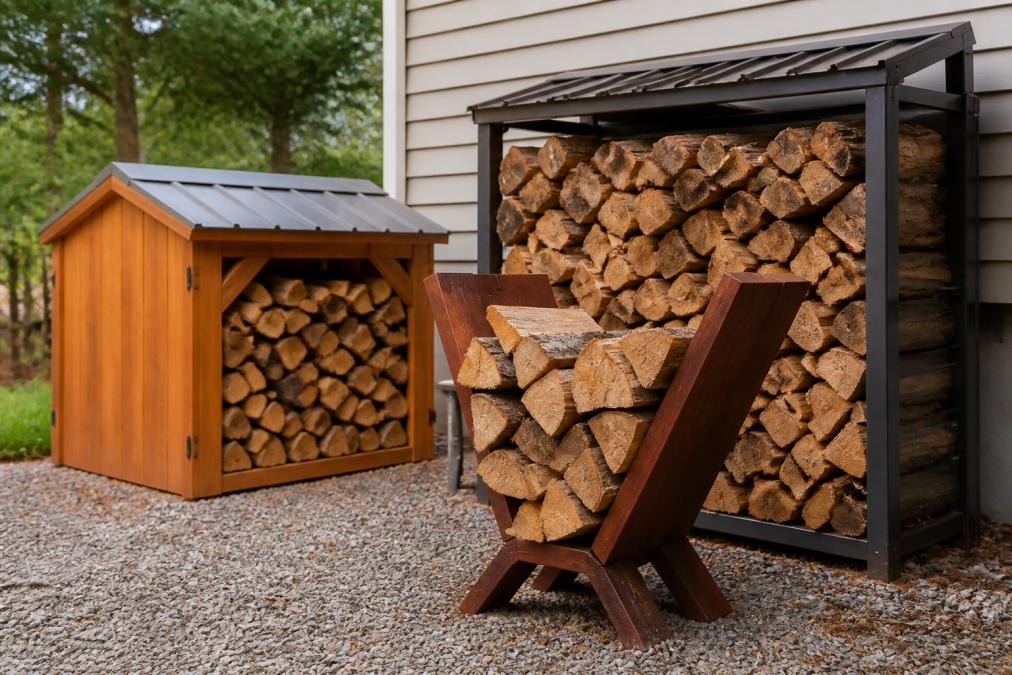
Table of Contents
- Why Proper Firewood Storage Matters
- 1. Metal Firewood Racks: The Durable Foundation
- 2. DIY Firewood Shed Plans for Custom Fit
- 3. Pre-Built Firewood Sheds: Ready-Made Protection
- How to Stack Firewood for Airflow and Seasoning
- 4. Firewood Storage Bags and Carriers
- 5. Log Holders and Indoor Transport Solutions
- Firewood Storage Pest Prevention: Keep Insects and Rodents Away
Last Updated: August 15, 2026
Why Proper Firewood Storage Matters
Firewood stored directly on damp ground rots. Wood exposed to rain absorbs moisture instead of seasoning. Insects and rodents nest in poorly stored stacks. According to the U.S. Forest Service guidance on firewood storage, properly seasoned and stored firewood burns hotter, produces less creosote buildup in chimneys, and lasts significantly longer than improperly stored wood.
The challenge is balancing three competing needs: keeping wood dry, allowing air circulation for seasoning, and preventing pest access. This guide covers 10 practical backyard storage ideas for firewood, from simple racks to custom-built sheds, along with proven techniques for stacking, seasoning, and pest prevention.
1. Metal Firewood Racks: The Durable Foundation
Metal firewood racks are the most straightforward solution for most homeowners. They keep wood elevated off the ground, allow airflow underneath, and last for years with minimal maintenance.
A quality metal rack sits on feet creating 6-12 inches of clearance between the ground and bottom logs. This gap prevents moisture from wicking up from soil, stops rodents from nesting directly under the stack, and allows air to circulate underneath.
The Woodhaven Firewood Log Rack is built from 16-gauge steel with welded joints and powder-coated finish. It comes in lengths from 2 to 16 feet, with a 4-foot model storing roughly a quarter cord. Many users report their racks lasting 15+ years without rust or structural failure. Woodhaven includes a short cover protecting the top while allowing airflow through the sides. The trade-off is price; Woodhaven racks cost more than budget alternatives, but the lifetime structural warranty justifies the investment for serious firewood users.
The ShelterLogic Heavy Duty Firewood Rack offers a middle ground on cost. It features heavy-duty steel construction with a thermoset powder-coated finish and includes a two-way adjustable polyester cover that moves with the wood level as you use the stack. Models range from 4 to 16 feet. At around $70 for a 4-foot model, it’s more affordable than Woodhaven while delivering solid construction.
The Werph 4FT Firewood Rack with Cover is the budget-conscious choice at $70, delivering basic functionality, heavy-duty steel frame, included cover, and ground clearance.
Best for: Homeowners storing 1/4 to 1/2 cord who want a simple, maintenance-free solution. Metal racks work well in any climate and require no assembly beyond setting them level on the ground.
2. DIY Firewood Shed Plans for Custom Fit
Building your own firewood shed gives you complete control over size, design, and materials. DIY plans range from basic designs holding a quarter cord to larger structures storing 2+ cords.
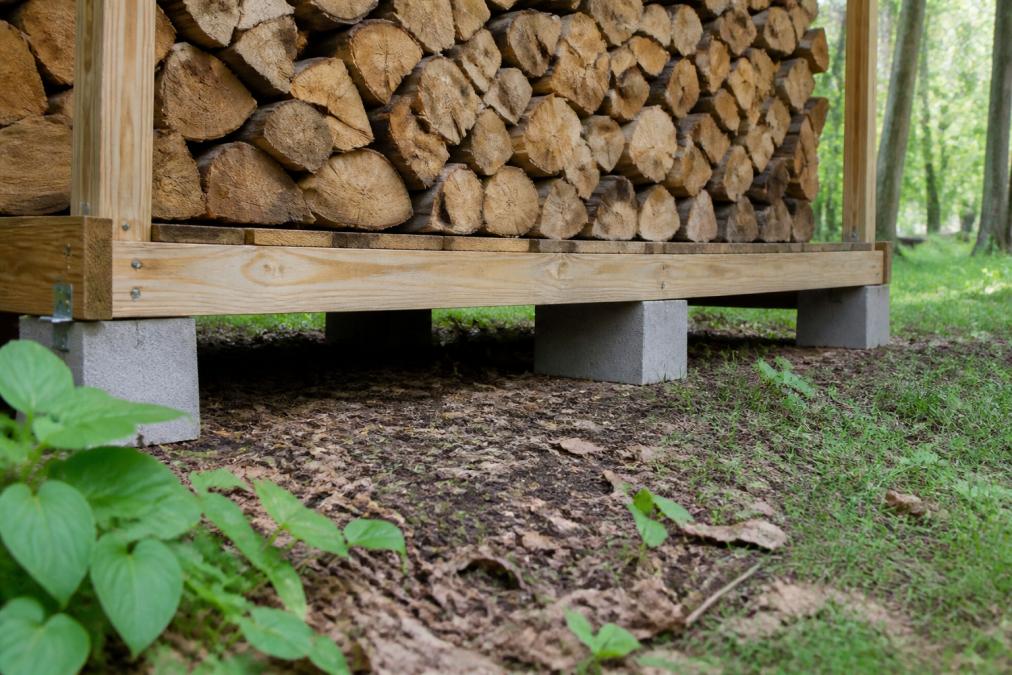
Simple frame designs use treated lumber for the base and frame, with open or slatted sides for ventilation. A basic design might be 8 feet wide, 4 feet deep, and 6 feet tall, holding roughly 1 cord of wood. The frame sits on concrete blocks or a gravel base to keep wood off the ground.
Digital plans typically cost $10-20 and include material lists, cut lists, and step-by-step instructions. Total material costs typically range from $150-400 depending on size. Building a functional 8×4 shed usually takes 8-16 hours over a weekend or two. You’ll need basic tools and possibly help lifting larger pieces.
Best for: Homeowners comfortable with basic carpentry who have time to invest and want to store 1-2 cords at minimal cost.
Build your shed on a gravel base or concrete blocks, never directly on soil. Gravel allows water to drain away from the wood, and blocks create the ground clearance needed to prevent rot and pest access.
3. Pre-Built Firewood Sheds: Ready-Made Protection
Pre-built sheds arrive fully constructed and ready to use. You position them on your property, and firewood storage is immediately functional.
Blake Designs offers a 1-Cord Firewood Shed built from treated lumber with breathable sides that allow continued seasoning. At $1,600, it’s a significant investment, but it’s a permanent structure requiring no assembly and no ongoing maintenance beyond occasional inspection.
Handy Home Products offers DIY wood shed kits in various sizes (10×12, 12×16, and larger). These are pre-cut kits where you assemble the components. Kits typically cost $2,000-3,000 depending on size, with assembly taking 1-2 days.
Pre-built sheds require a level spot in your yard with adequate drainage. If your property slopes significantly, you may need to level the ground first, an additional cost.
Best for: Homeowners storing 1+ cord who want a permanent, maintenance-free solution and have the budget for it.
How to Stack Firewood for Airflow and Seasoning
Stacking technique directly affects how quickly wood seasons and whether moisture remains trapped inside the pile.
The crisscross method: Layer wood perpendicular to the layer below. The first layer runs left to right. The second layer runs front to back. The third layer returns to left to right. This pattern creates channels for air to flow through the entire stack.
Leave 2-4 inches between logs in each layer. Logs touching along their entire length prevent airflow and trap moisture at contact points. Gaps between logs allow air to circulate across the wood surface, speeding evaporation.
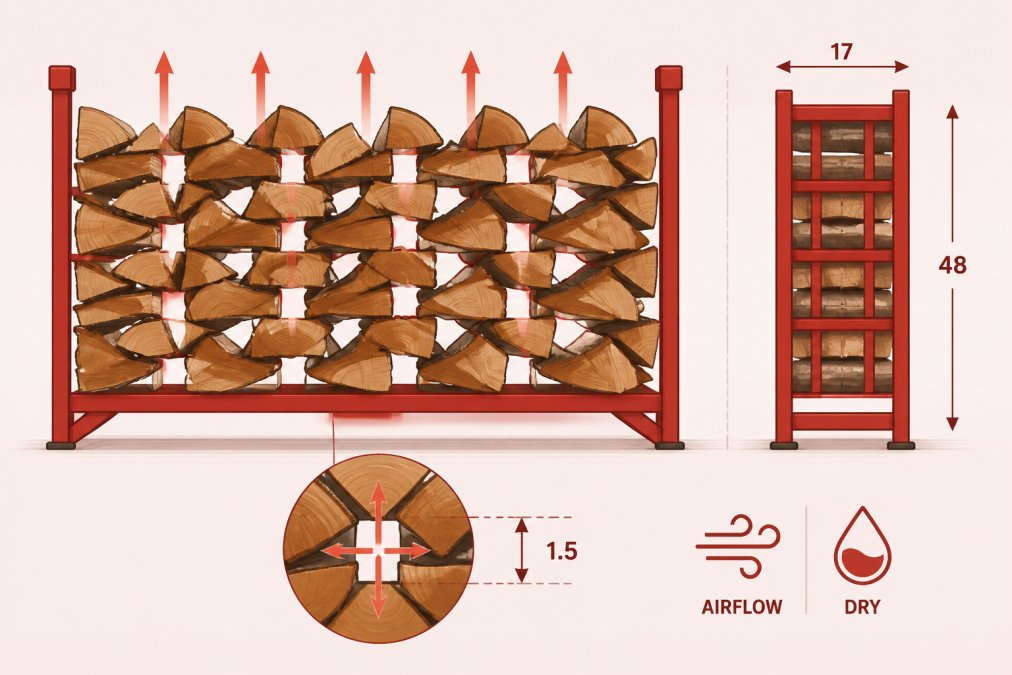
Stack wood to a height of 4-5 feet maximum. Stacks taller than this become unstable and may collapse as wood settles and dries.
Orient the stack so prevailing winds blow across the stack, not into it. This maximizes airflow without creating wind tunnels that dry the outer layers while leaving the interior damp.
Freshly cut wood contains 50-60% moisture content. Properly stacked and stored wood reaches usable moisture content (20% or below) in 6-12 months depending on wood species and climate. Stacking in spring means wood is ready by fall.
Burning wet wood (above 25% moisture content) produces excessive creosote buildup in your chimney, increases fire risk, and reduces heat output by 20-30%. Always verify wood moisture before burning.
4. Firewood Storage Bags and Carriers
Firewood bags offer portability and weather protection without requiring permanent yard space. They’re ideal for storing smaller quantities or transporting wood from an outdoor stack to an indoor fireplace.
Readywares Firewood Bag is made from durable waxed canvas with a shoulder strap for easy carrying. The bag holds enough wood for several fires and can sit indoors by a fireplace or outdoors for short-term storage. At around $40-60, it’s affordable for occasional firewood transport.
Woodland Mills Vented Firewood Bags are large mesh bags designed for bulk storage and seasoning. Each bag holds approximately 1/3 cord of wood. A 5-pack costs around $110. The mesh construction allows maximum airflow for seasoning, and the bags include a built-in rain cover sewn into the top. Four reinforced lifting loops on top and bottom facilitate moving bags with equipment.
Best for: Waxed canvas bags work for households burning wood occasionally or transporting wood from a main storage area to the fireplace. Heavy-duty mesh bags suit those storing 1+ cord outdoors and wanting bags to facilitate seasoning.
5. Log Holders and Indoor Transport Solutions
Log holders and carriers make moving firewood from outdoor storage to indoor fireplaces cleaner and easier. They’re not primary storage solutions but essential complements to outdoor stacks or racks.
Landmann Firewood Log Holder combines a sturdy tubular steel frame with a canvas carrier featuring large handles. The holder neatly organizes wood, and the canvas carrier allows you to load wood and carry it indoors without dropping pieces. Assembly is simple and requires no tools.
These holders are designed for indoor use near a fireplace, not for outdoor storage. They’re meant to hold wood you’ve already transported indoors. Capacity is limited to enough wood for a few fires.
Log holders and carriers work best as the final step in your firewood workflow. You store bulk wood outdoors in a rack or shed, then move smaller quantities indoors using a carrier for convenient access during the heating season.
Best for: Households that already have primary outdoor storage and want a clean way to move wood indoors and keep it organized by the fireplace.
Firewood Storage Pest Prevention: Keep Insects and Rodents Away
Firewood stacks attract insects and rodents seeking shelter and food sources. Proper storage practices prevent infestations before they start.
Ground clearance is critical: Elevating wood 6-12 inches off the ground using a rack, blocks, or shed base creates a barrier. Rodents can still access elevated wood, but the clearance makes it less attractive than ground-level stacks.
Airflow reduces moisture and pest habitat: Insects and rodents thrive in damp, stagnant conditions. Proper stacking with gaps between logs and open sides allows air circulation that dries the wood and creates an inhospitable environment.
Distance from structures: Store firewood at least 20 feet from your home, garage, or shed. Rodents and insects living in the woodpile are less likely to venture into your home if the distance is significant.
Covering considerations: A roof or cover protects wood from rain but can create a sealed environment if sides are closed. Keep covers or roofs open on at least two sides to maintain airflow.
Treating the ground: Some homeowners lay landscape fabric or hardware cloth (metal mesh) on the ground before positioning a rack or shed. Hardware cloth with 1/4-inch mesh excludes mice while allowing water drainage.
Inspection routine: Check your firewood storage monthly for signs of pest activity, sawdust, droppings, or visible insects. Early detection allows you to remove infested wood before pests establish a population.
The single most effective pest prevention strategy is elevation combined with airflow. Ground clearance stops rodents from nesting directly under your wood, and open-sided storage with gaps between logs creates an environment where insects and moisture cannot thrive.
Choosing the Right Solution for Your Space
Your choice depends on three factors: how much wood you burn annually, your available yard space, and your budget.
For small quantities (1/4 cord or less): A metal rack or waxed canvas bags work well. These solutions are affordable, require minimal space, and are sufficient for households burning wood occasionally.
For moderate quantities (1/2 to 1 cord): A metal rack or DIY shed strikes a balance. A quality metal rack handles this volume without taking up excessive space. A DIY shed costs $150-400 in materials and provides long-term storage for minimal ongoing expense.
For large quantities (1+ cord): A pre-built shed, DIY shed, or multiple metal racks are necessary. Pre-built sheds cost more upfront but require no assembly. DIY sheds cost less but demand time and carpentry skill.
For climate considerations: In regions with high humidity or frequent rain, sheds with roofs provide better protection than open racks. In dry climates, open-sided racks may be sufficient. In cold regions where snow accumulation is heavy, a shed roof prevents snow from compacting the wood.
For urban or limited-space yards: Waxed canvas bags or a single compact metal rack work best. These solutions minimize visual impact and don’t require permanent yard modifications.
Proper firewood storage ensures that the wood you’ve invested in burns efficiently, safely, and for the full heating season. Whether you choose a simple metal rack, build a DIY shed, or invest in a pre-built structure, the key is elevating wood off the ground, allowing airflow for seasoning, and maintaining distance from your home to prevent pest access.
Riehl Structures specializes in custom-built outdoor structures, including firewood sheds designed specifically for your property’s layout and your storage needs. Our Amish-built sheds feature treated lumber construction, breathable design for proper wood seasoning, and the durability to last decades. With custom design services and flexible financing options, we can build a firewood storage solution tailored to your yard’s dimensions and your heating requirements. Get a quote now to explore how a custom firewood shed can simplify your wood storage and protect your investment year-round.
Frequently Asked Questions
What is the best way to store firewood in my backyard?
The best backyard storage for firewood combines elevation, airflow, and weather protection. Store wood on a rack or platform at least 6 inches off the ground to prevent moisture and pest issues. Stack logs with gaps between rows to allow air circulation, which speeds seasoning and prevents mold. Cover the top with a tarp or shed roof, but leave the sides open for ventilation. This approach keeps wood dry while maintaining the moisture content needed for efficient burning.
How do I prevent pests when storing firewood?
Firewood storage pest prevention starts with elevation: keep wood at least 6 inches off the ground using a rack or platform. This blocks access for termites, carpenter ants, and rodents. Store firewood at least 20 feet from your house to discourage pests from moving to your home. Inspect wood for insects before bringing it indoors, and avoid stacking wood directly against exterior walls. Consider using sealed storage bags or a shed with screened vents for extra protection.
How long does firewood take to season properly?
Most firewood requires 6-12 months to season adequately, depending on wood type and climate. Softwoods like pine dry faster (6-8 months), while hardwoods like oak need 12 months or longer. Proper stacking with airflow accelerates the process. Seasoned firewood has a moisture content below 20%, which you can verify with an inexpensive moisture meter. Storing wood off the ground with ventilation on all sides helps achieve proper seasoning faster than ground-level storage.
What are common mistakes when storing firewood?
Common mistakes include storing wood directly on the ground, which traps moisture and attracts pests; covering all sides with tarps, which prevents airflow and causes rot; stacking wood too tightly without gaps, which slows seasoning; and placing wood too close to the house, which invites pests indoors. Also avoid storing unseasoned wood indoors, as it releases excessive moisture. Choose a location with good sun exposure and natural wind to maximize drying.
Do I need to cover my firewood stack?
Yes, but only the top. A cover or roof protects wood from rain and snow while allowing sides to remain open for air circulation. Full covers that enclose all sides trap moisture and promote rot. Use a breathable cover or simple tarp over the top, ensuring it slopes slightly for water runoff. If using a shed or rack with a built-in cover, verify the sides remain open or have vents. This balance keeps wood dry while maintaining the ventilation needed for proper seasoning.
This article was written using GrandRanker

Copy Link