Durable Outdoor Playsets for Kids: 2026 Buyer’s Guide
Copy Link

Table of Contents
- What Makes Durable Outdoor Playsets Worth the Investment
- Material Comparison: Wood vs. Metal vs. Vinyl Playsets
- Metal vs Wood Playsets Durability: Which Lasts Longer
- How to Maintain Outdoor Playsets for Maximum Lifespan
- Playset Safety Standards & Inspection Requirements
- Foundation & Ground Preparation for Durable Playsets
- Top Durable Outdoor Playsets for Kids: Feature Comparison
- Warranty, Longevity & Resale Value Considerations
Durable Outdoor Playsets for Kids: 2026 Buyer’s Guide
Last Updated: July 6, 2026
When parents invest in durable outdoor playsets for kids, they’re making a decision that shapes their family’s backyard for years to come. The market offers genuine choices between cedar wood, powder-coated metal, vinyl-clad systems, and hybrid designs. Each material class offers distinct trade-offs between maintenance burden, longevity, safety, and upfront cost. This guide cuts through marketing noise and gives you the framework to choose the right playset for your specific backyard, climate, and family situation.
What Makes Durable Outdoor Playsets Worth the Investment
A quality outdoor playset is infrastructure for your backyard. The difference between a playset that lasts 5 years and one that lasts 15 years lies in engineering, hardware quality, and manufacturing decisions.
A swing beam must absorb dynamic loads from multiple children simultaneously. Wood beams must be thick enough to resist deflection without cracking. Metal beams must be properly welded and powder-coated to resist rust. Fasteners must be stainless steel or corrosion-resistant, not cheap zinc-plated hardware that fails in salt air or humid climates.
A $3,000 playset used by your children and eventually your grandchildren costs pennies per play session. A $1,500 playset that deteriorates after 6 years becomes expensive when you factor in replacement costs and disappointment.
The most durable playsets share three characteristics: commercial-grade hardware, proper material thickness, and design that resists stress concentration points where failures typically begin.
Material Comparison: Wood vs. Metal vs. Vinyl Playsets
Your material choice determines maintenance schedules, lifespan expectations, and how the playset will age in your specific climate.
Cedar Wood: Natural Durability & Aesthetic Appeal
Cedar has earned its reputation for outdoor durability. Northern White Cedar and Western Red Cedar contain oils that inhibit fungal growth. However, "rot-resistant" doesn’t mean "maintenance-free." Cedar still weathers and requires annual sealing or staining to prevent checking (surface cracking that creates splinters).
Over 10-15 years, properly maintained cedar playsets often outlast their owners’ patience for maintenance. Cedar’s natural resistance means even neglected playsets degrade slowly rather than failing catastrophically. Cedar’s density allows for thicker beam construction (typically 4×4 or 4×6) that safely supports multiple children and accommodates ambitious play features.
Cedar playsets purchased with pre-stained components often deteriorate faster than untreated versions because stain can trap moisture under the finish, accelerating rot. Always verify the finishing protocol with your manufacturer.
Powder-Coated Metal: Low-Maintenance Weather Resistance
Modern metal playsets use powder-coat finishes that reflect rather than absorb heat, maintaining cooler surface temperatures even in intense sun. Metal’s structural advantage is precision, welded steel components don’t have wood’s variability. A 2-inch steel tube with a 1/8-inch wall thickness delivers predictable strength.
Maintenance is genuinely low. A powder-coated metal playset requires occasional washing and inspection for coating damage. Many metal playsets come with 10-year warranties on structural components, reflecting manufacturer confidence in longevity.
The trade-off is aesthetic. Metal playsets look industrial and don’t have wood’s natural warmth. Metal also conducts temperature, getting cold in winter and hot in summer, which affects play comfort.
Vinyl-Clad & Polymer-Wrapped: Maintenance-Free Options
These systems wrap wood or metal cores in UV-resistant vinyl or polymer coatings, combining structural benefits of wood with plastic’s maintenance-free appeal. Vinyl-clad playsets never need staining or sealing and resist splinters because the surface is smooth.
The weakness is junction points where vinyl meets exposed wood. Fastener holes, cut edges, and beam-to-beam connections can allow moisture to wick into the wood core. The best vinyl-clad systems use meticulous sealing at all penetration points and specify regular inspection protocols.
Metal vs Wood Playsets Durability: Which Lasts Longer
Both can last 15+ years with proper maintenance. Metal playsets typically outlast wood in harsh coastal environments where salt spray accelerates corrosion. However, corrosion risk depends entirely on powder-coat quality. Premium multi-layer powder coat resists salt air for 15+ years; budget powder coats can fail in 5-7 years.
Wood playsets in dry climates often outlast their owners’ interest. Cedar in Arizona or Colorado can remain structurally sound for 20+ years with minimal maintenance because dry air prevents fungal growth. The same cedar in humid Florida or the Pacific Northwest needs active maintenance to prevent decay.
If you’re in a humid climate and don’t want to maintain a playset, metal is the clear choice. If you’re in a dry climate and willing to seal [your playset](/design-your-playset/) annually, cedar offers superior play value and longevity. If you want zero maintenance regardless of climate, vinyl-clad systems are worth the premium, but inspect them quarterly for coating damage.
How to Maintain Outdoor Playsets for Maximum Lifespan
Maintenance is the single biggest factor determining whether your playset reaches 5 years or 15 years. The maintenance burden depends entirely on material choice. Metal playsets need quarterly inspection and occasional washing. Wood playsets need annual sealing and immediate attention to any damage. Vinyl-clad systems need monthly visual inspection for coating damage.
Seasonal Maintenance Checklist
Spring Inspection: Inspect wood components for soft spots, cracking, or discoloration. Check fasteners for corrosion or looseness. Examine finishes for peeling or exposed bare wood. Look for water pooling on horizontal surfaces.
Summer Maintenance: Wash the playset with mild soap and water. Check for new damage from heavy use and repair immediately. Inspect safety surfacing for settling. Verify the playset isn’t leaning or shifting.
Fall Preparation: Clear leaves and debris from all surfaces. Reapply sealant or stain to wood components if weathering is visible. Drain any standing water.
Winter Protection: Remove accumulated snow and ice promptly. Check fasteners after freeze-thaw cycles. Inspect rope components for ice damage.
Common Maintenance Mistakes to Avoid
The biggest mistake is waiting until something breaks before addressing it. A small area of exposed wood or a hairline crack becomes a major structural problem within a season if left untreated.
Using the wrong sealant is the second mistake. Many homeowners apply exterior house paint or deck stain to playset wood. Use products specifically formulated for playground equipment.
Neglecting fastener maintenance causes premature failure. Bolts work loose over time as the playset flexes. Stainless steel fasteners cost more upfront but eliminate rust problems that compromise structural integrity.
Playset Safety Standards & Inspection Requirements
Safety standards exist because children have been seriously injured on poorly maintained or improperly designed playsets.
ASTM & CPSC Safety Guidelines
The American Society for Testing and Materials (ASTM) publishes ASTM F1148, the standard for playground equipment safety. This standard specifies everything from minimum beam thickness to maximum spacing between components to fall-surface requirements.
The Consumer Product Safety Commission (CPSC) publishes the "Public Playground Safety Guidelines," which provides detailed specifications for equipment design, installation, and maintenance. These guidelines are available from CPSC playground safety guidance.
A compliant playset isn’t automatically safe. Compliance means the equipment was designed and manufactured to standards. Safety depends on proper installation, maintenance, and age-appropriate use. The critical safety elements are fall surfacing depth, entrapment prevention, weight capacity, and age appropriateness.
Monthly Safety Inspection Checklist
Visual Inspection: Look for cracks, splits, or splintering in wood components. Check for rust spots or coating damage on metal components. Examine fasteners for corrosion, looseness, or missing hardware. Verify that safety surfacing hasn’t settled or shifted.
Physical Testing: Gently shake vertical supports; they should not move excessively. Tug on railings and handholds. Inspect swing chains for rust or damage. Test slides for rough spots. Verify that all moving parts move freely.
Entrapment Check: Use a ball 1.25 inches in diameter to test spacing; it should not fit through any openings where a child’s head could become stuck.
Documentation: Keep a log of inspections and repairs. This creates a maintenance record that demonstrates diligence if an injury occurs.
Foundation & Ground Preparation for Durable Playsets
The best playset will fail prematurely if installed on an inadequate foundation. Playsets create point loads on the ground that concentrate enormous force on small areas of soil.
Proper foundation preparation starts with soil evaluation. Clay soils need drainage considerations. Sandy soils need compaction and stabilization. The best approach is to dig post holes 24-36 inches deep (below the frost line in cold climates) and set anchor bolts in concrete.
Many homeowners skip this step and simply bolt the playset to the ground surface. This allows the playset to shift, creating stress on fasteners and eventually leading to structural failure.
The second foundation consideration is drainage. Water pooling around the base accelerates wood rot and creates rust conditions for metal components. Proper site preparation includes grading to ensure water runs away from the structure.
Safety surfacing is part of the foundation system. Fall surfacing must be installed to the depth specified for the equipment height. A playset that’s 8 feet tall requires 9 inches of engineered wood fiber or equivalent.
Top Durable Outdoor Playsets for Kids: Feature Comparison
Riehl Structures: Custom Amish-Built Playsets
Riehl Structures builds custom playsets to your specific backyard needs rather than forcing your family into a one-size-fits-all design. With 30+ years of experience and Amish craftsmanship, every playset is built to order with commercial-grade hardware and premium wood selection.
The durability advantage is immediate. Riehl Structures uses thick cedar beams (typically 4×4 and 4×6 construction) with stainless steel hardware throughout. The custom design means your playset is engineered for your climate and soil conditions.
Riehl Structures offers Rent to Own options with no prepayment penalties and no home equity requirement. Free delivery within 30 miles of their West Chester and King of Prussia locations removes logistics headaches.
Families who want a playset that will last 20+ years and aren’t willing to compromise on craftsmanship. If you have a non-standard backyard or specific play needs, custom design is worth the investment.
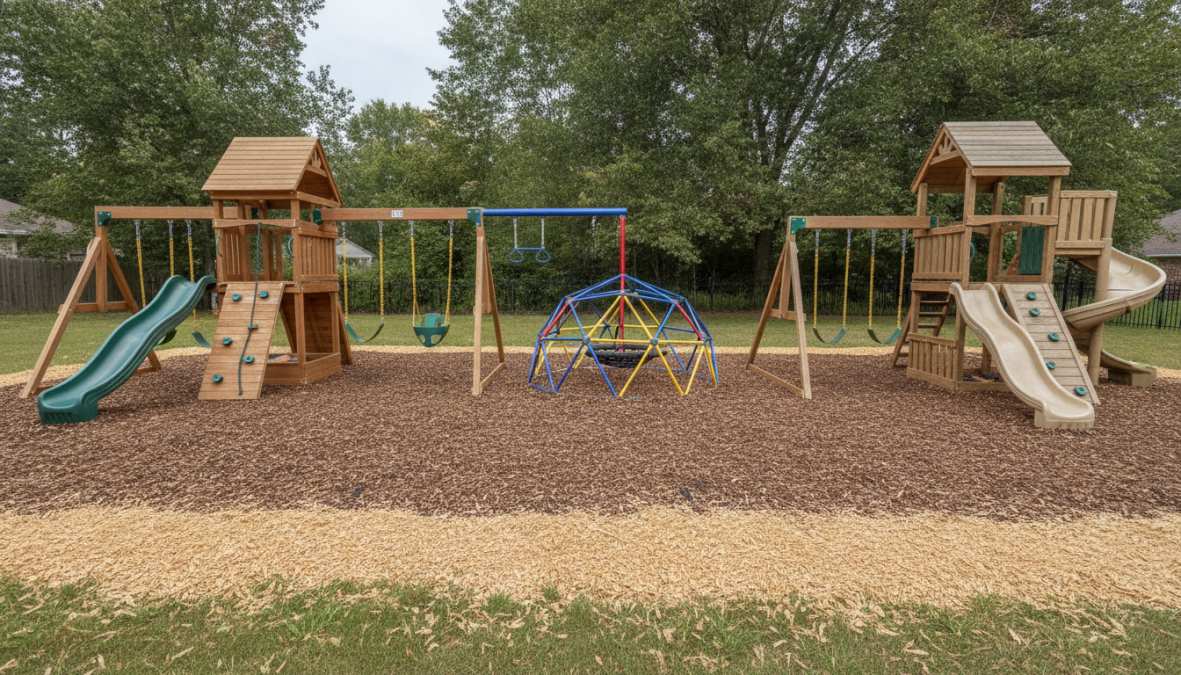
Gorilla Playsets: Premium Cedar Construction
Gorilla has built a reputation for strong wooden playsets that prioritize structural integrity. Their standard beam construction uses premium cedar with commercial-grade hardware. The key differentiator is their "Timber Shield" protective coating option, which provides a maintenance-free finish on the framing while keeping the natural wood aesthetic.
Gorilla playsets are designed for customization. You can start with a base model and add features like rock walls, rope climbs, and multiple slide configurations.
Pros: Excellent structural design, wide customization options, quality hardware
Cons: Requires professional installation, significant assembly time, higher price point
Rainbow Play Systems: Commercial-Grade Heavy-Duty Build
Rainbow specializes in playsets engineered for maximum safety and longevity. Their signature feature is massive beam construction (4×4 and 4×6 cedar) with weight-tested components throughout.
Rainbow’s engineering approach is overkill for residential use, and that’s the point. They design for commercial playground standards, then sell to families who want that level of durability. The warranty reflects this confidence, typically 15+ years on lumber and hardware.
Pros: Exceptional build quality and stability, strongest warranty in the industry, engineered for heavy use
Cons: Significant investment cost, requires professional installation, industrial aesthetic
CedarWorks: Eco-Friendly Splinter-Free Cedar
CedarWorks uses Northern White Cedar and doesn’t apply chemical stains or sealants. The wood is naturally rot-resistant and splinter-free due to the grain structure of this specific cedar species.
The appeal is environmental and safety-focused. No chemical treatments means no arsenic-treated lumber concerns. Northern White Cedar is genuinely rot-resistant, and the wood will weather to gray patina if left unsealed while maintaining structural integrity.
Pros: No chemical treatments required, splinter-free wood, superior safety, customizable designs
Cons: Premium pricing, limited availability compared to mass-market brands, requires monitoring for weathering
Backyard Discovery: Budget-Friendly Cedar Option
Backyard Discovery targets families who want a quality playset without premium pricing. Their playsets use 100% cedar wood construction with pre-cut, pre-drilled, and pre-stained components designed for easier assembly.
The trade-off is that lumber thickness is lighter than commercial-grade options. For families willing to maintain their playset annually, Backyard Discovery offers good value. A well-maintained playset will last 8-12 years.
Pros: Good value for the price, easier assembly process, real cedar construction
Cons: May require more frequent maintenance, lighter lumber thickness, galvanized rather than stainless hardware in some areas
Lifetime Products: Metal & Plastic Low-Maintenance Design
Lifetime specializes in maintenance-free playsets using powder-coated steel and UV-protected plastic components. Starting at around $900 for entry-level models, they’re the most affordable option for families prioritizing low maintenance over natural aesthetics.
Steel tubing with welded joints provides predictable strength without wood’s variability. The modular design allows for configuration options and future expansion. The maintenance-free claim is legitimate, you wash it occasionally and inspect for coating damage, but no annual sealing or staining.
Pros: Extremely low maintenance, highly weather-resistant, affordable entry price, modular design
Cons: Metal can get hot in direct sunlight, less "natural" aesthetic than wooden sets, industrial appearance
Warranty, Longevity & Resale Value Considerations
Warranty terms reveal how confident manufacturers are in their products. A company offering a 15-year structural warranty is betting that their playset will last that long. Budget manufacturers typically offer 3-5 year warranties, reflecting lower durability expectations.
| Brand | Warranty | Coverage | Best For |
|---|---|---|---|
| Riehl Structures | Custom terms | Full structural coverage | Custom builds, premium durability |
| Rainbow Play Systems | 15+ years | Lumber and hardware | Heavy use, multiple children |
| Gorilla Playsets | 10 years | Structural components | Quality construction, customization |
| CedarWorks | 10 years | Cedar lumber | Eco-conscious families, safety-first |
| Backyard Discovery | 5 years | Limited coverage | Budget-conscious, annual maintenance |
| Lifetime Products | 5-10 years | Structural/plastic | Low-maintenance preference |
A well-maintained cedar playset often outlasts its warranty period. A well-maintained wooden playset from a quality manufacturer can be sold for 40-60% of its original purchase price.
Choosing Your Playset: The Decision Framework
The right playset depends on five factors: climate, maintenance commitment, budget, family size/age, and backyard space.
Climate determines material priority. Coastal families should prioritize metal with premium powder coat or vinyl-clad systems. Humid inland families benefit from cedar with annual maintenance or metal. Dry climate families can use cedar with minimal maintenance.
Maintenance commitment is honest assessment, not aspirational thinking. If you hate yard work, don’t buy a wooden playset and tell yourself you’ll seal it annually. Choose metal or vinyl-clad if maintenance isn’t your thing.
Budget shouldn’t drive the entire decision. A $1,500 playset that lasts 5 years costs more per year than a $3,500 playset that lasts 15 years. Calculate cost-per-year over expected lifespan rather than just upfront price.
Family size and age affect feature requirements and durability needs. Larger families benefit from overbuilt systems designed for heavy use.
Backyard space constrains options. A small urban lot needs a compact playset. Soil conditions matter too; rocky soil makes anchor installation difficult; clay soil requires drainage planning.
Choosing a durable outdoor playset is one of the most impactful backyard decisions you’ll make. Your choice determines not just the immediate play experience but years of family memories. Riehl Structures understands this commitment, which is why they build custom playsets engineered for your specific backyard and climate. Their 30+ years of experience, Amish craftsmanship, and flexible financing options remove the typical stress from the buying process. Whether you’re choosing custom Amish-built quality or evaluating other options, prioritize durability, proper installation, and realistic maintenance planning. Get a quote now from Riehl Structures and discover how a custom-designed playset can transform your backyard into a space where memories are made.
Frequently Asked Questions
What material is best for a durable outdoor playset?
Cedar wood is excellent for durability and natural rot resistance, while powder-coated metal offers maintenance-free weather protection. Polymer-wrapped options eliminate splinters and decay concerns. Your choice depends on climate, maintenance preference, and budget. Cedar playsets last 10-15 years with proper care; metal can exceed 15 years with minimal upkeep. Consider your local weather, humid climates favor metal or treated wood; dry regions suit cedar wood playsets.
How do I maintain an outdoor playset to make it last longer?
Inspect monthly for loose hardware, cracks, or rust. For wood playsets, apply protective sealant every 1-2 years and remove debris regularly. Metal playsets need occasional powder-coat touch-ups. Check swing beams and anchoring systems quarterly. Remove standing water and trim overhanging branches. Replace worn safety surfacing promptly. Follow manufacturer guidelines for your specific playset type to ensure structural integrity and prevent premature decay.
What safety standards should a durable playset meet?
Look for ASTM F1148 compliance (standard for playground equipment) and CPSC guidelines. Verify weight capacity ratings, proper anchoring systems, and certified safety surfacing underneath. Check that hardware is commercial-grade and corrosion-resistant. The playset should have no sharp edges, pinch points, or entrapment hazards. Request warranty documentation and safety certifications from manufacturers. Proper installation and regular inspections ensure your playset maintains safety compliance throughout its lifespan.
Is investing in a high-quality durable outdoor playset worth the cost?
Yes, premium playsets offer better structural integrity, longer lifespans (15+ years), and stronger warranties. High-quality cedar wood, commercial-grade hardware, and proper anchoring systems reduce maintenance costs and safety risks. While entry-level sets cost less upfront, they may require replacement within 5-7 years. Durable playsets support higher weight capacity, accommodate multiple children safely, and often retain resale value. Calculate cost-per-year over the playset's lifespan for true value comparison.
This article was written using GrandRanker

Copy Link

