Backyard Gazebo Kits: A 2026 Buyer’s Guide
Copy Link
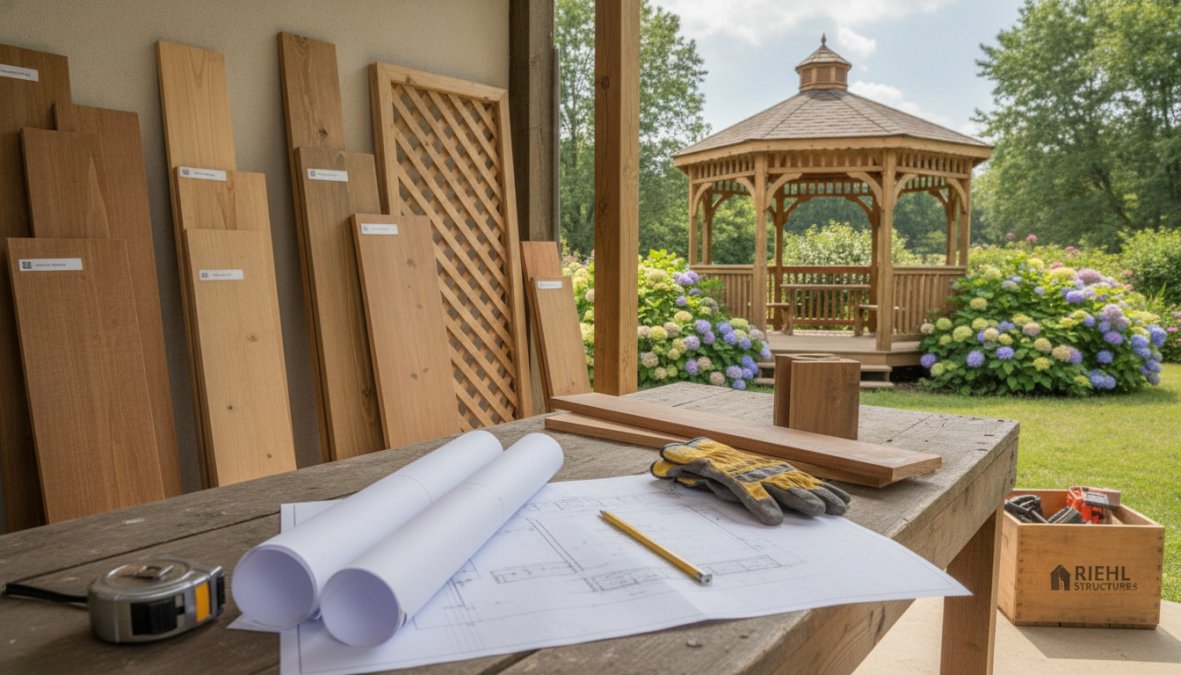
Table of Contents
- Understanding Backyard Gazebo Kits: What You Need to Know
- Material Types for Backyard Gazebo Kits
- Gazebo Shapes and Design Options
- Gazebo Foundation Requirements and Site Preparation
- How to Assemble a Gazebo Kit: Step-by-Step Process
- Cost of Gazebo Installation and Budget Planning
- Maintenance Tips for Wood vs Metal Gazebos
- Creating Your Outdoor Living Space with Gazebos
Last Updated: July 10, 2026
When you’re ready to transform your backyard into an outdoor living space, backyard gazebo kits offer a practical solution combining convenience with quality craftsmanship. At Riehl Structures, we’ve spent over 30 years helping homeowners find the perfect outdoor structures, and gazebo kits consistently rank among the most popular choices for shade, protection, and curb appeal. These pre-cut, pre-designed systems eliminate guesswork, allowing you to create a stunning focal point without months of planning.
Understanding Backyard Gazebo Kits: What You Need to Know
Backyard gazebo kits are complete outdoor structures sold as packaged systems with pre-cut, organized components for assembly at your site. Unlike custom builds, kits give you control over timing, cost, and customization while maintaining professional-grade materials and joinery. Manufacturers have already engineered the structure, calculated load-bearing requirements, and ensured all pieces fit together, reducing assembly errors and installation time significantly.
Why Choose a Kit Over Custom-Built
Custom-built gazebos often require months of design consultation, permitting delays, and contractor coordination. Kit systems compress that timeline dramatically. Research from the National Association of Home Builders indicates that homeowners value projects with predictable timelines and transparent costs, both of which kits deliver more reliably than custom builds. Additionally, kit manufacturers have refined their designs through hundreds of installations, meaning your structure benefits from proven engineering. Kits also lock in your primary expense upfront, with only labor and site preparation varying significantly.
Key Differences in Material and Design
Material choice fundamentally affects durability, maintenance, and aesthetics. Cedar wood offers natural beauty and excellent weathering but requires ongoing maintenance. Pressure-treated pine delivers budget-friendly durability with less aesthetic appeal. Vinyl and powder-coated steel eliminate wood maintenance entirely while providing modern design options.
Design also varies significantly. Octagon shapes provide classic appeal and efficient shade coverage. Rectangular designs maximize interior space for larger gatherings. The shape you select affects how wind moves through the structure and how much usable interior space you gain.
Before selecting a kit, photograph your yard from multiple angles and visualize the gazebo in each location. The same kit can look entirely different depending on its placement relative to your house, landscaping, and sight lines from the street.
Material Types for Backyard Gazebo Kits
Each material class offers distinct advantages and trade-offs that should match your maintenance capacity and long-term vision.
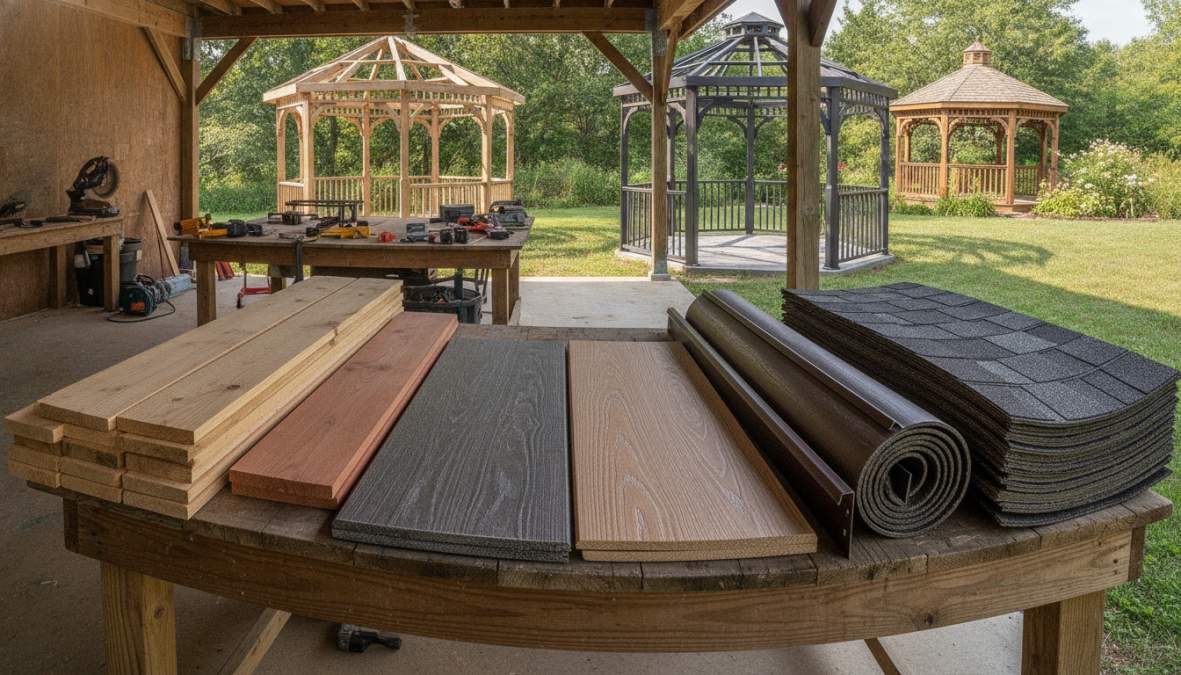
Cedar Wood: Premium Durability and Aesthetics
Cedar wood gazebos command premium pricing because the material justifies it. Cedar naturally resists rot and insect damage due to its oil content, making it ideal for humid climates. The warm, rich color deepens beautifully over time, developing a silvery-gray patina if left unfinished, or maintaining its original tone with regular staining.
Hand-fitted joints in cedar kits showcase traditional mortise-and-tenon connections that tighten as wood seasons, creating stronger bonds than fasteners alone. These structures typically last 20-30 years with proper maintenance. Cedar gazebos often increase perceived property value more than vinyl or steel alternatives.
The maintenance commitment is real, however. Cedar requires staining or sealing every 2-3 years in most climates. Budget 20-40 hours annually for cleaning, staining touch-ups, and minor repairs.
Pressure-Treated Pine: Budget-Friendly Option
Pressure-treated pine delivers structural integrity at a fraction of cedar’s cost. Modern pressure-treatment processes provide 15-20 year protection against rot and termites. Pine lacks cedar’s natural warmth and requires paint or stain to look finished, but accepts paint readily and maintains a clean appearance with repainting every 5-7 years. Pine kits work well for homeowners on tight budgets who plan to paint the structure a complementary color.
Vinyl and Powder-Coated Steel: Low-Maintenance Alternatives
Vinyl gazebos eliminate wood maintenance entirely. The material resists rot, insects, and UV damage without staining or sealing. Vinyl kits maintain their appearance for 20+ years with occasional cleaning and never require painting or protective treatments.
Powder-coated steel frames offer similar low-maintenance benefits with a contemporary aesthetic. Steel provides superior wind resistance compared to wood, making it ideal for exposed locations or areas prone to severe weather. Both materials sacrifice some visual warmth compared to natural wood but deliver maintenance-free longevity.
Vinyl becomes brittle in extremely cold climates (below -20°F regularly). If you live in harsh winter regions, verify that your chosen vinyl kit is rated for your temperature range.
Gazebo Shapes and Design Options
The shape you select affects both aesthetics and functionality. Octagon gazebos are the classic choice, offering elegant symmetry and efficient shade coverage. Rectangular and square designs maximize usable interior space, making them ideal for large gatherings or substantial furniture.
Wind resistance varies by shape. Octagon designs shed wind effectively due to their angled sides. Rectangular structures with large open sides can catch wind more aggressively. If your location experiences regular high winds, verify that your chosen shape and material combination are rated for your typical wind speeds.
Gazebo Foundation Requirements and Site Preparation
A solid foundation determines whether your gazebo stands for 20 years or becomes unstable within five. Foundation preparation is critical and often overlooked.
Assessing Your Hardscape and Landscape
Begin by evaluating your yard’s drainage and soil composition. Gazebos require level ground; slopes greater than 2% make assembly difficult and create water pooling problems. Soil type matters significantly. Clay-heavy soil retains water and can shift seasonally, destabilizing foundations. Sandy soil drains well but provides less bearing capacity. Ideal soil is well-draining loam with good compaction.
Hardscape assessment means identifying underground utilities before digging. Contact your local utility locating service (811 in most U.S. locations) to mark gas lines, electrical, and water before any site preparation.
Most gazebo kits require either a concrete pad foundation or post footings set below the frost line. Concrete pads work well for level sites with good drainage. Post footings (typically 36-48 inches deep) suit sloped terrain and areas with poor drainage.
Permitting and Zoning Requirements
Gazebos often require building permits, though requirements vary dramatically by jurisdiction. Check with your local building department before purchasing your kit. Zoning requirements address setbacks (how far the structure must sit from property lines) and height limits. Many residential zones require 10-15 foot setbacks from property lines.
Homeowners association restrictions also apply in many neighborhoods. If you have an HOA, review architectural guidelines before purchasing.
Permitting protects your investment. A permitted structure with proper foundation work stands strong for decades. Unpermitted work can create problems when selling your home or filing insurance claims.
How to Assemble a Gazebo Kit: Step-by-Step Process
Assembly difficulty varies by kit complexity and material. Most homeowners can assemble a gazebo kit with 2-4 people working over 2-3 days.
Pre-Assembly Checklist and Tools Needed
Before opening your kit, verify that all components arrived undamaged and that nothing is missing. Unpack everything and organize pieces by type. Check the manufacturer’s parts list against what you received.
Essential tools include: power drill with multiple bit sizes, circular saw, pneumatic nail gun or hammer, 4-foot level, 25-foot measuring tape, socket set and adjustable wrenches, 6-8 foot ladder, work gloves, and safety glasses.
Review the assembly manual thoroughly before starting. Prepare your foundation according to the kit’s specifications. If using a concrete pad, allow concrete to cure fully (typically 7 days) before assembly.
Assembly Phases and Hand-Fitted Joints
Most gazebo assembly follows a logical sequence: foundation and base frame, vertical posts, roof structure, and finishing details. Start with the base frame, ensuring it’s perfectly level before moving forward.
Hand-fitted joints in wood gazebos require care during assembly. These mortise-and-tenon connections fit snugly but should slide together without forcing. As you build upward, periodically check that the structure remains plumb and level. Diagonal bracing significantly stiffens the structure. Roof assembly typically comes last.
| Assembly Phase | Duration | Difficulty | Key Checkpoints |
|---|---|---|---|
| Foundation prep | 1-2 days | Low | Level, proper drainage |
| Base frame | 4-6 hours | Low | Square and level |
| Vertical posts | 3-4 hours | Medium | Plumb, properly spaced |
| Roof structure | 4-6 hours | Medium | Secure fasteners, proper slope |
| Finishing | 2-3 hours | Low | Stain/paint, weatherproofing |
Cost of Gazebo Installation and Budget Planning
Gazebo kit costs vary dramatically based on material, size, and complexity. Understanding pricing variables helps you allocate budget realistically.
Pricing Variables and Customization Impact
Material choice is the primary cost driver. Cedar wood kits typically cost 40-60% more than pressure-treated pine for equivalent sizes. Vinyl kits fall between these extremes. Size matters proportionally; a 12-foot octagon costs roughly double a 10-foot octagon in the same material.
Customization options add cost incrementally. Upgraded roofing materials, electrical wiring for lighting, and structural reinforcements for heavy snow loads all increase the base price. Foundation work represents a significant expense. A concrete pad foundation typically costs $500-2,000 depending on size and site conditions. Post footings cost less ($200-800) but require more labor. Professional installation labor typically runs $1,500-4,000 depending on complexity and local rates.
At Riehl Structures, we offer transparent pricing and flexible financing options including rent-to-own plans that require no home equity. We provide free delivery within 30 miles of our West Chester and King of Prussia locations.
Maintenance Tips for Wood vs Metal Gazebos
Long-term gazebo satisfaction depends on understanding maintenance requirements for your chosen material and committing to a realistic schedule.
Weatherproofing, UV Protection, and Seasonal Care
Cedar wood gazebos require annual inspection and maintenance. Each spring, examine the structure for splits, loose joints, or areas where stain has worn thin. Reapply stain or sealant to exposed wood, paying particular attention to horizontal surfaces where water pools. In fall, clear leaves and debris from the roof and any horizontal surfaces.
Vinyl gazebos require minimal maintenance but benefit from occasional cleaning with mild soap and water. Inspect fasteners periodically to ensure they remain tight as the material expands and contracts with temperature changes.
Powder-coated steel gazebos similarly need minimal maintenance. Inspect fasteners regularly and touch up any areas where the coating has chipped to prevent rust.
Create a simple maintenance calendar. Mark your phone with reminders to inspect your gazebo in spring and fall. Thirty minutes of preventive maintenance twice yearly prevents costly repairs and extends your structure’s lifespan significantly.
Creating Your Outdoor Living Space with Gazebos
A gazebo is the foundation for an outdoor living space that extends your home’s usable square footage and creates a destination within your yard.
Enhancing Curb Appeal and Landscape Design
Strategic placement transforms a gazebo from a standalone structure into an integrated landscape feature. Position it where it’s visible from your home’s main windows and from the street. Landscape design around the gazebo matters as much as the structure itself. Plant foundation plantings at the gazebo’s perimeter to integrate it into your yard’s overall design.
Lighting transforms a gazebo from daytime shade structure into an evening destination. String lights overhead create ambient lighting for gatherings. Furnishing choices affect both aesthetics and functionality. Comfortable seating encourages lingering. A small table creates a gathering point. According to the National Association of Landscape Professionals, outdoor structures like gazebos rank among the highest-value landscape improvements for homeowner satisfaction.
Creating an outdoor living space with a gazebo kit is an achievable project that delivers years of enjoyment. Whether you choose cedar for its timeless beauty, pressure-treated pine for budget efficiency, or vinyl for maintenance-free longevity, a well-selected and properly installed gazebo becomes the heart of your backyard. The key is matching the kit to your actual maintenance capacity, climate conditions, and intended use. At Riehl Structures, our Amish-built gazebo kits combine hand-fitted joinery with transparent pricing and expert guidance. We handle site assessment, recommend appropriate foundations for your specific conditions, and deliver free within 30 miles of West Chester and King of Prussia. Get a quote now and discover how a quality gazebo kit transforms your outdoor space into a destination where memories are made.
Frequently Asked Questions
Are backyard gazebo kits easy to assemble?
Most backyard gazebo kits are designed for DIY assembly with pre-cut components and hand-fitted joints that simplify the process. Assembly difficulty depends on kit complexity, your experience level, and available tools. Simpler rectangular designs typically take 1-2 days, while octagon or oval kits may require longer. Many manufacturers provide detailed installation guides. Having a second person and proper tools, like a power drill, level, and wrench set, makes assembly significantly easier and faster.
Do I need a permit for a backyard gazebo kit?
Permit requirements vary by location and depend on gazebo size, foundation type, and local zoning regulations. Many municipalities require permits for permanent structures, especially those with roofs or covering more than a certain square footage. Some areas classify gazebos as accessory structures with different rules. Before purchasing, contact your local building department to understand permitting requirements, setback distances, and any height restrictions. This upfront research prevents costly delays and ensures your structure meets code.
What is the most durable material for a gazebo kit?
Cedar wood offers premium durability and natural beauty, typically lasting 15-20+ years with proper maintenance. Pressure-treated pine is more affordable but requires regular staining and sealing. Vinyl gazebos provide excellent low-maintenance durability and are highly resistant to rot and insects. Powder-coated steel and galvanized steel offer superior weather resistance and wind-resistant properties, making them ideal for harsh climates. Your choice depends on climate, maintenance commitment, and budget. Each material has distinct advantages: cedar for aesthetics, vinyl for ease, and metal for extreme durability.
How much does it cost to install a backyard gazebo kit?
Gazebo kit pricing depends on material type, size, customization options, and whether you handle assembly yourself or hire professionals. Factors affecting cost include premium materials like cedar versus pressure-treated pine, roof decking complexity, and custom design features. Foundation preparation and site work may add to total expenses. For accurate pricing specific to your needs, including delivery, financing options, and any customization, contact a local provider directly. Many offer flexible financing and delivery services that can affect your overall investment.
This article was written using GrandRanker

Copy Link