What Size Shed Do I Need: A Practical Guide
Copy Link
Table of Contents
- What Size Shed Do I Need: Start With Your Storage Inventory
- Key Factors That Determine the Right Shed Size
- What Fits in a 10×12 Shed: Popular Size Breakdown
- Shed Size for a Riding Mower and Garden Equipment
- Use a Shed Size Calculator to Confirm Your Choice
- West Chester PA Shed Permit Requirements and Zoning
- Common Sizing Mistakes to Avoid
- Frequently Asked Questions
Last Updated: October 6, 2026
What Size Shed Do I Need: Start With Your Storage Inventory
The first step in choosing the right shed size is simple: list everything you plan to store. Most homeowners underestimate what size shed do i need until they actually start moving items into the space. This inventory becomes your foundation for making the right choice.
List Everything You Plan to Store
Write down every item you want to keep in your shed. Don’t skip anything. Include garden tools, lawn equipment, seasonal decorations, sports gear, and workshop supplies. Be specific. Instead of writing “tools,” list the drill press, table saw, workbench, and hand tools separately.
Group similar items together:
- Garden tools (shovels, rakes, hoes, pruners)
- Lawn equipment (push mower, leaf blower, trimmer)
- Seasonal items (holiday decorations, patio furniture)
- Sports equipment (bikes, skis, tennis rackets)
- Workshop supplies (wood, metal stock, hardware)
- Outdoor furniture and cushions
Measure the larger items. How tall is your riding mower? How wide is your workbench? These dimensions matter because they determine minimum shed dimensions. A 10×12 shed might work for hand tools but not for a riding mower plus storage.
Take photos of your items as you list them. When you visit a shed showroom or review options, you’ll have visual references to compare against actual floor space.
Account for Growth and Future Items
Your storage needs will change. Children grow. Hobbies expand. Projects multiply. A shed that feels spacious today might feel cramped in three years.
Plan for at least 20-30% extra capacity beyond what you need right now. If your current inventory fills 400 square feet, look for a shed that offers 500-550 square feet. This buffer prevents you from outgrowing your structure too quickly.
Also consider what you might add:
- New hobbies or sports equipment
- Additional garden tools as your landscape grows
- Workshop equipment if you enjoy DIY projects
- Seasonal items that accumulate over time
Many homeowners who buy too small end up needing a second shed. That’s expensive and wastes yard space. Start with the right size and you’ll avoid that problem.
Key Factors That Determine the Right Shed Size
Beyond your inventory, several practical factors shape what size shed do i need for your specific situation. Yard space, access, and climate all influence the decision.
Available Yard Space and Placement
Your yard might limit your options. A small residential lot in West Chester won’t accommodate the same shed size as a rural property. Walk your yard and identify potential placement spots. Look for areas that get good drainage and aren’t shaded by large trees.
Measure the available space carefully. Account for:
- Distance from property lines (check local zoning rules)
- Clearance from the house and other structures
- Space needed to walk around the shed for maintenance
- Visibility from the street or neighbors’ yards
- Slope or grade changes in your yard
A shed on sloped ground requires leveling work. Riehl Structures handles site preparation, but knowing your terrain upfront helps you understand what size works best for your property. Some homeowners choose a narrower shed for a sloped lot rather than a larger one that would require extensive grading.
The largest shed isn’t always the best choice. A shed that fits your yard, your budget, and your property’s layout will serve you far better than an oversized structure that dominates your landscape.
Access and Working Room Inside
Don’t just think about storage capacity. Think about how you’ll actually use the space. Can you open a lawnmower door fully? Can you move around a workbench? Can you access items stored in the back?
A 10×12 shed gives you roughly 120 square feet of floor space. That sounds like plenty until you add shelving, a workbench, and larger equipment. Suddenly, moving around becomes tight.
Consider these practical needs:
- Space to walk down an aisle between stored items
- Room to open cabinet doors and drawers
- Clearance to move equipment in and out
- Headroom for standing and working
- Ventilation space around items to prevent moisture damage
If you plan to work in the shed, add extra space. Workshops need room to move, bend, and maneuver materials. A shed that’s half-full of equipment but unusable as a workspace defeats the purpose.
Climate and Weather Considerations
Pennsylvania’s climate affects shed durability and function. Winters bring snow and ice. Springs bring heavy rain. Summers get humid. Your shed must handle these conditions.
Proper ventilation prevents moisture buildup and extends the life of stored items. Amish-built sheds from Riehl Structures are constructed with quality materials that resist rot and weathering. Better construction means your shed protects your belongings longer.
Climate also affects what you’ll store seasonally. Winter storage needs differ from summer needs. A shed sized only for summer storage might feel cramped when you add winter items. Account for seasonal variation when determining size.
What Fits in a 10×12 Shed: Popular Size Breakdown
A 10×12 shed is one of the most popular sizes for residential use. Understanding what actually fits helps you decide if this size works for your needs.
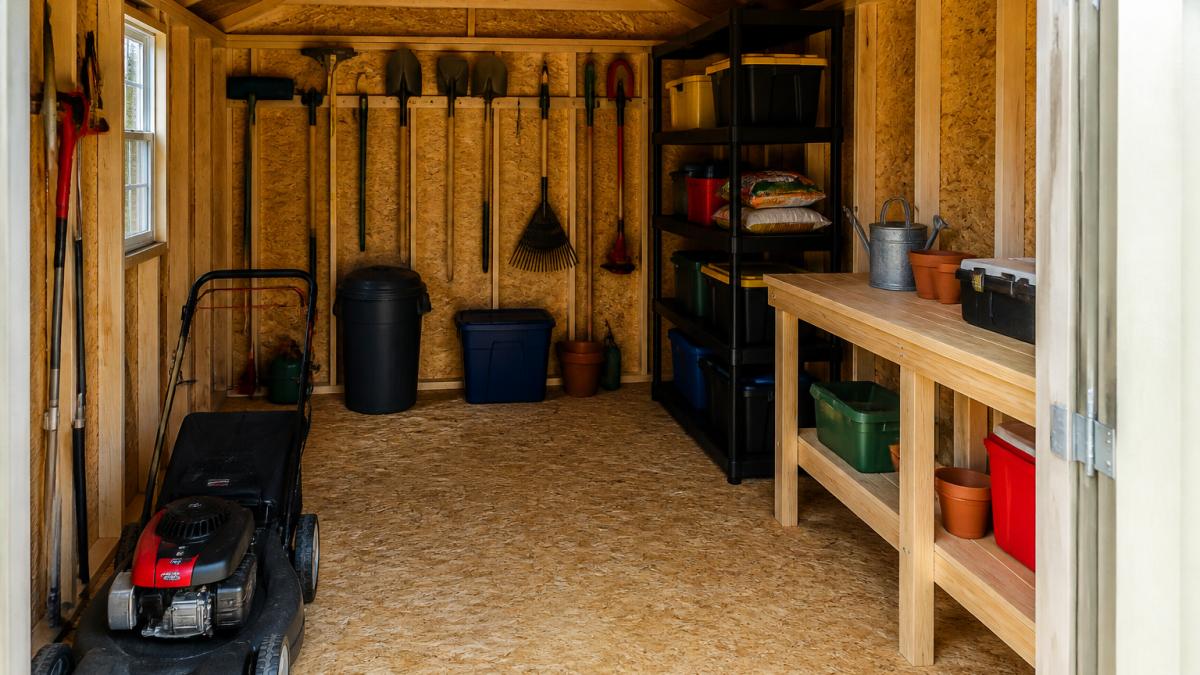
A 10×12 shed offers approximately 120 square feet of usable floor space. That’s roughly the size of a small bedroom. Here’s what typically fits:
Garden and yard storage:
- Push mower and trimmer
- Shovels, rakes, hoes (6-8 tools)
- Wheelbarrow and garden cart
- Hoses, sprinklers, and irrigation supplies
- Potting bench or small table
- Bags of soil, mulch, and fertilizer
Seasonal items:
- Holiday decorations (3-4 storage bins)
- Patio furniture cushions
- Winter equipment (sleds, snow blower)
Workshop basics:
- Workbench
- Hand tools and power tools
- Basic lumber and hardware storage
- Tool chest or pegboard
What doesn’t fit in a 10×12:
- Riding mower (needs more width and length)
- Large workshop with multiple workbenches
- Extensive tool collections
- Significant quantities of building materials
The key is vertical storage. Wall-mounted shelves and pegboards multiply your capacity. Many homeowners maximize 10×12 sheds by using every inch of wall space.
Shed Size for a Riding Mower and Garden Equipment
If you own a riding mower, that single piece of equipment shapes your shed size decision. Riding mowers are large and need dedicated space.
Measuring Your Riding Mower and Other Large Tools
Before choosing a shed size, measure your riding mower precisely. Most residential riding mowers are 40-48 inches wide, 60-72 inches long, and 40-48 inches tall. Some zero-turn models are wider.
Write down these measurements:
- Mower width (including mirrors or side attachments)
- Mower length (from front bumper to rear)
- Mower height (to the highest point)
- Aisle space needed to maneuver the mower in and out
A 10×12 shed is too small for a riding mower plus other storage. You need at least a 12×16 shed to comfortably fit a riding mower, workbench, and basic tool storage. A 12×20 shed gives you real breathing room.
Consider the shed entrance too. A standard single door might not be wide enough for your mower. Some homeowners choose sheds with double doors or larger openings to make equipment access easier.
Forcing a riding mower into too-small a shed causes damage. You’ll scrape paint, dent walls, and risk hitting your equipment or the structure itself. Measure twice, buy once.
Use a Shed Size Calculator to Confirm Your Choice
After listing your items and measuring your space, use a shed size calculator to verify your decision. Many manufacturers offer tools that help estimate the right shed size for your needs.
A calculator typically asks:
- What items do you plan to store?
- How much space do you need for each category?
- Do you need workspace inside the shed?
- How much growth capacity do you want?
The calculator estimates total square footage required. Compare that number to available shed sizes. Most come in standard dimensions: 8×10, 8×12, 10×12, 10×16, 12×16, 12×20, and larger.
This step confirms your thinking before you commit to a purchase. It’s easier to adjust your choice now than to realize after delivery that you picked the wrong size.
West Chester PA Shed Permit Requirements and Zoning
Before buying a shed, check local zoning rules. West Chester and surrounding areas have specific regulations about shed size, placement, and setbacks from property lines.
Most townships require:
- Setback distances from property lines (typically 5-10 feet)
- Maximum shed size without a permit (often 200-250 square feet)
- Building permits for larger structures
- Proof that the shed won’t block drainage or create flooding issues
A 10×12 shed (120 square feet) usually doesn’t require a permit in most West Chester areas. Larger sheds often do. Your township’s zoning office can tell you exactly what applies to your property.
It’s better to ask before you buy than to discover permit issues after delivery.
Contact your local township zoning office or building department for specific rules. They’ll tell you:
- Whether your shed size needs a permit
- Setback requirements for your lot
- Any design or material restrictions
- Inspection requirements
Common Sizing Mistakes to Avoid
Homeowners make predictable mistakes when choosing shed size. Learning from them saves you money and frustration.
Mistake 1: Measuring only current needs. You’ll accumulate more stuff. Plan for growth. A slightly larger shed costs less than buying a second one later.
Mistake 2: Ignoring slope and drainage. A shed on a sloped lot needs grading work. A shed in a low spot collects water. Both create problems. Choose placement carefully.
Mistake 3: Underestimating equipment size. Your riding mower is bigger than you think when you’re trying to fit it through a door. Measure twice.
Mistake 4: Forgetting about working space. A shed packed wall-to-wall with storage is a storage locker, not a functional workspace. Leave room to move.
Mistake 5: Choosing size without checking zoning. A shed that violates setback rules creates legal problems. Know the rules before you buy.
Mistake 6: Picking a cheap shed that won’t last. A poorly built shed deteriorates quickly and fails to protect your items. Quality construction, like Amish-built sheds from Riehl Structures, lasts decades.
Choosing the right shed size starts with an honest inventory of what you need to store, then expands to include your yard’s limitations, local regulations, and future growth. A 10×12 shed works for basic garden storage. A 12×16 or 12×20 accommodates a riding mower and workshop space.
At Riehl Structures, we help West Chester homeowners find the perfect shed size for their property. Our custom design process accounts for your specific needs, your yard’s layout, and local requirements. We handle site preparation and delivery within 30 miles of our West Chester and King of Prussia locations, making the process stress-free from start to finish.
Frequently Asked Questions
What size shed do I need for a riding lawn mower?
A riding mower typically requires 8 feet of length and 5 feet of width at minimum. A 10×12 shed comfortably accommodates a riding mower plus hand tools and garden equipment. If you also store a second vehicle, snow blower, or significant amounts of seasonal items, consider a 12×16 or larger. Measure your specific mower’s dimensions before deciding, some zero-turn models are wider than traditional riders.
How do I calculate what size shed I need?
Start by listing every item you plan to store and its dimensions. Add 20-30% extra space for organization, walkways, and future purchases. For example, if your items total 80 square feet, aim for at least 100-110 square feet. Account for shelving and vertical storage, which multiplies usable capacity. Many homeowners find that their initial estimate is too small, overestimating by one size category often saves regret later.
Do I need a permit for a shed in West Chester, PA?
Yes. West Chester and most townships in Chester County require a zoning permit for sheds over 100-120 square feet, depending on local ordinances. Setback requirements typically mandate 5-10 feet from property lines. Height limits usually cap at 15 feet. Contact your local township office or zoning department before purchasing to confirm requirements for your specific address. Riehl Structures can guide you through the permitting process as part of the custom design.
What can I fit in a 10×12 shed?
A 10×12 shed (120 square feet) holds a riding mower, push mower, garden tools, seasonal decorations, and moderate lawn equipment. With shelving and wall-mounted storage, you can store bicycles, hand tools, fertilizer, pots, and small power tools. However, it fills quickly if you add snow blowers, extra furniture, or multiple large items. Most homeowners discover they need vertical storage and organized shelving to maximize the space effectively.

Copy Link