Waterproof Pergola Lighting for All Seasons
Copy Link
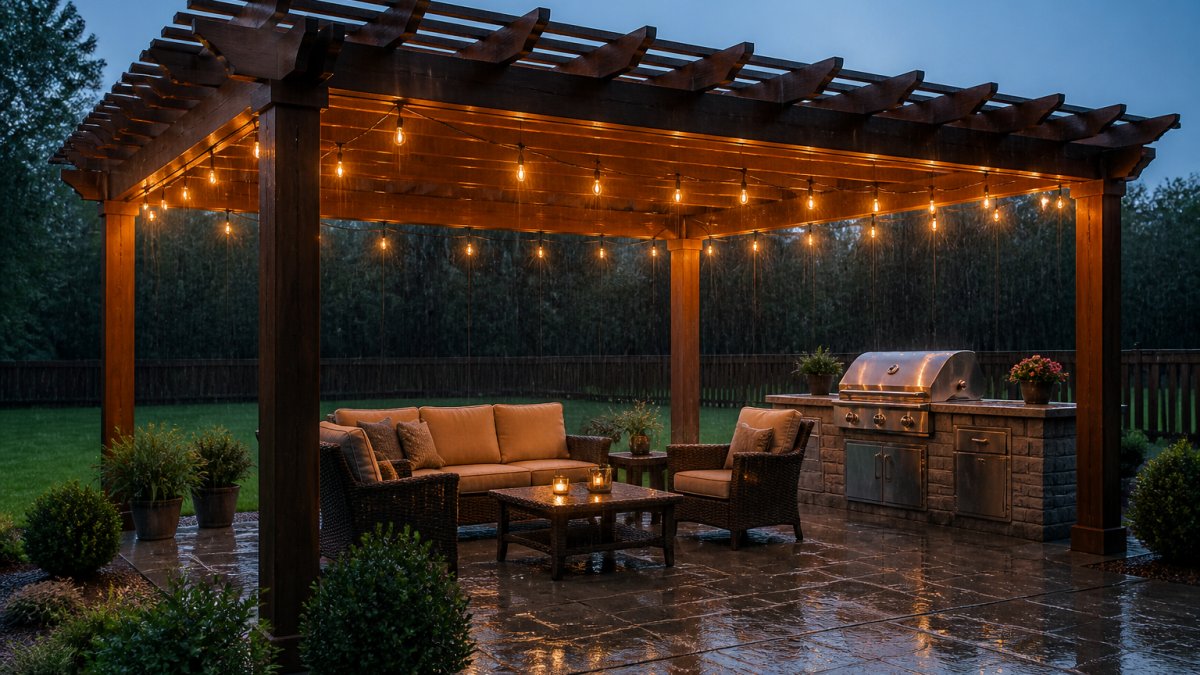
Table of Contents
- Types of Waterproof Pergola Lighting
- IP65 Outdoor Lights and Weather Resistance
- Weatherproof Outdoor String Lights for Year-Round Use
- Solar Pergola Lights: Benefits and Limitations
- Pergola Lighting Ideas and Design Placement
- Installation Best Practices for Waterproof Pergola Lighting
- Seasonal Maintenance and Winter Durability
- Frequently Asked Questions
Last Updated: October 16, 2026
Types of Waterproof Pergola Lighting
When you’re adding lights to a pergola, the first decision is which type to install. The right choice depends on your budget, the look you want, and how much maintenance you’re willing to do.
LED fixtures are the most durable option for outdoor use. They last longer than traditional bulbs, use less electricity, and handle temperature swings without failing. LEDs stay bright even in cold winter months, which matters if you’re in West Chester or anywhere with harsh seasonal changes.
String lights create ambiance but need more care. They look beautiful draped overhead, yet they’re more exposed to weather damage. Fixture lights mount directly to your pergola’s structure and offer better protection from rain and snow.
LED Fixtures for Durability
LED fixtures are built to last. They handle freezing temperatures, intense sun, and heavy rain without dimming or burning out quickly.
Here’s what makes LEDs practical for year-round use:
- Last 25,000 to 50,000 hours (much longer than incandescent bulbs)
- Use 75% less energy than traditional bulbs (the EPA)
- Produce less heat, reducing fire risk
- Available in warm or cool white tones
- Resistant to vibration and shock
The upfront cost is higher than other options, but you’ll save money over time because you replace them less often. If your pergola is a gathering spot in your West Chester backyard, LEDs make sense.
String Lights vs. Fixture Lights
String lights hang between posts or along the pergola’s frame. They’re easy to install and give a relaxed, festive feel. The downside: they’re fully exposed to wind, rain, and temperature swings. Each connection point is a potential failure spot.
Fixture lights mount directly to the structure. They’re recessed or enclosed, so weather exposure is minimal. Installation takes more work because you may need to run wiring through the pergola’s beams. But once installed, they’re more reliable in all seasons.
For year-round waterproof pergola lighting in regions with heavy snow or ice, fixture lights are the stronger choice. String lights work better if you plan to take them down seasonally.
IP65 Outdoor Lights and Weather Resistance
IP65 is a rating that tells you how well a light handles dust and water. It means the fixture is dust-tight and can withstand water jets from any direction without damage.
For pergola lighting, IP65 is the minimum standard you should accept. Anything lower leaves gaps where moisture creeps in and corrodes wiring or bulbs.
Look for these features in IP65-rated lights:
- Sealed gaskets around all openings
- Stainless steel or powder-coated aluminum housing
- Epoxy-coated wiring and connectors
- No exposed screws or fasteners
- Drain holes to prevent water pooling
Check the product label before buying. Some lights claim water resistance but don’t carry the IP65 rating. That’s a red flag. The rating is backed by testing standards, so you know what you’re getting.
West Chester experiences freeze-thaw cycles that stress outdoor fixtures. IP65 protection keeps water from entering during rain or snow, then expanding as it freezes. That expansion cracks unsealed lights. With proper sealing, your lights survive multiple winters.
Weatherproof Outdoor String Lights for Year-Round Use
If you prefer the look of string lights, weatherproof versions exist. They’re designed to handle rain, snow, and temperature changes better than standard decorative strings.
Weatherproof outdoor string lights typically feature:
- Silicone or rubber gaskets at every bulb socket
- UV-resistant cords that don’t crack in sunlight
- Sealed connection points where wires join
- Bulbs rated for outdoor use (not indoor-only)
- Heavy-duty insulation on all wiring
Even with these upgrades, string lights need seasonal care. Before winter, inspect each connection for cracks or loose wires. Remove ice buildup by hand to avoid stressing the cord. In spring, check for UV damage or brittleness.
Weatherproof outdoor string lights work well for pergolas you use year-round. They’re less maintenance-heavy than basic string lights, though still more demanding than mounted fixture lights. For a pergola in your PA backyard that gets regular use, they’re a practical middle ground.
Solar Pergola Lights: Benefits and Limitations
Solar lights seem ideal. No wiring, no electricity bills, and they charge during the day. For pergola lighting, they have real appeal, especially if your structure is far from an electrical outlet.
Benefits of solar pergola lights:
- No electrical wiring needed
- Zero operating cost after purchase
- Easy to install and move
- Good for accent lighting or pathway lights
Limitations to consider:
- Battery life drops in winter (shorter days, weaker sun)
- Performance depends on cloud cover and tree shade
- Batteries degrade after 2-3 years
- Light output is dimmer than wired fixtures
- Upfront cost per light is often higher
Solar lights work best as supplementary lighting, not your main light source. Use them for accent lighting along pathways or to highlight architectural details. For primary pergola lighting where you need reliable brightness year-round, wired LED fixtures are more dependable. Integrating permanent holiday lighting into your pergola structure provides a consistent, weather-resistant glow that remains functional regardless of the season.
If your pergola sits in full sun with no shade, solar lights perform better. In West Chester, where winters are gray and overcast, solar output drops significantly from November through February.
Pergola Lighting Ideas and Design Placement
Good lighting design transforms a pergola from a daytime structure into an evening retreat. The key is layering different light types to create depth and mood.
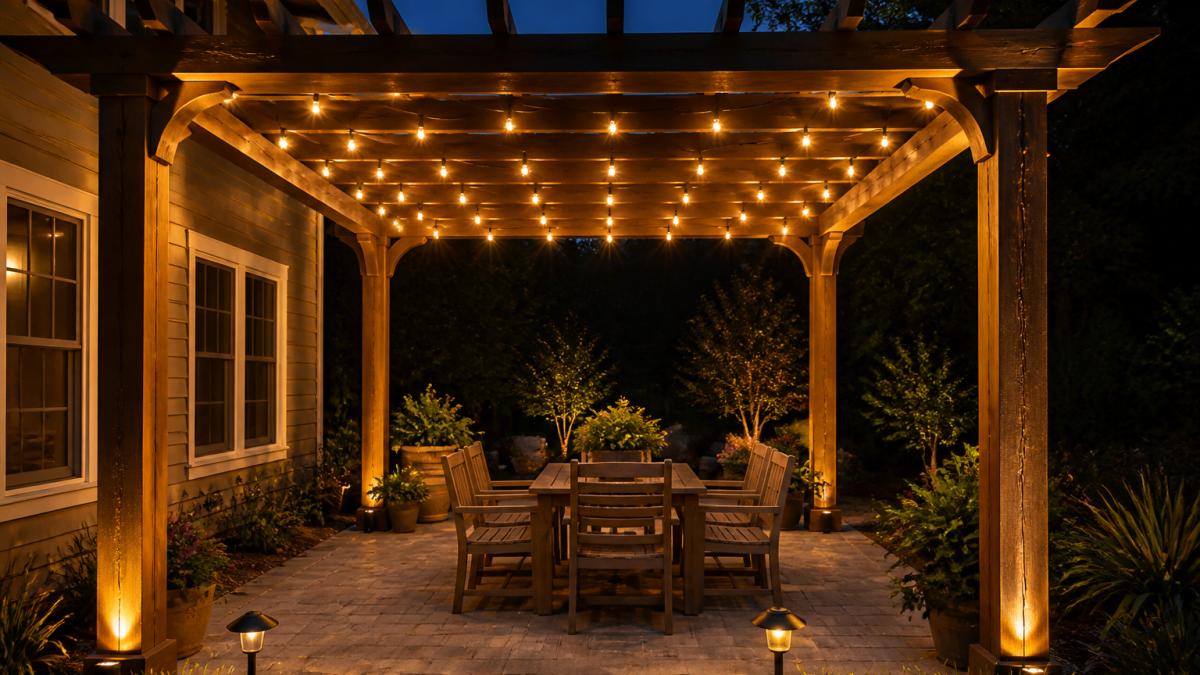
Overhead and Accent Lighting
Overhead lights are your primary source. Install them along the pergola’s beams or suspended between posts. They illuminate the entire space and make the area safe for evening gatherings.
Accent lighting highlights the pergola’s structure itself. Mount small fixtures on vertical posts or beams to create shadow and texture. This draws the eye upward and makes the structure feel more intentional.
Combine both approaches:
- String lights or fixture lights overhead for general brightness
- Smaller accent lights on posts for visual interest
- Ground-level path lights for safety and ambiance
This layering gives you flexibility. You can adjust brightness by turning on only the overhead lights for a quiet evening, or all three layers for entertaining.
Creating Ambiance for Different Seasons
Your lighting should adapt to seasonal use. In summer, you want bright, energizing light for entertaining. In fall and winter, warmer, softer light feels more inviting.
Summer approach:
- Use cooler white LEDs (5000K color temperature)
- Brightness set to full output
- Overhead lights on constantly during evening hours
Fall and winter approach:
- Switch to warm white LEDs (2700K color temperature)
- Reduce brightness to 50-75% for coziness
- Use accent lights to create focal points instead of full brightness
If your fixtures support dimmers, you can adjust without changing bulbs. Some modern LED systems let you control color temperature with a remote or app, a smart choice for year-round pergolas.
Installation Best Practices for Waterproof Pergola Lighting
Proper installation is where many pergola lighting projects fail. Poor wiring or exposed connections let water in, and that means early failure.
Wiring and Power Considerations
Run all wiring through the pergola’s structure, not along the outside where weather exposure is constant. If you must run wire externally, use conduit to shield it.
Key steps for safe wiring:
- Use outdoor-rated wire (marked “UF” for underground/wet use)
- Bury electrical lines at least 18 inches deep if running under ground
- Keep all connections indoors or in weatherproof junction boxes
- Install a GFCI outlet to cut power if water causes a short
- Use a breaker rated for outdoor circuits (typically 20 amps for pergola lights)
If you’re not comfortable with electrical work, hire a licensed electrician. A mistake here creates a shock hazard or fire risk. In West Chester, local electricians understand regional codes and permit requirements.
Weatherproofing Your Installation
Every connection point is a potential leak. Seal them all.
Use these materials for weatherproofing:
- Silicone caulk around fixture bases
- Electrical tape wrapped tightly over wire connections
- Heat-shrink tubing over solder joints
- Stainless steel hardware (bolts, screws, washers)
- Gaskets and rubber seals in fixture housings
After installation, walk around the pergola and look for gaps. Caulk anything that looks exposed. In winter, check again after heavy snow or ice storms. Settling and freeze-thaw cycles can open new gaps.
Seasonal Maintenance and Winter Durability
Your waterproof pergola lighting needs regular attention to last through all seasons.
Fall maintenance:
- Clean fixtures and lenses of dust and debris
- Test all lights to confirm they still work
- Inspect wiring for cracks or loose connections
- Tighten any hardware that’s come loose
Winter care:
- Remove ice and snow buildup by hand (don’t use a broom, which can crack fixtures)
- Check for water pooling inside fixtures and drain if needed
- Inspect gaskets and caulk for cracks
- Verify GFCI outlets are still functional
Spring cleanup:
- Replace any bulbs that failed over winter
- Recaulk areas where caulk has shrunk or cracked
- Clean lenses again after winter weather
- Test dimmer switches and smart controls if you have them
This maintenance takes a few hours each season. It’s far less work than replacing lights that failed due to neglect.
Adding waterproof pergola lighting transforms how you use your outdoor space year-round. Whether you choose LED fixture lights for reliability or weatherproof string lights for ambiance, the key is starting with IP65-rated fixtures and sealing every connection.
At Riehl Structures, we build custom pergolas designed to support integrated lighting systems. Our team can help you plan a pergola layout that makes wiring simple and keeps your installation clean. We offer custom pergola designs with flexible financing options to fit your budget and timeline. With free delivery within 30 miles of our West Chester location and professional site preparation, your pergola is installed right the first time. Get a quote now and start enjoying your backyard in every season.
Frequently Asked Questions
What does IP65 mean for waterproof pergola lighting?
IP65 is a rating that indicates a light fixture can withstand water jets from any direction and is dust-tight. For pergola lighting, this means the fixture resists heavy rain, snow, and moisture without damage. This rating is essential for outdoor lights exposed to all seasons and ensures your waterproof pergola lighting investment lasts years without corrosion or electrical failure.
Can solar pergola lights work during winter or cloudy weather?
Solar pergola lights work year-round but produce less brightness on cloudy days and during winter months when daylight hours are shorter. Modern solar lights store energy in batteries and activate at dusk, but reduced sunlight means shorter operating time. For reliable all-season performance, consider hybrid systems that combine solar charging with battery backup, or choose hardwired LED options if consistent brightness is your priority.
Should I use weatherproof outdoor string lights or fixture lights for my pergola?
Weatherproof outdoor string lights create ambient, decorative lighting and are easier to install without hardwiring. Fixture lights offer brighter, more focused illumination and cleaner aesthetics. For all-season use, choose string lights rated IP65 or higher if you want year-round ambiance, or combine both: string lights for mood and fixture lights for functional brightness. Your choice depends on your pergola’s purpose and desired atmosphere.
Do I need an electrician to install waterproof pergola lighting?
Low-voltage solar or battery-powered lights require no electrician and can be installed by homeowners. Hardwired LED fixtures running on standard household current should be installed by a licensed electrician to ensure proper grounding, weatherproof connections, and code compliance. Improper wiring in wet conditions creates serious shock and fire hazards, making professional installation worth the investment for safety and durability.

Copy Link