Signs Your Shed Foundation Is Failing
Copy Link
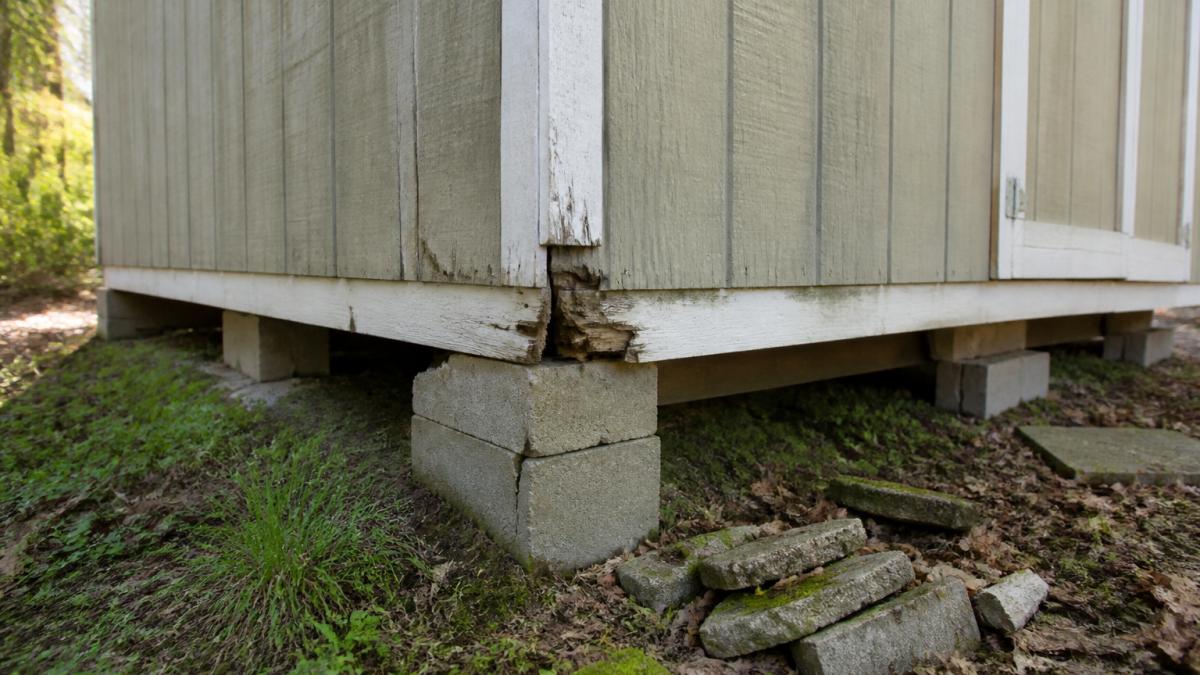
Table of Contents
- How to Spot a Failing Shed Foundation
- Shed Foundation Inspection Checklist
- Common Causes of Foundation Failure
- Best Shed Foundation Types for Pennsylvania
- Shed Foundation Repair Cost and Your Options
- Preventing Foundation Problems Before They Start
- Frequently Asked Questions
Last Updated: September 28, 2026
How to Spot a Failing Shed Foundation
Understanding the signs your shed foundation is failing helps you catch problems early, as these visible indicators get worse over time. The most common indicators are cracks, uneven floors, and water damage. Recognizing signs your shed foundation is failing early means the difference between a simple repair and a complete rebuild. Neglecting these structural shifts can also mask the presence of termite foundation damage, which compromises the integrity of your timber supports just as severely as shifting soil.
Your shed sits on one of several foundation types. Concrete pads, gravel beds, and ground-level options all fail differently. The good news: most failures happen slowly, giving you time to act.
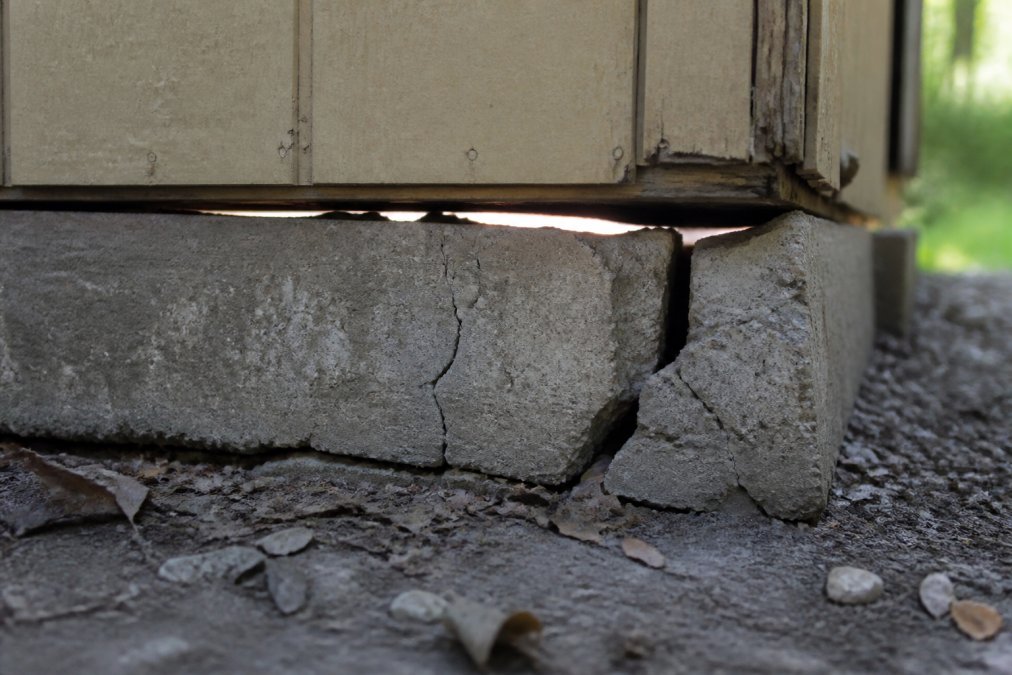
Visible cracks and separation
Cracks in your foundation aren’t all equal. Small hairline cracks are normal in concrete. Wide cracks that keep growing are a problem.
Look for cracks that:
- Widen over time (measure them monthly)
- Run horizontally across the pad
- Appear at corners or edges first
- Let water seep through
Separation happens when the foundation pulls away from the shed walls. You’ll see gaps between the structure and the base. These gaps let water in and weaken the entire frame.
Check for separation by walking around the shed perimeter. Run your hand along where the walls meet the foundation. Any gap wider than a quarter-inch means the foundation is moving.
Sagging or uneven floors
Walk inside your shed and feel the floor. Does it slope in one direction? That’s settling. Uneven floors mean the foundation has shifted beneath the structure.
Test for sagging with a simple method:
- Place a marble or ball on the floor
- Watch which way it rolls
- Roll it in different spots throughout the shed
If it consistently rolls toward one corner, your foundation has settled unevenly. This puts stress on the frame and eventually causes structural damage.
Sagging also makes doors and windows stick. If your shed door suddenly won’t close properly, check the foundation first.
Water pooling and moisture damage
Water is the enemy of any foundation. Pooling water around the base signals drainage problems. Standing water accelerates foundation failure by softening soil and promoting settling.
Walk around your shed after rain. Does water collect near the base? Does it drain slowly? Poor drainage creates a soggy foundation that loses strength.
Inside the shed, look for:
- Damp spots on the floor
- Discolored concrete or wood
- Musty smells
- Visible mold or mildew
Moisture damage weakens concrete by freezing and thawing. In Pennsylvania winters, this cycle happens repeatedly, breaking down the foundation from within.
Shed Foundation Inspection Checklist
A thorough inspection takes 30 minutes and requires no special tools. This checklist helps you catch problems before they become expensive.
What to look for during your walkthrough
Start outside and work your way in. Document what you find with photos and notes.
Exterior inspection:
- Walk the entire perimeter slowly
- Look for visible cracks wider than a hairline
- Check for gaps between shed and foundation
- Spot water pooling or poor drainage
- Note any areas where soil has settled
- Look for rust stains (indicates water movement)
Interior inspection:
- Check the floor for slopes or soft spots
- Press on wooden sills with a screwdriver (soft wood means rot)
- Look for water stains on walls or floor
- Smell for musty odors
- Test door and window operation
- Look for cracks in interior walls
Foundation type matters:
Concrete pads show cracks and spalling. Gravel bases settle unevenly. Ground-level foundations collect water. Knowing your foundation type helps you spot its specific failure points.
Take photos of anything suspicious. Date them. Take the same photos again in three months. If cracks grow or new damage appears, you have evidence of active failure.
When to call a professional inspector
Some problems need expert eyes. Call a professional if you notice:
- Cracks wider than one-quarter inch
- Visible separation between shed and foundation
- Significant floor slopes or soft spots
- Water damage that won’t dry
- Structural movement or creaking
A professional foundation inspector costs money upfront but prevents expensive mistakes. They can determine whether your foundation needs repair or replacement. Many offer free estimates.
In West Chester and the surrounding area, foundation inspectors familiar with Pennsylvania’s freeze-thaw cycles understand the specific challenges your shed faces. They know which repairs hold up and which are temporary fixes.
Common Causes of Foundation Failure
Understanding why foundations fail helps you prevent it. Most failures come from one or more of these causes.
Poor drainage tops the list. Water that sits around your foundation softens soil and promotes settling. Sloped yards that drain toward your shed create constant moisture problems.
Inadequate site preparation during installation sets the stage for failure. Uncompacted soil, debris under the pad, or uneven grading causes uneven settling from day one.
Freeze-thaw cycles in Pennsylvania winters crack concrete and destabilize gravel bases. Water enters small cracks, freezes, expands, and widens the crack. This repeats for months each winter.
Heavy loads concentrated in one spot stress the foundation beyond its design capacity. Storing heavy equipment or materials unevenly accelerates settling.
Poor initial construction using thin pads, inadequate base preparation, or wrong materials creates early failure. Quality matters from the start.
Age and wear affect all foundations eventually. After 15-20 years, even well-built foundations show stress. Regular maintenance extends the life, but replacement eventually becomes necessary.
Best Shed Foundation Types for Pennsylvania
Pennsylvania’s climate demands foundation types that handle freeze-thaw cycles. Not all options perform equally in your region.
Concrete pads and their durability
A concrete pad is the most common choice. It provides a solid, level surface that resists settling when properly installed.
Why concrete works well:
- Resists moisture better than gravel
- Provides stable, level support
- Lasts 20-30 years with proper drainage
- Easy to inspect for damage
- Works on most yard slopes
The catch: Concrete cracks in freeze-thaw cycles. Proper installation includes drainage and a gravel base. Thick pads (4-6 inches) handle Pennsylvania winters better than thin ones.
When concrete fails, repair means patching cracks or pouring a new pad. Replacement costs more than gravel but lasts longer.
Gravel and ground-level options
Gravel bases cost less upfront but require more maintenance. They settle unevenly and compact over time.
Gravel foundation pros:
- Lower initial cost
- Easy to adjust if shed settles
- Good for temporary structures
- Works on slopes with proper preparation
Gravel foundation cons:
- Settles within 2-3 years
- Needs annual raking and compacting
- Poor drainage in heavy rain
- Attracts moisture and pests
- Requires more frequent inspection
Ground-level foundations skip the pad entirely. The shed sits directly on treated wood or blocks. This approach works for small structures but fails quickly in Pennsylvania’s wet climate.
Shed Foundation Repair Cost and Your Options
Repair costs vary based on foundation type and damage extent. Understanding your options helps you decide.
When repair is possible
Small cracks in concrete can be sealed. Hairline cracks (less than one-quarter inch) respond well to concrete sealant. This costs minimal money and takes a weekend.
Larger cracks need professional attention. Epoxy injection fills cracks and restores some strength. This works best when the foundation is still structurally sound overall.
Settling that affects only one corner sometimes responds to shimming. Adjustable posts or blocks lift and level the shed. This works when settling is minor and recent.
Drainage improvements help stop ongoing damage. Adding gutters, grading soil away from the foundation, and installing drain tile can save a marginal foundation.
When replacement makes more sense
Extensive cracking means the foundation has failed structurally. Patching becomes a temporary fix that delays the inevitable. Replacement is the better long-term choice.
Severe settling that affects multiple areas suggests the foundation can’t be saved. The soil underneath has lost capacity. A new foundation on better-prepared soil is the solution.
Water damage that causes rot in the shed frame means the foundation failed to keep moisture out.
The decision between repair and replacement depends on:
- Foundation age
- Damage extent
- Repair cost versus replacement cost
- How long you plan to keep the shed
Preventing Foundation Problems Before They Start
The best foundation repair is the one you never need. Prevention starts with proper installation and continues with maintenance.
Frequently Asked Questions
How do I know if my shed foundation is sinking?
A sinking shed foundation shows several telltale signs: the floor inside slopes or feels uneven underfoot, gaps appear between the shed walls and the foundation, doors and windows stick or won’t close properly, and the structure tilts visibly from one side. You may also notice cracks radiating outward from corners or the center of the foundation pad. If you suspect sinking, place a level on different areas of the floor, a reading of more than 1/8 inch per 10 feet indicates a problem that needs attention soon.
What causes shed foundations to fail in Pennsylvania?
Pennsylvania’s freeze-thaw cycles are the primary culprit. Water enters the foundation material, freezes in winter, expands, and cracks the concrete or shifts the base. Poor drainage around the shed, especially on sloped yards, allows water to pool and weaken the foundation. Frost heave, where the ground lifts unevenly due to freezing, pushes one part of the foundation higher than another. Settling on poor soil, inadequate foundation depth, and using low-quality concrete or gravel also contribute.
Can a shed foundation be repaired, or does it need to be replaced?
Minor cracks and small areas of settling can often be repaired by filling cracks with concrete sealant, improving drainage, and in some cases, adding support piers underneath. However, if the foundation has shifted more than 1/2 inch, shows widespread cracking, or has severe water damage, replacement is usually more cost-effective and safer. A professional assessment will determine whether your specific foundation can be saved or if starting fresh is the better choice.
How often should I inspect my shed foundation?
Inspect your shed foundation twice a year: once in spring after winter freeze-thaw cycles and again in fall before winter weather arrives. After heavy rain or if you notice any visible changes (new cracks, doors sticking, or uneven floors), do an immediate inspection. Keep records of any changes over time, photos dated and labeled make it easy to track whether problems are worsening. Early detection prevents small issues from becoming expensive repairs.

Copy Link