Shed Dimensions for Storing Kayaks: A Complete Guide
Copy Link
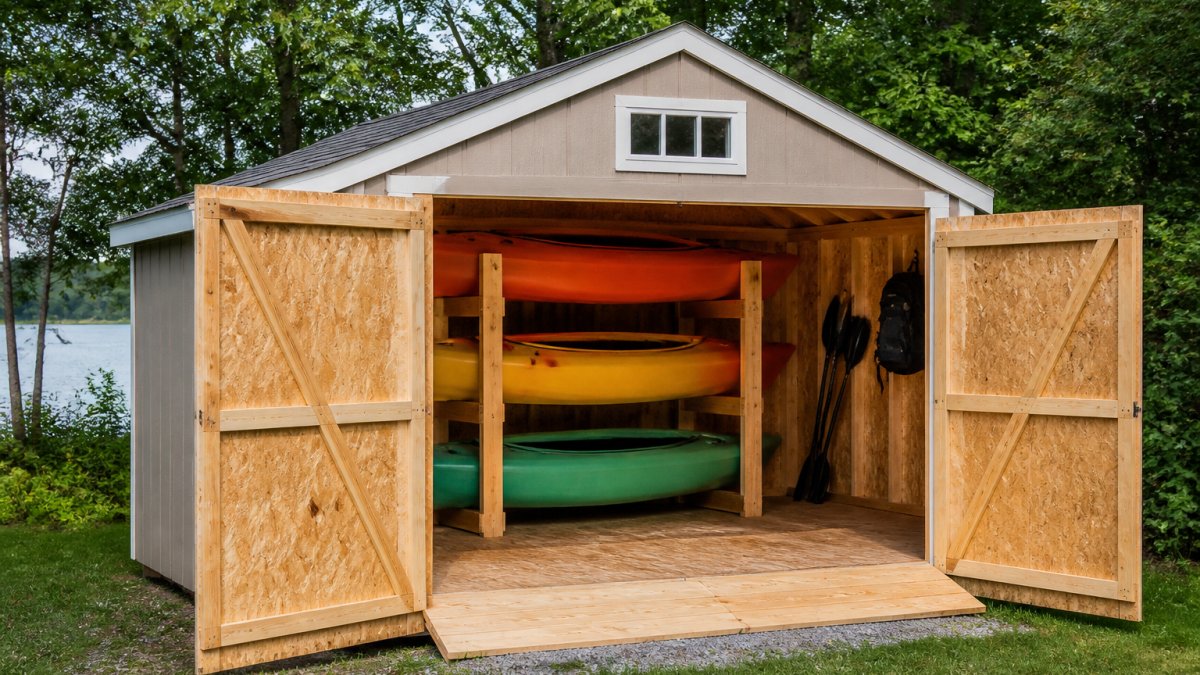
Table of Contents
- Shed Dimensions for Storing Kayaks: What You Need to Know
- Minimum Shed Size for One Kayak
- Shed Size for Two Kayaks and Beyond
- Kayak Shed Layout: Organizing Your Storage Space
- How to Store a Kayak in a Shed: Best Practices
- Kayak Storage Rack Dimensions and Specifications
- Factors That Affect Your Shed Size Decision
- Custom Shed Solutions for Kayak Storage
- Frequently Asked Questions
Last Updated: October 14, 2026
Shed Dimensions for Storing Kayaks: What You Need to Know
Kayak storage is a puzzle most owners eventually face. You need space that protects your investment without wasting your yard. The right shed dimensions for storing kayaks make all the difference between a smooth storage setup and constant frustration.
At Riehl Structures, we help homeowners in West Chester and across the region find the perfect outdoor storage solutions. Whether you own one kayak or a fleet, understanding the space you need prevents costly mistakes down the road. This guide breaks down exact dimensions, layout strategies, and practical storage methods so you can choose or build a shed that actually works.
The numbers are straightforward. A single kayak needs minimal space. Two kayaks require more strategic planning. A growing collection demands a thoughtful layout. We’ll walk you through each scenario with specific measurements and real-world storage tips. Proper vertical or horizontal placement within these dimensions ensures long-term hull integrity, and incorporating kayak protection tips will help you customize your storage racks to prevent pressure points.
Minimum Shed Size for One Kayak
A single kayak needs less space than most people think. The kayak itself takes up roughly 9 feet long, 2-3 feet wide, and 1-2 feet tall when stored vertically or horizontally.
A 4×6 shed works for one kayak. This gives you 24 square feet of floor space. That’s enough room for the kayak plus a small workbench or storage for paddles and life jackets.
Here’s what fits comfortably:
- One kayak stored on a wall rack or standing vertically
- Paddles and oars hung on hooks
- Life jackets on a shelf
- Small cooler or gear box nearby
Wall mounting saves floor space. Instead of laying the kayak flat, hang it on brackets. This keeps your floor clear for other items and makes the kayak easier to grab when you’re ready to paddle.
A 4×6 shed dimensions work best if the kayak is your only storage priority. If you need room for other gear, consider stepping up to 6×8.
Shed Size for Two Kayaks and Beyond
Two kayaks change the equation. You’re no longer storing one item, you’re managing a collection that needs organization.
A 6×8 shed works for two kayaks. This gives you 48 square feet. Two kayaks fit easily on wall racks with room for accessories, tools, and seasonal items.
For three or four kayaks, a 6×10 or 8×10 shed makes sense. Here’s why:
- Two kayaks on one wall
- A second pair on the opposite wall
- Shelving for life jackets, helmets, paddles
- A workbench for maintenance
- Space to move around without bumping equipment
Shed size for two kayaks depends on how you arrange them. Wall-mounted racks are the game-changer. They let you store more kayaks in less floor space than stacking them horizontally.
If you have five or more kayaks, plan for an 8×12 or 10×12 shed. This gives you the flexibility to organize by type, fishing kayaks in one area, recreational kayaks in another, and still have room for storage shelves and a work area.
Kayak Shed Layout: Organizing Your Storage Space
The shed dimensions matter, but how you use that space matters more. A poorly organized shed wastes space and makes kayaks hard to access.
Start by measuring your kayaks. Write down the length, width, and height of each one. This tells you exactly what racks and mounting systems will work. Different kayak types have different shapes, fishing kayaks are wider, racing kayaks are narrower.
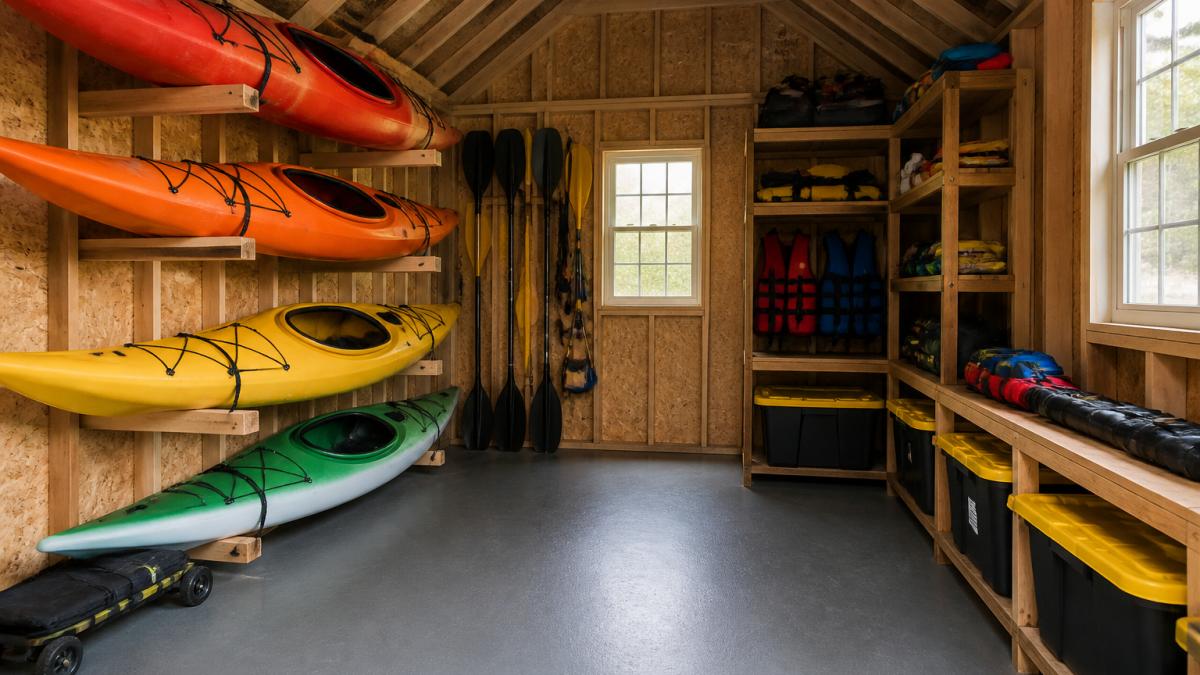
Plan your layout before you build or buy. Sketch it out on paper. Put the heaviest, most-used kayaks at comfortable shoulder height. Store lighter kayaks higher up. Keep paddles and life jackets within arm’s reach.
Wall-Mounted Racks and Hooks
Wall racks are the best use of space in a kayak shed. They keep kayaks off the floor and organized vertically.
J-hooks or cradle racks work well. Mount them 4-5 feet high on your shed walls. This height lets you lift a kayak without straining and grab it easily. Space racks 4 feet apart horizontally so kayaks don’t touch each other.
For a West Chester area shed storing multiple kayaks, consider:
- Two racks on each long wall for a 6×8 shed
- Three racks on each long wall for an 8×10 shed
- Four racks per wall for a 10×12 shed
Paddles store best in vertical holders mounted near the kayaks. A simple PVC pipe holder works. Drill holes in a 4-inch PVC pipe and mount it on the wall. Slide paddles through the holes. This keeps them organized and prevents warping.
Life jackets hang on hooks below the kayak racks. Mount hooks every 2 feet along the wall. This keeps them visible and accessible.
Floor-Based Storage Options
Not everything needs to hang on walls. Some gear works better on the floor.
Storage shelves hold accessories. A 6-foot shelf 6 feet high holds life jackets, helmets, repair kits, and coolers. Use industrial shelving, it’s cheap, sturdy, and adjustable. A 36-inch-wide shelf gives you room for multiple items without taking up much floor space.
Bins organize small items. Label them: “Repair Supplies,” “Seasonal Gear,” “Fishing Equipment.” Stack bins under shelves to maximize vertical space.
A workbench in the corner gives you a place to maintain kayaks. A 3×4 workbench fits in most sheds and doesn’t block traffic flow. Mount a pegboard above it for tools.
How to Store a Kayak in a Shed: Best Practices
Storing a kayak correctly extends its life. UV light, temperature swings, and moisture damage kayaks over time. A shed protects against all three.
Store kayaks off the ground. Concrete floors hold moisture. Use wall racks or floor stands that lift the kayak 12 inches or higher. This prevents water damage and keeps pests out.
Avoid stacking kayaks flat on top of each other. The weight of the upper kayak can warp the hull of the one below, especially if stored for months. Wall racks solve this problem entirely.
Ventilation matters. A kayak shed needs air flow to prevent moisture buildup. Install vents on opposite walls or a small roof vent. This keeps humidity low and prevents mold.
Padding protects kayak hulls from scratches and dings. Use foam cradles or pipe insulation on racks where the kayak makes contact. This small step prevents costly damage.
Keep kayaks out of direct sunlight if possible. If your shed has windows, use a shade cloth or tarp to block UV rays during peak sun hours. This prevents fading and material degradation.
Kayak Storage Rack Dimensions and Specifications
Rack dimensions depend on your kayak type and how many you’re storing.
Standard J-hook racks:
- Width: 12-18 inches
- Depth: 6-8 inches
- Mounting height: 4-5 feet above floor
- Weight capacity: 50-75 pounds per hook
Cradle racks (better for multiple kayaks):
- Width: 24-36 inches
- Depth: 8-12 inches
- Mounting height: 4-5 feet above floor
- Weight capacity: 100-150 pounds per cradle
Vertical storage stands (floor-based):
- Width: 12-18 inches
- Depth: 12-18 inches
- Height: 4-6 feet tall
- Weight capacity: 75-100 pounds per stand
Spacing between racks is critical. Leave 18-24 inches between the center of one rack and the next. This gives you room to slide kayaks in and out without banging them together.
For a shed dimensions of 6×8, two racks per wall work. For 8×10, three racks per wall fit comfortably. For 10×12, four racks per wall gives you maximum storage.
Factors That Affect Your Shed Size Decision
Several variables change how much space you actually need.
Number of kayaks. This is the obvious one. One kayak, one problem. Five kayaks, five times more planning.
Kayak type matters. Fishing kayaks are wider and heavier. Touring kayaks are longer and narrower. Sit-on-top kayaks take up more vertical space. Sit-inside kayaks are more compact. Mix different types, and you need more flexible storage.
Accessories take space. Paddles, life jackets, helmets, coolers, fishing rods, and maintenance supplies add up fast. Budget 25-30% of your shed space for accessories, not just kayaks.
Climate in West Chester affects storage. Pennsylvania winters are cold and wet. Snow load on a shed roof matters, make sure your structure is rated for local winter weather. Humidity is high in summer. Ventilation becomes more important in humid climates.
Future growth. Will you buy more kayaks in the next few years? Buy a shed slightly larger than your current needs. Upgrading later is expensive.
Other storage needs. Do you also store garden tools, bikes, or lawn equipment? Add that square footage to your kayak storage calculation.
Custom Shed Solutions for Kayak Storage
Off-the-shelf sheds work for basic storage. Custom sheds solve specific problems.
A custom shed dimensions for storing kayaks can include built-in racks, shelving, and ventilation designed exactly for your needs. You get better organization and more usable space than a generic structure.
Riehl Structures builds custom kayak storage sheds tailored to your kayaks, your yard, and your climate. We design sheds with:
- Pre-installed wall racks at the right height
- Built-in shelving for accessories
- Proper ventilation to prevent moisture damage
- Flooring that handles moisture
- Roof pitch and construction rated for Pennsylvania winters
Our Amish-built sheds are built to last. That means your kayak investment stays protected for decades, not just a few seasons.
Custom design also solves yard challenges. Your property might slope. The soil might be soft. A custom shed can be built to sit level and stable in conditions where a prefab structure would struggle.
We serve the West Chester and King of Prussia areas with free delivery within 30 miles. Our team handles site preparation, so you don’t have to worry about leveling or foundation work.
The right kayak storage shed turns a problem into a solution. Measure your kayaks, count your collection, and plan your layout. A 4×6 shed handles one kayak. A 6×8 or 6×10 works for two to four. Larger collections need 8×10 or bigger.
Wall racks save space. Ventilation prevents damage. Proper padding protects your kayaks. Get these details right, and your kayaks stay safe and accessible for years to come. Ready to build? Riehl Structures offers custom shed design services for the West Chester and King of Prussia areas.
| Kayak Count | Recommended Shed Size | Wall Racks Needed | Best For |
|---|---|---|---|
| 1 kayak | 4×6 | 1 | Single kayak owner |
| 2 kayaks | 6×8 | 2 per wall | Small family |
| 3-4 kayaks | 6×10 or 8×10 | 2-3 per wall | Growing collection |
| 5+ kayaks | 8×12 or 10×12 | 3-4 per wall | Serious enthusiasts |
Frequently Asked Questions
What size shed do I need to store a kayak?
A single kayak requires a minimum shed depth of 10 feet and width of 6 feet if stored vertically. Horizontal storage needs 16-18 feet of length for a standard recreational kayak, 8 feet of width, and 6-7 feet of height. Account for access space around the kayak to prevent damage. Adding accessories like paddles, life jackets, and gear bags means planning an extra 2-3 feet of width or height depending on your storage method.
How do you store multiple kayaks in a shed?
For two kayaks, plan a shed that is at least 8 feet wide and 10 feet deep if using wall-mounted racks, or 18-20 feet long if storing horizontally. Wall-mounted racks save floor space and allow vertical stacking. Each kayak needs 2-3 feet of horizontal space on a rack. For three or more kayaks, consider a 10×12-foot or larger shed with a combination of wall racks and floor storage, ensuring at least 2 feet of clearance between kayaks to prevent hull damage.
Can you store a kayak vertically in a shed?
Yes, vertical storage is space-efficient and works well for most kayaks. Store a kayak on its side on a wall-mounted rack or foam cradle to distribute weight evenly and prevent hull deformation. Ensure the rack is rated for your kayak’s weight, typically 40-80 pounds depending on the model. Never store a kayak upside-down on its hull for extended periods, as this can cause permanent damage. Vertical storage requires 6-7 feet of ceiling height and 2-3 feet of wall space per kayak.
How much space should I leave around a kayak in storage?
Leave at least 2 feet of clearance on all sides of a kayak to prevent damage and allow safe removal. If using floor storage, plan for 1-2 feet of walkway space between kayaks. For wall-mounted systems, ensure 6 inches of clearance above and below the kayak to prevent pressure points. When storing paddles, life jackets, and gear, allocate an additional 2-3 cubic feet per kayak. This spacing also improves air circulation, reducing moisture buildup and mold risk.

Copy Link