How to Prepare Your Backyard for Gazebo Installation
Copy Link
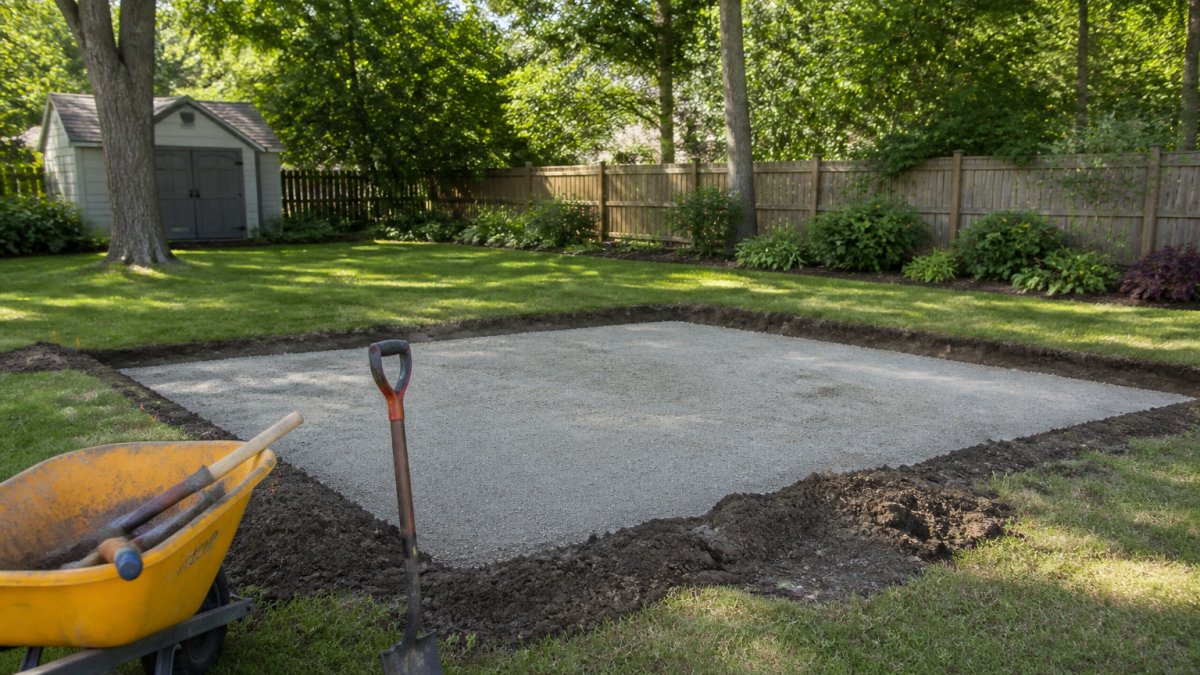
Table of Contents
- Assess Your Yard and Choose the Right Location
- Achieve Level Ground for Your Gazebo
- Understand Gazebo Foundation Options
- Prepare for Gazebo Delivery and Access
- Create Your Gazebo Installation Checklist
- Handle Permits and Local Requirements
- Frequently Asked Questions
Last Updated: October 12, 2026
Assess Your Yard and Choose the Right Location
Before you prepare backyard gazebo installation, spend time understanding your backyard. The location you choose determines everything that comes next. A poorly chosen spot means fighting with water, shade problems, or uneven ground for years. A smart choice makes installation easier and your gazebo lasts longer.
Start by walking your yard at different times of day. Notice where the sun hits in the morning, afternoon, and evening. Watch how water flows after rain. These observations matter more than any measurement tool.
Measure the Space and Account for Clearance
Measure the space where you want your gazebo to sit. Write down the exact dimensions. Then measure the area around it. You need clearance on all sides, not just where the structure sits.
Most gazebos need at least 3 feet of clear space on every side for maintenance and safety. Some building codes in the West Chester area require 5 feet. Check with your local township before you finalize the spot.
Here’s what to measure:
- The footprint of your gazebo (length and width)
- Distance to your house or other structures
- Distance to property lines
- Distance to trees or overhead branches
- Width of gates and pathways leading to the site
A 12×12 gazebo needs more than 144 square feet. It needs a 20×20 or larger clear area to work properly. If your yard is tight, you may need to remove obstacles or trim back vegetation.
Check Sun Exposure and Drainage Patterns
Sun exposure determines how usable your gazebo will be. Full sun all day can make it too hot. Constant shade keeps it damp and dark.
The ideal spot gets morning sun and afternoon shade. This keeps the structure dry while providing relief from heat during the hottest part of the day.
Watch your yard after rain for at least one full day. Where does water pool? Where does it drain quickly?
Drainage problems create rot, mold, and foundation issues. If your yard slopes toward the location you’re considering, water will flow toward your gazebo.
Achieve Level Ground for Your Gazebo
Uneven ground is the most common reason gazebo installations fail. A sloped or bumpy foundation causes the structure to rack (twist), doors to stick, and the whole frame to shift over time.
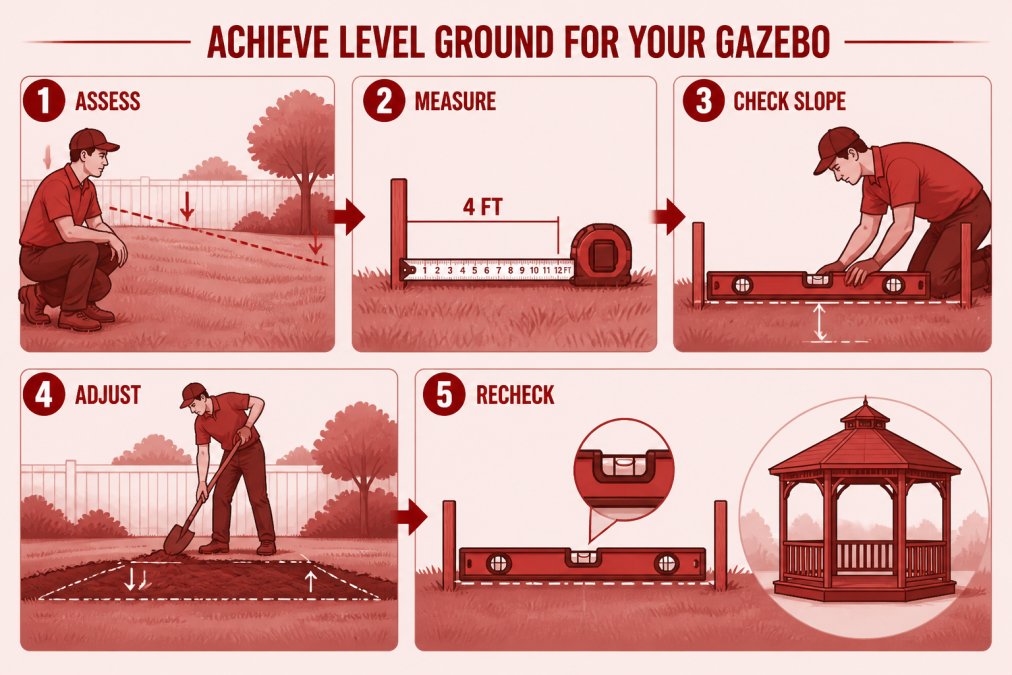
Your gazebo doesn’t need to be perfectly level to 1/16 inch. But it needs to be close. Most gazebos can tolerate up to 1 inch of slope across the entire footprint. More than that, and you’re asking for trouble.
Test the Slope and Identify High and Low Spots
The easiest way to check slope is with a long level and a measuring tape. A 4-foot level works for small checks.
Place the level across the spot where your gazebo will sit. Note where it’s high and where it’s low. Repeat this in multiple directions.
Mark the high and low spots with stakes or chalk. Measure the difference in height. If one corner is 2 inches higher than the opposite corner, you have a 2-inch slope.
Another method is to use a water level or a laser level if you have access to one. These tools are more precise but take longer to set up.
Grading and Compacting Options for Uneven Yards
If your yard slopes, you have three main options: grade the land, use a gravel base to level it, or use adjustable foundation pads.
Grading means moving soil to level the ground.
Gravel or crushed stone bases are easier. You dig out the high spots slightly, then add gravel to the low spots and compact it.
Adjustable foundation pads let you level the gazebo after installation. These pads have threaded bolts that raise or lower each corner.
For most West Chester homeowners, grading the area and adding a gravel base is the best balance of cost and durability.
Understand Gazebo Foundation Options
Your foundation choice affects how long your gazebo lasts and how stable it feels. There’s no single “best” foundation. The right choice depends on your soil, climate, budget, and how permanent you want the structure to be.
The three main options are concrete, gravel, and adjustable pads. Each has trade-offs.
Concrete Pads and Footings
Concrete is the most permanent and stable option. It keeps your gazebo level for decades and prevents rot from ground moisture.
Concrete pads work by placing footings below the frost line (typically 36-42 inches deep in Pennsylvania).
The downside is cost and permanence. Concrete requires digging holes, pouring footings, and waiting for them to cure.
For a 12×12 gazebo, you typically need 4-6 concrete footings spaced evenly. Each footing is a hole 12 inches deep or deeper, filled with concrete and a post bracket.
Concrete is the best choice if you plan to keep your gazebo for 20+ years or if your soil is very poor.
Gravel or Crushed Stone Bases
Gravel bases are the most popular choice for homeowners. They’re affordable, easy to install, and work well in most situations.
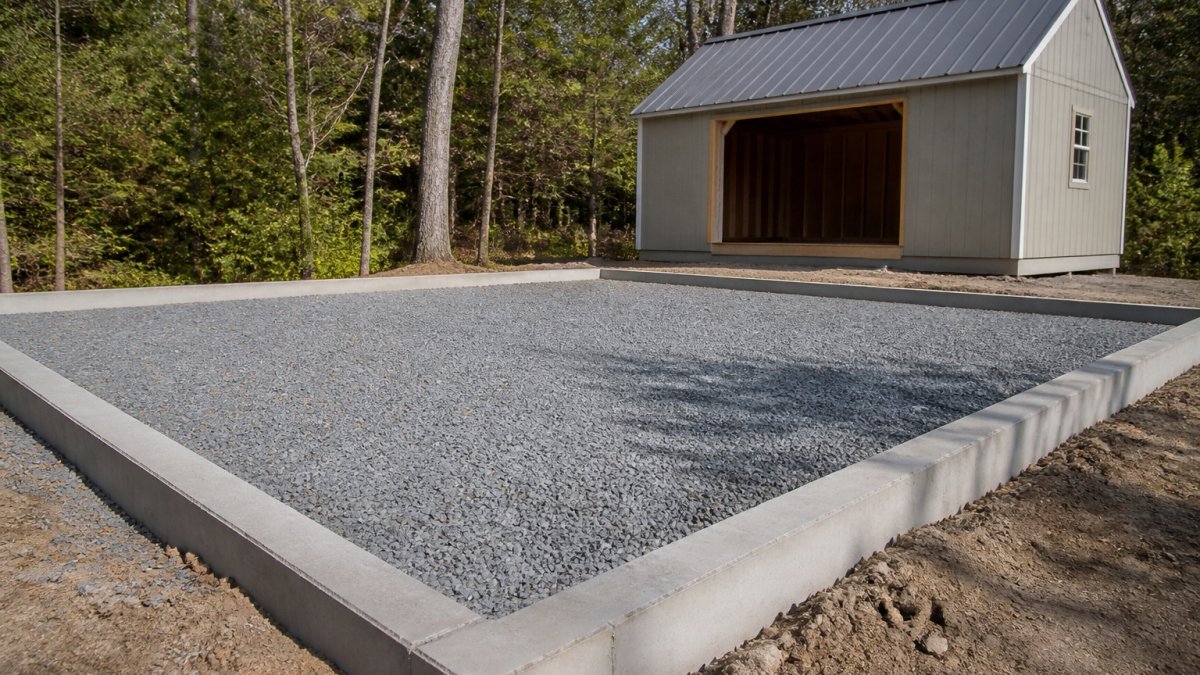
A gravel base means preparing a level area, adding 4-6 inches of crushed stone or gravel, and compacting it firmly.
The trade-off is maintenance. Gravel settles and shifts over time. You’ll need to rake and top it off every 1-2 years.
Crushed stone (angular pieces) compacts better than round gravel. Use crushed limestone or granite, not pea gravel. Pea gravel shifts too easily.
For most West Chester properties, a 4-6 inch gravel base is sufficient. It’s affordable, easy to maintain, and lasts 10-15 years with proper care.
Permanent Anchoring Systems
Anchoring systems bolt your gazebo to the ground, preventing it from shifting or tipping. These are essential if you live in an area with high winds or if your gazebo will be left unattended for long periods.
Anchoring systems use ground anchors (long bolts driven into the earth) or concrete footings with anchor bolts. They’re installed at each corner or at multiple points around the perimeter.
Anchoring adds cost but provides peace of mind. It’s especially important for gazebos in open yards or near water where wind is stronger.
Prepare for Gazebo Delivery and Access
Delivery day is when all your efforts to prepare backyard gazebo installation pay off. A clear path and open access mean your gazebo arrives safely and installation goes smoothly. Obstacles and tight passages cause delays, damage, and frustration.
At Riehl Structures, we handle delivery within 30 miles of our West Chester and King of Prussia locations. We can guide you on what access we need, but you can prepare ahead of time to make the process seamless.
Clear Pathways and Gates
Measure every gate, doorway, and pathway the delivery truck and crew will use. Your gazebo needs to fit through these spaces.
Most gazebos are delivered on a trailer. The structure may be assembled or partially disassembled depending on the size.
Measure gates and passages with the actual width and height of your gazebo pieces. Don’t guess. A 12-foot-wide gazebo won’t fit through a 10-foot gate, even if you angle it.
If your pathways are narrow, you may need to:
- Remove gates temporarily
- Trim back bushes or branches
- Move parked cars or other vehicles
- Clear garden beds along the path
Call your delivery company a few days before arrival. Ask them what size equipment they’re bringing and what access they need. Then verify your pathways match those requirements.
Remove Obstacles and Plan Equipment Access
Walk the path from the street to your gazebo site. Look for anything that might slow down or block the delivery crew.
Common obstacles include:
- Garden hoses or irrigation lines
- Potted plants or planters
- Children’s toys or play equipment
- Patio furniture
- Grills or outdoor appliances
- Low-hanging branches
- Fences or gates that don’t open fully
- Parked bicycles or lawn equipment
Move everything away from the pathway. Clear at least 4 feet of width on both sides of the route. This gives the crew room to maneuver equipment and prevents damage to your yard or theirs.
If your yard is accessed by a narrow side yard, alert the delivery company early. They may need to use a smaller truck or bring equipment in pieces.
Create Your Gazebo Installation Checklist
A checklist keeps you organized and prevents last-minute scrambling. Use this timeline to stay on track.
Two Weeks Before Installation
- Confirm your delivery date and time window with the company
- Ask about access requirements and equipment size
- Verify your gazebo’s final dimensions and weight
- Check local permit requirements with your township
- Have your site fully graded or gravel base prepared
- Confirm that all gates and pathways are clear
- Test your site’s level one final time
- Mark the exact installation location with stakes or chalk
- Plan where you’ll park your car to keep it out of the way
- Notify neighbors if work will be loud or take several hours
One Week Before and Day-of Checklist Items
- Clear the installation area of all tools, toys, and furniture
- Move any outdoor equipment (grills, planters, etc.) away from the work zone
- Trim any low branches that might interfere with installation
- Ensure the site is dry (wait 24 hours after rain if possible)
- Have a clear path from the driveway to the installation site
- Be home and available during the delivery window
- Have a helper ready to assist (if required by the company)
- Take photos of the site before installation begins
- Confirm the final location one more time with the crew
- Ask the installation team to walk you through the structure and any care instructions
Handle Permits and Local Requirements
Permit requirements vary by township in Pennsylvania. Some require permits for any structure. Others only require them above a certain size or if the gazebo is permanent.
In the West Chester area, most townships require a permit for structures larger than 100-200 square feet or if the structure will be anchored to the ground.
Contact your local township or building department before ordering. Ask:
- Do I need a permit for a gazebo this size?
- What’s the application process and timeline?
- Are there setback requirements (distance from property lines)?
- Are there height restrictions?
- Do I need an inspection after installation?
Permits typically cost $50-200 and take 1-2 weeks to process. Getting a permit upfront prevents problems later and protects your property value.
Preparing your backyard properly is the difference between a gazebo that lasts 20 years and one that fails in five.
At Riehl Structures, our team can answer questions about site preparation and help you understand what we need on delivery day. When you’re ready to move forward, get a quote now and let us handle the rest.
Frequently Asked Questions
Does the ground need to be level before installing a gazebo?
Yes, a level foundation is essential for your gazebo’s stability and longevity. Uneven ground can cause structural stress, water pooling, and premature wear on the frame. You don’t need perfectly flat terrain, but the installation area should be graded to within 1-2 inches of level. Minor slopes can be corrected with proper site preparation and foundation adjustments, but significant grades may require professional grading.
What are the best gazebo foundation options for different yard conditions?
Foundation options depend on your soil type and budget. Concrete pads offer the most durability and are ideal for permanent installations. Gravel or crushed stone bases work well for temporary setups and improve drainage. For sloped yards, helical piers or adjustable footings accommodate uneven terrain. Riehl Structures can help you choose the right foundation based on your specific yard conditions and long-term plans.
How do I prepare my yard for gazebo delivery?
Clear a pathway from your driveway to the installation site wide enough for delivery equipment (typically 4-5 feet). Remove low-hanging branches, garden decorations, and outdoor furniture. Mark the installation location clearly. If your yard has a slope or soft ground, identify the best access route. Riehl Structures provides free delivery within 30 miles of our West Chester and King of Prussia locations and handles site setup as part of our service.
Do I need a permit to install a gazebo in my area?
Permit requirements vary by municipality. Some jurisdictions require permits for permanent structures, while others have exemptions for gazebos under a certain size or setback distance from property lines. Contact your local township or building department to confirm requirements for your area. Riehl Structures can provide guidance on typical requirements, though permit applications remain your responsibility.

Copy Link