Oil vs. Varnish for Outdoor Wood: Which Lasts?
Copy Link
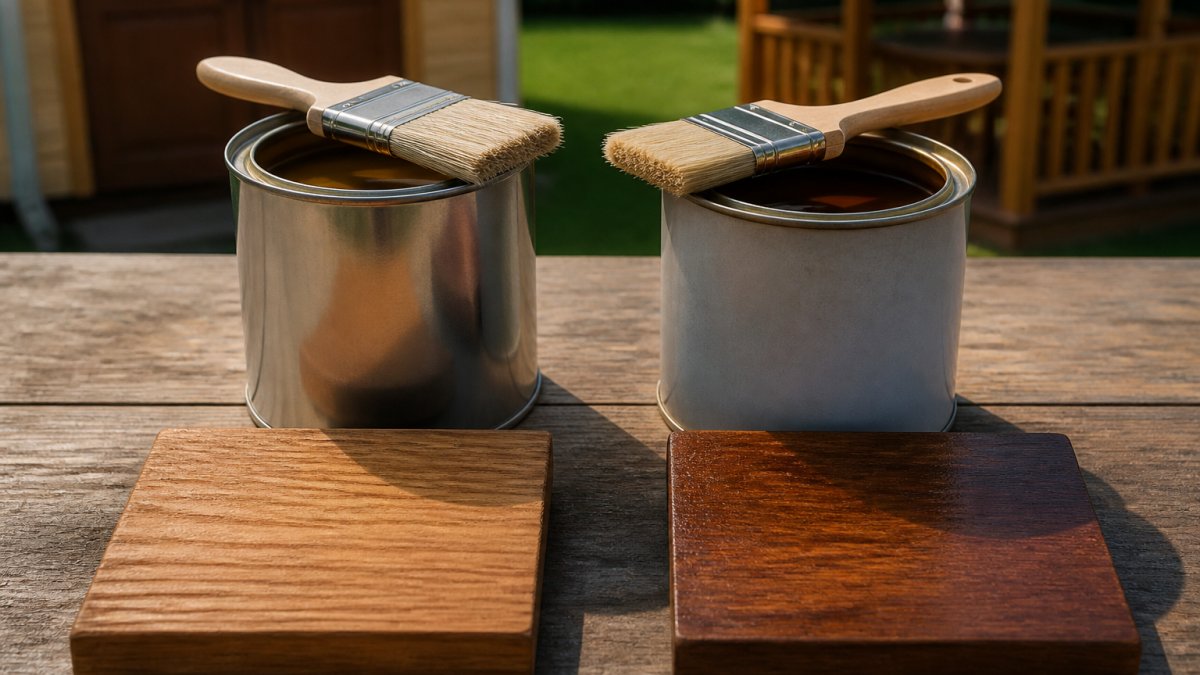
Table of Contents
- Oil vs Varnish for Outdoor Wood: The Short Answer
- How Oil and Varnish Protect Wood Differently
- The Best Outdoor Wood Finish by Structure Type
- The Best Oil for Outdoor Wood: What to Look For
- How Often to Oil Outdoor Wood in Pennsylvania Weather
- How to Apply Spar Varnish Outdoors
- Durability and Maintenance: Side-by-Side Comparison
- Frequently Asked Questions
Last Updated: October 20, 2026
Oil vs Varnish for Outdoor Wood: The Short Answer
For most outdoor wood in our region’s freeze-thaw climate, the oil vs varnish question has a clear answer: oil is the better choice. Oil soaks into the grain, keeps the wood flexible, and lets moisture escape. Varnish builds a hard shell on top, and that shell cracks when the wood underneath swells and shrinks. Once water gets behind a cracked film, it gets trapped, and the wood rots from the inside out.
That is the short answer, and it holds for sheds, pergolas, and anything else that sits in the weather year-round. At Riehl Structures, we build and deliver Amish-built sheds, garages, pergolas, and pavilions, so we see how finishes hold up on real structures after five and ten seasons. The pattern is consistent: oiled wood ages gracefully, while varnished wood either gets maintained on a strict schedule or fails badly.
The rest of this guide breaks down how each finish works, which one suits your structure, and how to keep it protected.
How Oil and Varnish Protect Wood Differently
Oil and varnish protect wood in opposite ways, and understanding that difference explains every other decision . Oil penetrates. Varnish coats.
Penetrating Oils: Feeding the Wood
Penetrating oils soak into the fibers and protect from within. The wood stays breathable, so moisture that enters can leave again. It also stays flexible, which matters when temperatures swing from humid summer afternoons to freezing winter nights. The trade-off: oil does not build a surface barrier, so it needs reapplication more often.
Film-Forming Varnish: Sealing the Surface
Film-forming finishes sit on top of the wood and seal it against water and UV. Spar varnish is the classic outdoor version, formulated with more flexible resins than interior varnish. The problem is mechanical: the film is only as good as its bond. When wood expands and contracts, the film cracks, and repairs mean sanding back to bare wood.
The Best Outdoor Wood Finish by Structure Type
The best outdoor wood finish depends on the structure. Vertical surfaces that shed water quickly, like shed siding and pergola beams, do well with oil. Horizontal surfaces that collect water, like deck boards and rail caps, need a finish that can be renewed easily, which again favors oil. Varnish makes more sense on protected doors and trim that stay out of direct rain.
| Structure | Best Finish | Why | Maintenance Rhythm |
|---|---|---|---|
| Shed siding | Penetrating oil | Breathes; sheds water vertically | Every 1-2 years |
| Pergola beams | Penetrating oil | Flexible in temperature swings | Every 1-2 years |
| Deck boards | Penetrating oil | Easy spot renewal; no sanding | Annually |
| Doors and trim | Spar varnish | Protected from direct rain | Recoat every 2-3 years |
| Gazebo roof fascia | Spar varnish | Sheltered overhang | Recoat as film dulls |
The Best Oil for Outdoor Wood: What to Look For
The best oil for outdoor wood is a penetrating oil with UV inhibitors and a fungicide, not a food-grade oil like linseed or tung alone. Raw linseed oil feeds mildew in damp climates and offers no UV protection. Look for these on the label:
- UV inhibitors to slow graying from sunlight
- Mildewcide because our humid summers encourage growth
- Water repellency stated on the can, not just “penetrating”
- Exterior rating clearly printed, since interior oils lack weather protection
Two thin coats beat one thick coat every time. A heavy coat sits on the surface, turns tacky, and attracts dirt before it cures. Brush the first coat until the wood stops drinking, wait, then apply the second thin coat and wipe off the excess.
How Often to Oil Outdoor Wood in Pennsylvania Weather
Reoil outdoor wood in our region once a year for horizontal surfaces and every one to two years for vertical surfaces. The freeze-thaw cycle here is hard on finishes: water works into microscopic cracks, freezes, and pushes them wider. A simple water test tells you when it is time. Sprinkle a few drops on the wood. If they bead up, the finish is still working. If they soak in within a minute, the wood is thirsty.
New wood needs oil within a few weeks of installation, once it has dried out. Waiting a full season lets the surface weather unevenly.
How to Apply Spar Varnish Outdoors
Apply spar varnish outdoors in thin coats over a clean, sanded surface, and only when the weather will stay dry for 24 hours. Here is the sequence we would follow:
- Prep the surface. Sand bare wood to 120 grit, then wipe off all dust with a tack cloth.
- Seal the grain. Brush on a thinned first coat so it soaks in and anchors the film.
- Sand lightly between coats. A 220-grit pass knocks down ridges and helps the next coat bond.
- Build thin coats. Three to four coats, brushed with the grain, each one thin.
- Watch the weather. Apply when rain is at least a day away and temperatures stay above 50°F.
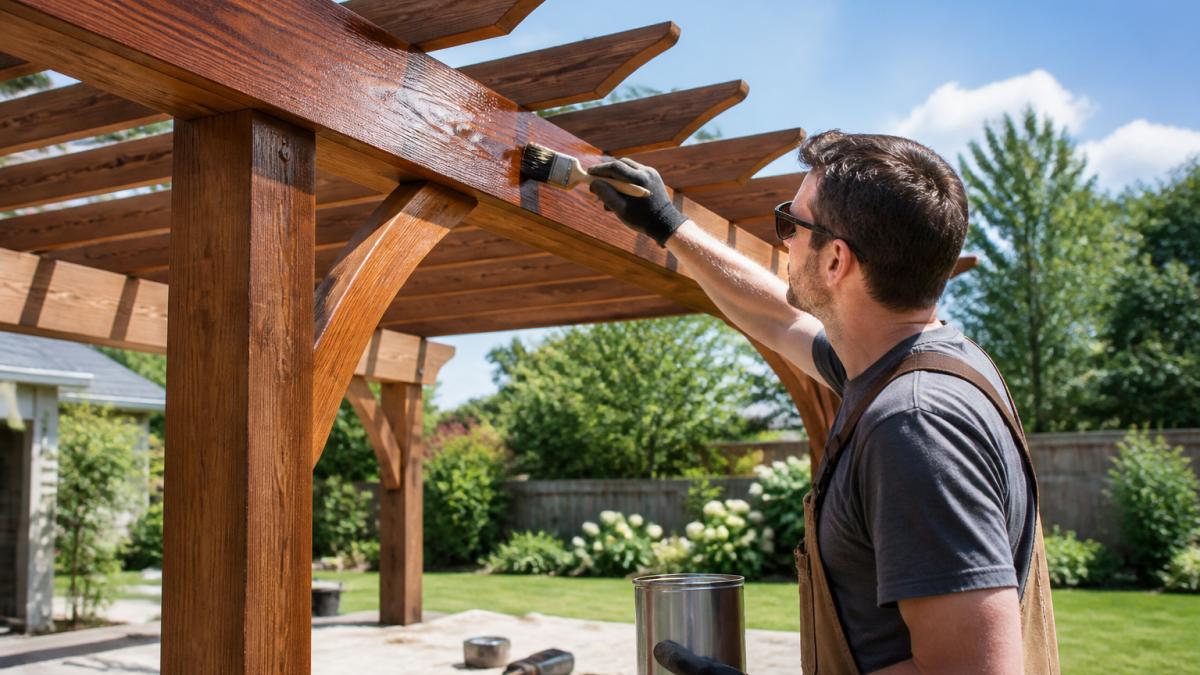
Properly sealing these joints with a high-quality spar varnish is a critical step in preventing pergola rot, ensuring the structural integrity of your outdoor space remains sound for years to come.
Do not varnish over wood that is still damp from rain or fresh pressure washing. Trapped moisture under a film finish blisters the coat within weeks and forces a full strip-down. Let the wood dry for several dry days first.
Durability and Maintenance: Side-by-Side Comparison
Oil wins on durability in practice, not because it lasts longer per coat, but because it fails gradually and repairs cheaply. A varnish film looks better for the first season and then demands sanding, stripping, and full recoating once it cracks. Oiled wood never needs stripping: you clean it and add another coat.
| Factor | Penetrating Oil | Spar Varnish |
|---|---|---|
| Protection style | Soaks in | Sits on top |
| Recoat interval | 1-2 years | 2-3 years |
| Prep for recoat | Clean and reapply | Sand and spot repair |
| Failure mode | Gradual graying | Cracking and peeling |
| Water trapping risk | Low | High once cracked |
| Best for | Sheds, pergolas, decks | Doors, trim, sheltered wood |
For a structure you plan to keep for decades, choose the finish you will actually maintain. That is the honest test, and for most homeowners it points to oil.
The finish you choose matters, but the wood underneath matters more. A well-built structure with a simple oil routine will outlast a cheap one with the finest varnish on it. That is why we build our sheds, pergolas, and pavilions from quality lumber and back them with 30+ years of family-owned experience, custom design, and flexible financing with no prepayment penalties. If you are planning a new structure in West Chester or anywhere within our 30-mile delivery area, get a quote now and let us help you start with wood worth protecting.
Frequently Asked Questions
Is oil or varnish better for outdoor wood?
It depends on the structure and how much upkeep you want. Oil soaks into the grain and protects from the inside, so it never peels, but it needs reapplication roughly every year. Varnish builds a protective film on top that can last two to three years, yet it cracks and peels once moisture gets underneath. For sheds, pergolas, and furniture that flex in the weather, oil is usually the lower-risk choice. For a front door or a decorative piece that stays put, spar varnish gives a glossier, longer-lasting look.
How often should you reapply oil to outdoor wood?
Plan on once a year for most horizontal surfaces like deck boards and pergola tops, and every 12 to 18 months for vertical surfaces such as shed walls. In the Philadelphia suburbs, freeze-thaw cycles and summer humidity push wood harder than in drier climates, so check in spring. The water test tells you: splash a few drops on the surface. If they soak in within a minute, the wood is thirsty and ready for another coat.
Can you apply varnish over oiled wood?
Generally no. Varnish needs a clean, dry surface to bond, and residual oil prevents that bond, which leads to peeling within a season. If you want to switch from oil to varnish, let the wood weather for several months, then sand it back to bare timber before applying a spar varnish primer. Going the other direction, from varnish to oil, is easier: strip or sand off the old film, then apply oil once the bare wood is dry.
How long does exterior varnish last outdoors?
A quality spar varnish on a sheltered surface typically holds up two to three years before it needs a refresh coat. Fully exposed horizontal surfaces, like railing caps or table tops, often fail in 12 to 18 months because UV and standing water attack the film first. Once you see dulling, hairline cracks, or white cloudy patches, sand the affected area and recoat before water gets behind the film and starts lifting it.

Copy Link