How to Level a Shed on a Slope
Copy Link
Last Updated: October 30, 2026
Quick Summary
To level a shed on a slope, cut into the high side and fill the low side in shallow layers, compacting each one, until the pad sits level within 1 inch over 10 feet. For bigger drops, use a raised foundation of concrete blocks or piers stepped down the hill.
- Most sheds need a foundation level within 1 inch over 10 feet.
- A drop of a few inches across the footprint is a straightforward cut-and-fill job.
- Build up the low side in layers no deeper than a few inches at a time.
- Set the first block at the highest corner, then work downhill in steps.
- Filling the low side with loose dirt and setting blocks on top causes the shed to rack.
Table of Contents
- Shed Foundation on a Slope: What You’re Dealing With
- Tools and Materials You’ll Need
- How to Level Ground for a Shed
- Shed Foundation Blocks on a Slope: Step-by-Step Installation
- How to Fix a Shifted Shed Foundation
- Common Mistakes to Avoid
- When to Call a Professional for Your Sloped Yard
- Get a Quote for a Custom Shed Built for Your Slope
- Frequently Asked Questions
Shed Foundation on a Slope: What You’re Dealing With
A sloped yard is not a dealbreaker for a shed, but it does change how you level a shed. The key number to know: most sheds need a foundation that sits level within 1 inch over 10 feet, according to Riehl Structures’ guide to leveling a yard for a shed. Miss that mark and doors stick, walls rack, and the floor never feels right underfoot.
A slope can almost always be handled with the right foundation approach. For a broader look at shed sizes, costs, and foundation tips, see our full shed guide.
How Much Slope Is Too Much?
A gentle grade is easy. A steep one needs engineering. As a rule of thumb, a drop of a few inches across the footprint is a straightforward cut-and-fill job. Once the fall gets closer to a foot or more over the building length, you are looking at a raised foundation with blocks or piers, and possibly a retaining wall on the uphill side. If the ground moves more than that, call in a pro before you dig.
Level Ground vs. Raised Foundation
To level a shed on mild ground, you cut into the high side and fill the low side until the pad is flat. A raised foundation means setting concrete blocks or piers and building the floor up above grade. Level ground suits mild slopes and saves on materials. A raised foundation handles bigger drops and keeps the floor dry. If you are weighing a simpler option, our guide on whether you can put a shed on a grass foundation explains when a ground-level base works and when it does not.
Here’s how the size of the drop decides which foundation approach fits.
| Slope condition | Foundation approach | Note |
|---|---|---|
| Level within 1 inch over 10 feet | Required tolerance for most sheds | Miss it and doors stick, walls rack |
| Drop of a few inches across footprint | Straightforward cut-and-fill job | Cut high side, fill low side |
| Fall near a foot or more over building length | Raised foundation with blocks or piers | Possibly a retaining wall on uphill side |
| Ground moves more than that | Call in a pro before you dig | Engineering needed |
Tools and Materials You’ll Need
Gather everything before you start digging. A mid-job run to the hardware store is the fastest way to lose a weekend.
- 4-foot level and a 25-foot tape measure
- String line, stakes, and a line level
- Shovel, rake, and a wheelbarrow
- Hand tamper or plate compactor
- Crushed stone and coarse gravel
- Concrete blocks or treated lumber for skids
- Work gloves and safety glasses
A plate compactor saves hours and packs the base far tighter than hand tamping, which works for small pads.
How to Level Ground for a Shed
Start by stripping grass and topsoil from the footprint, then cut the high side and fill the low side in shallow layers. Compact each layer as you go. This is the heart of leveling ground for a shed, and rushing it is the number one reason pads settle later.
Step 1: Measure and Mark the Slope
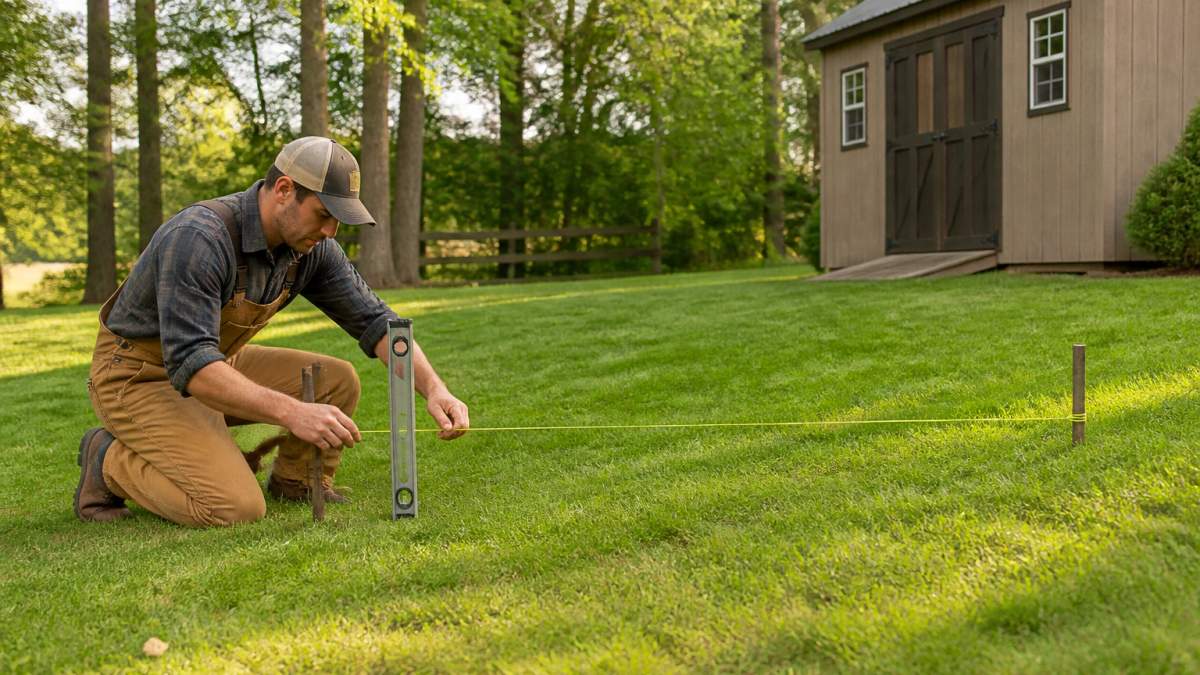
Drive stakes at each corner of the planned footprint. Tie a string between them and hang a line level on it. Measure down from the string to the ground at each stake. The difference between the highest and lowest reading tells you exactly how much slope you are fighting.
Step 2: Cut and Fill the Site
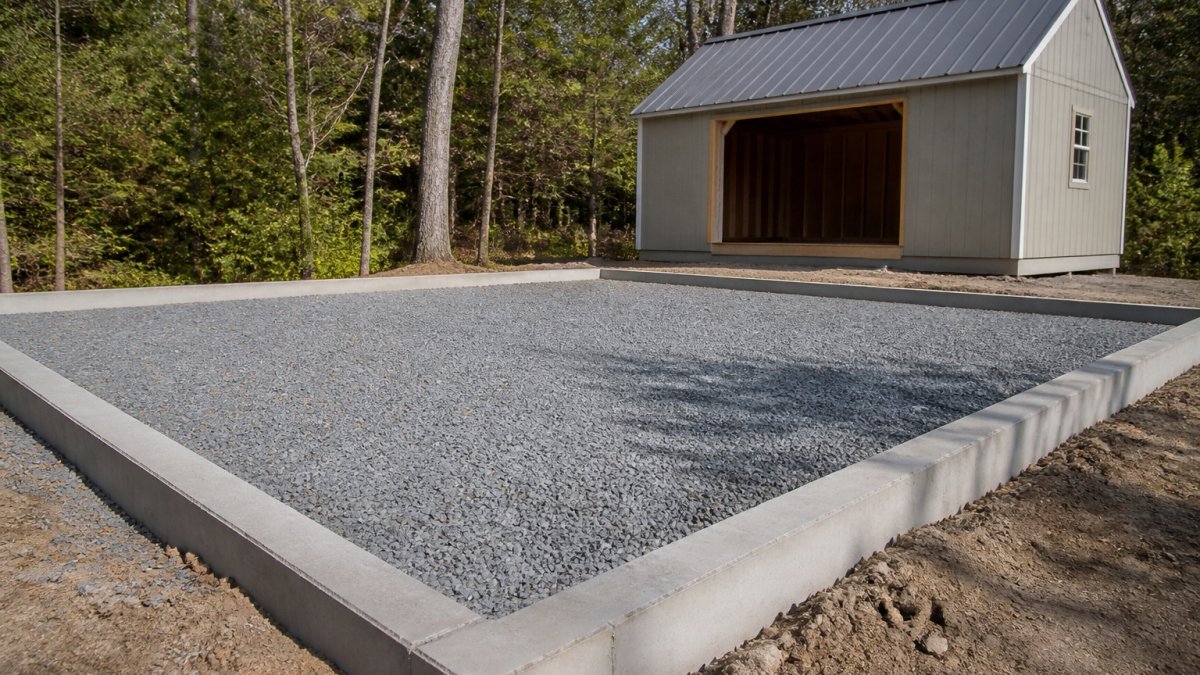
Dig out the high side down to your target grade. Move that soil to the low side. Build up in layers no deeper than a few inches at a time, and never dump the whole pile at once. Spread crushed stone over the finished pad for drainage.
Step 3: Compact and Verify
Run the compactor over every layer, then check the pad with your 4-foot level in several directions. Recheck the string line against your original marks. If any spot is off, fix it now, before blocks or a floor go down.
Shed Foundation Blocks on a Slope: Step-by-Step Installation
Shed foundation blocks on a slope work by stepping up the hill in stages, with each block sitting level and solid on compacted ground. The blocks carry the load, so every one must bear weight evenly. A block that rocks or floats will crack or sink.
Setting the First Block
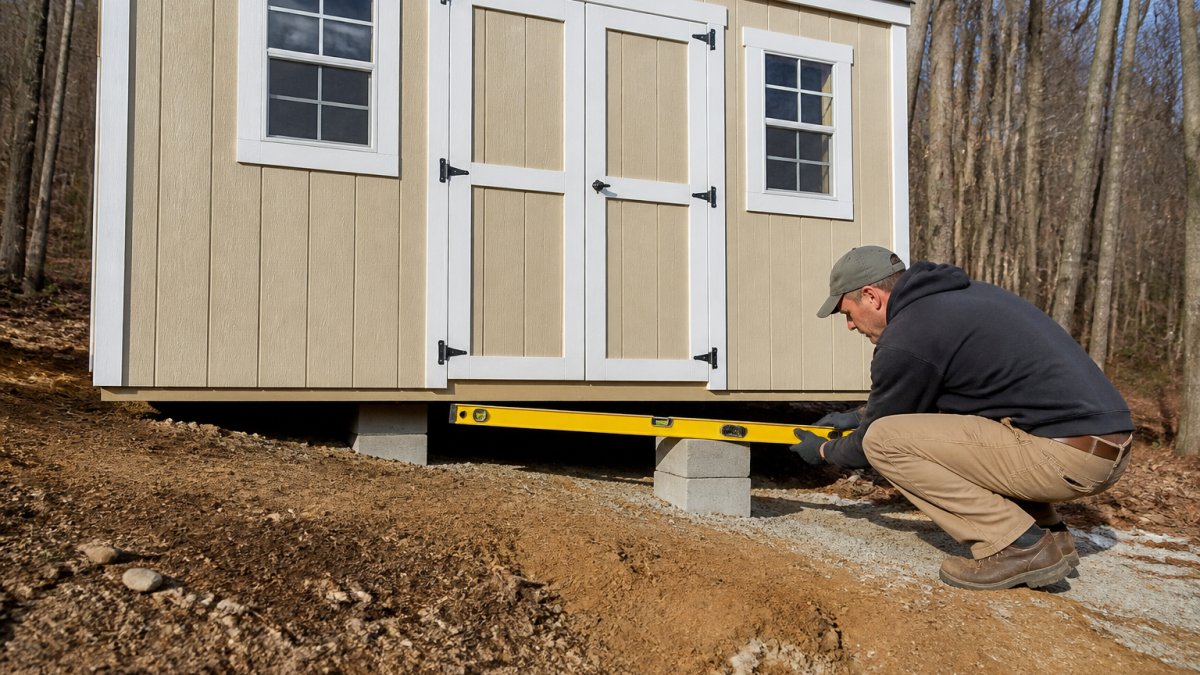
Begin at the highest corner. Dig a flat pocket, add a bed of compacted gravel, and set the block so its top sits level. Check it with your level in both directions. This first block sets the height for everything that follows, so take your time.
Building Up the Downhill Side
Work downhill, adding blocks in steps. Keep each block level and firmly seated on gravel. Stack additional blocks where the drop is deeper, and fill any gaps with compacted stone. The goal is a flat, even plane across the top of every block.
Anchoring and Final Checks
Once the shed is set, anchor it so wind and frost cannot shift it. Then check the floor with a level one last time and confirm doors swing freely.
How to Fix a Shifted Shed Foundation
A shifted foundation shows up as sticking doors, cracks, or a floor that feels springy. The fix depends on the cause. If blocks sank, jack the shed up carefully, re-compact the base, and reset the blocks. If water is the culprit, add drainage before you reset anything. Small frost heaves often settle back on their own once the ground thaws. For anything beyond a minor shift, get a professional assessment before you lift a loaded structure. Long-term stability relies on managing the surrounding landscape, as proper professional site grading directs runoff away from your foundation to prevent the soil saturation that causes these recurring shifts.
Common Mistakes to Avoid
Most failures trace back to a handful of avoidable errors.
- Skipping compaction and backfilling loose soil
- Building on grass or topsoil instead of bare, solid ground
- Ignoring drainage so water pools under the shed
- Checking level in only one direction
- Setting blocks on soft ground without a gravel base
Watch out: filling the low side with loose dirt and setting blocks straight on top is the classic mistake. The fill settles, the blocks drop, and the shed racks within a season.
When to Call a Professional for Your Sloped Yard
Some slopes are simply too steep or too wet for a DIY pad. If the drop is large, the ground holds water, or you are unsure about soil stability, bring in help. A pro can assess drainage, recommend a retaining wall, and build a foundation that lasts.
Get a Quote for a Custom Shed Built for Your Slope
Leveling the site is half the job. The other half is choosing a shed that fits your yard and your needs. Learn about the benefits of Amish built sheds before you decide. Riehl Structures builds Amish-built sheds, garages, greenhouses, and more, custom-designed for your property and delivered free within 30 miles of our West Chester and King of Prussia locations. Flexible financing is available, with no home equity required and no prepayment penalties. Curious about the craftsmanship behind our buildings? One customer shared that the finished product was “exactly as we planned and imagined.”
Frequently Asked Questions
Can you put a shed on uneven ground?
Yes, but the shed must sit on a level foundation even if the ground beneath slopes. Most manufacturers require the foundation to be level within 1 inch over 10 feet. You can either grade the site flat or build a raised foundation using blocks or a pier system that brings the downhill side up to level. Skipping this step causes doors to stick, walls to rack, and the floor to feel springy.
How much slope can a shed foundation handle?
A shed foundation can handle a slope of a few inches per foot if you use a raised pier or block system, but the structure itself must remain level. Check with your shed manufacturer for the exact tolerance; a common rule is 1 inch over 10 feet. Slopes steeper than about 1 foot of drop over 4 feet usually call for retaining walls or professional grading.
Should you level the ground or use a raised foundation for a shed?
Leveling the ground works best for gentle slopes and keeps the shed low to the ground. A raised foundation with shed foundation blocks on a slope is faster and avoids moving large amounts of soil, but it needs proper anchoring. For slopes over 6 inches of drop, a raised foundation often saves time and reduces excavation.
How do you keep a shed foundation from shifting on a slope?
Proper compaction and drainage are key. Compact the soil in 2-inch lifts, set blocks on a 4-inch gravel base, and anchor the shed to the ground with auger anchors or concrete footings. Direct water away from the uphill side with a swale or French drain. Inspect the foundation after heavy rain and fix any erosion before it worsens.
A sloped yard does not have to stand between you and the storage space you need. Whether you level the ground yourself or want a structure built to fit the grade, our team can help you get it right the first time. Get started with Riehl Structures and turn that uneven corner of your property into a backyard where memories are made.


Copy Link