How to Build a Gazebo Foundation on Uneven Ground
Copy Link
Last Updated: October 29, 2026
Quick Summary
A DIY gazebo foundation on uneven ground starts with measuring the slope across the footprint, then choosing a method that fits the drop. Mild slopes can be leveled with a compacted gravel base, steep slopes need a raised foundation on footings, and soft or wet ground calls for a concrete pad.
- Measure the slope with stakes, a string line and a tape measure before buying materials.
- Level mild slopes by cutting the high side down and filling the low side with compacted gravel.
- Use a raised or stepped foundation on footings when the drop across the site is large.
- Choose a concrete pad for large gazebos or soft, marshy ground to spread the load.
- Set every concrete footing to the same finished elevation, measured from the string line.
Table of Contents
- Why Uneven Ground Matters for a Gazebo
- Assessing Your Gazebo on a Sloped Yard
- Gazebo Foundation Options for Uneven Ground
- How to Level a Gazebo Site Step by Step
- Setting Gazebo Concrete Footings on a Slope
- Common Foundation Mistakes to Avoid
- Booking a Site Assessment for Your Gazebo Foundation
- Frequently Asked Questions
Why Uneven Ground Matters for a Gazebo
A gazebo on a sloped or uneven site can shift, rack and pull apart over time. The foundation is the part of the build that decides how long the structure lasts. Get the base right and the rest of the gazebo stays square.
A foundation is the level, stable base that carries the gazebo’s weight. When the ground under it is uneven, one corner can carry more load than the others. That uneven load is what leads to cracks, sagging floors and doors that stop closing.
Water is the other problem. An uneven site can let water pool under one side of the gazebo. An uneven foundation can cause structural stress, water pooling and premature wear. Those issues show up slowly, which is why many owners miss them until repairs get expensive.
- Uneven load: one corner carries more weight than the rest
- Water pooling: moisture collects under one side and rots wood
- Shifting: the frame moves as the soil settles or erodes
- Early wear: joints loosen and finishes fail sooner
Start by checking the slope before you buy materials. The next section shows you how.
Assessing Your Gazebo on a Sloped Yard
Before you dig, measure how far the ground drops across the gazebo footprint. Use a long level, a string line and a tape measure. A mild slope and a steep one need different fixes, so this step saves time and money.
Follow these steps to assess the site:
- Mark the four corners of the gazebo footprint with stakes.
- Run a string line between the stakes at the same height.
- Measure the gap between the string and the ground at each stake.
- Note which direction the slope runs and how much it drops.
A small drop across the footprint can often be fixed with leveling and a gravel base. A large drop usually calls for a raised or stepped foundation. Measure twice and pick the method that matches the numbers, not the look you want.
Also check drainage. Water that runs toward the structure will work against any foundation you build. Plan a path for it to leave the site before you start.
Gazebo Foundation Options for Uneven Ground
There is no single best foundation for a sloped yard. The right choice depends on how steep the site is, how wet the soil gets and how much you want to spend.
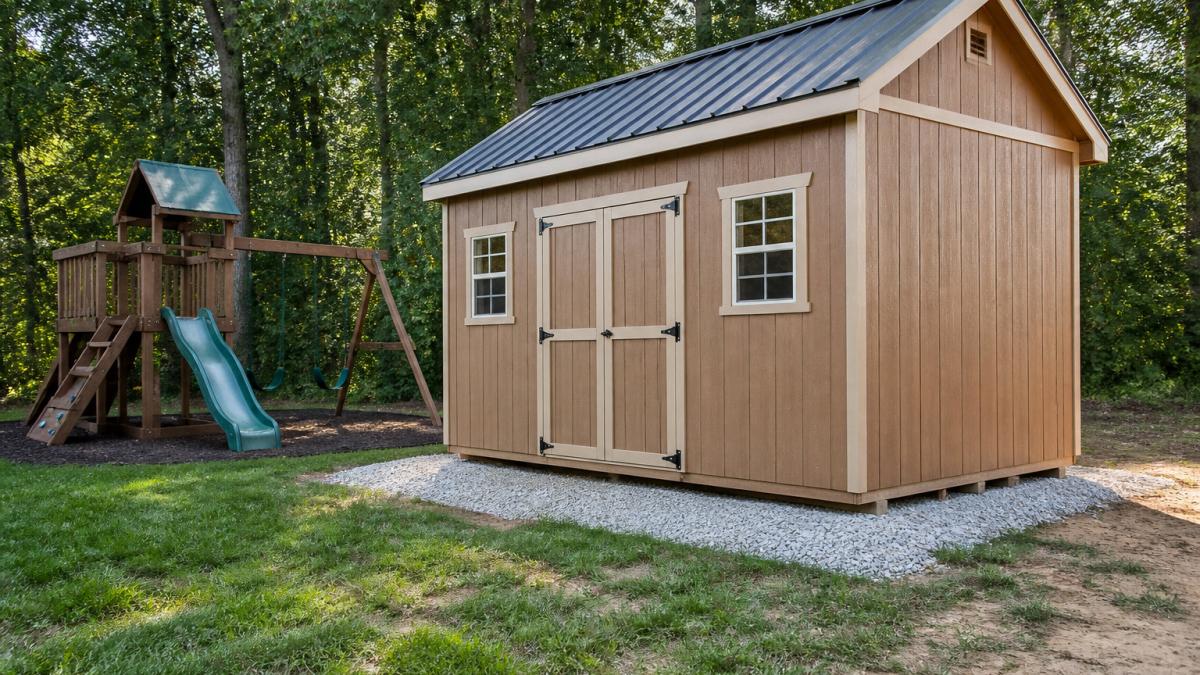
Leveling the ground can be the simplest option when the slope is mild. For specific techniques for leveling the surrounding yard, see how to level yard for shed. Cut the high side down and fill the low side with compacted gravel. This works well when the drop is small and the soil drains well.
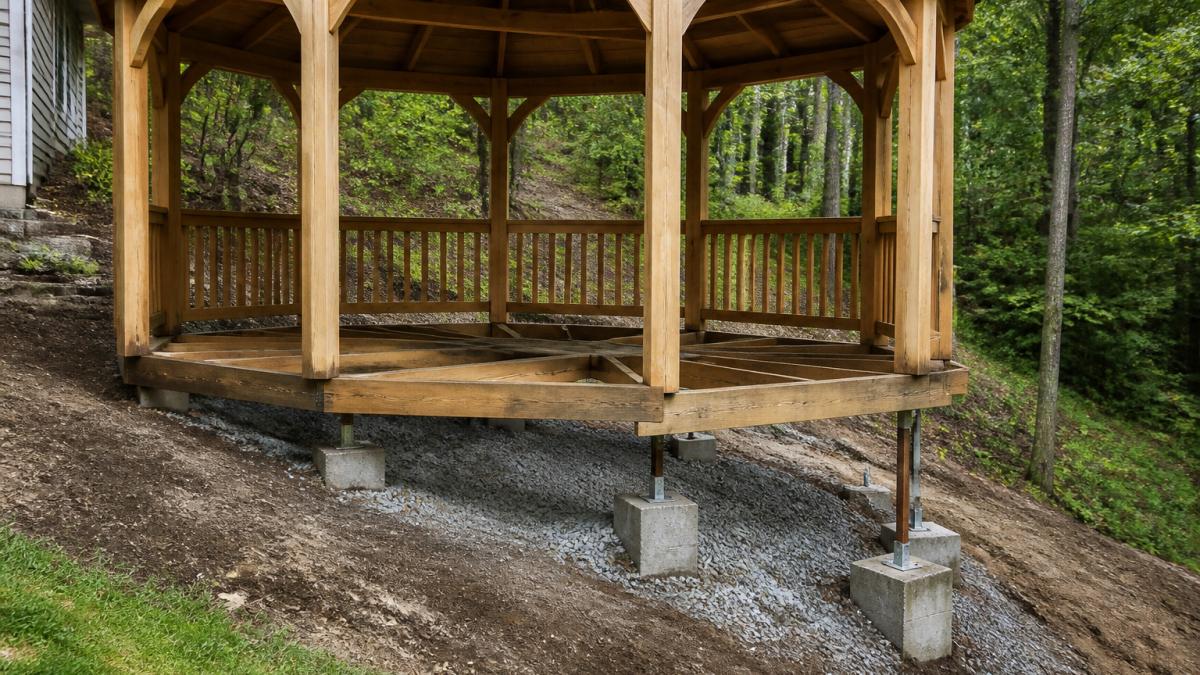
A raised foundation suits steeper sites. Build a level frame on posts or footings so the gazebo sits flat even though the ground does not. This takes more work but handles larger drops.
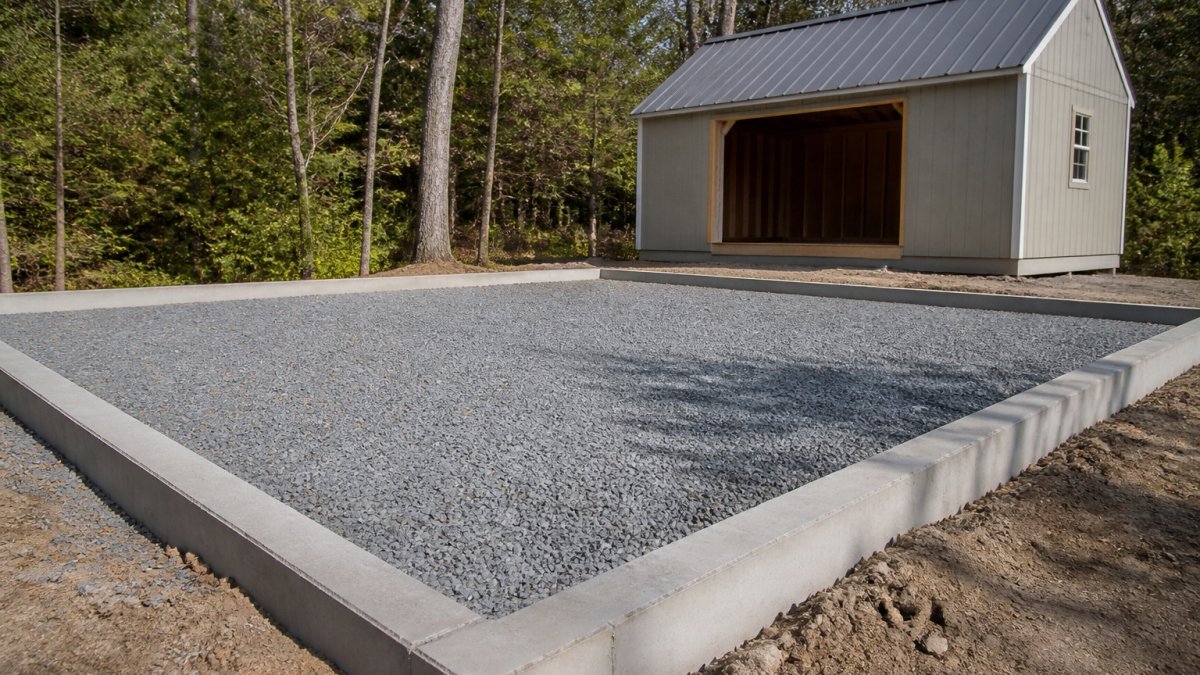
Concrete pads work best for larger gazebos or soft, marshy ground. A concrete pad spreads the load and resists sinking. Gravel is a lower-cost choice, and it drains well, but it needs a firm base and good edging to hold its shape.
- Mild slope: level the ground and use a compacted gravel base
- Steep slope: build a raised or stepped foundation on footings
- Soft or wet ground: use a concrete pad to spread the load
- Tight budget: gravel with solid edging can do the job
Pick the option that fits your measurements, then build it as level as you can.
The article compares the main foundation choices by the type of site they suit.
| Site condition | Foundation | Key point |
|---|---|---|
| Mild slope | Leveled ground with compacted gravel | Cut high side, fill low side |
| Steep slope | Raised or stepped foundation on footings | Handles larger drops |
| Soft or wet ground | Concrete pad | Spreads the load, resists sinking |
| Tight budget | Gravel with solid edging | Works if the base is firm |
How to Level a Gazebo Site Step by Step
Leveling is the part most DIY builders underestimate. Take your time here. A few millimeters of error at the start becomes a visible tilt by the time the roof goes on.
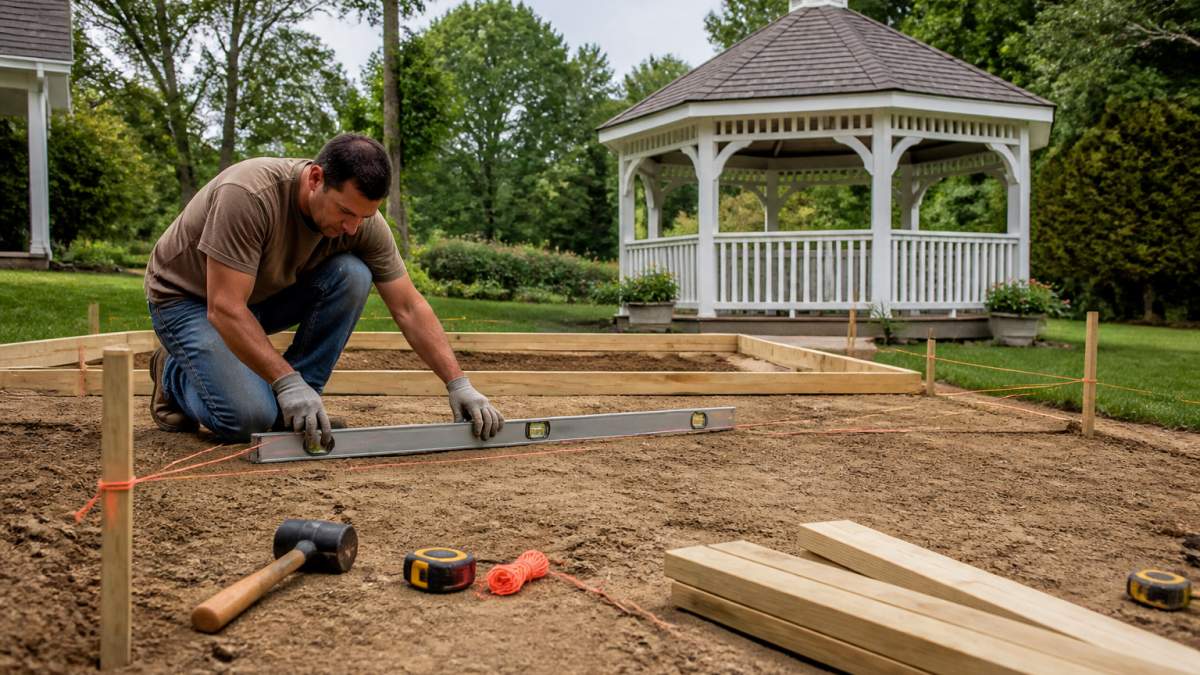
Tools and Materials You Will Need
- Stakes and a string line
- A long level and a tape measure
- A shovel, rake and tamper
- Gravel for the base and fill
- Landscape fabric to block weeds
- Edging boards or pavers to hold the gravel
Work in stages. Remove sod and topsoil from the footprint, then cut the high side down until the string line sits level. Fill the low side in layers of about 2 inches, tamping each layer before you add the next.
Check level in several directions as you go. A level site feels firm underfoot and drains away from the structure. Once the base is compacted and checked, your gazebo footings or pad can go in.
Setting Gazebo Concrete Footings on a Slope
Concrete footings give you fixed points that hold the frame at the right height. On a slope, set each footing to the same finished elevation, not the same depth in the ground. Measure from your string line to set each one.
Dig below the frost line in your area so the footings do not heave in winter. Your local building office can confirm the depth. Fill each hole with concrete, then set an anchor bracket or post base while the concrete is still wet.
Let the concrete cure before you build on it. Check each footing with your level again, because concrete can shift as it sets. Small adjustments now are much easier than fixing a frame later.
Common Foundation Mistakes to Avoid
A common mistake is building on soil that was never compacted. The base will settle, and the gazebo will tilt with it. Tamp in layers and check the level after each one.
Another frequent error is skipping drainage. Water pooling under the structure rots wood and invites pests. Slope the finished base slightly away from the gazebo and keep gutters pointed away from the site.
Watch out: do not pour footings to different heights and plan to fix it with shims. The frame will carry that error into the walls and roof.
Finally, do not rush the permit or inspection step. Confirm the rules with your township before you dig.
Booking a Site Assessment for Your Gazebo Foundation
If your yard has a steep or uncertain slope, a site assessment can tell you which foundation fits before you spend money on materials. Site preparation help may be available with some installations, so you can start by requesting a quote to ask about your options. For a closer look at the groundwork, see our guide on how to prepare ground for a shed and our shed foundation alternatives comparison, which covers gravel, timber skids and other concrete-free options.
Get a quote now to talk through your slope, your budget and the foundation that fits your yard.
Frequently Asked Questions
Can you install a gazebo on uneven ground?
Yes. A gazebo can be installed on uneven ground, but the site needs to be prepared so the structure sits level and stable. A sloped yard can be handled either by leveling the ground or by building a raised foundation to accommodate the slope. Which route makes sense depends on how steep the slope is, the size of the gazebo, and the soil. For a mild slope, leveling is often the simpler option. For a steeper site, a raised or stepped foundation usually makes more sense. Pricing for site preparation depends on the scope of work, so request a quote from Riehl Structures for current figures.
What is the best foundation for a gazebo on uneven ground?
There is no single best foundation for every site. Foundation choice depends on the ground conditions and your priorities. A concrete pad is generally suggested for larger gazebos or for soft, marshy ground because it spreads the load and resists movement. Gravel can suit a cost-conscious project on well-drained ground, and it is easier to level on a slope. Concrete footings or piers are another option when you need a raised, stable base. Ask Riehl Structures which approach fits your yard before you start digging.
Do gazebo posts need concrete footings?
Many gazebo posts benefit from concrete footings, especially on a slope or in soft soil. Footings anchor each post, keep it from shifting as the ground moves, and help the structure resist wind loads. On uneven ground, footings can be set at different depths so the top of every post sits at the same height. Footing depth and size depend on the gazebo design and local frost conditions in Chester County. Check the plans with Riehl Structures and your township before pouring concrete.
When should you hire a professional to prepare a gazebo site?
Consider hiring a professional when the slope is steep, when the site has drainage problems, or when you are unsure how to set footings level. Water pooling and an unlevel base can cause structural stress and premature wear, so mistakes are costly to fix later. Riehl Structures offers site preparation as part of a turnkey installation, which can take the guesswork out of the process. Contact the team for a quote tailored to your property.


Copy Link