How to Anchor a Shed to a Gravel Pad (2026 Guide)
Copy Link
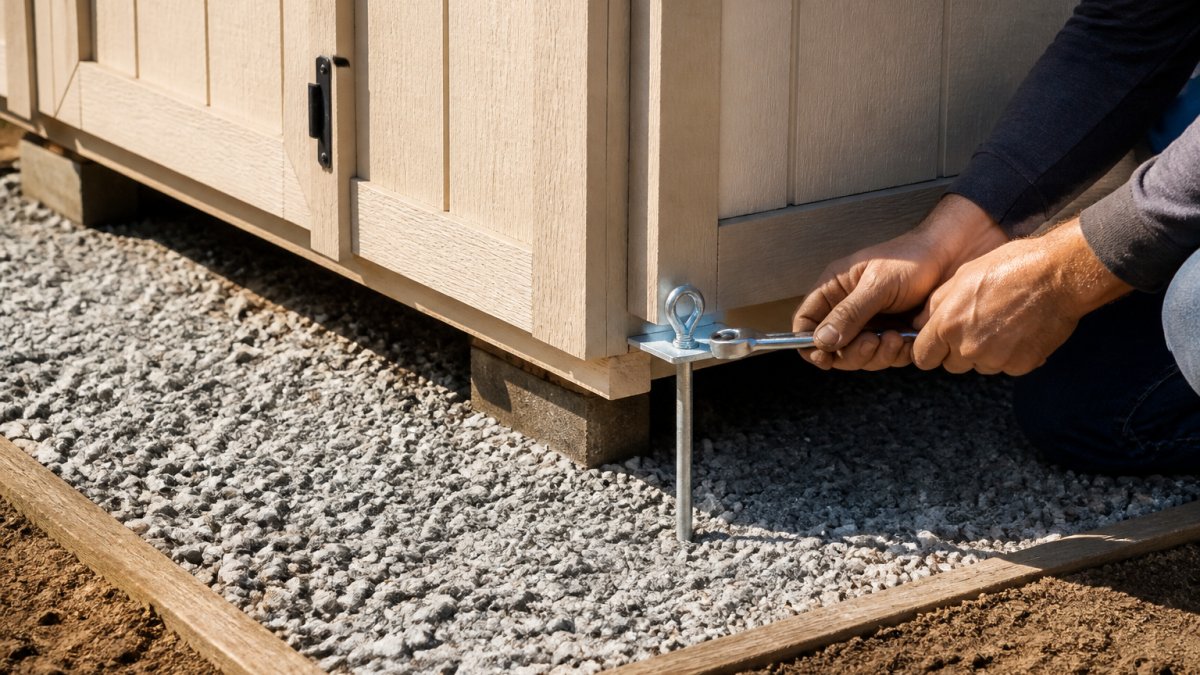
Table of Contents
- Why a Gravel Pad Shed Needs Proper Anchoring
- Tools and Materials You Will Need
- Step-by-Step: How to Anchor a Shed to a Gravel Pad
- How to Secure a Shed from Wind After Anchoring
- How Many Anchors Does a Shed Need?
- Common Mistakes to Avoid When Anchoring a Shed
- When to Call a Professional in West Chester, PA
- Frequently Asked Questions
Last Updated: October 11, 2026
Why a Gravel Pad Shed Needs Proper Anchoring
A gravel pad shed needs proper anchoring because gravel alone cannot hold a structure down when wind gets underneath it. The pad drains well and supports weight, but it offers almost no resistance to uplift. That is the part most owners miss.
At Riehl Structures, we have delivered and set up Amish-built sheds across Chester County for more than 30 years.
Anchoring is what turns a heavy box into a fixed structure. It is also one of the cheapest steps in the whole project.
Wind Uplift and Frost Heave in Pennsylvania
Pennsylvania sits in a region where both problems show up. Summer thunderstorms can push 60 mph gusts through an open backyard. Winter brings repeated freeze-thaw cycles that move soil and gravel.
Wind uplift works like a lever. Air pressure builds under the floor and pushes up. Once the shed lifts even a little, the wind grabs more surface area and the whole thing can flip.
Frost heave pushes from below. Water in the soil freezes, expands, and lifts whatever sits on top. A shed that is not tied down will rock and settle out of level over a few seasons.
Together, these two forces explain why “it’s heavy enough” is not a plan.
Tools and Materials You Will Need
Gather everything before you start. A hardware store run in the middle of the job costs more time than the parts cost money.
Tools:
- Hammer drill with a masonry bit
- Socket set and adjustable wrench
- Cordless drill and driver bits
- 4-foot level and a torpedo level
- Tape measure
- Post hole digger or auger
- Sledgehammer
- Work gloves and safety glasses
Materials:
- Shed anchors for gravel (auger-style or helical)
- Ground anchors for sheds, sized to your structure
- Shed tie-down kit with cables or straps
- Turnbuckles
- Galvanized lag bolts
- Steel washers
- Ratchet straps for temporary bracing
Choosing Shed Anchors for Gravel
The right anchor for gravel is a helical or auger-style anchor with a wide flight. Smooth stakes pull out. Screw-in anchors bite into the soil below the gravel and hold.
Look for three things:
- Flight width: wider flights grip more soil
- Length: longer anchors reach past the loose gravel layer
- Coating: hot-dipped galvanized steel resists rust
Do not use concrete wedge anchors or expansion bolts on a gravel pad. They need solid concrete to grip. In gravel, they will pull free under the first real wind load.
Step-by-Step: How to Anchor a Shed to a Gravel Pad
Anchoring a shed to a gravel pad takes about two to three hours for a standard 10×12 shed. You drive anchors into the soil below the gravel, then connect them to the shed frame with a tie-down kit.
Here is the full process.
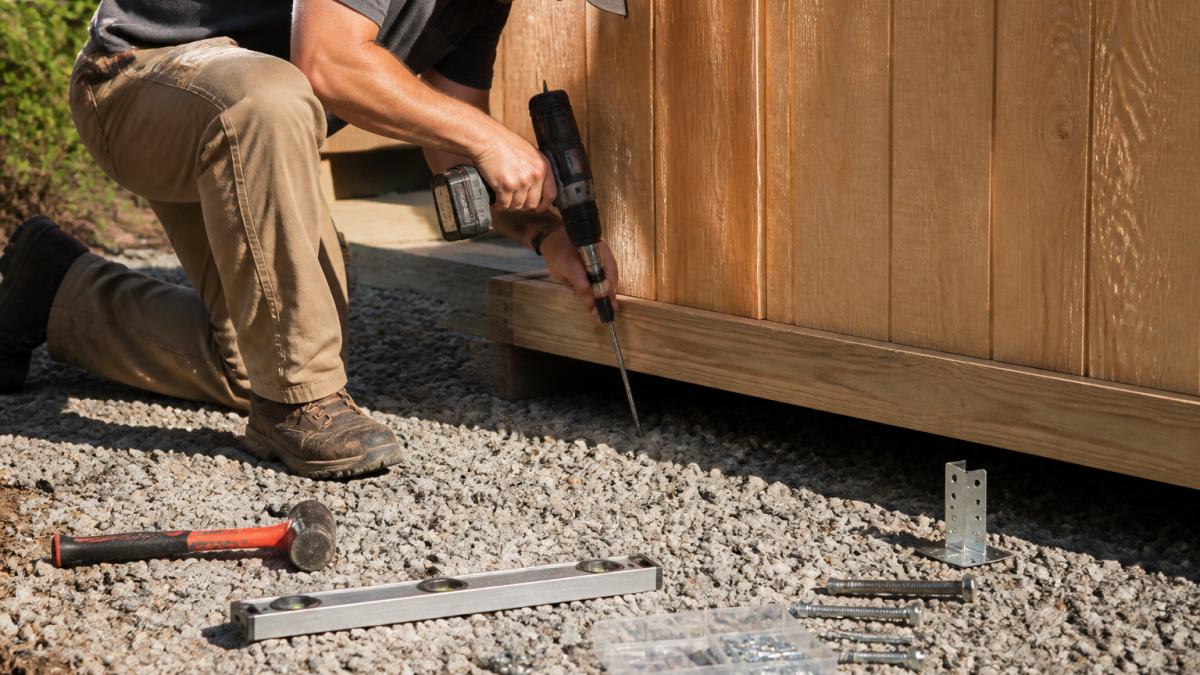
Step 1: Position and Level the Shed
Set the shed where you want it, then check level in both directions. Slide shims under the skids or runners until the bubble sits centered.
A level shed anchors evenly. An unlevel shed puts all the load on one corner, and that corner is where the anchor will fail first.
Check the corners against each other, not just the middle.
Step 2: Install Ground Anchors for Sheds
Drive one anchor at each corner and one at the midpoint of each long wall. Angle them slightly outward so the tension pulls against the shed, not straight up.
Use a hammer drill to start the pilot, then turn the anchor in with a bar or the tool that came with it. Stop when the eyelet sits just above the gravel.
Step 3: Attach the Shed Tie-Down Kit
Run the cable or strap from the anchor eyelet to the shed’s base frame. Connect with a turnbuckle so you can tighten it later.
Tighten until the cable is firm but not bowstring-tight. Check every connection by hand. Loose hardware is the same as no hardware.
Re-tighten your turnbuckles after the first freeze and again in spring. Gravel and soil settle, and cables that felt tight in October often go slack by February.
How to Secure a Shed from Wind After Anchoring
Securing a shed from wind means closing off the paths air uses to get underneath. Anchors hold the shed down. Airflow control keeps the wind from lifting it in the first place.
Three moves make the biggest difference:
- Skirt the base: gravel or treated boards packed along the bottom block wind from entering
- Check the doors: a loose door acts like a sail in a storm
- Trim nearby trees: limbs that rub the roof can pry panels loose
If your shed has windows, make sure the latches hold. A window that pops open in a gust turns the whole shed into a parachute.
How Many Anchors Does a Shed Need?
A standard 10×12 shed needs at least six anchors: one at each corner and one at the center of each long wall. Larger sheds need more.
Use this as a starting point:
| Shed Size | Minimum Anchors | Placement |
|---|---|---|
| Up to 8×10 | 4 | One per corner |
| 10×12 to 12×16 | 6 | Corners plus long-wall midpoints |
| 12×20 and larger | 8 or more | Corners, midpoints, and interior frame points |
Add anchors if your shed sits on an exposed hill or faces open ground. Wind speed goes up with exposure.
Common Mistakes to Avoid When Anchoring a Shed
The biggest mistake is anchoring into gravel only. Anchors must reach the soil below, or they will not hold.
Other mistakes we see often:
- Skipping the turnbuckle and tying cable in a knot
- Using uncoated steel that rusts through in two winters
- Anchoring only two corners because “the other side is against the fence”
- Forgetting to re-tighten after the ground settles
- Drilling through the floor instead of the frame
Any one of these can cost you the shed in a bad storm. All five together almost guarantee it.
When to Call a Professional in West Chester, PA
Call a professional when your shed sits on a slope, when the pad is more than a few inches deep, or when you are not comfortable with a hammer drill. A pro can also check whether your pad was built to hold anchors at all. Securing a structure against shifting ground often requires selecting the right professional construction hardware to ensure long-term stability.
Riehl Structures handles site prep, delivery, and setup for homeowners across West Chester and the surrounding area. Our team sets structures on prepared pads and can walk you through anchoring before the shed ever arrives. We offer free delivery within 30 miles of our West Chester and King of Prussia locations, and financing with no prepayment penalties.
If you are still deciding what to buy, our custom design service lets you match the shed to your yard instead of forcing a stock size to fit. For anyone searching for shed installation near me in Chester County, getting the pad and anchors right the first time saves a lot of repair work later.
Frequently Asked Questions
Can you anchor a shed directly to a gravel pad?
Yes, you can anchor a shed to a gravel pad, but the method differs from concrete. You will need anchors designed for gravel, such as ground anchors or helical piles, that penetrate through the gravel into the soil below. A shed tie-down kit with cables or straps connects the anchors to the shed’s frame. This setup holds the shed against wind uplift and keeps it from shifting on the loose surface.
What type of anchors work best for a shed on gravel?
For gravel pads, ground anchors for sheds that drive into the soil beneath the gravel work best. Look for auger-style anchors or helical piles with a minimum 30-inch embedment. These provide strong holding power in varying soil conditions. Avoid concrete wedge anchors, which need a solid concrete base. A complete shed tie-down kit often includes the right anchors, cables, and tensioners for gravel installations.
How many anchors does a shed need?
The number of anchors depends on shed size and local wind exposure. A common guideline is one anchor per corner and additional anchors every 4 to 6 feet along the walls. For a typical 10×12 shed, four to six anchors are sufficient. In high-wind areas or for larger sheds, increase the count. Always check the anchor manufacturer’s recommendations and local building codes for specific requirements.
Do local building codes require shed anchors in West Chester, Pennsylvania?
Building codes in West Chester and throughout Chester County typically require sheds to be anchored to resist wind loads. The specific requirements depend on shed size and location; many townships require a permit for sheds over a certain square footage. Anchoring is often part of the inspection process. Check with your local township office or a professional installer to ensure your shed meets current code.
Anchoring a shed to a gravel pad is a few hours of work that protects the whole investment. Wind and frost will test your shed every season, and the anchors are what decide whether it stays put. Riehl Structures builds Amish-crafted sheds and outdoor structures with the craftsmanship to last, plus free delivery within 30 miles and flexible Rent to Own financing. Get a quote now and let our team help you plan a shed that stands up to Pennsylvania weather.

Copy Link