Heating and Cooling Solutions for Outdoor Office Sheds
Copy Link
Last Updated: October 22, 2026
Quick Summary
An outdoor office shed needs its own heating and cooling plan because it sits outside your home’s ductwork and insulation envelope. Insulate and air-seal the shell first, then choose a ductless mini-split for year-round comfort or a portable AC plus electric heater for occasional use.
- Insulate the ceiling to a higher level than the walls, since the roof loses and gains the most heat.
- A ductless mini-split heats and cools from one unit but costs more to install than simpler options.
- Portable AC units need window venting, drainage, and are louder than a mini-split on calls.
- Electric baseboard heat suits a dedicated office you heat most days; space heaters are for short sessions.
- A mini-split and electric baseboard both need a dedicated circuit, often a subpanel run from the house.
Table of Contents
- Why Outdoor Office Sheds Need a Real Heating and Cooling Plan
- Shed Office Insulation: The Step That Decides Everything Else
- Mini-Split for Shed Office: The Year-Round Ductless Option
- Portable Air Conditioner for Shed: Budget Cooling That Works Within Limits
- Electric Heater for Shed Office: Keeping Winter Workdays Warm
- How to Choose Heating and Cooling Solutions for Your Shed Size, Budget, and Climate
- Power, Permits, and Setup: What to Arrange Before Installation
- Conclusion
- Frequently Asked Questions
Why Outdoor Office Sheds Need a Real Heating and Cooling Plan
An outdoor office shed is a detached, finished workspace in your yard, and it needs its own heating and cooling plan because it sits outside your home’s ductwork and insulation envelope. A space that’s comfortable in April can be unusable by July and unbearable by January. The shell is only half the job; the climate control inside it decides whether you actually use the space.
Here’s the part most guides get wrong: they jump straight to equipment. The wrong order. Insulation, size, and power come first, because they determine which heating and cooling solutions for outdoor office sheds even make sense for your build.
The good news is that a shed office can be comfortable year-round without a major construction project. A few options cover almost every case:
- Ductless mini-split: heat and cool from one unit
- Window or portable AC: cooling only, lower upfront cost
- Electric baseboard or space heater: winter heat, often paired with an AC
- Insulation and sealing: the upgrade that makes all of the above work
Below, we’ll walk through each option, what it costs to run, and how to match it to your shed’s size and your local climate.
Shed Office Insulation: The Step That Decides Everything Else
Shed office insulation is the layer of material in your shed’s walls, floor, and ceiling that slows heat transfer, and it matters more than the heater or AC you pick. Skip it and you’re paying to condition air that leaks straight back outside. A well-insulated 100-square-foot office can often be kept comfortable with a small unit, while the same space uninsulated may never feel right.
What actually moves the needle:
- Walls and ceiling: fill the stud bays and add a ceiling layer; heat rises and escapes there first.
- Floor: an insulated floor makes a cold shed usable in winter.
- Air sealing: caulk gaps, seal around outlets, and weatherstrip the door. Air leaks undo insulation fast.
- Windows: double-pane glass or a quality storm window cuts drafts and summer heat gain.
If you’re ordering a new shed, ask about insulation before the build, not after. Retrofitting a finished shed costs more and looks worse.
Insulate the ceiling to a higher level than the walls. In a small shed office, the roof is where most heat is lost in winter and gained in summer, and it’s the cheapest place to add protection during the build.
Mini-Split for Shed Office: The Year-Round Ductless Option
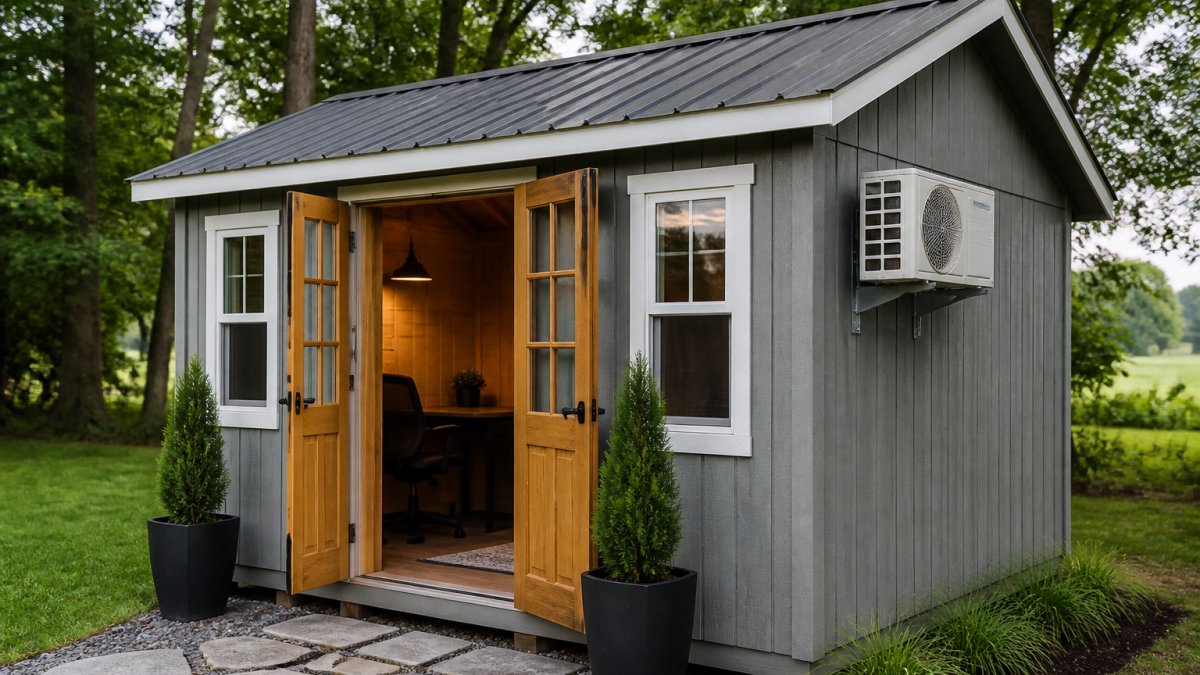
A mini-split for shed office use is a ductless system with an indoor head and an outdoor compressor that both heats and cools, which makes it the most complete single solution for a backyard workspace. GREE Comfort’s guide to shed air conditioning notes that ductless mini-splits are becoming a popular choice for sheds and garage spaces, with quiet operation and energy efficiency as the main draws.
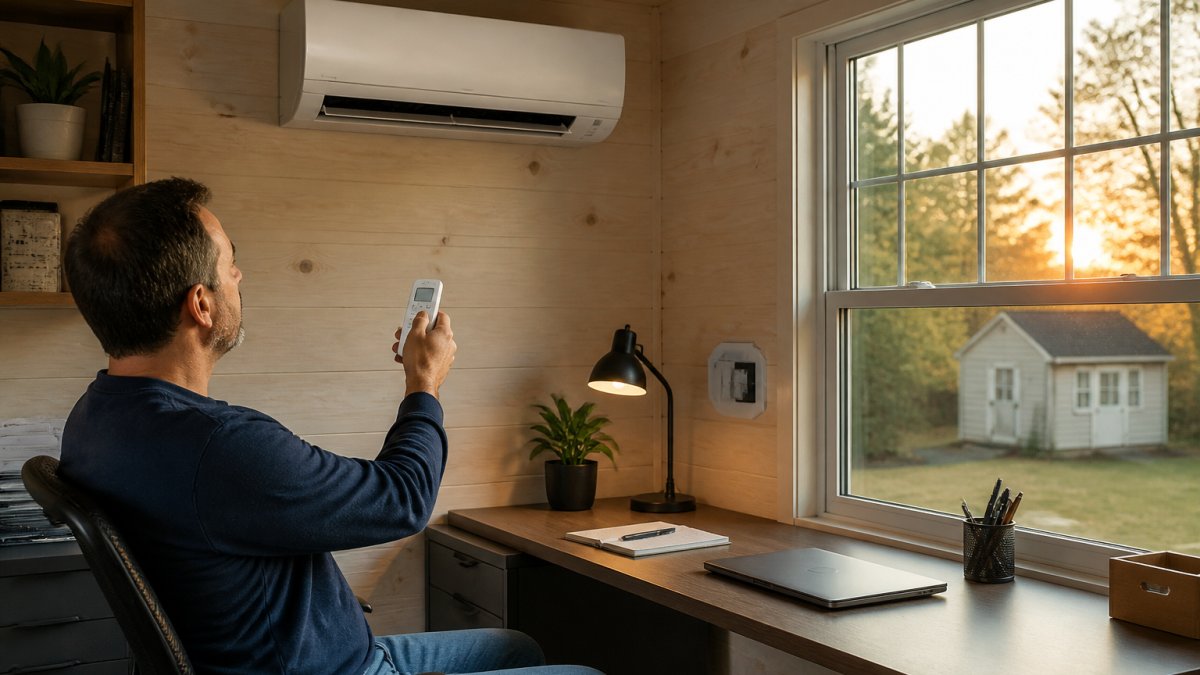
The trade-off is cost. GREE points out that mini-splits cost more to install than simpler options, so they make the most sense when you’ll use the shed year-round. N.E.T.R., Inc.’s overview of ductless systems explains that mini-splits suit small spaces without central HVAC and can be set up for cooling alone or upgraded to include heating.
Where it fits best:
- Sheds you use daily, in every season
- Spaces where quiet matters (calls, focused work)
- Builds where you want one system instead of two
For shoppers comparing ductless options, retailers like HVACDirect’s shed mini-split listings organize units by shed application, which helps you size a system before you call an installer.
Portable Air Conditioner for Shed: Budget Cooling That Works Within Limits
A portable air conditioner for shed use is a wheeled cooling unit that vents hot air out a window, and it’s the simplest way to cool a small office without a permanent install. It’s also the option most likely to disappoint if you oversize the job. Portable units work best in a tight, well-insulated space and struggle in a leaky shed on a hot day.
What to know before you buy:
- Venting: you need a window or wall opening for the exhaust hose; a sliding window kit helps.
- Drainage: most units collect water and need draining or a gravity hose.
- Noise: compressors are louder than a mini-split, which matters on calls.
- Cooling only: you’ll still need heat in winter.
A window air conditioner is a related pick. It cools a single room and, in an inverter model, runs more efficiently than a basic unit. The catch is that a window unit needs a secure opening and blocks part of the view.
Electric Heater for Shed Office: Keeping Winter Workdays Warm
An electric heater for shed office use is a plug-in or hardwired heat source that warms a small space without ductwork, and it’s the cheapest way to make a shed usable in cold months. The right type depends on how often you’re out there and how cold it gets. Transitioning to more permanent climate control often involves installing air-to-air heat pumps, which provide both heating and cooling efficiency for year-round comfort in your workspace.
The main choices:
- Electric baseboard: fixed, quiet, and steady; good for a dedicated office you heat most days.
- Oil-filled radiator: portable, silent, and holds heat after shutoff; good for occasional use.
- Space heater: fast spot heat for short sessions; least efficient for all-day comfort.
Safety comes first with any plug-in heater. Use a unit with a tip-over shutoff, keep it clear of paper and fabric, and don’t run one on an overloaded circuit. If you’ll heat the shed daily, a fixed baseboard or a mini-split’s heat mode is the better long-term call.
Don’t rely on a single portable space heater to warm a large, uninsulated shed. It will run constantly, never catch up on cold days, and strain your electrical circuit. Fix insulation and air sealing first.
How to Choose Heating and Cooling Solutions for Your Shed Size, Budget, and Climate
Picking heating and cooling solutions for outdoor office sheds comes down to three inputs: how big the space is, how often you’ll use it, and how extreme your seasons are. Get those right and the equipment choice mostly makes itself.
Use this as a starting framework:
| Your situation | Best fit | Why |
|---|---|---|
| Small shed, occasional use, mild summers | Portable AC + space heater | Lowest upfront cost, no install |
| Small shed, daily year-round use | Ductless mini-split | One system, quiet, efficient |
| Medium shed, cold winters, cooling needed | Mini-split or baseboard + window AC | Reliable heat plus summer cooling |
| Tight budget, cooling only | Window or portable AC | Simple, no contractor needed |
| New build, not yet ordered | Insulated shell + mini-split rough-in | Cheapest to do it right once |
A few rules of thumb:
- Size the unit to the room, not the whole yard. Oversized AC short-cycles and dehumidifies poorly.
- Match the system to your climate. A West Chester winter calls for real heat, not just a fan.
- Plan for both seasons at once. Buying cooling and heat separately costs more than one combined system.
If you’re weighing a new structure against a retrofit, our team can help you plan the shell and the power needs together so the HVAC install is straightforward.
Power, Permits, and Setup: What to Arrange Before Installation
Before any unit goes in, sort out power and permits. A mini-split and electric baseboard both need a dedicated circuit, and a shed office often needs a subpanel run from the house. That’s an electrician’s job, and it’s the step people forget until install day.
Your pre-install checklist:
- Confirm the shed has (or can get) a dedicated electrical circuit
- Decide whether you need a subpanel for the load
- Check local permit rules for electrical work and any structural changes
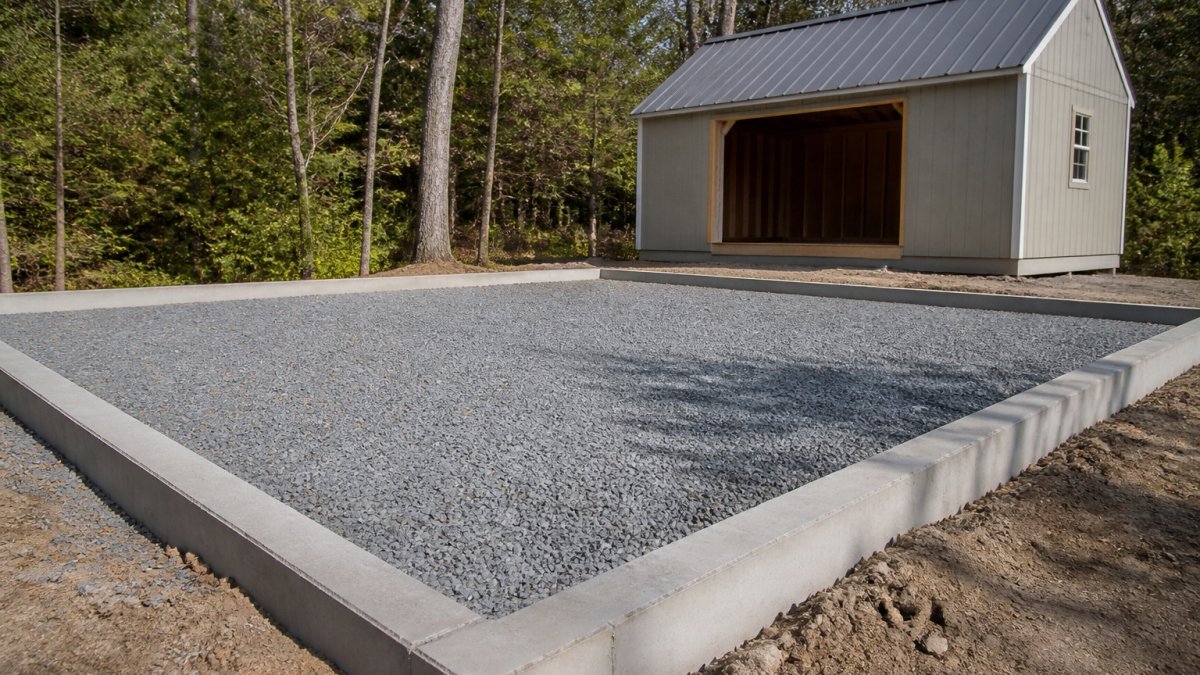
- Clear and level the area around the outdoor unit
- Seal and insulate before the equipment arrives
- Book the electrician and HVAC installer early
Permit rules vary by township, so confirm with your local office before work starts. For a shed built by Riehl Structures within 30 miles of our West Chester and King of Prussia locations, delivery and placement are handled for you, which takes one headache off the list.
Conclusion
The hardest part of a backyard office isn’t picking a heater or an AC; it’s getting the shell right so the equipment can do its job. Insulate first, size the system to your space, and plan power and permits before install day.
That’s where Riehl Structures comes in. We build Amish-crafted sheds, backed by 30+ years in business, custom design, and flexible financing with no prepayment penalties. Get a quote now and turn your backyard into a workspace you’ll actually want to use.
Frequently Asked Questions
What is the best way to heat and cool an outdoor office shed?
For year-round use, a ductless mini-split is the most complete answer because one system handles both heating and cooling, and it suits outbuildings with no existing ductwork. GREE notes mini-splits cost more to install than simpler options, so budget matters. A budget alternative pairs a window or portable air conditioner for summer with an electric heater for winter. Whichever route you take, insulation comes first: an uninsulated shed loses heat and cool air fast, so the equipment works harder and costs more to run.
Can a mini-split heat and cool a shed office?
Yes. A mini-split for a shed office provides both heating and cooling from one ductless unit, which is why HVAC sources present it as a common choice for sheds and garage spaces. Ductless systems are built for small spaces that are not tied into a home’s central HVAC. The tradeoff is cost: GREE notes mini-splits are more expensive to install than some alternatives. Sizing should match the shed’s square footage and insulation level, so confirm the model with an installer rather than guessing.
Can a portable air conditioner cool an office shed?
A portable air conditioner for a shed can cool a small, well-insulated space, especially if you only need comfort on the hottest afternoons. Portable units need a vent path to the outside, usually through a window or wall kit, and they work best in compact rooms. They cool only, so you still need a heat source for cold months. In a tight, insulated shed office, a portable unit is a reasonable low-cost starting point before committing to a mini-split.
Does an office shed need a dedicated electrical circuit for heating and cooling?
Often, yes. A mini-split, a window air conditioner, and many electric heaters draw enough power that sharing a circuit with lights and office equipment can trip breakers. A dedicated circuit sized for the equipment is the safer setup, and a licensed electrician should confirm capacity and wiring. If the shed is far from the house, the electrician will also check voltage drop over the run. Sort this out before buying equipment so installation does not stall.

Copy Link