7 Best Pest-Proof Storage Containers for Sheds
Copy Link
Last Updated: October 31, 2026
Quick Summary
The best pest-proof storage containers for sheds match the container to the threat: metal bins resist mice and rats, gasketed plastic totes block moisture and damp air, and snap-lock airtight bins keep insects out. Use metal for anything a rodent would eat and plastic for anything a rodent would only shelter in.
- A pest-proof container must block entry, resist gnawing, and control interior moisture at the same time.
- A metal trash can with a bungee or locking handle is the simplest, most reliable rodent barrier for a shed.
- Gasketed plastic totes should not be treated as rodent-proof because plastic can be chewed through.
- Use a gasket seal for outside humidity and a desiccant pack for moisture trapped inside the bin.
- Leave a gap between stacked bins and the wall so you can see pest activity and air moves.
Table of Contents
- Best Pest-Proof Storage Containers for Sheds: Quick Comparison
- What Makes a Storage Container Truly Pest-Proof?
- Mouse-Proof Storage Containers: Metal vs. Heavy-Duty Plastic
- Airtight Storage Bins for Bugs: Snap-Lock and Gasketed Lids
- Waterproof Storage Bins for Outdoor Sheds: Gaskets and Desiccant Packs
- Common Storage Mistakes That Invite Pests Into Your Shed
- Which Container Fits Your Shed and Your Storage List?
- Upgrade Your Shed With Riehl Structures
- Frequently Asked Questions
Best Pest-Proof Storage Containers for Sheds: Quick Comparison
If you have ever pulled a winter coat out of a shed and found mouse droppings in the pocket, you already know why the best pest proof storage containers for sheds matter more than almost any other purchase for that building. This guide cuts through the marketing claims and shows you which container types actually keep rodents, insects, and moisture away from your gear.
Here is the short version: no single container wins every category. Metal wins against mice, gasketed plastic wins against damp air, and snap-lock lids win against insects. Match the container to the threat.
| Container Type | Best Against | Weak Against | Best For |
|---|---|---|---|
| Galvanized steel bin | Mice, rats, gnawing | Rust in wet sheds | Long-term tool and feed storage |
| Heavy-duty plastic tote with gasket | Moisture, damp air | Determined rodents | Fabric, clothing, paper goods |
| Snap-lock airtight bin | Insects, humidity | Chewing rodents | Pantry-style shed goods |
| Desiccant-packed sealed bin | Condensation, mildew | Physical pests | Seasonal gear, electronics |
| Metal trash can with locking lid | Rodents, raccoons | Bulk odd-shaped items | Birdseed, fertilizer, grit |
What Makes a Storage Container Truly Pest-Proof?
A pest-proof container is one that blocks entry, resists gnawing, and controls interior moisture at the same time. Most products only solve one of those three problems.
The seal is the first thing to check. A lid that snaps down with a rubber gasket keeps humid air and small insects out. A lid that just rests on top does not. The second check is wall thickness. Thin plastic flexes, and a rodent can work a gap open at a corner. The third is material hardness. According to Penn State Extension’s guidance on rodent control, rodents gnaw to wear down their teeth, which is why soft materials fail over time.
Mouse-Proof Storage Containers: Metal vs. Heavy-Duty Plastic
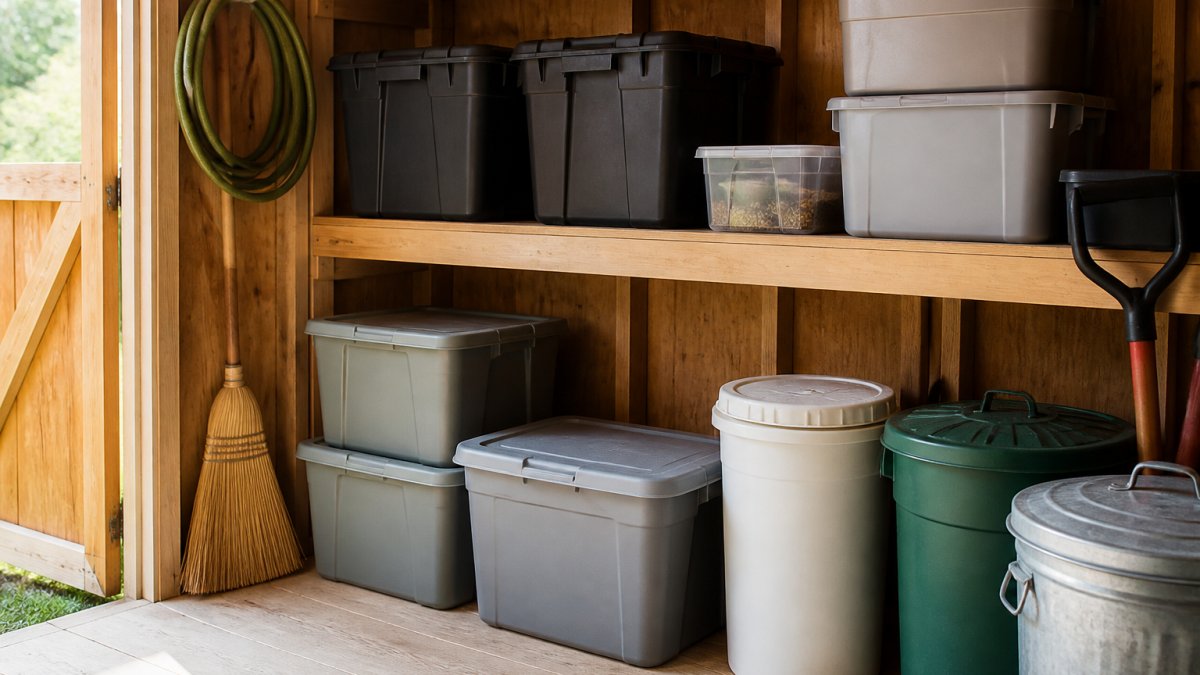
Metal is the most reliable material for resisting mice. Galvanized steel bins with tight-fitting or locking lids give rodents nothing to grip and nothing to chew. A metal trash can with a bungee or locking handle is the simplest, most reliable rodent barrier you can put in a shed.
Heavy-duty plastic is a different story. A gasketed, waterproof plastic tote may help keep out moisture, but it should not be treated as rodent-proof. Gardeners on the Bogleheads forum discussion of pest-proof storage have flagged this directly, noting that plastic can be chewed through and recommending sealed bins with desiccant packs as a partial fix rather than a guarantee.
Use metal for anything a mouse would want to eat, and plastic for anything a mouse would only shelter in.
Airtight Storage Bins for Bugs: Snap-Lock and Gasketed Lids
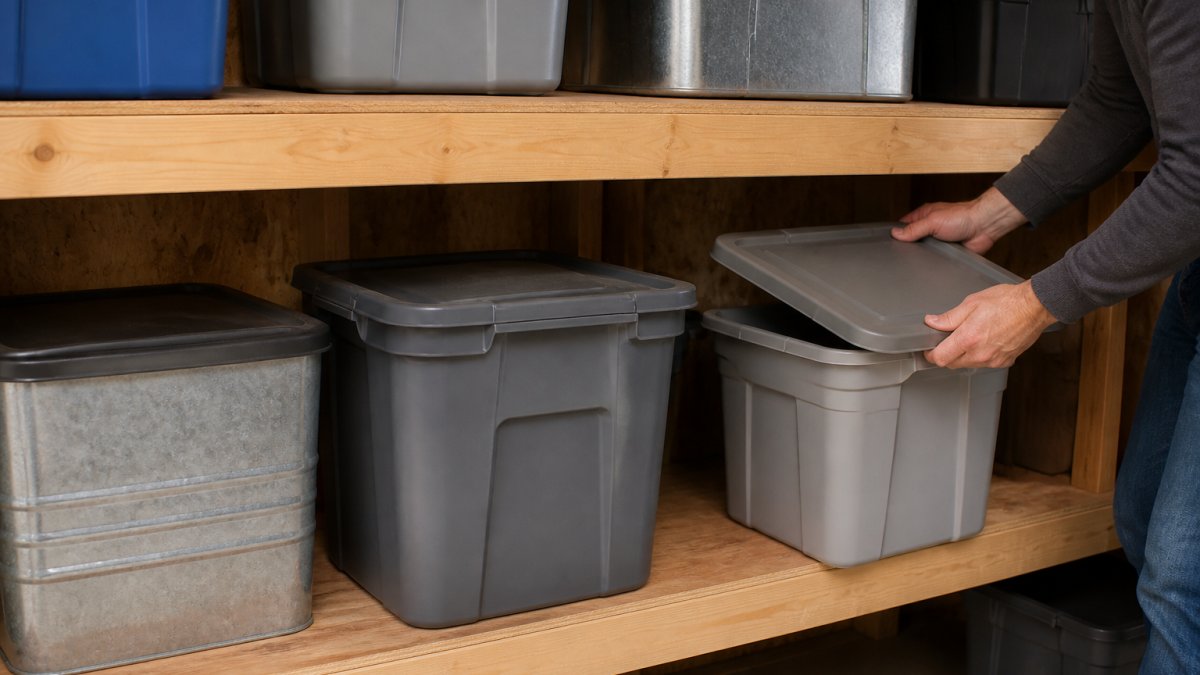
Airtight storage bins for bugs work because insects need gaps. Remove the gap and you remove the access. Snap-lock lids and full-perimeter gaskets close that gap far better than a standard friction lid.
Call Wayne’s pest control guidance recommends airtight plastic bins with snap-lock or latch lids over cardboard for insect protection, and that matches what we see in practice. Cardboard is the worst offender: it absorbs moisture, softens, and gives insects an easy meal and an easy entry point.
Watch out: an airtight lid on a damp container traps that moisture inside. Dry everything fully before sealing it for the season.
Waterproof Storage Bins for Outdoor Sheds: Gaskets and Desiccant Packs
Waterproof storage bins for outdoor sheds solve the problem metal cannot: condensation. Sheds breathe with the seasons, and temperature swings push moisture onto cold surfaces.
A gasket seal blocks outside humidity. A desiccant pack handles the moisture already trapped inside. Use both. Silica gel packs are cheap, reusable after drying, and they make the difference between gear that smells fresh in spring and gear that smells like a basement.
The one drawback is maintenance. Desiccant packs need replacing or recharging, so label each bin with the date you packed it.
Common Storage Mistakes That Invite Pests Into Your Shed
The biggest mistake is storing food-adjacent items in cardboard. Birdseed, grass seed, and pet food in a paper sack are an open invitation. Move them to metal.
Second mistake: stacking bins directly against the wall. Leave a gap so you can see activity and so air moves. Third: ignoring the shed itself. Gaps at the door, vents without screens, and gaps at the foundation line undo the best container you own.
For a deeper look at sealing the whole building, our guide on how to protect outdoor storage from pests covers entry points, screening, and seasonal checks.
Which Container Fits Your Shed and Your Storage List?
Start with a list, not a shopping trip. Sort your shed contents into three piles: things rodents eat, things moisture ruins, and things insects nest in. Then buy by pile.
- Rodent targets (seed, feed, soap, candles): galvanized metal with locking lids
- Moisture targets (fabric, paper, leather, tools): gasketed plastic plus desiccant
- Insect targets (dry goods, natural fiber): snap-lock airtight bins
- Odd shapes (rakes, hoses, long handles): wall hooks and ceiling racks, not bins
If you are planning the layout at the same time, our DIY shed shelving and storage ideas walk through shelf heights and bin placement that keep everything visible and off the floor.
Upgrade Your Shed With Riehl Structures
Containers only protect what the building lets them protect. A shed with a warped door, an unscreened vent, or a floor that sits below grade will defeat every bin inside it. That is the part most storage guides skip.
Riehl Structures builds Amish-built sheds, garages, and outdoor structures, with free delivery within 30 miles of our West Chester and King of Prussia locations. Every structure is custom-designed to your needs. Flexible financing is available, with no prepayment penalties and no home equity required.
If you are still weighing options, browse the storage shed lineup, read our storage sheds near me buying guide for local pricing context, or see how Amish sheds compare to big box store sheds before you commit.
Frequently Asked Questions
Are plastic storage bins mouse-proof?
Not always. Standard plastic bins can be chewed through by determined rodents. Look for heavy-duty plastic with thick walls and a tight-sealing gasket, or choose metal containers. Plastic is not rodent-proof, so waterproof bins with sealing gaskets plus desiccant packs offer added protection rather than a guarantee. For sheds with known mouse activity, metal cans or heavy-duty plastic with reinforced corners are safer bets.
Do airtight storage bins for bugs actually keep insects out?
Airtight bins with snap-lock or latch lids help keep insects out by cutting off their access. Airtight plastic bins are generally preferred over cardboard for insect protection. However, no bin is useful if it is left open or cracked. Check lids regularly and store dry goods in sealed bags inside the bin for an extra barrier. Remember that airtight bins are not automatically rodent-proof, so pair them with mouse-proof storage containers if rodents are a concern.
What is the best way to store birdseed in a shed?
Keep birdseed in a metal container with a tight-fitting lid, such as a galvanized trash can, or in a heavy-duty plastic bin with a gasketed lid. Place it off the floor on a shelf and away from walls to reduce rodent access. Birdseed attracts mice and raccoons, so a waterproof storage bin for outdoor sheds with a locking lid is ideal. Add a desiccant pack to control moisture and check the seed regularly for signs of pests.
Are metal containers better than plastic for pest-proof storage?
Metal containers are generally more resistant to rodents because mice and rats cannot easily chew through steel. Plastic bins vary widely: thin-walled bins offer little resistance, while heavy-duty plastic with gaskets can deter pests. Metal also holds up better against moisture when coated or galvanized. The trade-off is weight and cost. For sheds storing birdseed, pet food, or seasonal items, metal containers are a reliable choice, especially in areas with heavy rodent pressure.
Pests find the weak point in any shed, and it is usually the building, not the bins. Riehl Structures has spent more than 30 years building tight, durable outdoor structures for homeowners across Chester County, with custom design, flexible Rent to Own financing, and delivery that includes setup on your property. Get started with Riehl Structures and build a shed that gives your storage containers a fair chance.


Copy Link