Amish Greenhouses: A Complete 2026 Guide
Copy Link
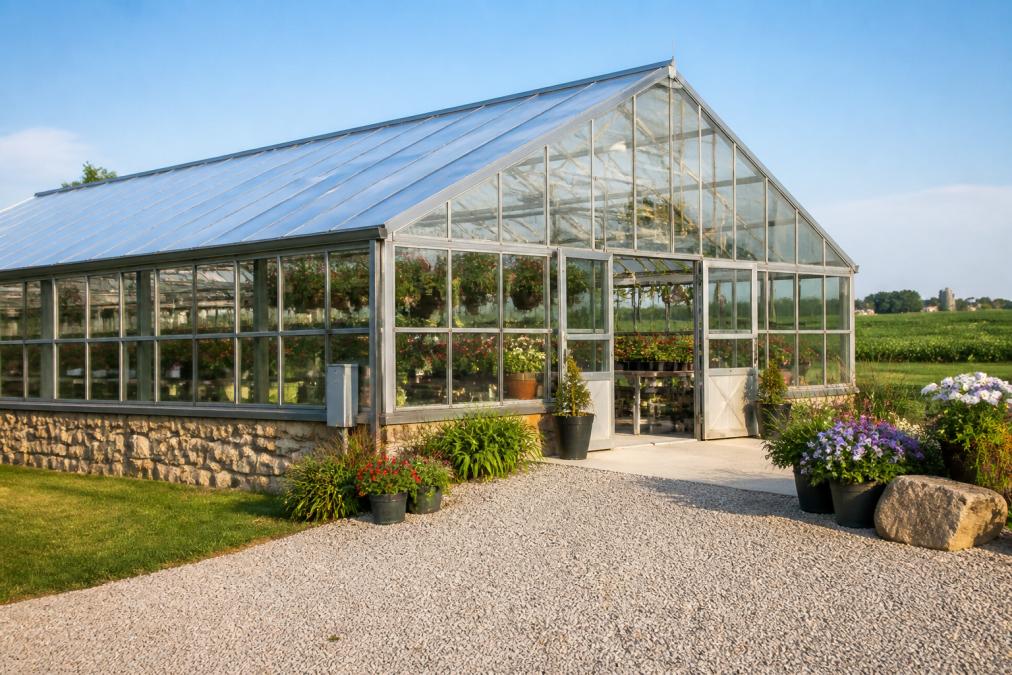
Table of Contents
- What Makes an Amish Greenhouse Different
- Why Amish Greenhouses Outlast Standard Kits
- Types of Amish Greenhouses
- Custom Greenhouse Design in West Chester
- Financing Options for Outdoor Structures
- Greenhouse Gardening in Chester County
- Choosing and Maintaining Your Amish Greenhouse
- Conclusion
- Frequently Asked Questions
Last Updated: September 25, 2026
What Makes an Amish Greenhouse Different
An Amish greenhouse is a hand-built growing structure constructed by Amish craftsmen using traditional joinery, kiln-dried lumber, and glazing systems designed to hold up for decades rather than seasons. This guide from Riehl Structures covers what separates these structures from mass-produced kits, which styles suit different yards, and how to plan one for the West Chester, PA area.
The difference shows up in the details: mortise-and-tenon joints instead of staples, hand-fitted glazing instead of snap-in plastic, and framing sized for snow load instead of shipping weight. According to Penn State Extension’s guide to home gardening structures, the durability of a growing structure depends far more on frame quality and glazing fit than on size or initial cost.
Most kit greenhouses are engineered to survive a truck ride and a weekend assembly. Amish-built greenhouses are engineered to survive twenty winters. That single design priority explains nearly every other difference.
The real gap between an Amish greenhouse and a standard kit isn’t aesthetics, it’s the frame. A structure built to withstand snow load and wind will outlast three kits that were built to ship flat.
Why Amish Greenhouses Outlast Standard Kits
Standard kits fail at predictable points: plastic connectors crack, thin aluminum frames rack out of square, and glazing panels cloud or pop loose within a few seasons. Amish greenhouses avoid these failure points by overbuilding the parts that matter.
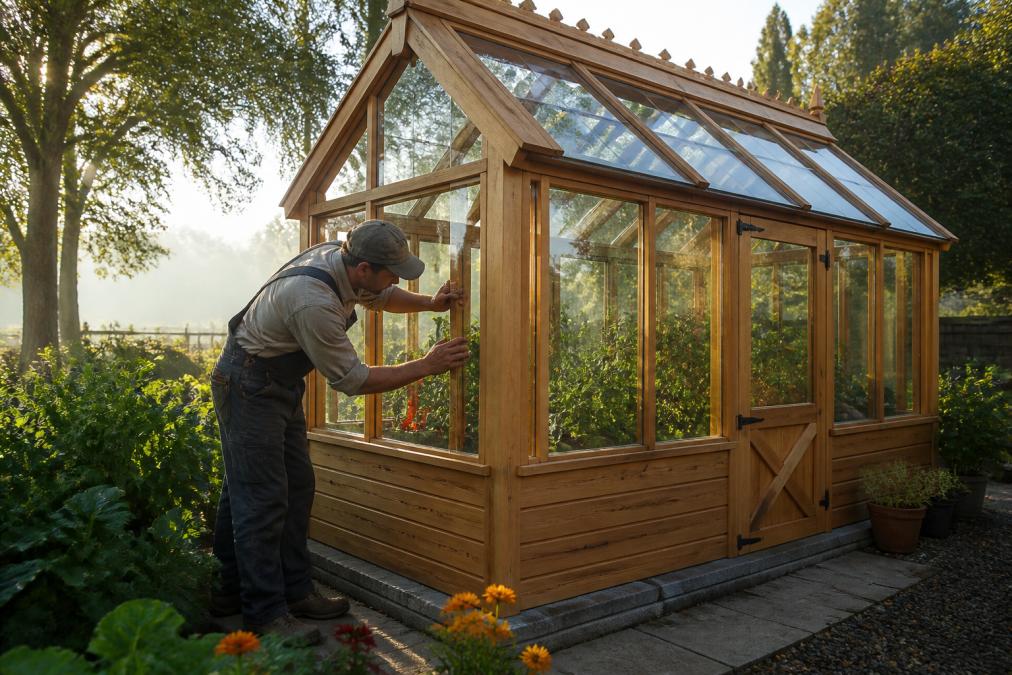
This commitment to structural integrity ensures that these wooden frames remain a permanent fixture in the landscape, providing a sturdy foundation that complements the aesthetic flow of modern backyard designs while integrating seamlessly with other outdoor structures.
Materials That Matter
Kiln-dried lumber resists warping and rot far better than the green-treated pine common in budget kits. Amish builders typically specify clear-span framing sized for local snow and wind loads, and glazing options range from double-wall polycarbonate to true glass. Hardware is galvanized or stainless, not painted steel that rusts at the first scratch.
Construction Techniques
Traditional joinery is the quiet advantage. Mortise-and-tenon and lap joints distribute stress across the full timber rather than concentrating it at a screw head. A common mistake buyers make is judging a greenhouse by its glazing while ignoring the frame. In practice, the frame determines whether the structure is still square in year ten.
Types of Amish Greenhouses
Three broad styles cover most backyards, and each suits a different site and purpose.
| Style | Best For | Snow Handling | Typical Footprint |
|---|---|---|---|
| Traditional A-Frame | Maximum light, classic look | Excellent, steep pitch sheds snow | Compact to medium |
| Gable | Year-round growing, headroom | Very good | Medium to large |
| Lean-To | Attaching to a wall or garage | Good, sheltered | Small to medium |
Traditional A-Frame
The A-frame is the iconic shape, with steep roof planes that shed snow and admit light from both sides. It works best as a freestanding structure in an open part of the yard where nothing blocks the southern exposure.
Gable and Lean-To Styles
A gable greenhouse adds vertical walls and a peaked roof, which means usable headroom along the full width. The lean-to trades independence for efficiency: it borrows the thermal mass of an existing wall, which helps moderate temperature swings and reduces material cost.
On a sloped Chester County lot, a lean-to built against a south-facing garage wall often outperforms a freestanding A-frame of the same size. The shared wall buffers overnight temperature drops, and the structure needs less site prep.
Custom Greenhouse Design in West Chester
Custom greenhouse design in West Chester starts with the site, not the catalog. Orientation, drainage, slope, and sun exposure determine what will actually work before style enters the conversation.
Riehl Structures builds greenhouses sized to the yard and the grower’s plans, not to a fixed kit dimension. That matters on the region’s rolling, uneven lots, where a stock footprint often means either wasted space or an awkward fit. The team handles site assessment and custom sizing so the structure sits correctly the first time. Homeowners comparing options can review the USDA Plant Hardiness Zone Map to confirm which zone their property falls in, since zone drives glazing and heating choices.
Financing Options for Outdoor Structures
Financing options for outdoor structures remove the biggest barrier to buying quality: paying for it all at once. Riehl Structures offers flexible financing including Rent to Own, with no prepayment penalties and no home equity required.
That structure matters. Many rent-to-own agreements quietly punish early payoff, and home-equity financing ties an outdoor purchase to your mortgage. Neither is necessary here. You can pay the balance down early without a penalty, and approval doesn’t put your house on the line.
Read the payoff terms before signing any rent-to-own agreement. Some contracts front-load interest so that paying off early saves you almost nothing. Confirm there’s no prepayment penalty in writing.
Greenhouse Gardening in Chester County
Greenhouse gardening in Chester County means working with a four-season climate, late frosts, and humid summers. A greenhouse extends the growing season on both ends, letting you start seedlings weeks earlier and keep cold-hardy crops producing into the winter.
The practical wins are specific. Start tomatoes and peppers indoors while snow is still on the ground. Grow lettuce and greens through December with minimal heat. Protect tender perennials that would otherwise struggle outdoors. For guidance on what grows well locally, Chester County’s Penn State Extension office publishes regional planting and frost-date information.
Choosing and Maintaining Your Amish Greenhouse
Choosing well comes down to four checks: frame material and joinery, glazing type, ventilation, and how the builder handles site prep and delivery. Maintenance is lighter than most people expect.
A simple seasonal routine keeps a greenhouse in good shape:
- Inspect glazing seals and re-caulk any gaps before winter
- Clear snow from the roof after heavy storms to protect the frame
- Check door and vent hardware for smooth operation each spring
- Refinish exterior wood every few years depending on sun exposure
- Test ventilation and shading before the first hot spell
A common mistake is skipping ventilation planning. A sealed greenhouse overheats fast in a Pennsylvania summer, and no amount of glazing quality fixes poor airflow. Size vents and doors for the structure’s volume, not for appearance.
Conclusion
Getting a greenhouse right the first time means choosing a frame built to last, sizing it to your actual yard, and financing it without punishing terms. Riehl Structures brings 30+ years of family-owned experience, Amish-built craftsmanship, custom design services, and flexible Rent to Own financing with no prepayment penalties. Free delivery within 30 miles of the West Chester and King of Prussia locations makes the process turnkey from quote to setup. Get a quote now!
Frequently Asked Questions
What makes Amish-built greenhouses more durable than standard kits?
Amish greenhouses use thicker framing, better joinery, and higher-quality materials than most kits. The construction focuses on long-term stability, with reinforced corners and weather-resistant finishes. This means they hold up better against wind, snow, and humidity. Many Amish builders also offer pressure-treated wood or cedar, which resists rot and insects. The result is a structure that lasts decades with minimal maintenance, unlike flimsier kits that may need replacing in a few years.
Are Amish greenhouses customizable for specific garden sizes?
Yes. Amish builders typically offer custom sizing to fit your space and gardening needs. You can choose dimensions, roof style, shelving, ventilation, and even door placement. For example, a custom greenhouse design in West Chester can be tailored to a sloped yard or a narrow side garden. Customization ensures the greenhouse works with your property, not against it, and lets you maximize growing space without wasting materials.
Do Amish greenhouses in Pennsylvania offer delivery and installation?
Many Amish greenhouse builders in Pennsylvania provide delivery and setup, especially within a certain radius. For instance, Riehl Structures offers free delivery within 30 miles of their West Chester and King of Prussia locations, and they handle placement on your property. It’s best to confirm whether the price includes full installation or just drop-off, as some companies charge extra for setup. Always ask about site preparation and leveling if your yard is uneven.
Can I use an Amish greenhouse for year-round gardening in PA?
Yes, with the right features. Amish greenhouses can be equipped with insulation, double-pane windows, and heating options to extend your growing season or even go year-round. In Chester County, winters can be harsh, so adding a heat source and proper ventilation is key. Many gardeners use their greenhouses to grow cold-hardy vegetables like kale and spinach through winter, or to start seedlings early. The sturdy construction helps maintain consistent temperatures better than lightweight kits.

Copy Link