7 Affordable Backyard Playground Shade Ideas for 2026
Copy Link
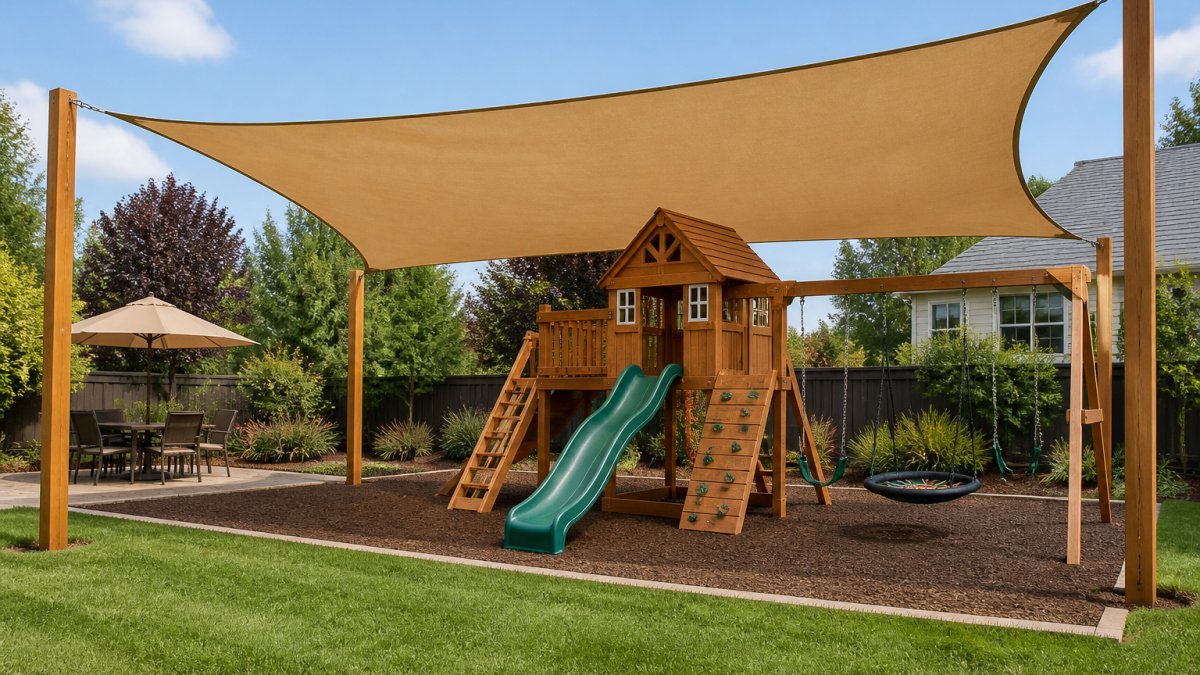
Table of Contents
- Why Affordable Playground Shade Matters (and How to Get It)
- 1. DIY Playground Shade: Budget-Friendly Options You Can Build
- 2. Shade Sail Over Playset: A Cost-Effective and Stylish Choice
- 3. Shade Trees for Backyard Play Areas: Natural, Long-Term Shade
- 4. Pergola Over Playset: A Customizable Shade Structure
- 5. Umbrella Shades and Modular Canopies: Quick, Affordable Fixes
- 6. Comparing Costs: Which Playground Shade Idea Fits Your Budget?
- Conclusion: Pick the Right Shade for Your Backyard
- Frequently Asked Questions
Last Updated: October 19, 2026
Why Affordable Playground Shade Matters (and How to Get It)
A playset without shade sits empty by mid-July. In West Chester, PA, summer afternoons regularly push past 90°F, and metal slides and dark rubber surfaces get hot enough that kids simply stop using the equipment.
Affordable backyard playground shade ideas solve that problem without a second mortgage. The trick is matching the structure to your yard, your budget, and how permanent you want the shade to be. Below, we’ll walk through seven options, from a tarp you can hang this weekend to an Amish-built pergola that lasts decades. Choosing the right materials for these structures often serves as a natural starting point for broader backyard renovation ideas that prioritize long-term environmental harmony.
The American Academy of Pediatrics guidance on sun safety for children is blunt about it: shade is one of the most effective tools for reducing UV exposure during peak hours. That’s the real reason this matters, beyond just keeping the slide cool.
1. DIY Playground Shade: Budget-Friendly Options You Can Build
DIY playground shade is the fastest route to relief and the least expensive entry point. A tensioned tarp, a canvas sail, or a simple wooden frame with shade cloth can all be installed in a weekend with basic tools.
Simple DIY Canopy and Tarp Solutions
Start with a heavy-duty shade cloth rated for UV blocking, not a hardware-store tarp. Tarps trap heat and degrade within a season. Shade cloth lets air move through, which drops the temperature underneath noticeably. Anchor it to four posts set in concrete, or tension it between the playset frame and two trees if the geometry works.
Cost-Saving Tips for DIY Shade
- Buy shade cloth by the roll rather than precut panels
- Reuse existing fence posts or playset uprights as anchor points
- Angle the canopy toward the afternoon sun rather than straight overhead
- Skip the custom frame; a simple 4×4 post setup handles most backyard spans
Set your posts at least 2 feet deep with concrete, even for a light canopy. Wind load on a stretched tarp is far higher than most homeowners expect, and a shade sail that pulls loose in a storm becomes a projectile.
2. Shade Sail Over Playset: A Cost-Effective and Stylish Choice
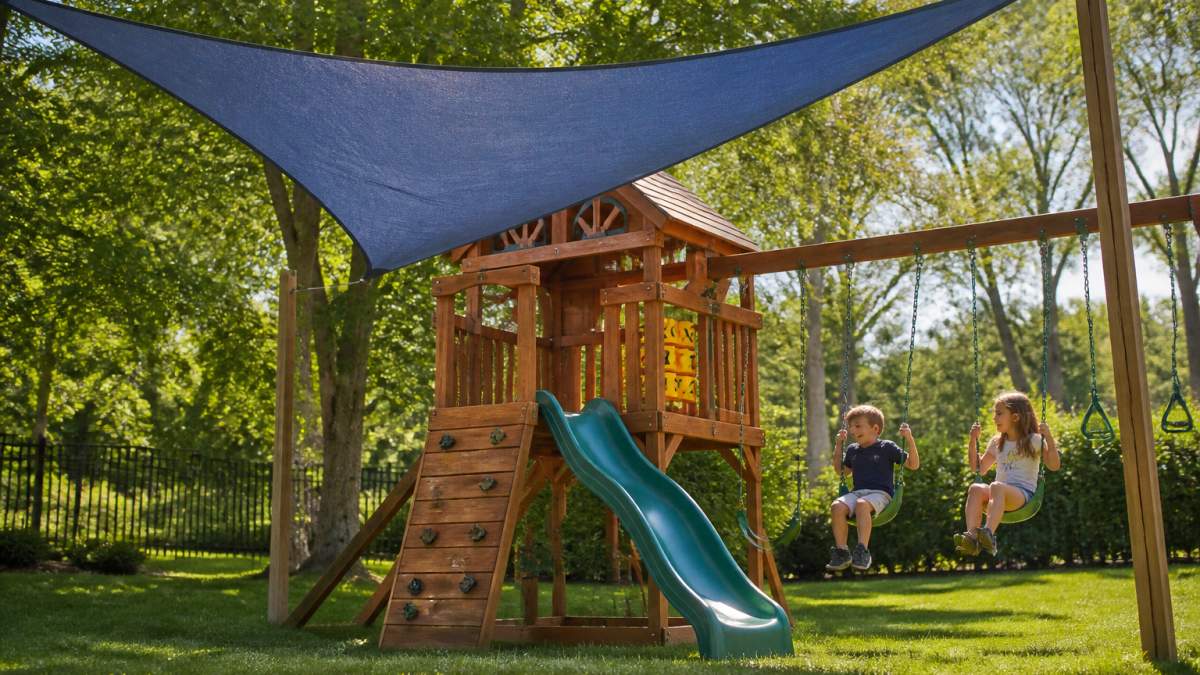
A shade sail over a playset is the sweet spot for most families: more permanent than a tarp, far cheaper than a built structure, and genuinely good-looking. Sails come in triangles and squares, so you can cover an odd-shaped play zone without custom fabrication.
Installation Basics and Safety
Mount sails to steel or pressure-treated posts, not to the playset itself. The playset wasn’t engineered for lateral tension. Keep the lowest corner at least 7 feet off the ground so adults can walk under it, and leave a slight slope so rain runs off instead of pooling. Check the turnbuckles each spring; sails loosen over winter.
3. Shade Trees for Backyard Play Areas: Natural, Long-Term Shade
Shade trees for backyard play areas cost the most patience and the least money over time. A deciduous tree planted 15 to 20 feet from the playset will shade it within a decade and cool the whole yard for generations.
Best Tree Species and Placement Tips
Fast growers like red maple, river birch, and honey locust work well in southeastern Pennsylvania. Plant on the south or west side of the play area to block afternoon sun. Keep branches clear of the swingset’s swing arc, and avoid species that drop heavy limbs or messy fruit over the play zone.
Don’t plant a tree right against the playset hoping for quick shade. Roots and canopy both need room, and a tree that crowds the structure creates a maintenance headache and a falling-branch risk for years.
4. Pergola Over Playset: A Customizable Shade Structure
A pergola over a playset gives you the most control over coverage and appearance. Slatted roofs block the harshest midday sun while letting breeze through, and you can add a fabric top or climbing vines for denser shade in peak summer.
This is where custom design pays off. A pergola sized to your actual playset footprint looks intentional rather than improvised, and it can be built from wood or low-maintenance composite. Riehl Structures builds Amish-crafted pergolas and pavilions sized to your yard, with free delivery within 30 miles of our West Chester and King of Prussia locations. Financing is available with no prepayment penalties, so you’re not locked into a long payoff.
5. Umbrella Shades and Modular Canopies: Quick, Affordable Fixes
Umbrella shades and modular canopies are the no-installation option. A cantilever umbrella positioned over a sandbox or a small play table costs far less than a built structure and moves wherever the sun is worst.
Modular canopy systems clip together and can grow as your play area does. They’re a common pick for renters or families not ready to commit to posts in the ground. The tradeoff is wind resistance: bring umbrellas in during storms, and stake modular units properly.
6. Comparing Costs: Which Playground Shade Idea Fits Your Budget?
Here’s how the seven options stack up on the factors that actually drive cost.
| Option | Upfront Cost | Installation Effort | Lifespan | Best For |
|---|---|---|---|---|
| DIY shade cloth | Lowest | Weekend project | 2-4 years | Tight budgets, renters |
| Shade sail | Low to moderate | Moderate, needs posts | 5-10 years | Most backyards |
| Shade trees | Lowest (sapling) | Planting only | Decades | Long-term homeowners |
| Pergola | Highest | Professional build | 15+ years | Custom, permanent shade |
| Umbrella / modular | Low | None to minimal | 3-7 years | Small zones, flexibility |
Costs vary widely by size, material, and site conditions. Get a quote based on your actual yard.
Conclusion: Pick the Right Shade for Your Backyard
The right affordable playground shade idea depends on how long you plan to stay, how much wind your yard gets, and whether you want to build it yourself. Start with a shade sail or DIY canopy if you need relief this summer. Go with a pergola or shade trees if you’re thinking in decades.
If you want a permanent, custom-built structure that matches your home and handles Pennsylvania weather, Riehl Structures can design and deliver a pergola, pavilion, or playset setup sized to your yard. Our family-owned team has 30+ years of experience, offers flexible Rent to Own financing, and delivers free within 30 miles of West Chester and King of Prussia. Get a quote now and stop losing summer afternoons to the sun.
Frequently Asked Questions
What is the cheapest way to shade a backyard playground?
The most budget-friendly option is often a DIY playground shade using a tarp or canopy attached to existing structures or poles. Umbrella shades and modular canopies are also cost-effective for smaller areas. For a long-term investment, shade sails offer good value. Pricing varies by size and material, so request quotes for your specific yard.
Are shade sails safe over a backyard playset?
Yes, when installed correctly. Shade sails must be anchored to sturdy posts or existing structures that can withstand wind loads. Ensure the sail is high enough to avoid head bumps and that all hardware is secure. Proper tension prevents sagging and flapping. For safety, consult a professional installer or follow manufacturer guidelines, especially in areas with high winds.
What trees provide good shade for a backyard play area?
Fast-growing shade trees like maple, oak, and birch are popular choices. Consider native species that thrive in your region. Plant trees on the south and west sides of the play area for maximum summer shade. Keep in mind that trees take years to mature, so they work best as a long-term plan combined with a temporary shade solution.
Can a pergola provide enough shade over a playset?
A pergola can provide partial shade, but its slatted roof allows sunlight through. To increase shade, add a fabric cover, climbing plants, or a retractable canopy. For full coverage, consider a solid roof pergola or combine it with a shade sail. Pergolas are a durable, attractive option that can be customized to fit your playset area.
How much shade does a backyard playground need?
Aim for at least 50% shade coverage over the play area, especially during peak sun hours (10 a.m. to 4 p.m.). This reduces surface temperatures on slides and swings, helping prevent burns and heat exhaustion. Use shade sails, canopies, or trees to cover the most-used equipment. Adjust based on your climate and children’s age.

Copy Link